
Voices from the Table: September Insights

Voices from the Table: September Insights

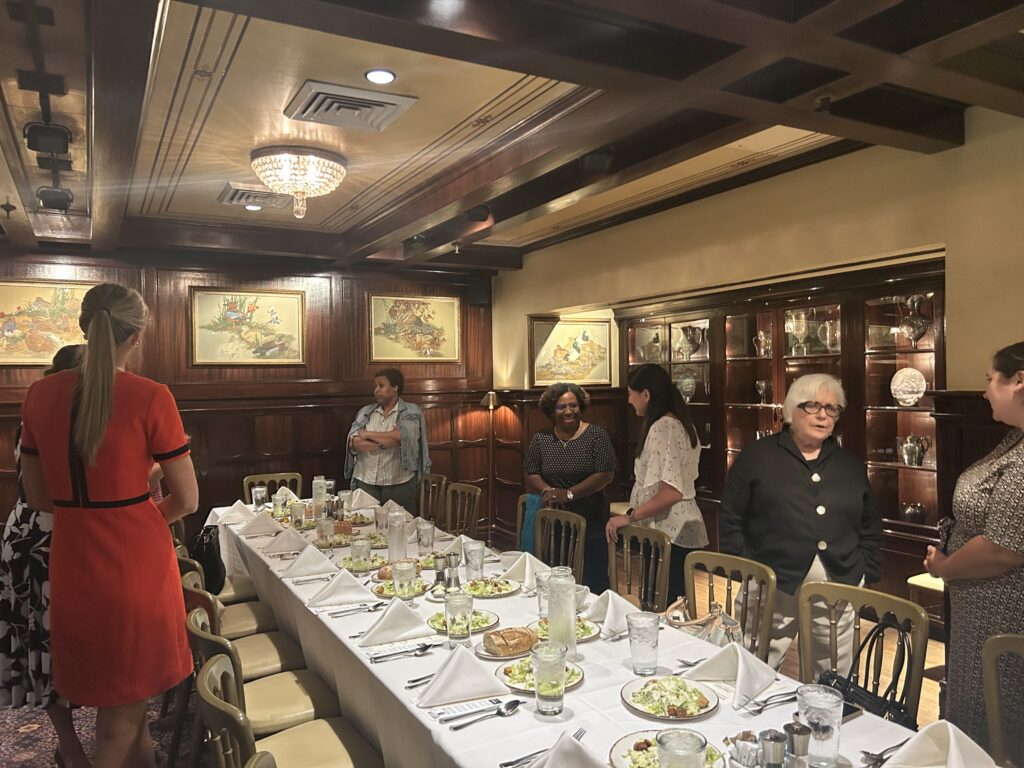
When leaders in Greater Washington gather around a table, bonds form and conversations deepen. At the Board of Trade’s weekly Executive Meals, those connections become catalysts — helping executives see challenges differently, surface new opportunities, and drive change for the Capital Region. 

A Region in Transition 

September’s conversations reflected both the pressures and possibilities of this moment. Leaders acknowledged workforce stress, the pace of technological change, and cultural polarization. Yet the dialogue pointed less to obstacles and more to strengths — adaptability, optimism, and collaboration. 

Board of Trade President & CEO, Jack McDougle, emphasized that the Capital Region is not defined by its federal footprint. With only one-fifth of jobs tied directly to government, our future depends on how we cultivate talent, embrace innovation, and invest in infrastructure. 

Leadership tone also stood out as a competitive asset. Calm, integrity, and optimism aren’t just virtues — they shape how organizations, and the region as a whole, navigate turbulence. 

Executives also highlighted the foundations needed to scale a digital economy: reliable energy, cybersecurity, and modern infrastructure. Federal spending tied to industrial policy and technology adoption creates clear opportunities for regional firms and talent. But seizing these gains must be balanced with protecting nonprofits, universities, and services that risk being left behind. 

Food for Thought 

These conversations didn’t aim for answers, but for sharper questions. Among those, the region must keep asking: 

  • How can we unlock adaptability by aligning talent, innovation, and infrastructure? 
  • What does optimism in leadership look like when uncertainty surrounds us? 
  • How do we turn AI into an engine for both opportunity and responsibility? 
  • What bold steps would move the Capital Region from fragmented to united? 
  • How do we capture the upside of federal investment in energy and technology while protecting the nonprofits and services our communities rely on? 

Looking Ahead 

The Capital Region’s competitiveness will not be defined by uncertainty, but by how we adapt together. The Board of Trade will continue convening these conversations, ensuring that executive voices shape not only individual strategies but the collective future of our region together. 
Unlocking Connection Through Storytelling: Leadership Lessons from the O Museum

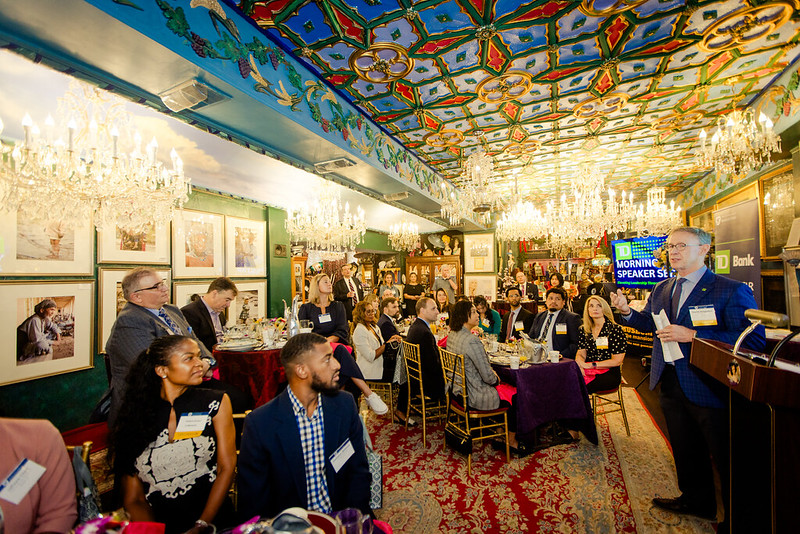
As today’s leaders navigate increasingly complex environments, the 2025 TD Bank Morning Star Speaker Series reminds us that leadership growth is strengthened through the stories we tell, the challenges we share, and the connections we build.

On September 24th in Washington, D.C., the Board of Trade, in partnership with TD Bank and the O Street Museum (O Museum), hosted the final session of this year’s series: The Power of Storytelling in Leadership. Surrounded by hidden doors and eclectic artifacts, attendees explored how storytelling can turn everyday interactions into meaningful experiences.

Change, Connection, and the Stories Between

The conversation wove together insights from H. Leonards, founder of the O Museum, and David Hargadon of TD Bank. Leonards reminded guests that creativity, curiosity, and imagination create space for growth and “real change comes from changing one heart at a time.” Hargadon built on this message, sharing how storytelling can strengthen relationships and leadership presence. Networking, he emphasized, isn’t about exchanging cards but about sharing short, memorable moments that reveal values, build trust, and humanize leadership.

Those ideas came to life as participants set out on a scavenger hunt through the museum, using artifacts as prompts for conversation. A vintage guitar might spark a story about teamwork; a hidden door could inspire reflection on navigating change. What could have been ordinary networking quickly became an exercise in discovery, showing how curiosity and shared experience can turn small interactions into genuine connection.

TD092425-223

Lessons That Last

The morning’s conversations left participants with reminders to carry forward:

  • Connection matters: Memorable anecdotes make conversations more impactful.
  • Identity is built through story: Consistent messages reinforce both personal and organizational brands.
  • Resilience inspires: Sharing challenges demonstrates courage and motivates others.

Celebrating the 2025 Series

This session concluded the 2025 TD Bank Morning Star Speaker Series, which over three installments focused on emotional intelligence, collaboration, and storytelling. Across the year, participants gained practical tools, shared experiences, and meaningful dialogue that turned leadership concepts into human connection.

As the Board of Trade looks ahead, that spirit will continue, creating opportunities for Greater Washington leaders to grow and lead in ways that are, in the words of TD Bank, unexpectedly human.

Special Thanks

The Greater Washington Board of Trade extends its thanks to TD Bank for 18 years of partnership in fostering unexpectedly human leadership experiences, and to the O Museum for hosting this imaginative and engaging session.

Founder of the O Museum and beloved figure in Washington, H. Leonards has devoted her life to building spaces that spark curiosity, creativity, and social change. She is also the visionary behind 51 Steps to Freedom®, an app and living trail that turns D.C. into the largest outdoor museum, bringing history to life for a new generation.

Building Momentum for RFK Stadium Redevelopment Project

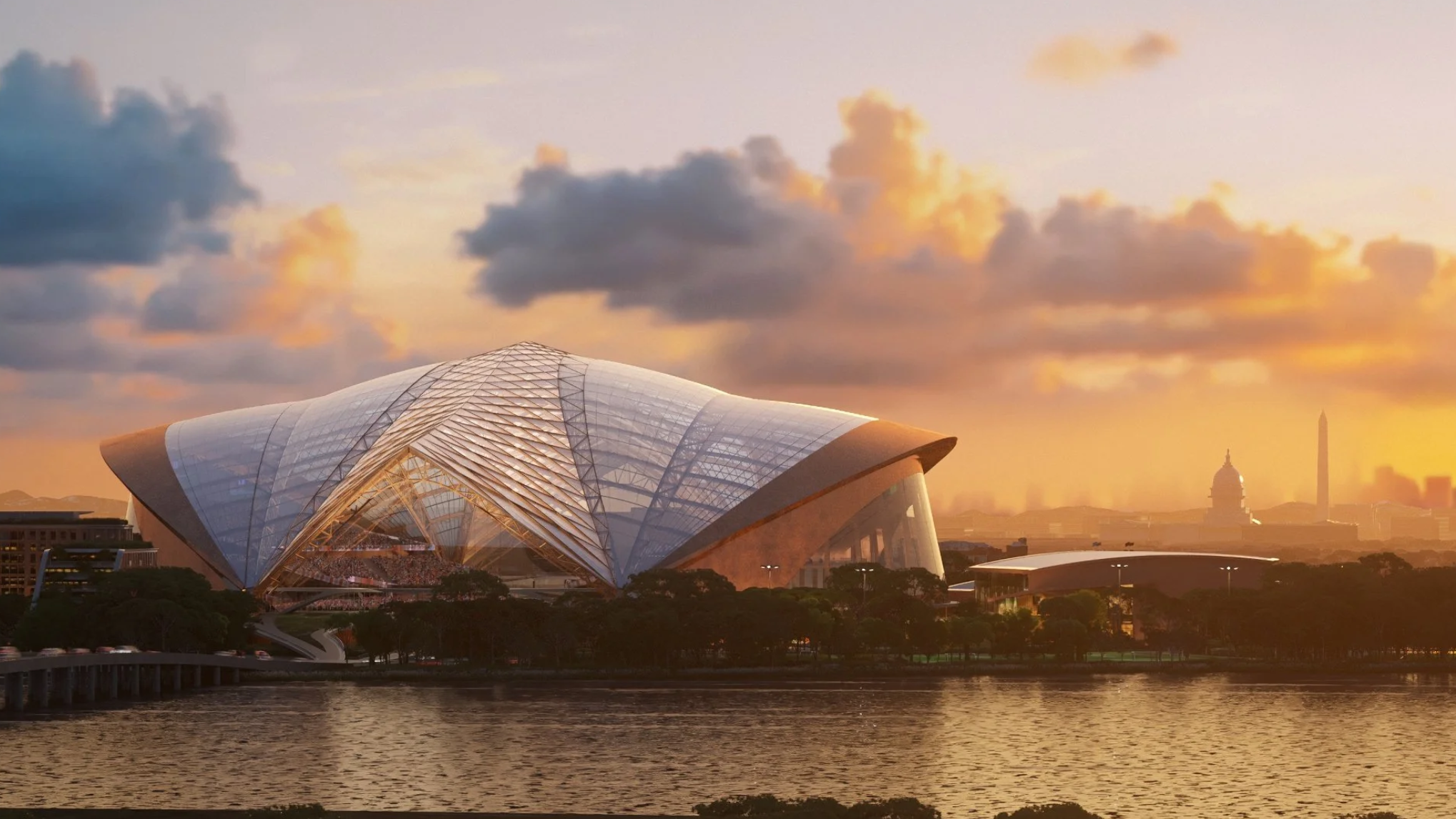
The future of RFK Stadium is moving closer to reality after September 17, when D.C. Council voted again in favor of the RFK stadium redevelopment legislation. Redeveloping RFK is not just about building a stadium; it’s about creating a 21st-century destination that reflects the values and ambitions of the District and its residents. The Board of Trade is proud to be a leading voice in shaping that future, and we will remain engaged as the process advances.  (Statement: D.C. Council final vote for redevelopment funding on Sept. 17)

This project represents more than bricks and mortar; it is a chance to reshape an iconic site into a destination that drives economic growth, improves connectivity, and enhances the quality of life across the District and region. The project will create 14,000 construction jobs and 2,000 permanent jobs, generating $4 billion in tax revenue and more than $15.6 billion in direct spending over 30 years. Spanning about 180 acres of the former RFK Stadium site, the campus will transform today’s underused riverfront parcel into a vibrant mixed-use neighborhood.


This RFK Stadium stie redesign rendering is provided by KATO. See more here: https://www.rfknewstadium.com/


Earlier this year, the Board of Trade, city officials, and other local and regional groups testified before the D.C. Council in support of legislation that would unlock the potential of the RFK site and allow the city to move forward with a transformative vision, including: 

  • Letters of support were submitted to the D.C. Council outlining the opportunity to transform the District through a 65,000-seat roofed stadium for the Washington Commanders, designed to host not only football but also up to 200 annual events, including concerts and cultural gatherings.
  • In initial testimony before the D.C. Council, the case was made for legislation to unlock the potential of the RFK site and advance a broader vision for redevelopment. The testimony highlighted priorities such as strong transit connections, economic competitiveness, and community benefits. Specific elements included 6,000 new housing units (with at least 30% affordable), hotel rooms, new restaurants and retail, parking, an $89 million youth sportsplex, activation of the Fields at RFK, expanded green space, riverfront access, and walkable parks. (read our testimony here 
  • Subsequent testimony supported the RFK Stadium funding bill and underscored the importance of timely action to prioritize infrastructure, affordable housing, and adherence to construction timelines. (read our second testimony here) 
  • In addition, Mayor Bowser and community leaders convened engagement events, including a rally at the Wilson Building and a stakeholder event hosted by the Mayor, to highlight the redevelopment’s potential business opportunities. These gatherings drew attention to the broad community and economic impacts of this once-in-a-generation project.

Throughout the entire process, we have been in ongoing dialogue with the Washington Commanders to ensure that the project balances economic competitiveness with community needs — from workforce opportunities to improved transit access and mixed-use development that serves residents and businesses alike. With upgraded utilities, new roadways, improved transit access, and vibrant hospitality districts like the Riverfront and Plaza, the project will revitalize the site and surrounding neighborhoods. It will serve as a community anchor by blending housing, commerce, recreation, and entertainment into a powerful driver of growth for the District.

The Board of Trade will continue to champion this redevelopment as an engine of growth, connectivity, and opportunity for the entire region. We look forward to continuing conversations with the Commanders, community leaders, and stakeholders to unlock all that the RFK site has to offer.  

Learn more about how we engage with leaders at the federal, state, and local levels to ensure that the voices of Greater Washington’s business community are heard: https://www.bot.org/business-policy-greater-washington-dc/

Both man and machine are causing big changes in the Washington, D.C. region | WTOP

This content is sponsored by EagleBank and was originally published on WTOP. 

“Our region is undergoing a fairly significant transformation,” said Jack McDougle, the President and CEO of the Greater Washington Board of Trade, “probably the greatest transformation it’s ever seen.”

The reasons: major shifts in the federal government and the rise of artificial intelligence.

However, McDougle believes government restructuring actually presents an opportunity.

“For the longest time, our region has aspired to develop an economy that wasn’t quite as reliant on the federal government… this is accelerating it.”

“Our region comes to this with a significant resource base,” he said. That includes a highly skilled workforce, a significant university network and other types of research and development activities.

McDougle adds that this region boasts “the third most productive biotech corridor in the country.”

“We’re the fifth largest recipient of venture capital money in the country,” he said.

Further, he states the region will still have a strong presence in the hospitality and tourism area. “If you think about our cultural assets in this region, and our monuments and our parks, that still is a significant draw for a global audience,” he said. “It still will be a pretty broad-based economy.”

Finally, some federal employees are leaving their jobs and starting their own businesses, “which is pretty interesting,” he said.

While those changes are the largely end result of political actions, there are also concerns that A.I. could affect the local economy.

Artificial intelligence itself may not be coming for your job, McDougle said, “but somebody who is equipped with artificial intelligence will be.”

“So it’s in everyone’s interest to figure out how it is that they will work with, use and learn to coexist with artificial intelligence.”

The region’s many small businesses could stand to benefit from A.I.

For businesses grappling with talent issues, “utilizing artificial intelligence now can make them more effective, quicker, (and) more productive with their current staff,” McDougle said.

“The challenge, though, is how do they really adopt those tools? How do they use those tools, and how do they invest in them?”

Despite all the upheaval, McDougle describes himself as optimistic about the region, long-term, because of the resources we have.

“And when you think about…deploying those resources more effectively, we’d be untouchable.”

Those resources include not only access to the federal government, but also “something that’s different about our workforce.”

“Our workforce is a little different because it’s mission driven,” McDougle said. “It’s civic-oriented.”

“And so if we can get out in front on the policy side, the regulatory side, the technology side, the capital and investment side, that’s a really unique combination that no one else has.”

Celebrating Executive Assistants with Connection and Conversation


The Board of Trade had the pleasure of convening a group of executive assistants for an appreciation lunch at Old Ebbitt Grill in downtown Washington, D.C., on August 20. The gathering offered a rare opportunity for EAs — so often working diligently behind the scenes — to step out from behind the computer, connect with peers, and share experiences in a supportive and energizing setting. 

As part of our professional development roundtable series, the event was designed not only to celebrate executive assistants but also to equip them with tools that support their work. Our featured speaker, Ernie Davis, Personal & Executive L&B Coach, led a thoughtful session on Myers-Briggs Strategy for Managing, Influencing, & Understanding Difficult People. With over 60 million people worldwide having taken the Myers-Briggs personality test, the discussion highlighted how understanding personality preferences can strengthen communication and relationships in both professional and personal contexts. 

Many in the group were surprised to see their personality type shift from when they last took the test, which sparked an engaging conversation about how we evolve over time. The group also reflected on the qualities they share — being organized, effective communicators, and highly observant — while noting that individuals who don’t fit the “traditional” mold of extroverted or fact-driven can bring equally valuable strengths. 

Ernie encouraged participants to lean into their natural preferences and show up authentically. “If you show up to work every day outside of who you are, that’s a fast track to burnout,” he reminded the group. His message resonated deeply, reinforcing the importance of authenticity not just in leadership, but in every role that helps an organization thrive. 

The energy in the room was infectious. Attendees lingered after the session, continuing conversations and sharing stories—leaving the lunch both appreciated and better equipped as they head into a busy fall season. Beyond the camaraderie, the session offered a practical reminder of how professional development can directly support executive assistants in their critical roles: stronger communication, sharper self-awareness, and strategies to reduce burnout while amplifying their impact on the teams they support. 

We are grateful to every executive assistant for the hard work, resilience, and dedication they bring to their roles each day. We look forward to reconvening this group soon and continuing to build this community through future gatherings in our professional development roundtable series. 


Learn More and Register for Annual Meeting

Learn More and Register for Fall Business Classic

Why culture, lifestyle, and place matter to Greater Washington’s economic future

From tech talent and research strength to public purpose and inclusive growth, our Greater Washington region has the ingredients to lead as a global innovation powerhouse. But bold coordination is needed.

Our President & CEO, Jack McDougle, shares in his latest Washington Business Journal viewpoint that we must transform into an innovation-led economy, elevating cultural strengths key to shaping the future of our region. From Smithsonian museums to vibrant food halls and miles of urban trails, the region’s quality-of-life assets are powerful drivers of economic growth. They attract talent, foster belonging, and create the “vibe” that makes people choose to stay, build, and invest here.

READ THE FULL ARTICLE HERE

ABOUT THE BOARD OF TRADE

The Greater Washington Board of Trade, founded in 1889, is the region’s premier non-partisan business organization representing industry, nonprofits, universities, and government agencies. The Board of Trade addresses complex and always-evolving business concerns that stretch across the District of Columbia, suburban Maryland and Northern Virginia, with a priority focus on inclusive economic growth, improving the business climate, and enhancing the region’s economic competitiveness.  

READ MORE POLICY ISSUES AND TOPICS THE BOARD OF TRADE IS FOLLOWING

Testimony to DC Council: Board of Trade Supports Bill for RFK Site Redevelopment

Update: The Washington Commanders secured a major milestone in the effort to bring professional football back to the District. On August 1st, the D.C. Council voted 9–3 in favor of legislation that would pave the way for the redevelopment of the RFK Stadium site, thus marking a pivotal first step in transforming one of the city’s most iconic but long-dormant properties into a vibrant, multi-use destination. This vote signals renewed momentum for a project that has implications far beyond the stadium walls. At its core, the redevelopment of the RFK site represents a commitment to regionalism with an investment in shared assets that generate economic activity, draw visitors, and enhance quality of life across jurisdictional lines.

About this Testimony:

The Board of Trade testified a second time before the D.C. Council and sent a letter to Council Chairman Phil Mendelson in support of Mayor Muriel Bowser’s proposal to bring the Washington Commanders back to the District as part of a larger mixed-use redevelopment of the RFK site. We again highlighted the opportunity not just as a sports project, but as a catalyst for long-term economic growth, fiscal strength, and regional competitiveness.

Previous Testimony on RFK Site Redevelopment to D.C. Council

Testimony Recording from DC Council Meeting: 

Letter to Chairman Mendelson:

DOWNLOAD HERE

July 31, 2025

Good Morning, Chairman Mendelson and members of the Council. 

Thank you for the opportunity to speak on behalf of the Greater Washington Board of Trade. Founded in 1889, our nonpartisan organization represents hundreds of employers across the Greater Washington region—spanning industry, nonprofits, universities, and government agencies. We’re committed to advancing inclusive economic growth and strengthening the city’s competitive position. 

My name is Daniel Flores, and I’m here to express our strong support for the Mayor’s proposal to bring the Washington Commanders back to the District through a new stadium and mixed use development at the old RFK stadium site. This moment is about far more than building a stadium—it’s about unlocking the full potential of a high-impact site to become a bold, mixed-use destination that embodies the future of urban development. With smart, forward-looking planning, this space can be transformed into a thriving hub for housing, small businesses, transit, recreation, and cultural activity.  

As the District stands at a critical crossroads, we must pursue ambitious solutions that don’t just maintain the status quo but reshape it. This is a once-in-a-generation opportunity to catalyze long-term prosperity, create new jobs, and strengthen our city’s position as a vibrant, resilient, and equitable capital for decades to come. With a record $2.7 billion private investment—the largest in D.C.’s history—augmented by thoughtfully designed public infrastructure, this project can: 

  • Support over 30,000 jobs and generate $4 billion in new tax revenue and unlock billions more in direct spending.  
  • Revitalize the RFK campus with new housing including 5,000-6,000 new homes for more than 10,000 residents across the campus with at least 30% affordable, maintaining The Fields at RFK and investing $89 million to construct a new state-of-the-art youth sports complex, new parks, retail, recreation, hospitality, and more.  
  • Generate long-term economic diversification through the develop of an inclusive, vibrant neighborhood that serves expanded opportunities for residents, supports small businesses, and boosts regional tourism.  

We recognize the District faces fiscal constraints. That’s precisely why this investment is critical—it leverages private capital to grow the tax base and secure the city’s long-term financial stability, and we have seen the successful transformative power of these kind of investments before. While we have seen several successful projects around the city, including the redevelopments of Nationals Park, Audi Field, and The Wharf—we believe the RFK project has the ability to surpass many of these incredibly successful projects we have already seen throughout the city.  

Time, however, is not on our side. Delays in legislative action or infrastructure investment threaten to derail the project timeline. Missing critical benchmarks this year could push back the stadium’s opening beyond the 2030 NFL season—and with that delay, the District could forfeit an estimated $750 million in lost economic impact from major events like the 2031 FIFA Women’s World Cup, the Rugby World Cup, a full season of Commanders home games, and large-scale concerts. This is more than an opportunity cost—it’s a concrete loss to city revenues, jobs, and visibility on the global stage. Additionally, failing to act could invite the opportunity for federal action to interfere with this redevelopment as it can be a signature achievement for the District—one that honors its past, serves its people, and inspires confidence in its future. 

Let’s be clear: this is more than a stadium project. It’s a transformative vision for over 190 acres of largely dormant land in the heart of our capital city. It’s a chance to create an inclusive, vibrant neighborhood that reflects D.C.’s values and positions us as a national leader in urban renewal.  

On behalf of the Board of Trade, I urge the Council to act with urgency and conviction. The pieces are in place and now is the moment to move forward to deliver not just 190 acres of largely dormant land in the core of the district, but a project that will shape the city’s future for generations to come. 

Thank you for your time, and for your leadership on this critical issue. 

Sincerely, 

Daniel Flores

Vice President of Regional Engagement 

Greater Washington Board of Trade

GWBOT July 2025 Newsletter

The Board of Trade remains focused on advancing the priorities that matter most to Greater Washington. This July newsletter shows a variety of engagements we have had across Greater Washington with members and public officials, while also showcasing meaningful updates on priorities we are following in the region. We also have a variety of member news updates that showcase regional collaboration!

Read our July 2025 Newsletter here

So Much Power, No Platform: Executive Leaders Discuss Fixing the Disconnect in Regional Progress

The Capital Region stands at a pivotal crossroads. We have all the assets we need to be one of the world’s most competitive, inclusive, and resilient economic hubs — yet we lack the collective operating system to truly activate them.

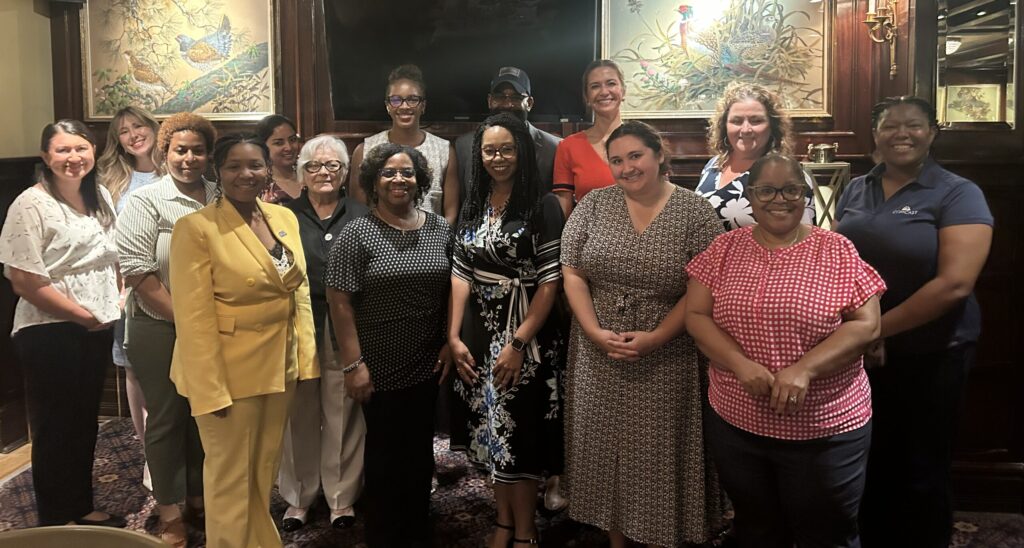
At the Board of Trade’s recent Executive Leadership Roundtable in partnership with Comcast, leaders across business, education, and civic sectors agreed: Our region is not short on resources. We are rich in capital, talent, innovation, and infrastructure, but these elements operate in silos.

We heard a striking metaphor: “Our region is an app store without an operating system.” We have incredible individual capabilities, but they are not plugged into a cohesive system that drives shared outcomes.

Participants emphasized that to transform, we must:

  • Move from a zero-sum mindset to shared growth.
  • Align educational and workforce systems with the region’s evolving economic identity.
  • Streamline regulatory frameworks to support speed and innovation.
  • Shift from process-driven philanthropy to outcome-focused investment.


Inclusion remains a central imperative. With deep disparities in literacy, income, and access to opportunity — for example, 47% of adults in Ward 7 read at a first-grade level — we cannot build a prosperous region without confronting these foundational issues.

As one participant noted, “We have the assets of a Silicon Valley, but not the mindset.” Changing this requires collective vision and action across public and private sectors, underpinned by bold leadership.

Participants explored forward-looking strategies to ensure the Capital Region remains competitive, resilient, and inclusive. Insights from this session will help shape ongoing regional dialogues and inform the collaborative work of the Potomac Conference — a platform designed to synthesize diverse perspectives and surface shared priorities across jurisdictions and sectors.

The time to act is now. We can no longer afford to admire our challenges — we must design, build, and sustain the systems that will define our shared future.

Thank you to Comcast and its government affairs executive, Misty Allen, for partnering and helping us facilitate this discussion. Learn more about the work of Comcast’s Project UP and how this initiative is helping expand internet access around Greater Washington and the United States: https://bit.ly/4lOoMQU

A new identity for Greater Washington: From policy powerhouse to innovation engine | WBJ Viewpoint

From tech talent and research strength to public purpose and inclusive growth, our Greater Washington region has the ingredients to lead as a global innovation powerhouse. But bold coordination is needed.

In his Washington Business Journal viewpoint, our President & CEO, Jack McDougle, highlights the region’s unique advantages—policy expertise, technical talent, and public purpose—and outlines six strategic priorities to turn ambition into impact.

READ THE FULL ARTICLE HERE

ABOUT THE BOARD OF TRADE

The Greater Washington Board of Trade, founded in 1889, is the region’s premier non-partisan business organization representing industry, nonprofits, universities, and government agencies. The Board of Trade addresses complex and always-evolving business concerns that stretch across the District of Columbia, suburban Maryland and Northern Virginia, with a priority focus on inclusive economic growth, improving the business climate, and enhancing the region’s economic competitiveness.  

READ MORE POLICY ISSUES AND TOPICS THE BOARD OF TRADE IS FOLLOWING

Featured Members