Councilmember Brooke Pinto on Public Safety, Economic Growth, and D.C.’s Federal Relationship

Councilmember Brooke Pinto on Public Safety, Economic Growth, and D.C.’s Federal Relationship

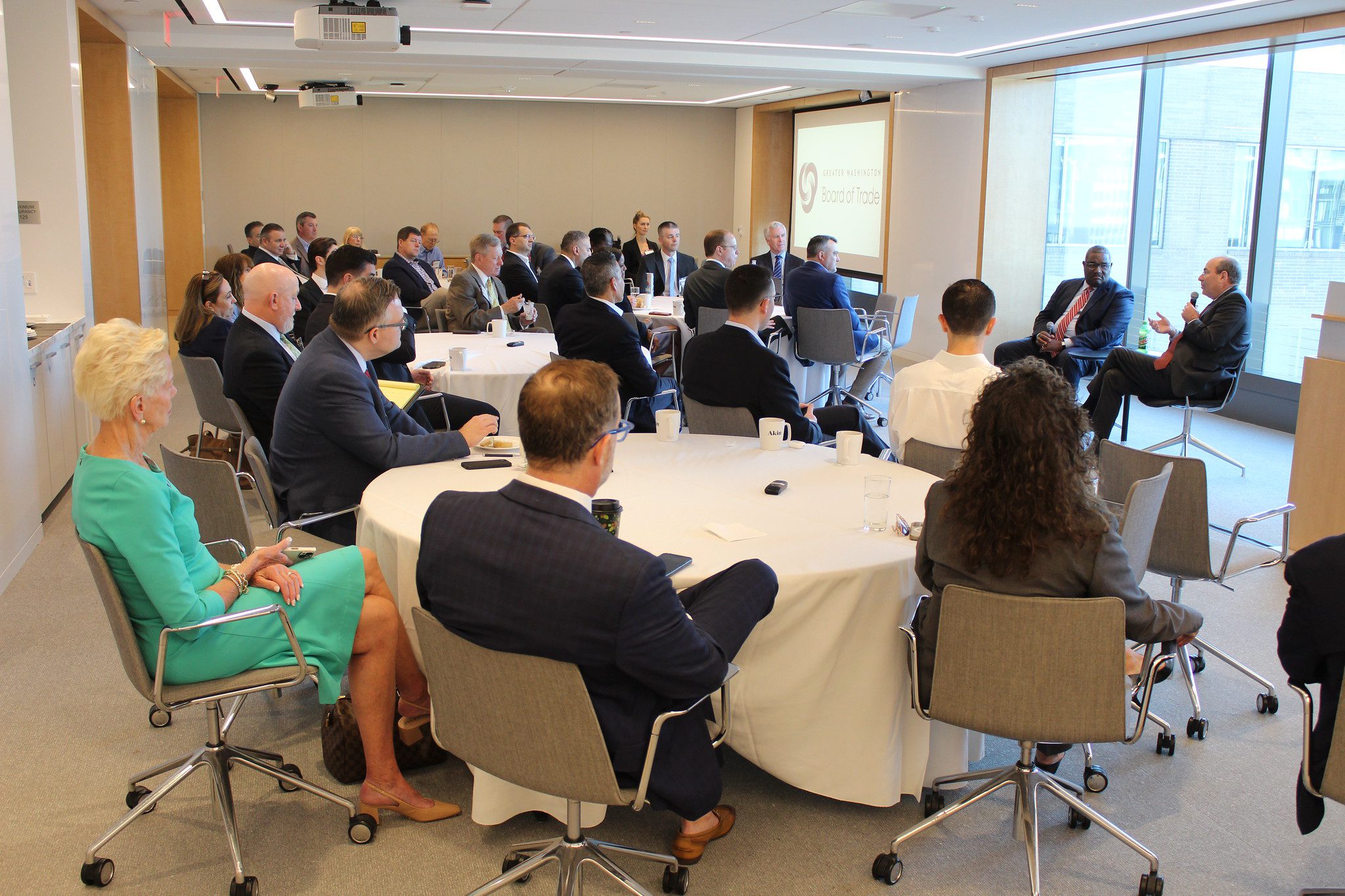
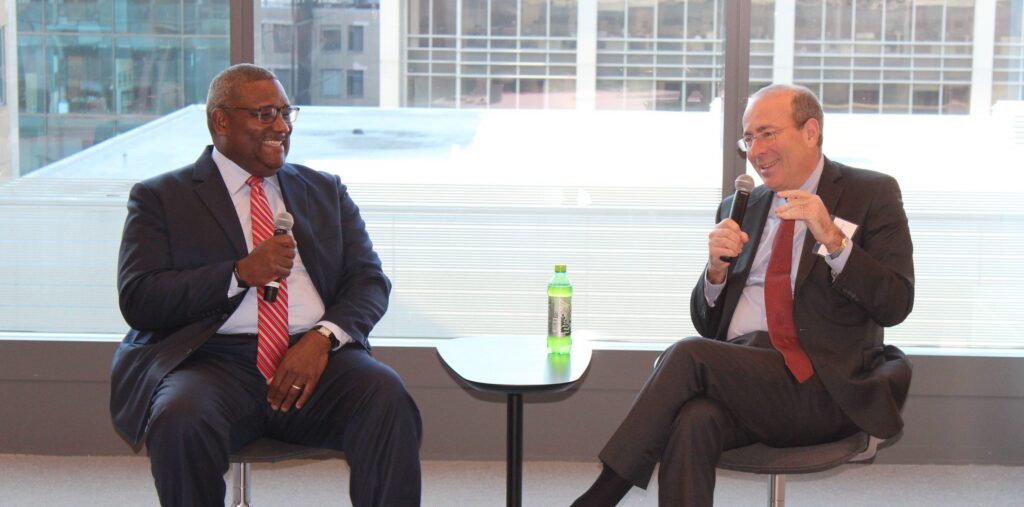
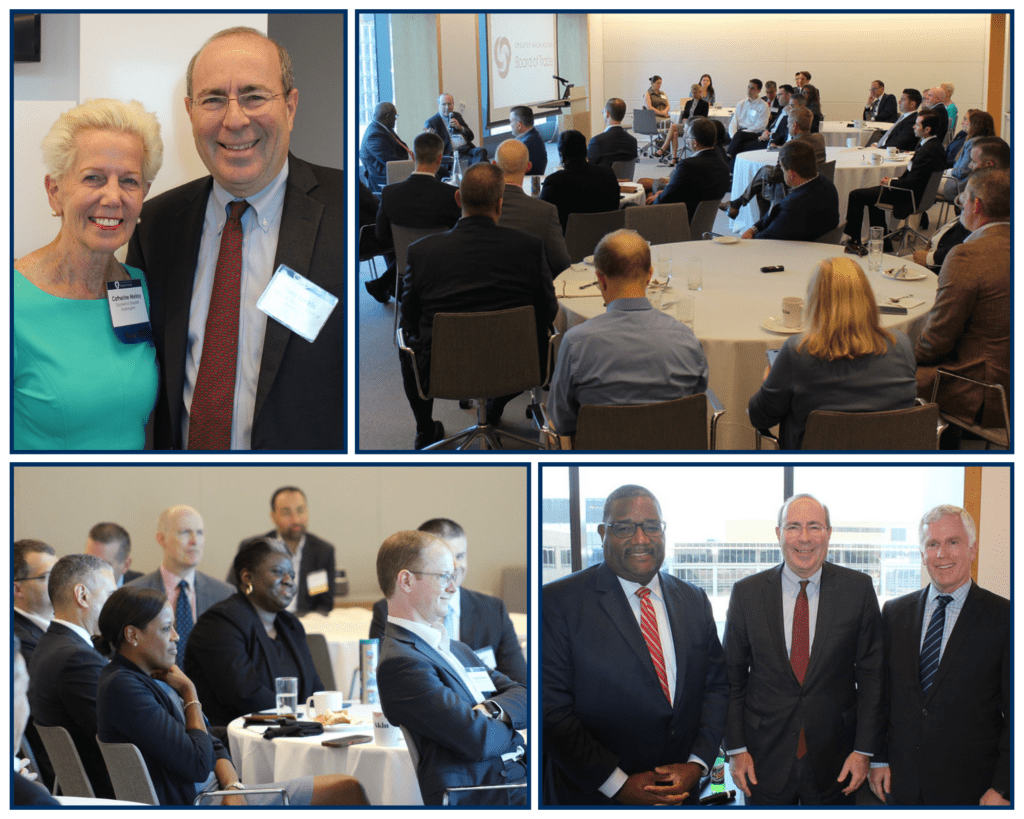
As part of the Greater Washington Board of Trade’s DC Election Watch series, members gathered for a candid conversation with Councilmember Brooke Pinto, who is running to represent the District in Congress.

For D.C., the congressional delegate seat has always carried unusual weight. Without full voting representation in Congress, the District relies on its delegate to help protect local priorities, build federal relationships, defend home rule, and pursue opportunities tied to the city’s unique role as the nation’s capital.

D.C. cannot afford to treat this seat as ceremonial. At a time when Congress continues to influence the District’s budget authority, public safety laws, courts, federal land use, Medicaid funding, and local autonomy, this election comes at a pivotal moment.

Pinto, who represents Ward 2 and chairs the D.C. Council’s Committee on the Judiciary and Public Safety, made the case for a pragmatic, results-focused approach to the District’s next chapter.

“We can’t keep doing things the same way we’ve been doing it,” Pinto said. “Our city is in a very interesting moment.”

Key Takeaways from the Discussion

  • Pinto connected the delegate role to D.C.’s ability to protect itself and compete for the future. She described federal engagement as essential to defending home rule, protecting local decision-making, and pursuing opportunities around public safety, housing, land use, and economic development.
  • She framed public safety as foundational. As Judiciary chair, Pinto helped lead Secure D.C. and said the city must remain focused on prevention, accountability, and better coordination across government.
  • She argued that growth and equity are connected. Pinto said business growth, housing production, and a stable tax base are part of how D.C. funds schools, health care, public safety, housing, and the social safety net.
  • She called for a more predictable and competitive business climate. Pinto said D.C. must reduce barriers, avoid policies that weaken competitiveness, and be more intentional about attracting employers, residents, investment, and new industries.
  • She emphasized fiscal responsibility as part of sustaining public priorities. Pinto opposed the business activity tax and argued that D.C. needs durable revenue to support the services residents rely on.

Below are a few highlights from the conversation.

Q&A Highlights

Why is the congressional delegate role especially important right now?

Pinto said the District’s relationship with Congress has become more urgent, particularly as federal lawmakers have considered proposals affecting D.C.’s budget, public safety laws, Medicaid funding, local autonomy, and courts.

She said the delegate role requires daily relationship-building on the Hill, both to push back against harmful interference and to identify opportunities for federal partnership.

“What started as a defensive posture of, I need to go there to protect the District, remains true,” Pinto said. “But I also think there are so many exciting opportunities for the District if we lean in and get this relationship right.”

Pinto pointed to opportunities around federal investment, underused GSA buildings, National Park Service land, opportunity zones, housing, and economic development.

How would she approach working with Congress while protecting D.C.’s autonomy?

Pinto said D.C.’s representative must be able to work with members of both parties while remaining clear about the District’s interests and autonomy.

She described federal engagement not as a concession on home rule, but as a practical necessity for protecting the District’s budget, laws, courts, and long-term interests.

That could include pushing back against harmful federal intervention, advancing judicial nominations, strengthening public safety infrastructure, unlocking underused federal assets, supporting housing, and bringing new investment to the nation’s capital.

Pinto said success in the delegate role will not always mean public credit. Sometimes, she said, it will mean securing wins behind the scenes.

“If it supports our residents and our businesses, my name doesn’t need to be anywhere on it,” she said.

How does Pinto view the moment D.C. is in now?

Pinto described her time on the Council in phases: pandemic response, recovery, public safety, and now what she sees as a pivot toward growth.

She said the District cannot remain overly reliant on the federal government and must be more assertive about attracting employers, residents, entrepreneurs, new industries, and investment.

“The number one thing that businesses want is predictability,” Pinto said. “And we don’t have a lot of predictability in our market right now.”

For Pinto, that means D.C. must become easier to live in, work in, visit, and do business in.

“If we get it right, we’ll look back 10 years from now and say that was the moment in 2026 that we pivoted and stopped being shy about the fact that we are the best city in the world,” she said.

How does public safety fit into D.C.’s future?

Pinto described 2023 as a defining year for public safety and said crime shaped nearly every conversation she had with residents, employers, and community leaders.

As chair of the Judiciary and Public Safety Committee, Pinto helped lead Secure D.C., a major legislative package focused on prevention, accountability, and government coordination.

She said public safety must remain a top priority because the city cannot meet its broader goals if residents, workers, visitors, and businesses do not feel safe.

“Every person deserves to be safe. Period,” Pinto said.

How does she connect economic growth with support for residents?

One of Pinto’s clearest points was that D.C. should not treat economic growth and support for vulnerable residents as competing priorities.

Instead, she argued that the District’s ability to fund schools, housing, public safety, health care, and the social safety net depends on a strong and stable tax base.

“In order to support the people who are most vulnerable, excellent education, safety, and the social safety net that we are so proud of in D.C., we have to ensure that there’s a funding stream to do so,” Pinto said.

For Pinto, business growth, housing production, and competitiveness are not separate from equity. They are part of how the city sustains the services and opportunities residents rely on.

What did she say about taxes and competitiveness?

Asked about proposals such as a business activity tax, Pinto was direct.

“I do not support the business activity tax,” she said.

She said D.C. must be realistic about competition from other markets and the choices residents, employers, and investors can make when costs rise or the policy environment becomes less predictable.

Pinto framed the issue as one of fiscal sustainability: D.C. needs the revenue to invest in public priorities, and that requires policies that help retain and grow the people, businesses, and jobs that generate that revenue.

What policy priorities should business and civic leaders watch?

Pinto highlighted two major legislative packages.

The first, Prosper D.C., includes proposals focused on business growth, headquarters attraction, hiring D.C. residents, downtown conversions, university partnerships, tech innovation, and paid work opportunities for young people.

The second, the HOMES Act, focuses on making it easier and more affordable to build housing in the District. Pinto said her broader housing agenda also includes federal policy changes, including revisiting constraints that limit housing production and making better use of vacant office space.

Pinto encouraged Board of Trade members to engage early and constructively on both efforts.

For Board of Trade members, the conversation was a reminder that the delegate race is not ceremonial. It is about who can help protect D.C.’s autonomy, strengthen federal relationships, compete for investment, and advance the conditions that allow residents, businesses, and neighborhoods to thrive.

More Regional Policy Discussion

Councilmember McDuffie Shares His Vision for Washington DC

A New Era of Collaboration: We Need the Big Three to Finally Bring the DMV Together | WBJ Viewpoint

Curiosity Is Competitive Advantage | WBJ Viewpoint

Curiosity is more than a mindset. It is a competitive advantage.

In his latest Washington Business Journal Viewpoint column, Jack McDougle, President & CEO of the Greater Washington Board of Trade, reflects on how moments of exploration, from the moon landing to the Artemis mission, show what is possible when curiosity is sustained through investment, talent, risk-taking, and collaboration.

For Greater Washington, that lesson is especially important. As the region continues to shift from a federal-centered economy to a more diversified, innovation-driven one, McDougle argues that our greatest assets, including world-class research institutions, leading universities, mission-driven talent, federal leadership, and a growing technology sector, must be better connected and supported across D.C., Maryland, and Virginia.

The column makes the case for reducing friction for businesses, strengthening access to capital, investing in research and commercialization, supporting reliable energy infrastructure, and building a talent pipeline that prepares people to solve real-world problems. With the right commitment, Greater Washington can turn curiosity into action and compete more effectively in the next era of innovation.

READ THE FULL ARTICLE HERE

ABOUT THE BOARD OF TRADE

The Greater Washington Board of Trade, founded in 1889, is the region’s premier non-partisan business organization representing industry, nonprofits, universities, and government agencies. The Board of Trade addresses complex and always-evolving business concerns that stretch across the District of Columbia, suburban Maryland, and Northern Virginia, with a priority focus on inclusive economic growth, improving the business climate, and enhancing the region’s economic competitiveness.  

READ MORE POLICY ISSUES AND TOPICS THE BOARD OF TRADE IS FOLLOWING

Councilmember McDuffie Shares His Vision for Washington DC

As part of the Greater Washington Board of Trade’s DC Election Watch series, presented in partnership with Holland & Knight, Board of Trade members gathered in downtown Washington for a candid conversation with mayoral candidate Kenyan McDuffie on the future of the District’s economy, business climate, and long-term competitiveness. The discussion was moderated by Janene Jackson, Executive Partner at Holland & Knight, and brought together regional leaders from across business, nonprofit, education, transportation, finance, and civic sectors. 

Throughout the discussion, McDuffie returned to a consistent theme: D.C. is at an inflection point. In his view, the city’s next mayor must focus on growing the economy, improving the experience of doing business, building more housing, strengthening public confidence, and positioning the District to compete more effectively within the region. 

For Board of Trade members, several themes stood out clearly from the conversation: 

Key takeaways from the discussion 

  • The economy, housing, and public safety were his top issues. McDuffie framed economic growth as the foundation for job creation, public safety, housing, and the city’s long-term fiscal health.  
  • He emphasized faster, more responsive government. He repeatedly pointed to permitting delays, regulatory burden, and slow agency processes as barriers to growth.  
  • He forcefully rejected the idea that pro-business and pro-equity are opposing values. He argued that stronger economic growth is what makes opportunity, public investment, and long-term inclusion possible.  
  • He tied housing production to competitiveness. His comments focused on the need to reduce the cost and time required to get housing built in the District.  
  • He treated Metro and regional mobility as essential to growth. He spoke about transportation not as a standalone issue, but as a core part of workforce access and economic performance. 

The conversation reflected many of the concerns business and civic leaders continue to raise about D.C.’s trajectory: whether the city can move faster, attract and retain investment, support employers already here, and create the conditions for long-term growth that benefits residents across all eight wards. 

VIEW MORE PHOTOS FROM THIS DISCUSSION

Below are a few highlights from the conversation. 

Q&A Highlights 

What is the most pressing issue facing the city? 

McDuffie pointed first to the economy. He described the District as being at a turning point and said the central question for city leadership is how to grow the economy in a way that creates jobs, attracts business and residents, strengthens the tax base, and expands opportunity without leaving people behind. 

How does he view the relationship between business growth and equity? 

This was one of McDuffie’s most emphatic moments of the discussion. He pushed back hard on the idea that being aligned with business means being any less committed to fairness, opportunity, or progressive outcomes. Instead, he argued that the District needs leadership that understands how economic growth and inclusive growth work together. 

He pointed to his own record to make that case, citing work on direct cash assistance, baby bonds, affordable housing, and police accountability, while also making clear that he has never seen support for business and support for residents as opposing ideas. In his view, the city cannot build pathways to opportunity, strengthen public safety, or sustain critical public investments without a stronger economy and a broader base of business activity. 

More than anywhere else in the conversation, this was the moment where McDuffie’s personal conviction came through. He spoke not just as a policymaker, but as someone shaped by his own experience growing up in the District and seeing firsthand what happens when economic opportunity is out of reach. 

What does D.C. need to do to attract and retain business? 

McDuffie’s answer centered less on marketing and more on execution. He argued that the city’s best strategy is to better support the businesses already here by reducing friction, lowering the cost of doing business, and restoring confidence that government can move at the speed required for investment. He pointed in particular to permitting, agency responsiveness, and the use of technology to create a more efficient and predictable business environment. 

Where is the biggest opportunity to improve the business experience? 

He returned to both mindset and mechanics. Beyond process reform, McDuffie said D.C. government has to operate with a clearer understanding that business growth, job creation, and public revenues are interconnected. In his view, improving the business climate starts with leadership setting the tone that the District wants employers to succeed here and then backing that up with real operational changes. 

How does housing fit into economic competitiveness? 

McDuffie made the case that D.C. must build more housing and make it easier to do so. He focused on the cost and time tied to approvals, the cumulative effect of regulations and litigation, and the need to unlock stalled projects more quickly. He also stressed that the city needs housing across income levels so that workers can live closer to where they work and employers can compete for talent. 

What role does regional collaboration play? 

Speaking to a Board of Trade audience that thinks regionally, McDuffie argued that D.C., Maryland, and Virginia should spend less time treating growth as a zero-sum competition and more time focusing on shared economic wins. He pointed to workforce, transportation, and major development opportunities as areas where regional collaboration could better support long-term prosperity. 

How did he describe transportation and Metro’s role? 

McDuffie was clear that Metro remains essential to the District’s future economic growth and to the strength of the regional economy. He connected investment in transit to access, affordability, workforce mobility, and downtown recovery, while also noting the importance of continued improvements to bus service and the broader experience of moving people into and through the city. 

What did he say about downtown? 

In audience discussion, McDuffie agreed that downtown recovery requires more than office-to-residential conversion alone. He pointed to the need for a broader revitalization strategy that includes targeted investment, tenant attraction, stronger street-level experience, and a realistic understanding of how important downtown office activity remains to the District’s fiscal future. 

The Board of Trade appreciates Councilmember McDuffie for joining this important conversation and sharing his perspective with our members. We also thank Holland & Knight for hosting the discussion and for their partnership in the DC Election Watch series, which is designed to give business and civic leaders the opportunity to hear directly from candidates about the future of the District. 

Greater Washington Must Build the Nation’s Leading K-12 Talent Pipeline

This Washington Business Journal Viewpoint by Greater Washington Board of Trade President & CEO Jack McDougle argues that reimagining K-12 education is essential to the region’s long-term economic competitiveness and national security. As Greater Washington works to diversify beyond its reliance on the federal government, McDougle says schools must stop preparing students for an outdated economy and instead equip students with the foundational skills needed for a fast-changing, innovation-driven workforce. The piece frames talent as a form of economic infrastructure and warns that the gap between classroom learning and real-world demands has become too wide to ignore.

A central theme of McDougle’s viewpoint is that career readiness must begin in K-12, not wait until college. He calls for a shift from a “college for all” mindset to a broader “careers for all” approach, emphasizing critical thinking, communication, collaboration, and creativity as essential competencies for every student. The article also highlights the growing importance of math, data literacy, and AI awareness, arguing that students should not just learn to use emerging technologies, but understand them well enough to apply them responsibly and creatively to real-world challenges.

As part of the Washington Business Journal Viewpoint series, the article concludes with a call for a regionwide strategy across D.C., Maryland, and Virginia to better connect classrooms with the needs of industry. McDougle points to experiential learning models like Odyssey of the Mind and Junior Achievement’s 3DE as examples of how students can build practical skills through problem-solving and teamwork. He then outlines three pillars for reform: introducing digital literacy early, involving employers in shaping curriculum, and advancing students based on demonstrated competency rather than seat time, positioning Greater Washington to build the nation’s strongest K-12 talent pipeline.

READ THE FULL ARTICLE HERE

ABOUT THE BOARD OF TRADE

The Greater Washington Board of Trade, founded in 1889, is the region’s premier non-partisan business organization representing industry, nonprofits, universities, and government agencies. The Board of Trade addresses complex and always-evolving business concerns that stretch across the District of Columbia, suburban Maryland, and Northern Virginia, with a priority focus on inclusive economic growth, improving the business climate, and enhancing the region’s economic competitiveness.  

READ MORE POLICY ISSUES AND TOPICS THE BOARD OF TRADE IS FOLLOWING

Keeping Greater Washington Connected Requires a New Mobility Mindset

Transportation in Greater Washington is no longer just about traffic, transit lines, or long-planned infrastructure projects. It is about whether the region can function in a way that supports growth, access, and competitiveness in a very different economic and workforce environment than the one our systems were originally built to serve. 

At our recent Executive Lunch, sponsored by United Airlines, leaders from across the region discussed what modern mobility really requires. The conversation moved quickly from airports and Metro to congestion, housing, workforce access, and regional coordination. Underneath it all was a broader question: are we designing a transportation system around how people actually live and work today? 

A Strong System Still Has User Experience Gaps 

There was broad recognition around the table that Greater Washington has major transportation assets. Leaders pointed to progress at Dulles International Airport, including United’s new concourse opening later this year and longer-term efforts to continue modernizing the airport experience. Participants also noted the value of transit access to both airports and the importance of major investments already underway across the region. 

But one of the clearest themes from the discussion was that mobility is defined not only by what gets built, but by whether the system works in real life for the people who rely on it. Again and again, the conversation returned to time, convenience, and connectivity. 

Even where transit exists, it is often neither seamless nor fast enough, nor connected enough, to compete with the flexibility people need in their daily lives. For many residents, especially outside the urban core, driving remains the only practical option. For others, transit works for some trips, but not for the cross-regional movement that increasingly defines work and life in Greater Washington. That gap between access on paper and usability in practice is where much of the region’s frustration now sits. 

Mobility Is Now a Workforce and Competitiveness Issue 

That challenge is bigger than commuting. When mobility systems are fragmented or inefficient, they affect where employers locate, whether workers return to offices, how students access internships and campuses, and how families manage time and opportunity. 

That was one of the strongest takeaways from the lunch: mobility is no longer a standalone transportation issue. It sits alongside housing, workforce, and economic competitiveness as part of the same regional challenge. Systems originally designed around traditional downtown commuting now have to support more varied movement across the region while also responding to changing work patterns, affordability pressures, and employer needs. 

What Is the Region Solving For? 

The conversation also surfaced a harder but important question: what, exactly, is Greater Washington trying to optimize for? 

Is the goal to reduce congestion? Supporting downtown recovery? Expanding transit access? Improving convenience? Advancing sustainability goals? Increasing economic competitiveness? In practice, the region is trying to do all of those things at once, often through systems built separately and still operating that way today. 

That fragmentation remains one of the region’s biggest obstacles. Transportation systems have been developed over time across jurisdictions and agencies, with priorities that do not always align. No single project will solve that. A rebuilt bridge, a new lane, or a transit extension can help, but the broader point raised around the table was that the region needs a more integrated approach, one that reflects how people move today, not how systems were designed decades ago. 

Keeping Greater Washington connected will require more than investment alone. It will require stronger coordination, a clearer focus on outcomes, and a willingness to think regionally about mobility, access, and growth. That is not a secondary concern. It is foundational to the region’s future. 

To learn more about how your organization can be involved in our energy initiative, reach out to [email protected] 

Insights from the Table is a membership-driven series of takeaways from our Executive Lunches, where local and regional leaders help inform the Board of Trade’s thinking and shape the work we do in a rapidly evolving environment. These conversations help surface the practical challenges, emerging priorities, and regional opportunities that matter most to Greater Washington’s future. 

More on Regional Mobility in Greater Washington

Expediting Delivery of the American Legion Memorial Bridge and I-495 & I-270 Managed Lane Project

National AV Safety Forum | Autonomous Vehicles Need a Clear Path Forward in Greater Washington

What We’re Hearing Across Greater Washington This Spring

There is a lot moving across the region right now. 

Not all of it fits neatly into one category, and not all of it is happening in one place. Some of the biggest conversations shaping Greater Washington this spring are unfolding in Richmond and Annapolis. Others are playing out in the District, through the D.C. mayoral race, the evolving council landscape, and ongoing debates about how the city grows, governs, and competes. 

Taken together, they point to something bigger: this is a moment when leadership, infrastructure, workforce, and policy decisions are converging in ways that will shape the region’s future. 

Transportation is one of the clearest examples. Metro funding remains a central regional priority, not simply as a transit issue, but as part of the broader question of how Greater Washington supports mobility, access, and long-term economic growth. At the same time, conversations around autonomous vehicles continue to test how quickly local policy can keep up with emerging technologies and changing transportation models. 

The American Legion Memorial Bridge is another example of how these issues are becoming more connected. What was once framed primarily as a roadway project now sits inside a broader conversation about corridor planning, congestion, transit, and multimodal investment. After the previous P3 arrangement ended, Maryland shifted toward a more expansive approach that includes transit, ridesharing, bicycle and pedestrian connections, and related improvements across the corridor. That broader lens is important, and it aligns with the kind of holistic, multimodal thinking the Board of Trade has continued to emphasize. 

Energy is also becoming harder to separate from growth and competitiveness. Discussions around grid reliability, energy demand, and data centers are no longer niche policy conversations. They are increasingly tied to business investment, infrastructure readiness, cost, and the region’s long-term ability to support innovation, retain growing companies, and create the conditions for business expansion. 

That broader competitiveness conversation also includes how the region supports business growth from within. Across Greater Washington, there is growing recognition that success is not only about attracting the next major employer. It is also about helping existing companies grow, scale, and stay here. That includes stronger support for firms that have moved beyond the startup stage but need better access to capital, operational guidance, and regional networks to reach the next level. 

The workforce conversation is shifting too. Leaders are looking beyond immediate hiring needs to think more broadly about federal workforce transitions, changing skill demands, and how technology is reshaping the labor market. That, in turn, is putting more attention on education, certifications, and better coordination between employers and workforce systems. 

Meanwhile, activity in the Virginia and Maryland General Assemblies continues to shape the landscape in real time. Budget debates, transportation funding questions, tax policy, workforce priorities, and business climate concerns are all part of that picture. These are state-level decisions, but their effects are regional. 

And then there is D.C., where the upcoming mayoral race and council contests carry implications that extend well beyond campaign politics. The mayoral race reflects competing ideas about affordability, growth, labor, and development, all at a time when the city is still working through downtown recovery, fiscal pressure, and broader economic transition. That matters for the District, but it also matters for the region as a whole. 

What ties all of these conversations together is not that they are identical. It is that they increasingly overlap. Mobility affects growth. Energy affects competitiveness. Workforce affects business planning and opportunity. Elections affect policy direction. State budget decisions affect regional systems. And for employers, institutions, and civic leaders across Greater Washington, those intersections matter. 

That is the Board of Trade’s role in this moment: helping bring together business, policy, and civic perspectives across jurisdictions so that members are not just reacting to individual headlines, but engaging with the bigger regional picture. 

Our spring calendar is taking shape around many of the issues already driving conversation across the region, from elections and legislative developments to energy, mobility, education, workforce, and business growth. These gatherings are not just opportunities to stay informed. They are opportunities to engage with peers, hear directly from decision-makers, and contribute to the conversations helping shape your business and Greater Washington’s future. 

More Content From Board of Trade

Autonomous Vehicles Need a Clear Path Forward in Greater Washington

America’s 250th Regional Resources and Festivities Guide

National AV Safety Forum | Autonomous Vehicles Need a Clear Path Forward in Greater Washington


U.S. Transportation Secretary Sean Duffy speaks to a large crowd assembled in downtown Washington, D.C., for USDOT’s National AV Safety Forum.


The conversation around autonomous vehicles has moved well beyond theory. At the U.S. Department of Transportation’s National AV Safety Forum on March 10, federal officials and industry leaders made clear that the question is no longer whether this technology is advancing. It is whether government can create a regulatory path that keeps safety at the center while allowing innovation to move from pilots to real-world deployment. The National Highway Traffic Safety Administration (NHTSA) used the forum to outline a federal automated vehicle framework focused on safety oversight, removing unnecessary regulatory barriers, and enabling commercial deployment.

That matters for Greater Washington. In cities such as Phoenix and Los Angeles, AV deployment is already moving beyond pilot programs, with expanding service, transit connections, and new operational investments showing what real-world integration can look like. Yet Greater Washington still does not have a clear regional path for fully autonomous vehicle deployment. 

Federal momentum is real, but local policy still determines what happens on our streets 

One of the clearest messages from the forum was that federal leadership can help modernize outdated rules, set clearer standards, and build public confidence in autonomous vehicle technology, especially because many existing safety rules were written for vehicles built around a human driver. NHTSA’s framework reflects that reality. 

But AV deployment will not be decided at the federal level alone. In Greater Washington, state law, local permitting, roadway ownership, emergency response protocols, and agency coordination all shape whether companies can move from testing to service. 

Today, D.C.’s legal framework remains limited to testing. In Maryland, SB909 would establish statewide standards for fully autonomous vehicles, but it remains pending. In Virginia, SB670 would create a framework for commercial fully autonomous vehicles, yet lawmakers delayed action and may revisit it next year. 

If federal officials are signaling that the U.S. needs clearer rules of the road, Greater Washington cannot answer with a patchwork of delays, half-steps, and conflicting local standards. 

NHTSA administrator Jonathan Morrison speaks with representatives from Waymoe, ZOOX, and Auroro during the USDOT National AV Safety Forum.

The DMV’s fragmentation is not just inconvenient. It is a competitive disadvantage 

This region already knows the cost of fragmentation. Transportation, land use, and infrastructure decisions are too often made jurisdiction by jurisdiction, even when the economy functions as one region. Autonomous vehicle policy is now running into that same problem. A technology that may function seamlessly in one jurisdiction becomes harder to scale if every border introduces a different set of rules, approvals, or operating conditions. 

Meanwhile, the industry is not standing still. Waymo is already operating at significant scale nationally, with more than 400,000 weekly rides and nearly 200 million fully autonomous miles on public roads. In Phoenix, the company has continued expanding service and investing in U.S. fleet manufacturing. In Los Angeles, it has tested ways to connect AV service with public transit trips. Greater Washington, by contrast, is still working through the rules needed to move beyond testing. 

If this region wants to attract investment, support innovation, and shape how these systems fit into transit and regional mobility, it cannot remain a market where companies can test but not meaningfully deploy. 

This should not be a debate about one company. It should be a debate about the right framework 

The Board of Trade’s role is not to pick winners. It is to help shape the policy environment the region needs to compete. 

That means being clear-eyed about both opportunity and responsibility. AV policy should be safety-first, with transparency, clear interaction protocols for first responders and law enforcement, strong data and cybersecurity expectations, and coordination with existing transportation systems. Maryland’s pending bill offers one example of what that framework can include, from insurance and first responder interaction plans to compliance with federal safety standards and data privacy protections. 

But getting the framework right is not only about managing risk. It is also about unlocking real public benefits. Autonomous vehicles can help expand mobility for seniors and people with disabilities, support first-mile/last-mile connections to transit, and reduce dangerous human driving behaviors that continue to contribute to roadway deaths. At the forum, NHTSA acknowledged AVs’ potential safety and mobility benefits while making clear that enforcement and oversight will remain essential. 

For Greater Washington, this is not a theoretical debate about the future. It is a practical policy question about how we modernize our transportation system to make the region more connected, more accessible, and more economically competitive. 

USDOT Secretary Sean Duff discusses autonomous vehicle safety with Waymo at USDOT National AV Safety Forum.

A clear regional path is within reach 

The path forward should be straightforward. D.C., Maryland, and Virginia need to move toward a more aligned framework for testing, deployment, and commercial operation. Local governments and transportation agencies should treat AVs as part of a broader mobility strategy, especially where they can complement transit through first-mile/last-mile connections, station access, and congestion relief. And the region needs to stop confusing caution with inaction. Safety oversight and public trust are essential, but endless delay is not a strategy. 

The federal government has signaled that it wants to modernize the regulatory conversation around autonomous vehicles. Greater Washington now has an opportunity to lead with a framework that reflects both innovation and responsibility. 

The Board of Trade will remain actively engaged in that work, bringing together business, government, and transportation stakeholders to support a more integrated, regionally aligned approach to autonomous vehicle policy that prioritizes safety, builds public trust, and recognizes AVs as one part of a larger system for improving mobility, access, and regional competitiveness. 

Check out more of where our organization is focused in the region on our Policy & Priorities page.

Engage Further on Transportation in Greater Washington

Connection Through Innovation: Highlights from the 2025 Capital Region Transportation Forum

Letter of Support: Fully Autonomous Vehicle Legislation (SB670) in Virginia

Letter of Support: Fully Autonomous Vehicle Legislation (SB670) in Virginia

Update: This proposed comprehensive framework bill for commercial autonomous vehicles in the state has been postponed for a second year. The Board of Trade will continue to support legislation that brings safe and logical next-generation mobility solutions to Greater Washington. 

About this Letter of Support: 

In its letter of support for SB670, the Greater Washington Board of Trade urges Virginia lawmakers to advance a clear regulatory framework for autonomous vehicles. The Board argues that the bill will help position Virginia as a leader in next-generation mobility by supporting innovation, economic growth, public safety, and long-term regional competitiveness.

Submitted Letter of Support:

DOWNLOAD HERE

March 2, 2026

Dear Chair Delaney and Vice Chair Reid:

I write to express our support for SB 670 as it comes before the House Transportation Subcommittee on Innovation.

Autonomous vehicle technology is no longer experimental. It is already operating in major U.S. markets, including Phoenix, San Francisco, Austin, and Las Vegas, under structured regulatory frameworks. States that provide clear, predictable rules are attracting investment, research partnerships, and high-skilled jobs in advanced mobility. Those that hesitate are watching that innovation and capital flow elsewhere.

Virginia is well positioned to lead. The Commonwealth’s strengths in artificial intelligence, cybersecurity, logistics, and advanced research make it a natural hub for
next-generation transportation systems. What is needed is regulatory clarity. SB 670 provides that framework while maintaining appropriate oversight and public safety.

Concerns about safety and workforce impacts deserve serious consideration, but they are best addressed through thoughtful policy, not delay. Properly regulated autonomous systems have the potential to improve safety, enhance traffic flow, and increase efficiency. AV deployment will also create new opportunities in fleet operations, software engineering, systems maintenance, and infrastructure modernization. The question isnot whether this technology will advance, but where the economic benefits will accrue.

As our region works to diversify beyond federal reliance and build a stronger digital-era economy, transportation innovation is directly tied to competitiveness. SB 670 signals that Virginia intends to shape the future of mobility rather than react to it.

We appreciate your leadership and thoughtful consideration of this measure and stand ready to serve as a resource as it moves forward.

Respectfully,

Jack McDougle

President & CEO

Greater Washington Board of Trade
Strengthening the DMV Region’s Energy Future

We encourage all our members to engage with our energy policy initiatives and join the solutioning for a reliable, sustainable, and affordable power system.

The conversation around Greater Washington’s (DMV) energy future has shifted from a distant policy debate to a defining operational reality.

At our recent GWBOT Executive Lunch, the dialogue wasn’t just about kilowatts and transmission lines; it was about the collective resilience of our region and the urgent need to respond to an energy system that is changing faster than our infrastructure can keep pace. 

The Stark Reality: A Surge in Energy Demand 

The data behind this shift is staggering. Kevin Carey from AOBA highlighted insights from PJM Interconnection that paint a clear picture of the road ahead: we are facing a projected 30GW of load growth between 2025 and 2030, with an additional 30GW+ expected by 2040. This surge is largely propelled by our digital-first economy, with U.S. power demand from data centers expected to more than double from current levels. 

While demand is skyrocketing, our ability to meet it remains constrained. In 2025, only about 2 GW of new generation came online in PJM; a significant drop from the 5 GW added just the year prior. Perhaps most concerning is the bottleneck in the construction queue; of the ~44 GW of capacity currently in development, roughly three-quarters remain stalled in engineering or procurement.

What Those Numbers Mean to Regional Leaders  

The conversation revealed a shared understanding: energy reliability is the silent engine of regional economic development. Whether it’s Washington Gas emphasizing the importance of a diverse energy mix or WTOP sharing its ability to report on the infrastructure that connects us, every leader in the room recognized that our collective growth depends on a modern, robust grid. 

For our nonprofits and small businesses, the challenge is one of bandwidth. When you are heavily focused on a daily critical mission, whether it’s community health or essential services, finding the time to navigate complex energy policy can feel like an impossible addition to an already full plate. However, we discussed how even small, incremental steps, like understanding your organization’s capacity tag or advocating for streamlined local permitting, can make a difference. 

Leaders from Perkins Eastman and the Universities at Shady Grove urged us to build with adaptability in mind, pointing to the miles of railroad infrastructure that made perfect sense in one era, only to be torn out as technology and growth patterns changed. We must move quickly to support projects like Valley Link and Joshua Falls, but do so informed by innovative insight and research. We can’t afford temporary fixes; we need long-life infrastructure that keeps power dependable and costs predictable for employers across the region. 

A Call for Collaborative Action for Energy Future

The takeaway from our discussion was clear: the grid is the floor upon which we all stand. To keep it solid, we must collaborate to support each other and quickly address these critical needs with the most innovative and thought-out approach possible. Join the conversation in addressing critical questions such as: 

  • How can we streamline the 75% of stalled projects in the queue to get them online faster? 
  • How do we ensure our smallest community anchors aren’t left behind as energy costs fluctuate? 
  • Are we building the infrastructure that will still be powering the DMV 50 years from now? 

Now is the time for coordinated action across employers, utilities, and local jurisdictions. We encourage all our members to engage with our energy policy initiatives and join the solutioning for a reliable, sustainable, and affordable power system. 

To learn more about how your organization can be involved in our energy initiative, reach out to [email protected] 

Insights from the Table is a membership-driven series of takeaways from our Executive Lunches, where local and regional leaders help inform the Board of Trade’s thinking and shape the work we do in a rapidly evolving environment. These conversations help surface the practical challenges, emerging priorities, and regional opportunities that matter most to Greater Washington’s future. 

Expediting Delivery of the American Legion Memorial Bridge and I-495 & I-270 Managed Lane Project


The American Legion Memorial Bridge has been in use since 1962 and is in need of major updates to accommodate our growing region.


About This Advocacy Effort:

Expediting Delivery of the American Legion Memorial Bridge is a must for Greater Washington to thrive. Below is part of the Board of Trade’s response to the Federal Highway Administration’s Request for Information on accelerating delivery of the American Legion Memorial Bridge replacement and the I-495/I-270 managed lanes corridor. It outlines why the bridge is a linchpin for regional mobility and economic competitiveness—and recommends a unified, multimodal corridor approach that pairs transit integration and modern technology with a Public-Private Partnership (DBFOM) delivery model to reduce risk, attract investment, and move faster. It also highlights key barriers (funding, cross-jurisdiction complexity, regulatory uncertainty), strategies to expedite construction, and the economic cost of delay for commuters, employers, and freight movement. Read the executive summary below or download our full response.

Download Full Response

Executive Summary

The Greater Washington Board of Trade (the Board of Trade) is the region’s premier nonpartisan business organization. For more than 135 years, we have represented all industry sectors across the District of Columbia, suburban Maryland, and Northern Virginia, serving as a primary convener to advance business competitiveness, inclusive growth, and regional livability.
Greater Washington is undergoing a profound economic transformation. The region’s historic reliance on the federal government is shifting toward a more diversified economy driven by artificial intelligence, biotechnology, cybersecurity, and other advanced industries. To remain globally competitive and to sustain the federal government’s own economic and national security interests our shared infrastructure must evolve.

Investing in the American Legion Memorial Bridge (ALMB) is therefore a strategic imperative for both Maryland and the federal government. As the bridge approaches the end of its useful life in 2028, it represents not only a critical transportation asset, but one of the most important federal–state infrastructure partnership opportunities in the nation.

While Greater Washington is now the most congested region in the United States, with daily gridlock costing billions in lost productivity, the central issue is not simply congestion. Mobility is now a core economic and national competitiveness function. The efficiency with which people and goods move determines whether the region can support federal missions, attract private investment, expand workforce participation, spur innovation, and sustain long-term growth.

We Cannot Compete Through Congestion

Greater Washington’s roadway system is fundamentally constrained. Unlike most major metropolitan regions, which benefit from inner and outer beltways, the Capital Region relies on a single overburdened loop to serve both local and national travel demand. Every chokepoint now carries national economic consequences.

Relying solely on traditional public funding for multibillion-dollar infrastructure investments is neither feasible nor equitable. Competing with global hubs such as London, Toronto, and Houston requires demonstrating a willingness at both the state and federal levels to invest now, responsibly and creatively, in the systems that underpin long-term competitiveness.

A Unified, Multimodal Corridor Strategy

The solution is not piecemeal projects, but a unified, multimodal corridor strategy for the I-270 and I-495 system. Given limited physical space and a single Capital Beltway, the objective must be to maximize throughput.

This requires integrating highways, transit, and technologies where rail, bus, and roadways operate as a single ecosystem. Only through this level of integration can the region meaningfully reduce congestion, improve reliability, and support long-term economic growth.

In 2019, the Board of Trade and the Greater Washington Partnership convened the Capital Regional Transportation Forum, leading to the Capital Beltway Accord, a joint Maryland–Virginia commitment to address the ALMB bottleneck and pursue a coordinated corridor strategy.
The replacement and modernization of the American Legion Memorial Bridge is the linchpin of this system and a cornerstone of North–South regional connectivity. The South Side Project is equally critical, unlocking the eastern and southern Beltway, improving freight movement, expanding access to jobs and housing, and strengthening trip reliability across the metropolitan area.

Leveraging P3s and Federal Investment

These projects are too critical and too large to be delivered through state level public funding alone. Public-Private Partnerships (P3s), supported by strong federal investment, should serve as a core delivery mechanism for the corridor.

P3s enable faster project delivery, introduce private-sector innovation, transfer risk, and unlock substantial private capital while positioning Maryland to maximize federal investment and meet USDOT’s expectations for performance, cost discipline, and schedule certainty.

We recommend a Public-Private Partnership using a Design-Build-Finance-Operate-Maintain (DBFOM) revenue-risk model to align federal priorities, state leadership, and private capital around long-term performance, accountability, and regional impact. This approach not only adds capacity to the corridor, but it introduces demand management in the form of dynamically priced express lanes, which offer reliable travel times for drivers when they need it and are willing to pay for it. This travel time reliability is also enjoyed by transit riders, as transit vehicles will use the express lanes at no cost.

By advancing a unified federal–state strategy that leverages private investment and modern delivery models, Maryland and the federal government can transform the region’s transportation system from a structural constraint into a national competitive asset.

Additional Advocacy Around This Topic

Letter of Support for Proposed I-495 Southside Express Lanes Project

Letter of Advocacy: Maryland and Virginia must Prioritize Reconstruction of American Legion Bridge

Featured Members