The Board of Trade’s advocacy, convening, and thought leadership activities support regional outcomes that will help Greater Washington grow and adapt for generations to come. The GWBOT Legislative Update shares legislation and policy insights from the region.
Category: Policy & Legislative Updates
Testimony to DC Council in Support of RFK Stadium Funding Bill
Update: The Washington Commanders secured a major milestone in the effort to bring professional football back to the District. On August 1st, the D.C. Council voted 9–3 in favor of legislation that would pave the way for the redevelopment of the RFK Stadium site, thus marking a pivotal first step in transforming one of the city’s most iconic but long-dormant properties into a vibrant, multi-use destination. This vote signals renewed momentum for a project that has implications far beyond the stadium walls. At its core, the redevelopment of the RFK site represents a commitment to regionalism with an investment in shared assets that generate economic activity, draw visitors, and enhance quality of life across jurisdictional lines.
About this Testimony:
The Board of Trade testified before the D.C. Council and sent a letter to Council Chairman Phil Mendelson in support of Mayor Muriel Bowser’s proposal to bring the Washington Commanders back to the District as part of a larger mixed-use redevelopment of the RFK site. We highlighted the opportunity not just as a sports project, but as a catalyst for long-term economic growth, fiscal strength, and regional competitiveness.
Testimony Recording from DC Council Meeting:
Submitted Testimony:
June 20, 2025
Dear Chairman Mendelson,
Thank you for the opportunity to share the perspectives of the Greater Washington Board of Trade. We strongly support the mayor’s proposal to bring the Washington Commanders back to the District through a new stadium and mixed-use development at the RFK site, and we urge the Council to take the legislative and budget actions needed to move this project forward. Revitalizing the RFK campus is a rare opportunity to deliver lasting economic, social, and community benefits—not just for the District, but for the entire region.
With a $2.7 billion private investment—the largest in the city’s history—paired with essential public infrastructure, this project will support tens of thousands of jobs, generate billions in new tax revenue, and transform one of the city’s most underutilized properties. The broader vision—including housing, retail, parks, and recreational space—will help create a vibrant, inclusive neighborhood that serves residents and draws visitors.
We recognize the District faces significant fiscal challenges, and public investments must be made wisely. That’s precisely why this project matters. Strategic developments that unlock private capital and grow the tax base are critical to the city’s long-term financial health.
We also acknowledge concerns about land use, community access, and stewardship of the site. These are important and valid. With thoughtful planning and strong accountability, this project can reflect community values while advancing shared goals.
Key milestones must be met in the coming months to stay on track for a 2030 opening, including legislative approval, infrastructure funding, and lease finalization. Delays now could jeopardize the entire opportunity.
We urge the Council to act with urgency and confidence. This is a once-in-a-generation chance to shape the future of the RFK site and deliver real value for the city. Let’s not miss it.
Sincerely,
Jack McDougle
President & CEO
Greater Washington Board of Trade
Highlighting Results from Virginia’s Primary Races
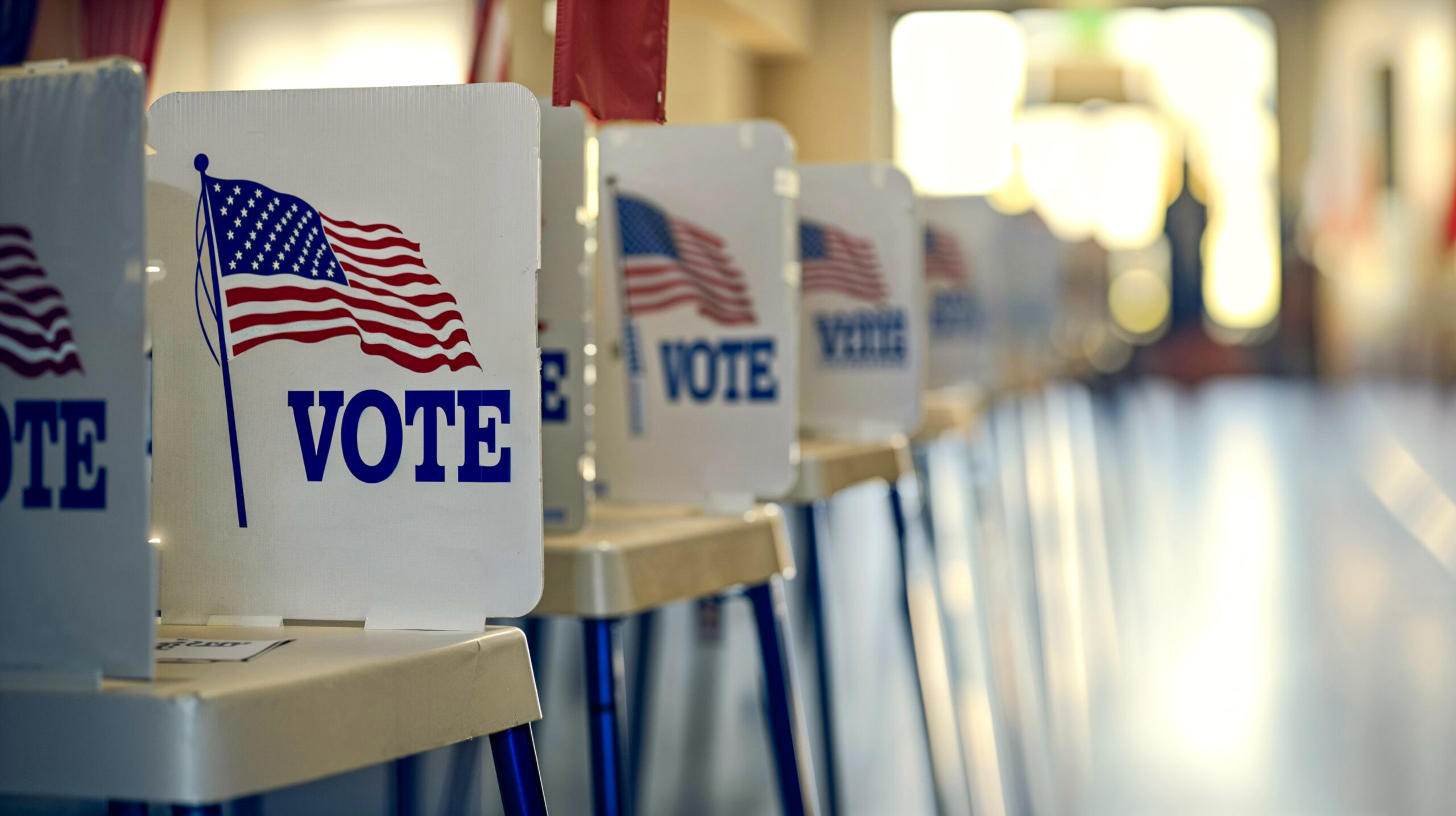
Virginia’s 2025 primary elections have set the stage for a historic and highly competitive general election in November. This election cycle is particularly historic: both major parties’ gubernatorial nominees are women, ensuring Virginia elects its first female governor. Abigail Spanberger, who secured her party’s nomination unopposed, is a former CIA officer and centrist congresswoman who has emphasized labor rights, paid family leave, and rural outreach as key themes for her campaign. On the Republican side, Winsome Earle‑Sears, a Marine Corps veteran and Virginia’s current lieutenant governor, represents a pro-business conservative alternative and could become the first Black woman to serve as governor in U.S. history.
In the race for attorney general, Democrat Jay Jones, a former state delegate and assistant attorney general, narrowly defeated Henrico County Commonwealth’s Attorney Shannon Taylor in a closely watched primary. Jones, who has emphasized his experience and commitment to challenging federal overreach, will face incumbent Republican Jason Miyares in the general election this fall.
The lieutenant governor race is also poised to be historic as Democrat Ghazala Hashmi, a state senator and former community college administrator, narrowly defeated former Richmond Mayor Levar Stoney in a six-way primary. If elected, Hashmi would become the first Muslim and Indian-American to hold statewide office in Virginia. She will face Republican John Reid, a conservative radio host and former communications director, who became the GOP nominee after his opponent withdrew from the race.
These developments mark a significant moment in Virginia’s political landscape, with both parties fielding diverse and accomplished candidates for the state’s top offices. As the general election approaches, all eyes will be on Virginia to see how these historic candidacies influence voter turnout and the broader political climate.
More Quick Info About Upcoming Elections in Virginia:
- Election Day in Virginia: Tuesday, November 4th. Early in-person voting begins on September 19th, and individuals can register to vote or update their existing registration online through October 14th. Learn more here.
- A Special Election will be held on September 9th for Virginia’s 11th District U.S. House seat. Early voting for this election will start on July 25th.
- To see where you should vote if you live in Virginia, click here.
Investing in What Works: Mayor Bowser on Building a Smarter, Stronger DC
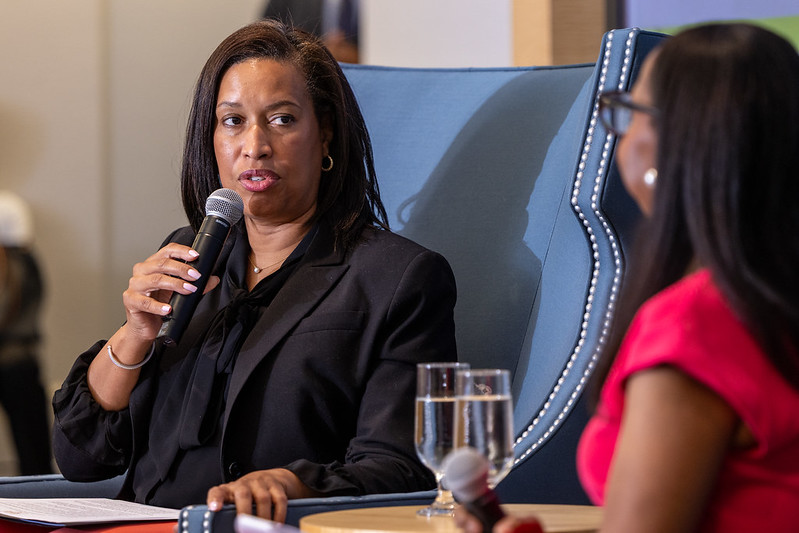
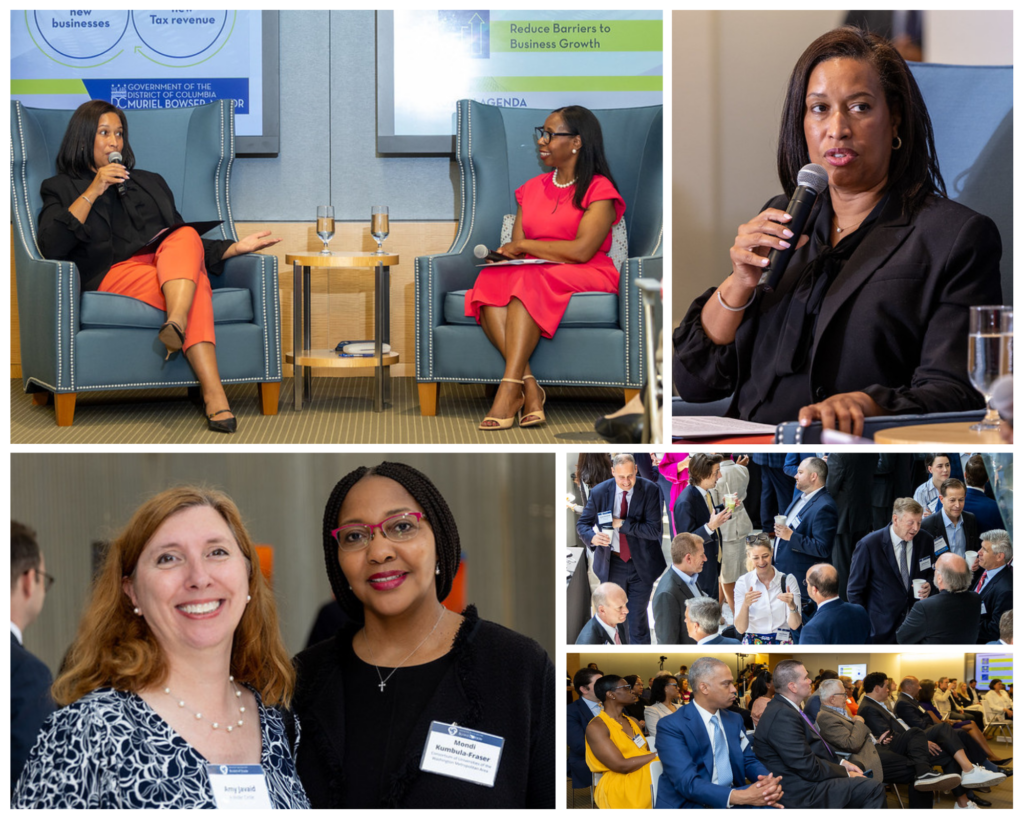
As Greater Washington navigates rapid economic change and shifting federal dynamics, the Greater Washington Board of Trade convened a timely and candid conversation with D.C. Mayor Muriel Bowser on June 12, 2025. The fireside chat, hosted in partnership with Holland & Knight LLP and moderated by Executive Partner Janene Jackson, brought together leaders across sectors to explore the District’s fiscal outlook, strategic investments, and long-term vision for inclusive growth.
Mayor Bowser addressed the District’s most pressing economic challenges, including a projected $1 billion revenue shortfall over the next four years, driven largely by anticipated federal workforce reductions. Despite this difficult terrain, she reaffirmed her commitment to a growth-oriented budget.
“We’re right-sizing our spending and growing our revenue, with no new taxes,” Mayor Bowser said. “We have to grow our economy, diversify our base, and help D.C. residents transition into new, high-quality jobs.”
Driving Strategic Investment Across the City
Throughout the conversation, Mayor Bowser outlined key priorities from her FY26 budget and Budget Support Act, emphasizing investments that modernize systems, expand opportunity, and maintain the District’s economic resilience:
- Tech Ecosystem Growth – A new Technology Ecosystem Fund and reviving parts of the Qualified High-Tech Company Incentive are designed to attract startups and scale-ups, leveraging the region’s tech talent and strengthening D.C.’s competitiveness as a center for innovation.
- Workforce Mobility – Investments in career and technical education, the DC Infrastructure Academy, and expanded procurement for local businesses aim to create upward mobility—particularly for residents in Wards 5, 7, and 8. Since 2015, the District’s spending with D.C.-based businesses has grown from $300 million to over $1.5 billion annually.
- Downtown Revitalization – The FY26 budget includes $17 million for public spaces, including the Gallery Square project and the revitalization of Farragut Square, McPherson Square, and Lafayette Park, part of a broader strategy to draw new investment, foot traffic, and vibrancy to downtown.
- Housing & Rental Reform – Mayor Bowser reaffirmed her commitment to affordable housing production while advocating for reforms to the Tenant Opportunity to Purchase Act (TOPA) and pandemic-era rental policies to stabilize D.C.’s housing ecosystem and re-attract capital investment.
- Public Safety & Infrastructure Modernization – New funding for 911 infrastructure (including a commitment to its updated and remodeled 2nd 911 Call Center), law enforcement drones, and asset lifecycle planning is part of a citywide push to modernize public services and ensure a safe, reliable foundation for growth.
VIEW MORE PHOTOS FROM THIS EVENT
The Future of RFK and Federal Alignment
Mayor Bowser also offered a bold vision for the RFK Stadium site—a catalytic 180-acre redevelopment opportunity that would include a new stadium, mixed-use housing, recreation space, and an entertainment district along the Anacostia River.
“If it was just a stadium, we wouldn’t be as interested,” she noted. “This is about unlocking the full potential of the site—for our residents and for the future of the city.”
Turning to federal workforce and infrastructure policy, Mayor Bowser emphasized the importance of regional alignment and cross-jurisdictional collaboration. She called on public and private leaders to push for federal reinvestment and a renewed commitment to in-person work in the capital.
A Call to Action for the Business Community
The session concluded with a direct message to business and civic leaders: remain engaged, advocate for change, and help move the District’s growth agenda forward.
“Don’t bet against the District,” Mayor Bowser said. “But don’t sit on the sidelines either. If we’re still having this conversation next year and haven’t made progress—shame on us.”
This special session is part of the Board of Trade’s broader mission to shape a next-generation regional economy—one built on digital transformation, inclusive growth, and stronger public-private partnerships. We extend our deep thanks to Mayor Bowser for her continued leadership, and to Holland & Knight and Janene Jackson for making this powerful dialogue possible.
Watch the whole conversation between Mayor Bowser and the Board of Trade below:
A Strategic Conversation with Senator Tim Kaine: Building the Capital Region’s Next Economy
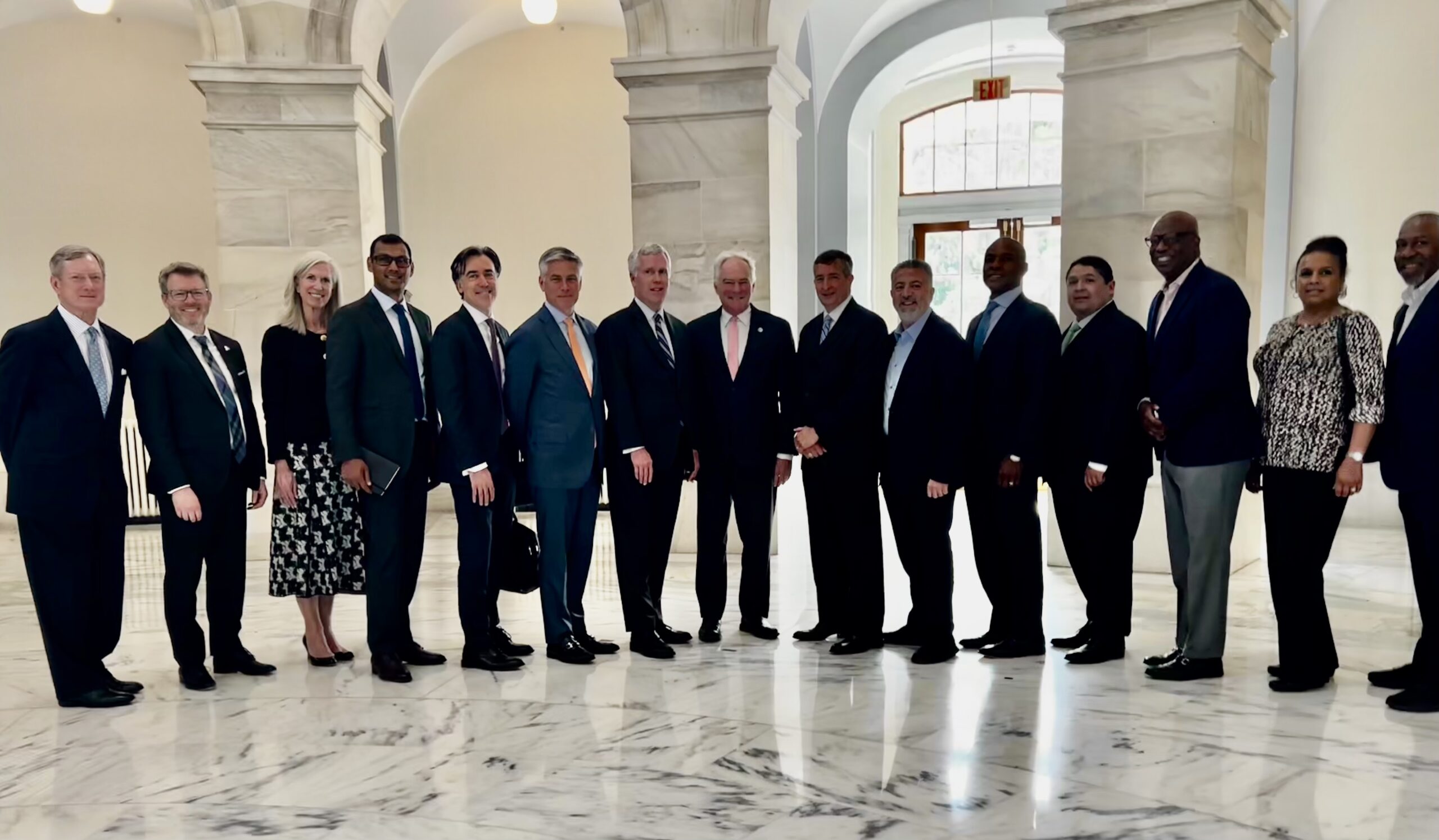
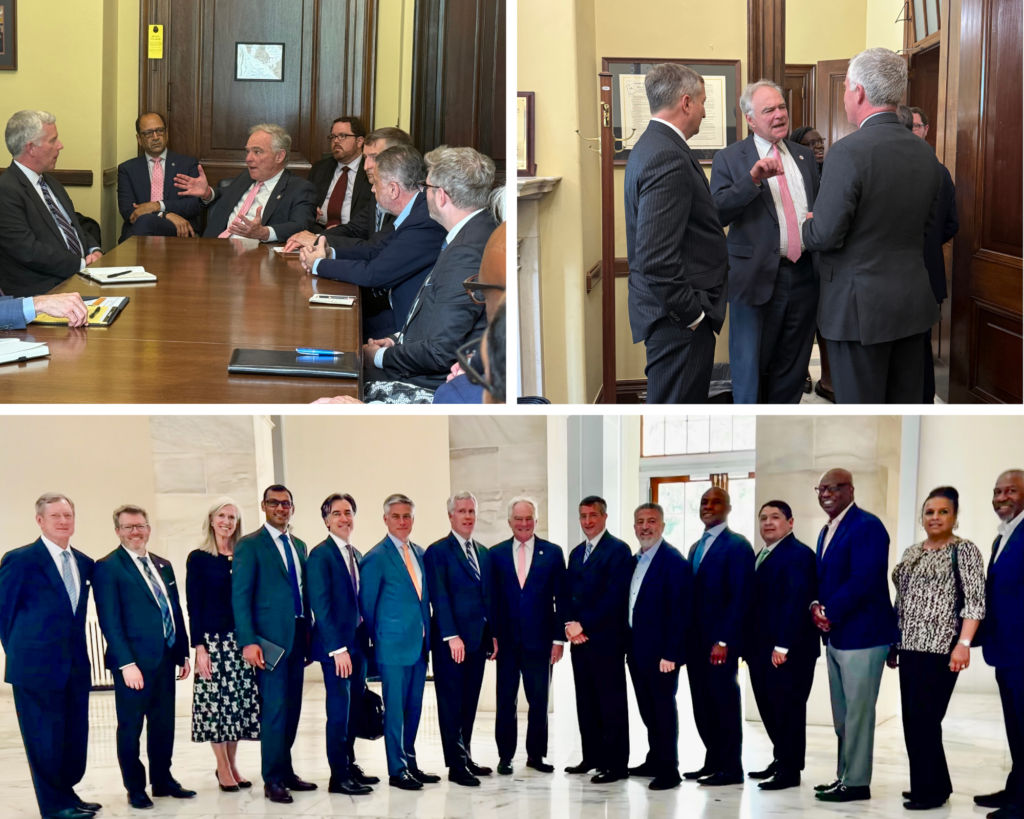
Amid rapid disruption and shifting federal priorities, Virginia Senator Tim Kaine convened the Greater Washington Board of Trade and a select group of regional leaders for a private roundtable focused on the Capital Region’s economic future. Held June 2 in the Russell Senate Office Building and co-hosted with Fox Rothschild LLP, the closed-door session explored how business and government leaders can collaborate to strengthen Greater Washington’s competitiveness in a time of accelerating change.
With participants representing sectors such as transportation, energy, infrastructure, and workforce development, the session served as a unique forum for candid, solution-oriented dialogue.
A Regional Approach to a Shared Future
Senator Kaine emphasized the need for stronger collaboration across D.C., Maryland, and Virginia to better position the region as a unified economic force. He encouraged business leaders to identify actionable, cross-jurisdictional priorities that could be brought to the attention of Virginia’s congressional delegation, which meets monthly and has a strong track record of bipartisan alignment on economic development.
Kaine also acknowledged the ongoing efforts of organizations like the Board of Trade and the Council of Governments to promote regional thinking, noting that “residents don’t see regionalism, but they live it.” His remark underscored the urgency of aligning across state lines to address shared challenges and opportunities.
Innovation, Infrastructure, and the Shift from Federal Dependency
The conversation addressed the region’s reliance on federal spending and the importance of accelerating the transition to a more innovation-driven economy. Participants highlighted the challenges facing midsize firms trying to scale, the need for accessible capital, and gaps in commercialization pathways for startups.
Senator Kaine underscored the importance of infrastructure investment, including energy and transit, as foundational to future economic growth. He also pointed to the federal government’s role in helping states and localities better connect workers, including veterans, to emerging industries.
VIEW MORE PHOTOS FROM THIS EVENT
Retaining Talent in a Changing Economy
A recurring theme was the imperative to attract and retain top talent. Senator Kaine noted that workforce retention is one of his top concerns and encouraged strategies that span early childhood education, advanced degree pathways, and credential transfer for military spouses and professionals.
“There are a lot of talented people in this region,” Kaine said. “The question is whether we are giving them reasons—and the ability—to stay.”
Leaders also discussed how unpredictable commuting patterns, housing affordability, and the mass layoff of federal workers are compounding talent challenges. Senator Kaine encouraged federal-regional alignment on solutions and noted that Greater Washington must continue building the case as a modern hub of innovation, not just governance.
From Dialogue to Strategy
The Board of Trade will continue to elevate regional voices and connect them with policymakers to drive tangible outcomes. As Senator Kaine noted, this moment presents both disruption and opportunity—and it will take collective action to shape what comes next.
Across initiatives like the Potomac Conference, DMVMoves, and our work on innovation and workforce transformation, we are helping the region transition from federal dependency to a more diverse, digitally enabled economy. Our strategy is grounded in the belief that Greater Washington can lead—by aligning across jurisdictions, investing in modern infrastructure, and unlocking the full potential of our people.
As federal priorities shift and technology accelerates change, we invite leaders across all sectors to engage with us. Together, we can build a stronger, more resilient Capital Region—one that defines the next era of American economic leadership.
We extend our sincere thanks to Fox Rothschild LLP and their partner, Reggie Jones, for their continued support of the Board of Trade’s policy programming. Additionally, we’d like to thank our Virginia policy advisor, Hon. David Ramadan, Ed.D. of RAMA International Inc., for their instrumental support in coordinating this engagement with Senator Kaine and helping shape the discussion.
Letter to WMATA and WMSC Boards Urging Dispute Resolution Process for Safety Technology Adoption
Update: Following our letter to the WMATA and WMSC Boards, we’re pleased to see ATO formally approved for the Green and Yellow lines, a major step forward for safer, more efficient transit.
About this Letter of Advocacy:
In this letter to the WMATA and WMSC Boards, the Greater Washington Board of Trade urges the establishment of a formal process for resolving disputes over proven transit safety technologies, citing the years-long delay in approving Automatic Train Operation. The letter highlights the risks this poses to Metro performance, regional mobility, and the economic competitiveness of Greater Washington.
Letter to Advocacy:
Dear Chair Hart and Chair Santos,
The recent decision by the Washington Metrorail Safety Commission (WMSC) to approve Automatic Train Operation (ATO) on the Green and Yellow Metrorail lines is a welcome and long-overdue step forward for our region. It’s a meaningful move toward enhancing safety while restoring the speed, reliability, and consistency riders expect—along with greater capacity and long-term cost savings for the system.
As Metro regains ridership and reconnects communities, modern tools like ATO are essential. Riders depend on Metro to get to work, access essential services, and participate fully in our economy. Expanding ATO will save time, improve the rider experience, reduce operator fatigue, and enhance safety—benefits already demonstrated on the Red Line. It also sends a strong signal to companies already here—and those looking to invest—that Greater Washington is committed to modern, efficient infrastructure that supports business growth and workforce mobility.
The long delay in approving ATO highlighted a deeper challenge: WMATA and WMSC lack a clear process for resolving differences over proven safety technologies and other issues. There’s no appeals pathway, no neutral third party, and no structured way to quickly move forward when views diverge. That creates gridlock—and undermines progress.
From a business standpoint, this kind of misalignment poses real risk. Metro is not just a transit system—it’s essential for a competitive regional economy. It drives commerce, lifts property values, and connects people to jobs, education, and opportunity. As the federal government continues to evolve and decentralize, we need Metro to operate at its full potential to attract talent, support innovation, and realize our economic promise. In a world defined by speed, data, and disruption, delays in adopting safe, widely used
technologies don’t just slow trains—they slow the entire region.
It’s time for a fix. I call on the WMATA and WMSC Boards to establish a formal process for resolving disputes—one that includes third-party mediation when needed, public reporting of decisions, and a commitment to timely, evidence-based outcomes. The DMVMoves initiative has already shown what’s possible when our regional bodies work together with purpose.
If no progress is made by year’s end, the Greater Washington Board of Trade will encourage leaders in the District, Maryland, and Virginia to amend the WMSC Compact to require such a process. Many elected officials have already expressed concern about the lack of coordination and transparency that marked the ATO decision.
We should not have to rely on legislative action. A shared commitment to better governance—balancing strong oversight with a clear path to modernization—will move the region forward and strengthen trust across the board.
Sincerely,
Jack McDougle
President & CEO
Greater Washington Board of Trade
Executive Leadership Roundtable Recap: Leaders Respond to a Changing Economy

On May 9 at our Downtown D.C. office, the Greater Washington Board of Trade convened a candid Executive Leadership Roundtable with Tom Barkin, President & CEO of the Federal Reserve Bank of Richmond. This session brought together senior executives from across the region for an exchange on national economic trends, regional business conditions, and the future of our workforce and markets.
Our members brought candor, insight, and urgency to the conversation, reflecting the realities of leading through disruption. While the economic data offers mixed signals, business leaders are navigating real-time volatility in pricing, hiring, trade policy, and consumer behavior. The conversation underscored that conventional playbooks no longer apply in the same ways, and leaders must adapt to a system defined by speed, decentralization, and growing complexity.
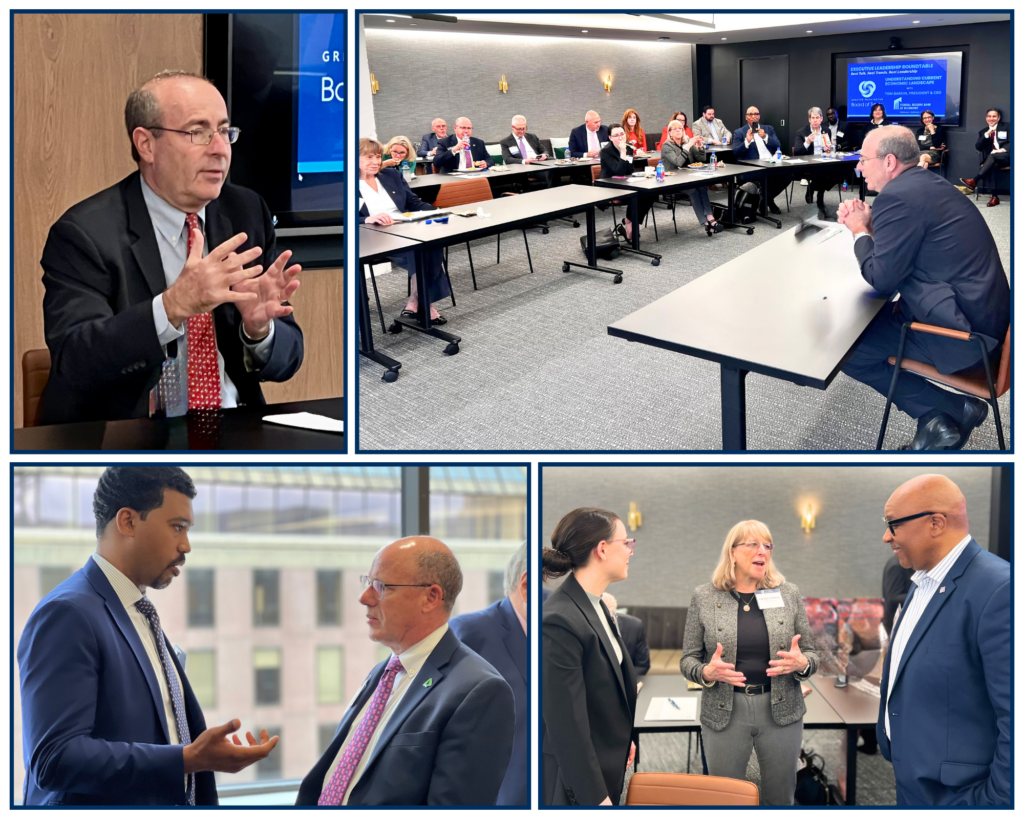
Several recurring themes emerged:
- Persistent labor shortages—not just in volume, but in skills alignment
- Rising operating costs and uncertainty around tariffs, housing, and energy
- The growing impact of AI and automation across internal operations
- A shared desire for better federal-local alignment in economic response
- The importance of timely, trusted data to supplement lagging indicators
The conversation reinforced a critical truth: Greater Washington cannot afford to plan for the economy of the past. Across sectors, leaders are grappling with systems and structures that were built for another era. What’s needed now is not only new solutions, but new ways of thinking.
The Board of Trade will continue to foster these executive-level dialogues, providing space for leaders to test assumptions, exchange strategies, and shape a more resilient, competitive region.
Mark your calendar: Our next Executive Leadership Roundtable with Tom Barkin will take place on October 17. Registration details will be shared soon—stay tuned.
Thank you to the Federal Reserve Bank of Richmond for sponsoring this vital discussion that engages our members and partners in the region.

Agenda Watch: Leading Through the First 100 Days
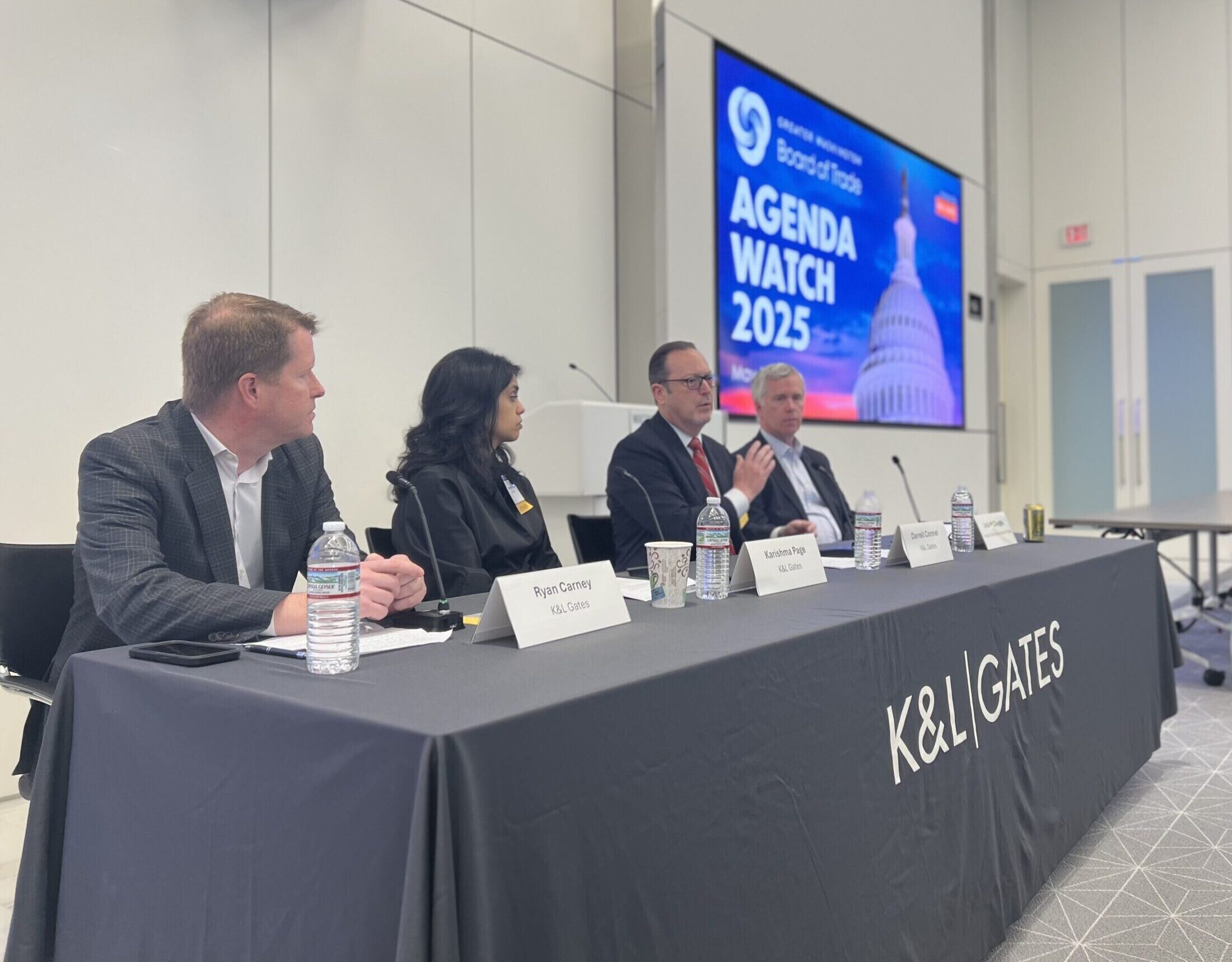
The first 100 days of a presidential administration are typically seen as a critical window for shaping priorities and building momentum. But as we heard in our latest Agenda Watch session – hosted in partnership with K&L Gates – this administration isn’t waiting around. The pace is so rapid, you can barely compute the first 100 hours, let alone the first 100 days.
Well over 100 executive orders have already been issued – marking a historic pace of presidential action. Senior officials were vetted and ready well before Inauguration Day. Federal agencies are moving quickly to execute an ambitious and sweeping plan to reshape the size, scope, and style of government. What may look chaotic on the surface is in fact a tightly coordinated and years-in-the-making strategy to act with speed and authority – especially in areas where congressional consensus is unlikely.
While much of the conversation centers on specific policy actions, what’s unfolding is part of a broader transformation—one that reflects a shift from the analog operating model of the past century to a digital-first, disruption-driven approach to governance. We’re witnessing the federal system being rewired for a new era: one defined by speed, decentralization, and real-time decision-making. The implications go far beyond politics—they challenge long-standing assumptions about how government functions, and how leaders outside of government must respond.
That’s why we launched Agenda Watch. This program is designed to help leaders in the Greater Washington business community stay ahead of these shifts—not just as observers, but as strategic actors. During our most recent session, we explored what these developments mean for the region and how leaders can adapt in an environment increasingly defined by volatility, speed, and structural change.
The Core Question: How do leaders navigate this moment of compressed change?
Among the key takeaways from the briefing:
- This is more than politics—it’s structural. While many moves reflect a long-standing conservative vision for shrinking government, they also represent a shift in how executive power is being exercised – faster, more centralized, and more willing to sidestep traditional federal processes.
- Executive orders are setting tone and direction. Though not equivalent to permanent law, the early wave of executive actions is already reshaping policy implementation. They signal priorities, shift agency focus, and can lay the groundwork for future regulatory or legislative changes. Their volume and velocity are strategic.
- Engagement doesn’t equal endorsement—but it matters. Business leaders must navigate unpredictability with discipline. Staying engaged across the political spectrum is essential for understanding how decisions are being made, where there’s room to align, and when to proactively offer alternatives.
- National security—not just economic policy—is the driving lens. Decisions about AI, energy, workforce policy, and trade are increasingly shaped by geopolitical risk and the desire for U.S. self-reliance. That includes efforts to reduce dependence on China for critical materials, strengthen domestic manufacturing, and secure technological leadership. While these objectives are clear, their policy paths may feel contradictory or disjointed at times.
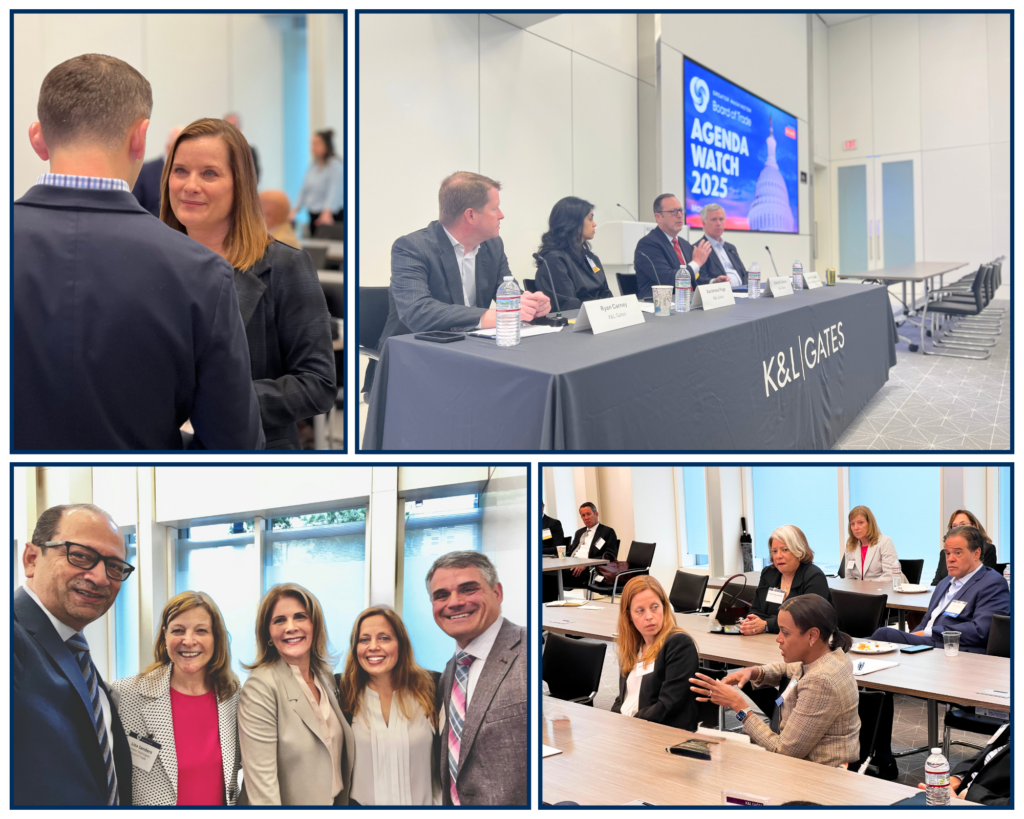
VIEW MORE PHOTOS HERE
This goes beyond politics and policy—it’s about leadership in flux.
For leaders across business, government, and the civic sector, the challenge isn’t just responding to change – it’s anticipating and absorbing it. The rules of engagement are evolving, but so are the expectations for how organizations show up, plan, and lead.
As the session concluded, four guiding principles emerged to help frame decision-making in this climate:
- Acknowledge volatility as a constant
Volatility is not episodic anymore – it’s systemic. Economic, regulatory, and political disruptions are happening in shorter, faster cycles.
- Balance long-term strategy with short-term agility
You need both a long-term strategy and the flexibility to pivot. Resilience lies in the ability to move between the two without losing your direction.
- Embrace calculated risk to stay competitive
Managing risk is no longer about avoidance – it’s about understanding, adapting, and acting. Those who take thoughtful risks will be better positioned to lead through disruption.
- Own your narrative—and ground it in shared outcomes
Don’t let others define your organization’s values or voice. Ground your message in shared economic outcomes, practical problem-solving, and the ability to work across divides.
The Board of Trade will continue to provide tools, insights, and convenings to support our members in this shifting landscape. Through Agenda Watch and other programming, we’re committed to elevating nonpartisan analysis, amplifying regional priorities, and helping our members lead through uncertainty with clarity and confidence.
Thank you to K&L Gates for sponsoring this vital discussion that engages our members and partners in the Greater Washington region.
Letter of Support: ‘District of Columbia Fiscal Autonomy Act’ Advancing to House Floor
About this Letter of Support:
Greater Washington Board of Trade President & CEO Jack McDougle submitted a Letter of Support to the United States House of Representatives (including House Speaker Mike Johnson, and both Senate and House members that represent Greater Washington) commending congressional leadership for advancing the District of Columbia Fiscal Autonomy Act to the House floor. This bipartisan legislation safeguards D.C.’s right to use its locally generated revenue, at no expense to the federal government. Its passage is critical to avoiding a $1.1 billion budget gap and maintaining funding for essential public services that support the District’s economic stability and the broader region’s prosperity.
Letter of Support:
Dear Mr. Speaker (Mike Johnson),
On behalf of the Greater Washington Board of Trade, I write to commend your leadership in advancing the District of Columbia Fiscal Autonomy Act to a floor vote this week. Your decision to move this legislation forward marks an important step toward restoring budget certainty and fiscal stability for our nation’s capital.
The Board of Trade has consistently advocated for the District’s ability to manage its locally raised revenues without Congressional interference. As outlined in our previous letters to Congress, we view local budget autonomy as essential to D.C.’s economic vitality, public service delivery, and long-term competitiveness as the hub of a dynamic regional economy.
We are also encouraged by the continued support of the region’s Congressional delegation, who have championed this issue on behalf of the District’s residents and businesses.
Bringing this legislation to a vote sends a strong signal about the importance of responsible governance and pragmatic leadership. Thank you for taking this step to advance a solution that promotes stability, preserves local control, and supports the broader regional economy.
Sincerely,
Jack McDougle
President & CEO
Greater Washington Board of Trade
Building Greater Washington’s Future—Together
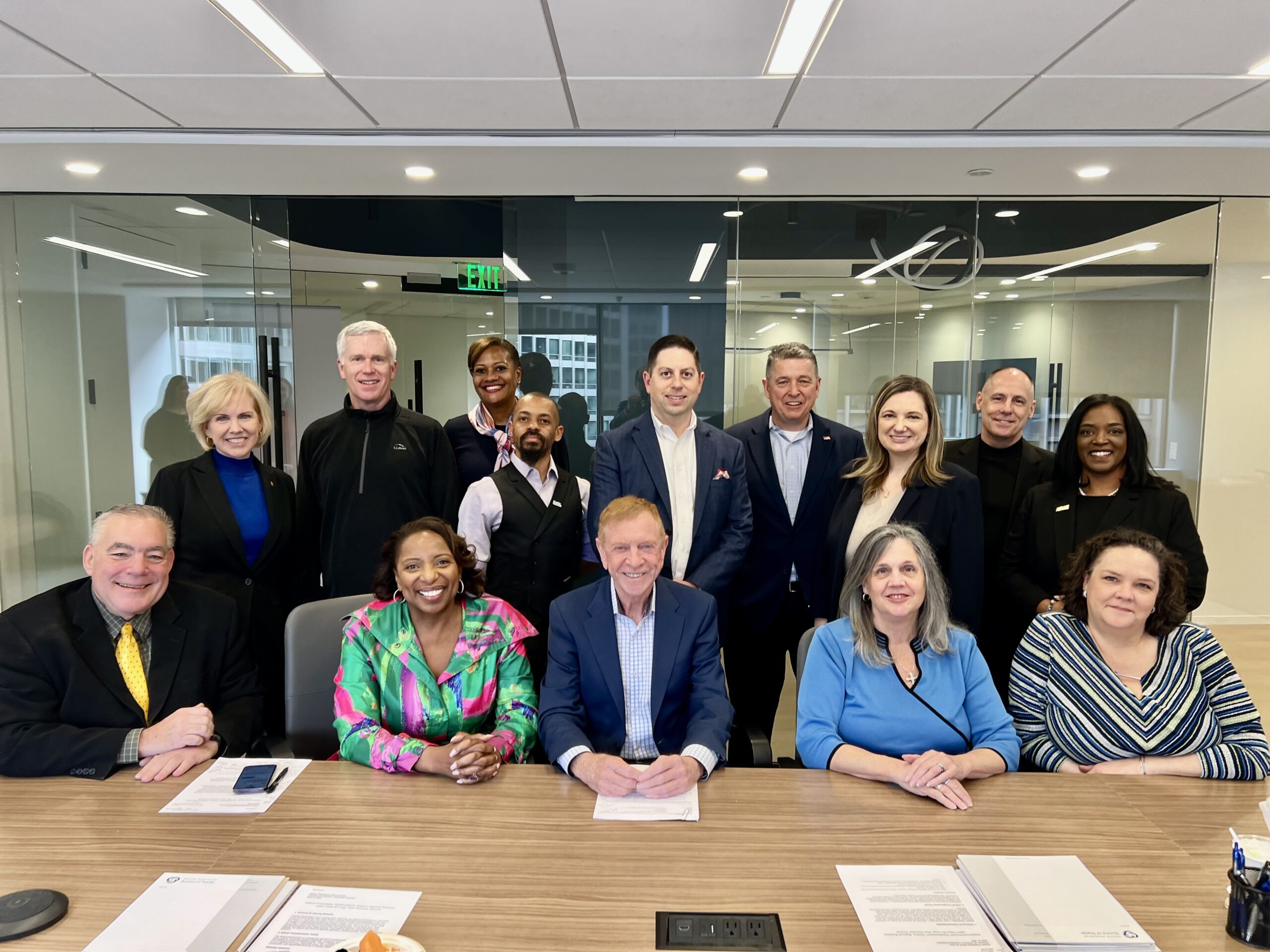
Across the region, leaders are asking: what will it take to make Greater Washington a globally competitive, inclusive, and future-ready economy? One thing is clear—no single organization or jurisdiction can answer that question alone. Our region’s success depends on deep collaboration, clear vision, and bold, long-term strategy.
That’s the driving force behind the reimagined Potomac Conference—not just a one-day convening, but a year-round initiative led by the Board of Trade in partnership with the Metropolitan Washington Council of Governments, the Consortium of Universities of the Washington Metropolitan Area, and the Greater Washington Partnership. Together, we’re aligning efforts across sectors to activate the region’s full economic potential.
Over the past several months, that work has accelerated. Through roundtables, executive lunches, one-on-one conversations, and formal convenings, we’ve engaged regional chambers, economic development leaders, nonprofits, academic institutions, and business executives to surface shared priorities and begin building a more unified path forward. Across all of these forums, one message is clear: Greater Washington’s future depends on a stronger collective voice and coordinated action.
At our Spring Board Meeting, members took part in a facilitated exercise—Mapping Greater Washington’s Economic Future—to explore where the region might be by 2035 and what decisions today could help us get there. The discussion underscored both the urgency and opportunity of the moment. Themes like the need for deeper regionalism, bold long-term bets, and business-led action were echoed in other forums as well.
In April, we met with regional chamber executives for a frank dialogue on economic pressures and policy uncertainty. Despite differing local contexts, there was unanimous agreement that collaboration is essential. The group is now drafting a joint letter to the Governors of Maryland and Virginia and the Mayor of D.C. to reinforce a united regional business agenda.
Economic development leaders (CEDO) are also shaping the strategy from the ground up. With deep jurisdiction-level knowledge, they’ve helped identify three region-wide priorities: attracting growth-stage capital, aligning industry cluster strategies, and strengthening education-to-workforce pipelines. Their next working session will begin turning those ideas into actionable plans.
At the same time, the Board of Trade continues to serve as a strong advocacy voice for the region’s business community. Whether it’s advancing workforce and mobility solutions, supporting local fiscal authority, or pushing back on federal overreach, we’re engaging where it counts—testifying before the D.C. Council, submitting letters to Congress, meeting with elected officials, and mobilizing member input to shape smart, business-forward policy. This unique capacity—to both convene and advocate—allows us to translate insight into action and ensure the voice of regional business is heard and heeded.
Together, these efforts are informing the long-term vision of the Potomac Conference and helping to establish the building blocks of a more competitive, resilient region.
This is the work of regionalism—not flashy, but foundational. It’s technical, behind the scenes, and at times slow. But it’s also powerful. Because when we align our voices, share data, and commit to a common direction, we unlock what’s possible for Greater Washington. We look forward to continuing this work—with you.