Building Momentum for RFK Stadium Redevelopment Project

Building Momentum for RFK Stadium Redevelopment Project

The future of RFK Stadium is moving closer to reality after September 17, when D.C. Council voted again in favor of the RFK stadium redevelopment legislation. Redeveloping RFK is not just about building a stadium; it’s about creating a 21st-century destination that reflects the values and ambitions of the District and its residents. The Board of Trade is proud to be a leading voice in shaping that future, and we will remain engaged as the process advances.  (Statement: D.C. Council final vote for redevelopment funding on Sept. 17)

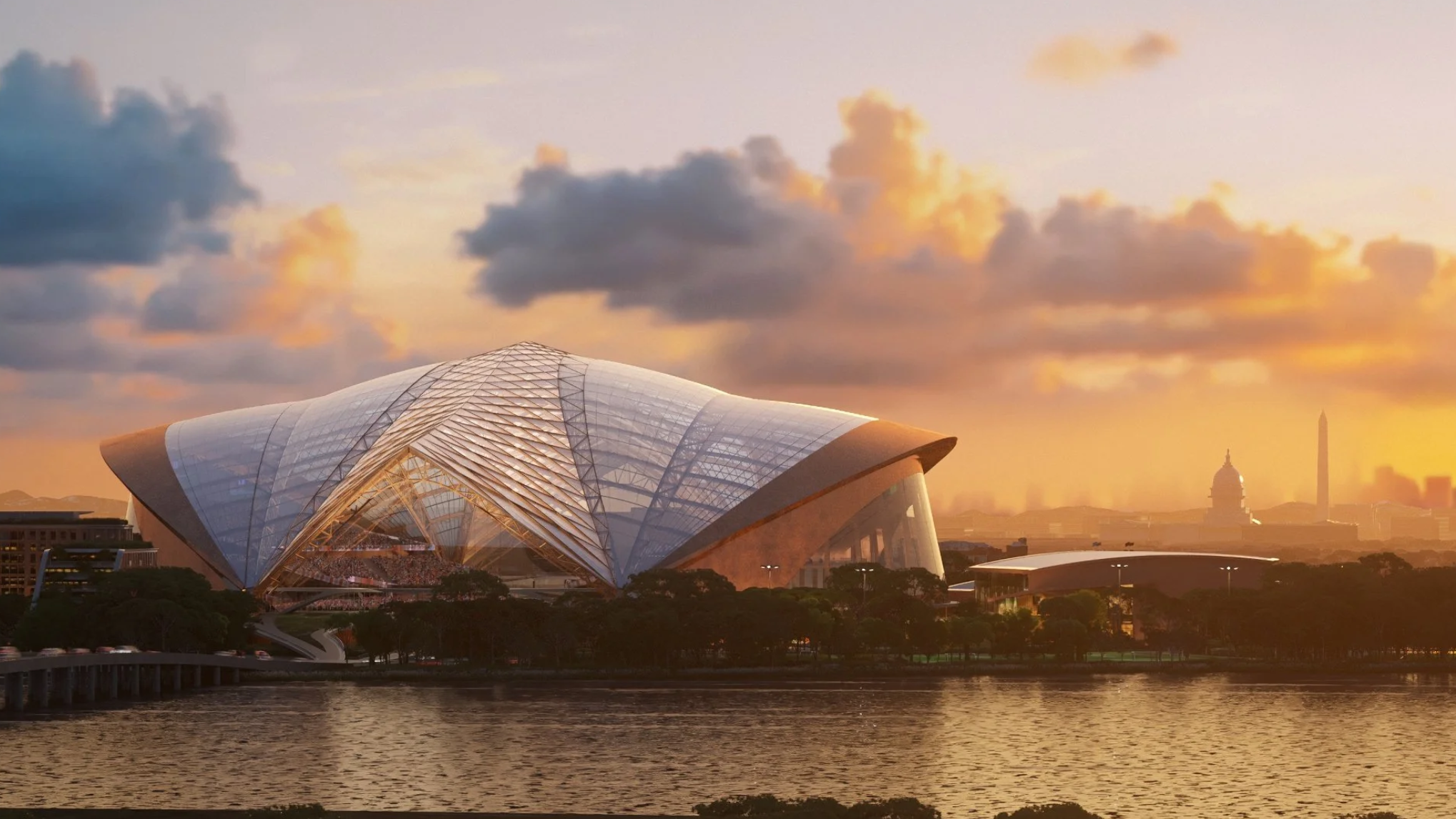
This project represents more than bricks and mortar; it is a chance to reshape an iconic site into a destination that drives economic growth, improves connectivity, and enhances the quality of life across the District and region. The project will create 14,000 construction jobs and 2,000 permanent jobs, generating $4 billion in tax revenue and more than $15.6 billion in direct spending over 30 years. Spanning about 180 acres of the former RFK Stadium site, the campus will transform today’s underused riverfront parcel into a vibrant mixed-use neighborhood.


This RFK Stadium stie redesign rendering is provided by KATO. See more here: https://www.rfknewstadium.com/


Earlier this year, the Board of Trade, city officials, and other local and regional groups testified before the D.C. Council in support of legislation that would unlock the potential of the RFK site and allow the city to move forward with a transformative vision, including: 

  • Letters of support were submitted to the D.C. Council outlining the opportunity to transform the District through a 65,000-seat roofed stadium for the Washington Commanders, designed to host not only football but also up to 200 annual events, including concerts and cultural gatherings.
  • In initial testimony before the D.C. Council, the case was made for legislation to unlock the potential of the RFK site and advance a broader vision for redevelopment. The testimony highlighted priorities such as strong transit connections, economic competitiveness, and community benefits. Specific elements included 6,000 new housing units (with at least 30% affordable), hotel rooms, new restaurants and retail, parking, an $89 million youth sportsplex, activation of the Fields at RFK, expanded green space, riverfront access, and walkable parks. (read our testimony here 
  • Subsequent testimony supported the RFK Stadium funding bill and underscored the importance of timely action to prioritize infrastructure, affordable housing, and adherence to construction timelines. (read our second testimony here) 
  • In addition, Mayor Bowser and community leaders convened engagement events, including a rally at the Wilson Building and a stakeholder event hosted by the Mayor, to highlight the redevelopment’s potential business opportunities. These gatherings drew attention to the broad community and economic impacts of this once-in-a-generation project.

Throughout the entire process, we have been in ongoing dialogue with the Washington Commanders to ensure that the project balances economic competitiveness with community needs — from workforce opportunities to improved transit access and mixed-use development that serves residents and businesses alike. With upgraded utilities, new roadways, improved transit access, and vibrant hospitality districts like the Riverfront and Plaza, the project will revitalize the site and surrounding neighborhoods. It will serve as a community anchor by blending housing, commerce, recreation, and entertainment into a powerful driver of growth for the District.

The Board of Trade will continue to champion this redevelopment as an engine of growth, connectivity, and opportunity for the entire region. We look forward to continuing conversations with the Commanders, community leaders, and stakeholders to unlock all that the RFK site has to offer.  

Learn more about how we engage with leaders at the federal, state, and local levels to ensure that the voices of Greater Washington’s business community are heard: https://www.bot.org/business-policy-greater-washington-dc/

Statement: Board of Trade on President’s Announcement to Deploy National Guard Troops in Washington, DC

“The Greater Washington Board of Trade shares the priority of keeping our communities safe and ensuring that people and businesses can thrive without disruption. Public safety is the foundation of a strong economy and quality of life.

In recent years, the District has made meaningful progress in reducing crime, with violent crime and property crime now at some of the lowest levels in recent memory. These gains are the result of sustained efforts by city leadership, law enforcement, business leaders, community organizations, and residents working together.

We welcome continued federal cooperation and coordination to build on this success. However, the National Guard’s mission is not law enforcement, and the deployment of troops for this purpose is likely unnecessary. We encourage federal leaders to work closely with District officials to support proven, community-based strategies that enhance safety while respecting the rights and trust of all residents.

The Board of Trade remains committed to fostering a safe, resilient, and inclusive Capital Region for all who live, work, and visit here.”

ABOUT THE BOARD OF TRADE

The Greater Washington Board of Trade, founded in 1889, is the region’s premier non-partisan business organization representing industry, nonprofits, universities, and government agencies. The Board of Trade addresses complex and always-evolving business concerns that stretch across the District of Columbia, suburban Maryland and Northern Virginia, with a priority focus on inclusive economic growth, improving the business climate, and enhancing the region’s economic competitiveness.  

READ MORE POLICY ISSUES AND TOPICS THE BOARD OF TRADE IS FOLLOWING

Why culture, lifestyle, and place matter to Greater Washington’s economic future

From tech talent and research strength to public purpose and inclusive growth, our Greater Washington region has the ingredients to lead as a global innovation powerhouse. But bold coordination is needed.

Our President & CEO, Jack McDougle, shares in his latest Washington Business Journal viewpoint that we must transform into an innovation-led economy, elevating cultural strengths key to shaping the future of our region. From Smithsonian museums to vibrant food halls and miles of urban trails, the region’s quality-of-life assets are powerful drivers of economic growth. They attract talent, foster belonging, and create the “vibe” that makes people choose to stay, build, and invest here.

READ THE FULL ARTICLE HERE

ABOUT THE BOARD OF TRADE

The Greater Washington Board of Trade, founded in 1889, is the region’s premier non-partisan business organization representing industry, nonprofits, universities, and government agencies. The Board of Trade addresses complex and always-evolving business concerns that stretch across the District of Columbia, suburban Maryland and Northern Virginia, with a priority focus on inclusive economic growth, improving the business climate, and enhancing the region’s economic competitiveness.  

READ MORE POLICY ISSUES AND TOPICS THE BOARD OF TRADE IS FOLLOWING

Testimony to DC Council: Board of Trade Supports Bill for RFK Site Redevelopment

Update: The Washington Commanders secured a major milestone in the effort to bring professional football back to the District. On August 1st, the D.C. Council voted 9–3 in favor of legislation that would pave the way for the redevelopment of the RFK Stadium site, thus marking a pivotal first step in transforming one of the city’s most iconic but long-dormant properties into a vibrant, multi-use destination. This vote signals renewed momentum for a project that has implications far beyond the stadium walls. At its core, the redevelopment of the RFK site represents a commitment to regionalism with an investment in shared assets that generate economic activity, draw visitors, and enhance quality of life across jurisdictional lines.

About this Testimony:

The Board of Trade testified a second time before the D.C. Council and sent a letter to Council Chairman Phil Mendelson in support of Mayor Muriel Bowser’s proposal to bring the Washington Commanders back to the District as part of a larger mixed-use redevelopment of the RFK site. We again highlighted the opportunity not just as a sports project, but as a catalyst for long-term economic growth, fiscal strength, and regional competitiveness.

Previous Testimony on RFK Site Redevelopment to D.C. Council

Testimony Recording from DC Council Meeting: 

Letter to Chairman Mendelson:

DOWNLOAD HERE

July 31, 2025

Good Morning, Chairman Mendelson and members of the Council. 

Thank you for the opportunity to speak on behalf of the Greater Washington Board of Trade. Founded in 1889, our nonpartisan organization represents hundreds of employers across the Greater Washington region—spanning industry, nonprofits, universities, and government agencies. We’re committed to advancing inclusive economic growth and strengthening the city’s competitive position. 

My name is Daniel Flores, and I’m here to express our strong support for the Mayor’s proposal to bring the Washington Commanders back to the District through a new stadium and mixed use development at the old RFK stadium site. This moment is about far more than building a stadium—it’s about unlocking the full potential of a high-impact site to become a bold, mixed-use destination that embodies the future of urban development. With smart, forward-looking planning, this space can be transformed into a thriving hub for housing, small businesses, transit, recreation, and cultural activity.  

As the District stands at a critical crossroads, we must pursue ambitious solutions that don’t just maintain the status quo but reshape it. This is a once-in-a-generation opportunity to catalyze long-term prosperity, create new jobs, and strengthen our city’s position as a vibrant, resilient, and equitable capital for decades to come. With a record $2.7 billion private investment—the largest in D.C.’s history—augmented by thoughtfully designed public infrastructure, this project can: 

  • Support over 30,000 jobs and generate $4 billion in new tax revenue and unlock billions more in direct spending.  
  • Revitalize the RFK campus with new housing including 5,000-6,000 new homes for more than 10,000 residents across the campus with at least 30% affordable, maintaining The Fields at RFK and investing $89 million to construct a new state-of-the-art youth sports complex, new parks, retail, recreation, hospitality, and more.  
  • Generate long-term economic diversification through the develop of an inclusive, vibrant neighborhood that serves expanded opportunities for residents, supports small businesses, and boosts regional tourism.  

We recognize the District faces fiscal constraints. That’s precisely why this investment is critical—it leverages private capital to grow the tax base and secure the city’s long-term financial stability, and we have seen the successful transformative power of these kind of investments before. While we have seen several successful projects around the city, including the redevelopments of Nationals Park, Audi Field, and The Wharf—we believe the RFK project has the ability to surpass many of these incredibly successful projects we have already seen throughout the city.  

Time, however, is not on our side. Delays in legislative action or infrastructure investment threaten to derail the project timeline. Missing critical benchmarks this year could push back the stadium’s opening beyond the 2030 NFL season—and with that delay, the District could forfeit an estimated $750 million in lost economic impact from major events like the 2031 FIFA Women’s World Cup, the Rugby World Cup, a full season of Commanders home games, and large-scale concerts. This is more than an opportunity cost—it’s a concrete loss to city revenues, jobs, and visibility on the global stage. Additionally, failing to act could invite the opportunity for federal action to interfere with this redevelopment as it can be a signature achievement for the District—one that honors its past, serves its people, and inspires confidence in its future. 

Let’s be clear: this is more than a stadium project. It’s a transformative vision for over 190 acres of largely dormant land in the heart of our capital city. It’s a chance to create an inclusive, vibrant neighborhood that reflects D.C.’s values and positions us as a national leader in urban renewal.  

On behalf of the Board of Trade, I urge the Council to act with urgency and conviction. The pieces are in place and now is the moment to move forward to deliver not just 190 acres of largely dormant land in the core of the district, but a project that will shape the city’s future for generations to come. 

Thank you for your time, and for your leadership on this critical issue. 

Sincerely, 

Daniel Flores

Vice President of Regional Engagement 

Greater Washington Board of Trade

A new identity for Greater Washington: From policy powerhouse to innovation engine | WBJ Viewpoint

From tech talent and research strength to public purpose and inclusive growth, our Greater Washington region has the ingredients to lead as a global innovation powerhouse. But bold coordination is needed.

In his Washington Business Journal viewpoint, our President & CEO, Jack McDougle, highlights the region’s unique advantages—policy expertise, technical talent, and public purpose—and outlines six strategic priorities to turn ambition into impact.

READ THE FULL ARTICLE HERE

ABOUT THE BOARD OF TRADE

The Greater Washington Board of Trade, founded in 1889, is the region’s premier non-partisan business organization representing industry, nonprofits, universities, and government agencies. The Board of Trade addresses complex and always-evolving business concerns that stretch across the District of Columbia, suburban Maryland and Northern Virginia, with a priority focus on inclusive economic growth, improving the business climate, and enhancing the region’s economic competitiveness.  

READ MORE POLICY ISSUES AND TOPICS THE BOARD OF TRADE IS FOLLOWING

New laws in Maryland and Virginia take effect; could impact certain businesses

Between June and July, residents of Maryland and Virginia will see new legislation taking effect across various sectors, which could have a significant impact on businesses, communities, and people traveling between all jurisdictions in the DMV. Here is a look at some of these laws that could impact business owners, regional professionals, and growing communities in the region. 

(Washington D.C. laws typically take effect in January. The Board of Trade will continue to proactively monitor the legislation’s impact on business communities in Greater Washington.)

Virginia:

As we head into the summer months, several important new laws will take effect across Virginia, impacting everything from workforce agreements to road safety. These changes reflect the state’s ongoing efforts to protect employees, enhance public safety, and promote fairness in the workplace. These laws discussed below in Virginia take effect on July 1.

Non-Compete Agreements: Expanded Worker Protections

Virginia will prohibit employers from enforcing non-compete clauses with non-exempt employees, those eligible for overtime pay under federal law. This shift is designed to give workers greater freedom to change jobs and encourage a more dynamic labor market. Employers may need to rethink retention strategies in a more mobile and competitive labor market.

Sexual Assault Employer Accountability Act

Another significant change focuses on employer accountability. The Sexual Assault Employer Accountability Act allows victims to hold employers civilly liable for misconduct committed by their employees, especially when vulnerable individuals—such as patients or residents in long-term care—are involved. This law underscores the state’s commitment to protecting those who may be at greater risk and ensuring organizations maintain safe environments. Employers must ensure robust safeguards and oversight in their workplace environments.

Christopher King Backseat Law: Seatbelt Requirement for All Adults

On the road safety front, Virginia is expanding its seatbelt laws to require all adults riding in the backseat to buckle up. Beginning July 1, those who fail to wear a seatbelt in the backseat may face a $25 fine. This measure, known as the Christopher King Backseat Law, is a vital step toward reducing injuries and fatalities on Virginia’s roads. Companies with rideshare programs, shuttle services, or delivery fleets must ensure drivers and passengers follow this law. Businesses may need to incorporate road safety reminders into onboarding or safety briefings. Failure to comply could result in citations that reflect poorly on a company’s safety culture.

Criminal Records Sealing: Supporting Second Chances

The state is advancing criminal justice reform by allowing individuals to petition for the sealing of certain criminal convictions. This change will open doors for many Virginians seeking new employment or housing opportunities, supporting reintegration and second chances. Employers may have less visibility into candidates’ full criminal history, making risk assessment more difficult. Also, employers must ensure hiring decisions don’t discriminate against applicants with sealed records, while still complying with other regulatory requirements.

Maryland:

As of June 1, several new laws are in effect in Maryland that could have a direct impact on businesses—particularly in sectors like energy, tourism, transportation, legal services, and hospitality. This includes new tax changes and rate changes for certain people and businesses.

Maryland Tax Changes

Maryland’s updated budget includes a 3% sales tax on certain tech services—such as data storage—targeted at IT companies. Notably, this tax does not apply to mobile phone services.

The budget also introduces new income tax brackets for top earners: individuals making $500,000 annually will face a 6.25% rate, while those earning $1 million or more will be taxed at 6.5%.

Additionally, a 2% capital gains tax now applies to individuals with incomes over $350,000, and tax rates have increased on both cannabis sales and sports betting.

Next Generation Energy Act

This legislation includes providing two $40 energy rebates to consumers in Fisical Year 2026 and also ends public subsidies for waste-to-energy incinerators, signaling a shift toward more sustainable energy sources. Utilities, energy companies, and large-scale energy consumers should prepare for both administrative burdens around rebates and longer-term transitions in energy policy. This law reinforces Maryland’s move toward greener infrastructure. Businesses with sustainability goals or those operating in the clean energy space may find new opportunities, but traditional energy providers may see changes in incentive structures.

Speed Camera Expansion on I-83

Baltimore City is authorized to double the number of speed cameras on the Jones Falls Expressway (I-83), increasing from 2 to 4. This may seem minor, but for logistics companies or anyone relying on that corridor, increased enforcement can mean higher ticket volumes, stricter route planning, and greater need for driver training. It’s a reminder to prioritize traffic law compliance, especially for regional operations.

Portable Toilet Regulations for Agritourism and Craft Beverage Venues

Wineries, breweries, farms, and other agritourism businesses must now provide portable toilets equipped with soap, clean water, and drying tools. For businesses hosting events, tastings, or public visits, this could mean new capital and operating costs for sanitation equipment, maintenance, and inspections. It also represents Maryland’s continued focus on aligning agritourism with public health standards. If you’re expanding or investing in on-site visitor experiences, this should be part of your planning and permitting strategy.

Abuse Lawsuit Settlement Caps

This law sets financial limits on the amount of damages that can be awarded in abuse-related lawsuits. This is a cap of $400,000 for claims against public institutions and a cap of $700,000 for claims against private entities. Caps on attorney fees will also be set at 20-25%. Organizations, especially schools, nonprofits, religious institutions, and private employers, should take note. These limits may reduce exposure to catastrophic settlements, but they also emphasize the importance of robust internal safeguards, incident reporting mechanisms, and legal risk management practices. While this could offer more predictability in litigation, it won’t replace the need for due diligence and compliance.

Testimony to DC Council in Support of RFK Stadium Funding Bill

Update: The Washington Commanders secured a major milestone in the effort to bring professional football back to the District. On August 1st, the D.C. Council voted 9–3 in favor of legislation that would pave the way for the redevelopment of the RFK Stadium site, thus marking a pivotal first step in transforming one of the city’s most iconic but long-dormant properties into a vibrant, multi-use destination. This vote signals renewed momentum for a project that has implications far beyond the stadium walls. At its core, the redevelopment of the RFK site represents a commitment to regionalism with an investment in shared assets that generate economic activity, draw visitors, and enhance quality of life across jurisdictional lines.

About this Testimony:

The Board of Trade testified before the D.C. Council and sent a letter to Council Chairman Phil Mendelson in support of Mayor Muriel Bowser’s proposal to bring the Washington Commanders back to the District as part of a larger mixed-use redevelopment of the RFK site. We highlighted the opportunity not just as a sports project, but as a catalyst for long-term economic growth, fiscal strength, and regional competitiveness.

Testimony Recording from DC Council Meeting: 

Submitted Testimony:

DOWNLOAD HERE

June 20, 2025

Dear Chairman Mendelson, 

Thank you for the opportunity to share the perspectives of the Greater Washington Board of Trade. We strongly support the mayor’s proposal to bring the Washington Commanders back to the District through a new stadium and mixed-use development at the RFK site, and we urge the Council to take the legislative and budget actions needed to move this project forward. Revitalizing the RFK campus is a rare opportunity to deliver lasting economic, social, and community benefits—not just for the District, but for the entire region. 

With a $2.7 billion private investment—the largest in the city’s history—paired with essential public infrastructure, this project will support tens of thousands of jobs, generate billions in new tax revenue, and transform one of the city’s most underutilized properties. The broader vision—including housing, retail, parks, and recreational space—will help create a vibrant, inclusive neighborhood that serves residents and draws visitors. 

We recognize the District faces significant fiscal challenges, and public investments must be made wisely. That’s precisely why this project matters. Strategic developments that unlock private capital and grow the tax base are critical to the city’s long-term financial health. 

We also acknowledge concerns about land use, community access, and stewardship of the site. These are important and valid. With thoughtful planning and strong accountability, this project can reflect community values while advancing shared goals. 

Key milestones must be met in the coming months to stay on track for a 2030 opening, including legislative approval, infrastructure funding, and lease finalization. Delays now could jeopardize the entire opportunity. 

We urge the Council to act with urgency and confidence. This is a once-in-a-generation chance to shape the future of the RFK site and deliver real value for the city. Let’s not miss it. 

Sincerely, 

Jack McDougle

President & CEO

Greater Washington Board of Trade

Highlighting Results from Virginia’s Primary Races

Virginia’s 2025 primary elections have set the stage for a historic and highly competitive general election in November. This election cycle is particularly historic: both major parties’ gubernatorial nominees are women, ensuring Virginia elects its first female governor. Abigail Spanberger, who secured her party’s nomination unopposed, is a former CIA officer and centrist congresswoman who has emphasized labor rights, paid family leave, and rural outreach as key themes for her campaign. On the Republican side, Winsome Earle‑Sears, a Marine Corps veteran and Virginia’s current lieutenant governor, represents a pro-business conservative alternative and could become the first Black woman to serve as governor in U.S. history.  

In the race for attorney general, Democrat Jay Jones, a former state delegate and assistant attorney general, narrowly defeated Henrico County Commonwealth’s Attorney Shannon Taylor in a closely watched primary. Jones, who has emphasized his experience and commitment to challenging federal overreach, will face incumbent Republican Jason Miyares in the general election this fall.  

The lieutenant governor race is also poised to be historic as Democrat Ghazala Hashmi, a state senator and former community college administrator, narrowly defeated former Richmond Mayor Levar Stoney in a six-way primary. If elected, Hashmi would become the first Muslim and Indian-American to hold statewide office in Virginia. She will face Republican John Reid, a conservative radio host and former communications director, who became the GOP nominee after his opponent withdrew from the race.

These developments mark a significant moment in Virginia’s political landscape, with both parties fielding diverse and accomplished candidates for the state’s top offices. As the general election approaches, all eyes will be on Virginia to see how these historic candidacies influence voter turnout and the broader political climate. 

More Quick Info About Upcoming Elections in Virginia:

  • Election Day in Virginia: Tuesday, November 4th. Early in-person voting begins on September 19th, and individuals can register to vote or update their existing registration online through October 14th. Learn more here.
  • A Special Election will be held on September 9th for Virginia’s 11th District U.S. House seat. Early voting for this election will start on July 25th.
  • To see where you should vote if you live in Virginia, click here.

Featured Members