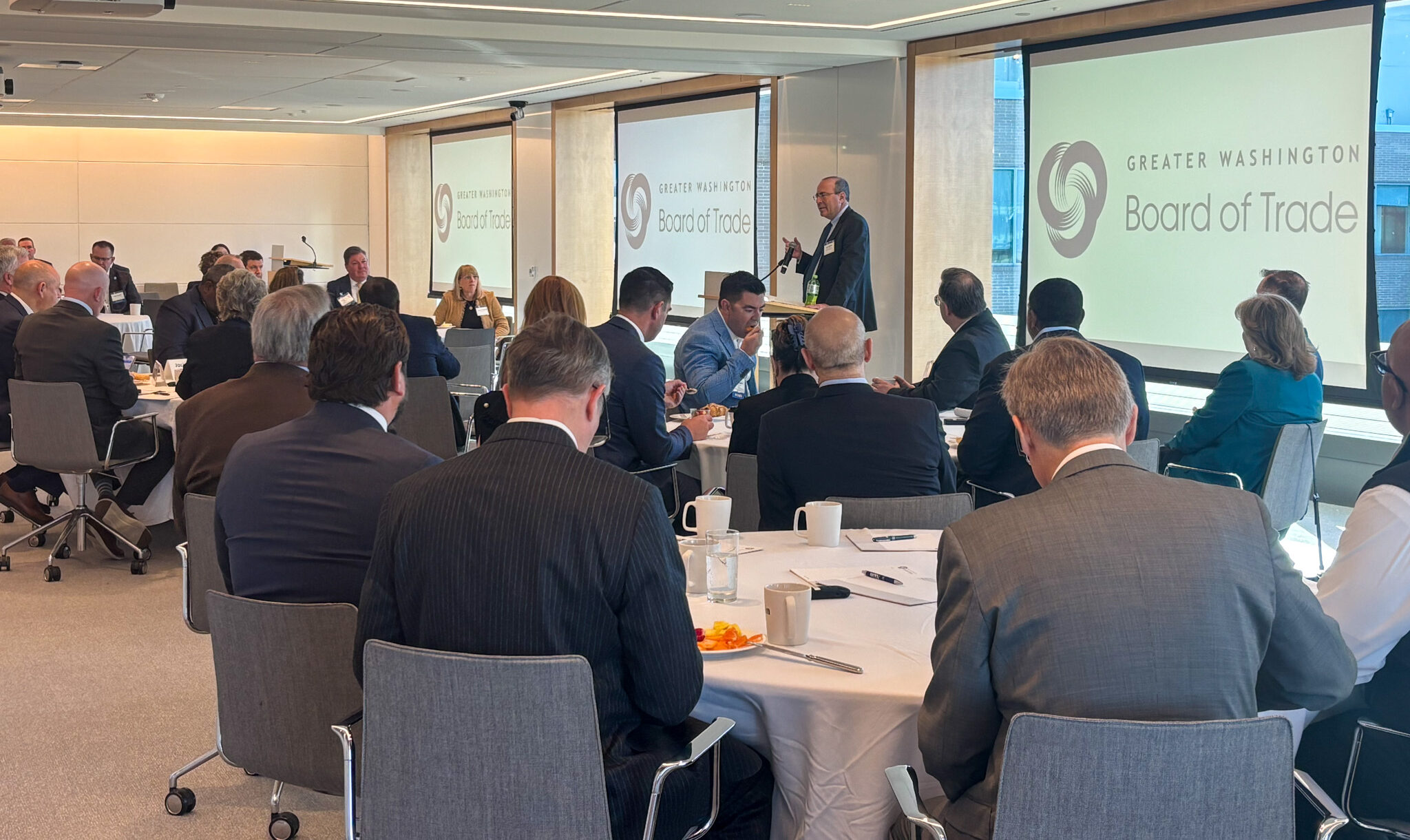
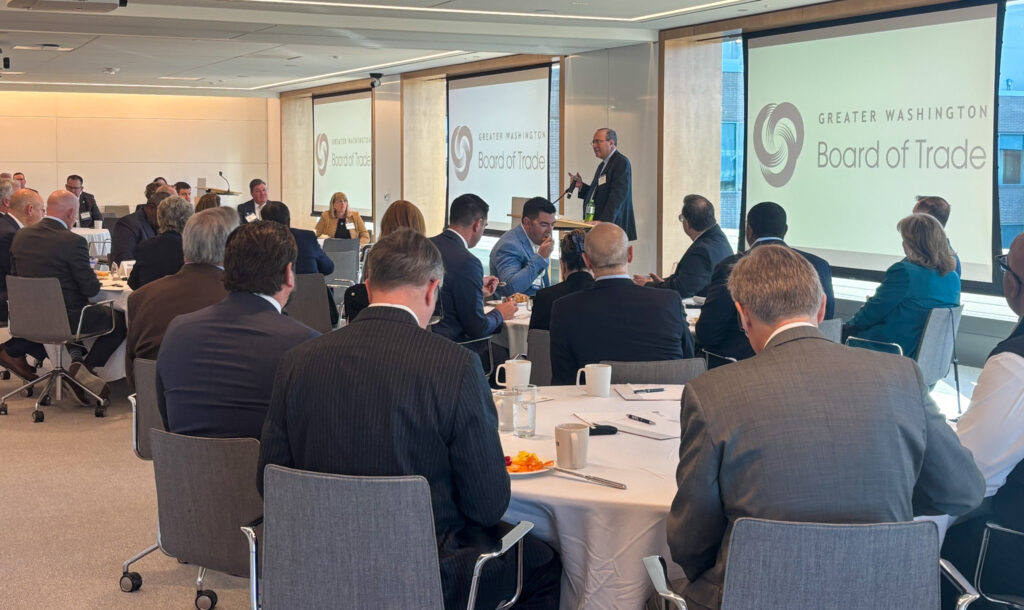
The Board of Trade’s advocacy, convening, and thought leadership activities support regional outcomes that will help Greater Washington grow and adapt for generations to come. The GWBOT Legislative Update shares legislation and policy insights from the region.
Category: Latest Updates
Testimony to DC Council in Support of RFK Stadium Funding Bill
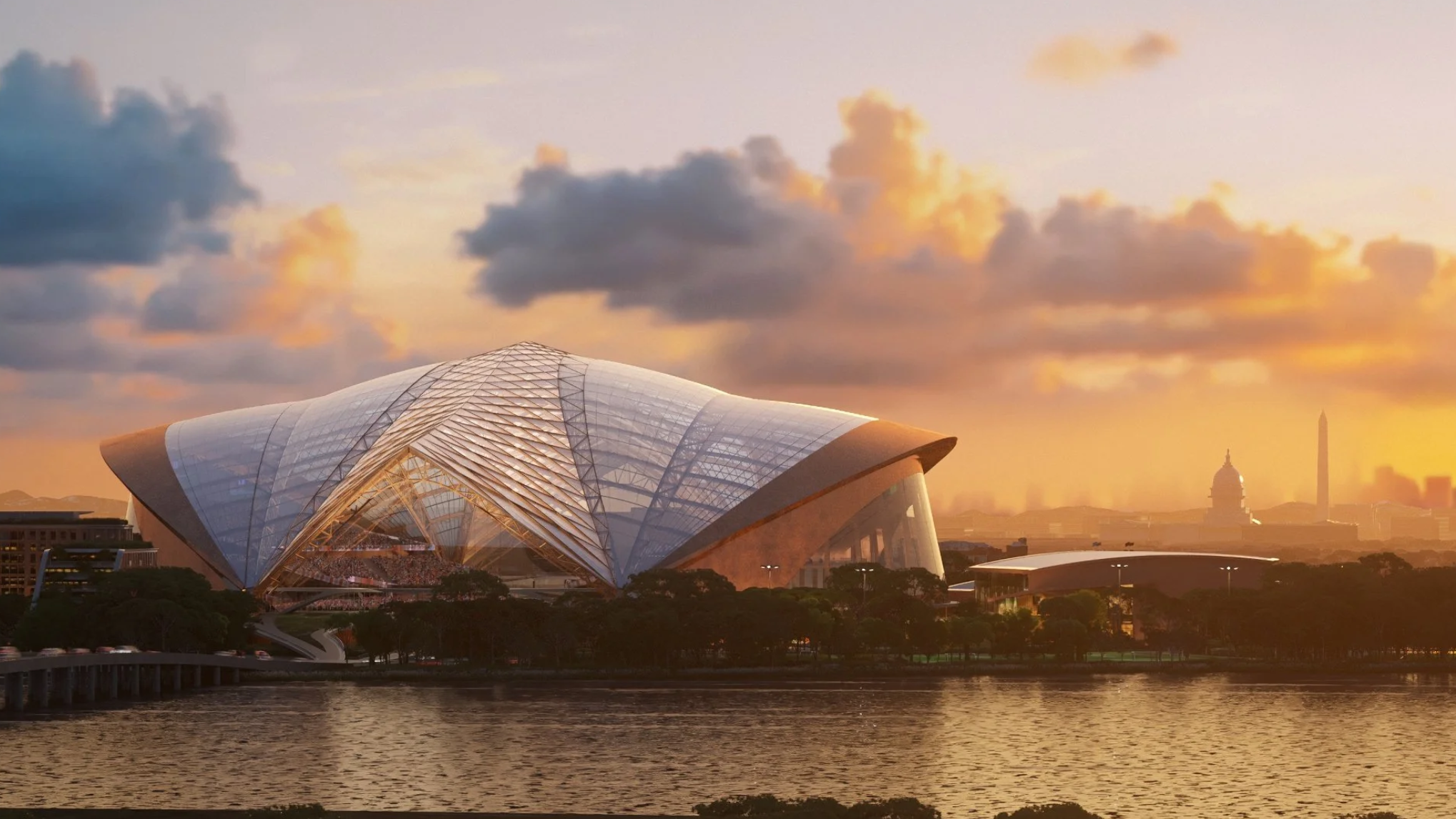
Update: The Washington Commanders secured a major milestone in the effort to bring professional football back to the District. On August 1st, the D.C. Council voted 9–3 in favor of legislation that would pave the way for the redevelopment of the RFK Stadium site, thus marking a pivotal first step in transforming one of the city’s most iconic but long-dormant properties into a vibrant, multi-use destination. This vote signals renewed momentum for a project that has implications far beyond the stadium walls. At its core, the redevelopment of the RFK site represents a commitment to regionalism with an investment in shared assets that generate economic activity, draw visitors, and enhance quality of life across jurisdictional lines.
About this Testimony:
The Board of Trade testified before the D.C. Council and sent a letter to Council Chairman Phil Mendelson in support of Mayor Muriel Bowser’s proposal to bring the Washington Commanders back to the District as part of a larger mixed-use redevelopment of the RFK site. We highlighted the opportunity not just as a sports project, but as a catalyst for long-term economic growth, fiscal strength, and regional competitiveness.
Testimony Recording from DC Council Meeting:
Submitted Testimony:
June 20, 2025
Dear Chairman Mendelson,
Thank you for the opportunity to share the perspectives of the Greater Washington Board of Trade. We strongly support the mayor’s proposal to bring the Washington Commanders back to the District through a new stadium and mixed-use development at the RFK site, and we urge the Council to take the legislative and budget actions needed to move this project forward. Revitalizing the RFK campus is a rare opportunity to deliver lasting economic, social, and community benefits—not just for the District, but for the entire region.
With a $2.7 billion private investment—the largest in the city’s history—paired with essential public infrastructure, this project will support tens of thousands of jobs, generate billions in new tax revenue, and transform one of the city’s most underutilized properties. The broader vision—including housing, retail, parks, and recreational space—will help create a vibrant, inclusive neighborhood that serves residents and draws visitors.
We recognize the District faces significant fiscal challenges, and public investments must be made wisely. That’s precisely why this project matters. Strategic developments that unlock private capital and grow the tax base are critical to the city’s long-term financial health.
We also acknowledge concerns about land use, community access, and stewardship of the site. These are important and valid. With thoughtful planning and strong accountability, this project can reflect community values while advancing shared goals.
Key milestones must be met in the coming months to stay on track for a 2030 opening, including legislative approval, infrastructure funding, and lease finalization. Delays now could jeopardize the entire opportunity.
We urge the Council to act with urgency and confidence. This is a once-in-a-generation chance to shape the future of the RFK site and deliver real value for the city. Let’s not miss it.
Sincerely,
Jack McDougle
President & CEO
Greater Washington Board of Trade
Highlighting Results from Virginia’s Primary Races
Virginia’s 2025 primary elections have set the stage for a historic and highly competitive general election in November. This election cycle is particularly historic: both major parties’ gubernatorial nominees are women, ensuring Virginia elects its first female governor. Abigail Spanberger, who secured her party’s nomination unopposed, is a former CIA officer and centrist congresswoman who has emphasized labor rights, paid family leave, and rural outreach as key themes for her campaign. On the Republican side, Winsome Earle‑Sears, a Marine Corps veteran and Virginia’s current lieutenant governor, represents a pro-business conservative alternative and could become the first Black woman to serve as governor in U.S. history.
In the race for attorney general, Democrat Jay Jones, a former state delegate and assistant attorney general, narrowly defeated Henrico County Commonwealth’s Attorney Shannon Taylor in a closely watched primary. Jones, who has emphasized his experience and commitment to challenging federal overreach, will face incumbent Republican Jason Miyares in the general election this fall.
The lieutenant governor race is also poised to be historic as Democrat Ghazala Hashmi, a state senator and former community college administrator, narrowly defeated former Richmond Mayor Levar Stoney in a six-way primary. If elected, Hashmi would become the first Muslim and Indian-American to hold statewide office in Virginia. She will face Republican John Reid, a conservative radio host and former communications director, who became the GOP nominee after his opponent withdrew from the race.
These developments mark a significant moment in Virginia’s political landscape, with both parties fielding diverse and accomplished candidates for the state’s top offices. As the general election approaches, all eyes will be on Virginia to see how these historic candidacies influence voter turnout and the broader political climate.
More Quick Info About Upcoming Elections in Virginia:
- Election Day in Virginia: Tuesday, November 4th. Early in-person voting begins on September 19th, and individuals can register to vote or update their existing registration online through October 14th. Learn more here.
- A Special Election will be held on September 9th for Virginia’s 11th District U.S. House seat. Early voting for this election will start on July 25th.
- To see where you should vote if you live in Virginia, click here.
Investing in What Works: Mayor Bowser on Building a Smarter, Stronger DC
As Greater Washington navigates rapid economic change and shifting federal dynamics, the Greater Washington Board of Trade convened a timely and candid conversation with D.C. Mayor Muriel Bowser on June 12, 2025. The fireside chat, hosted in partnership with Holland & Knight LLP and moderated by Executive Partner Janene Jackson, brought together leaders across sectors to explore the District’s fiscal outlook, strategic investments, and long-term vision for inclusive growth.
Mayor Bowser addressed the District’s most pressing economic challenges, including a projected $1 billion revenue shortfall over the next four years, driven largely by anticipated federal workforce reductions. Despite this difficult terrain, she reaffirmed her commitment to a growth-oriented budget.
“We’re right-sizing our spending and growing our revenue, with no new taxes,” Mayor Bowser said. “We have to grow our economy, diversify our base, and help D.C. residents transition into new, high-quality jobs.”
Driving Strategic Investment Across the City
Throughout the conversation, Mayor Bowser outlined key priorities from her FY26 budget and Budget Support Act, emphasizing investments that modernize systems, expand opportunity, and maintain the District’s economic resilience:
- Tech Ecosystem Growth – A new Technology Ecosystem Fund and reviving parts of the Qualified High-Tech Company Incentive are designed to attract startups and scale-ups, leveraging the region’s tech talent and strengthening D.C.’s competitiveness as a center for innovation.
- Workforce Mobility – Investments in career and technical education, the DC Infrastructure Academy, and expanded procurement for local businesses aim to create upward mobility—particularly for residents in Wards 5, 7, and 8. Since 2015, the District’s spending with D.C.-based businesses has grown from $300 million to over $1.5 billion annually.
- Downtown Revitalization – The FY26 budget includes $17 million for public spaces, including the Gallery Square project and the revitalization of Farragut Square, McPherson Square, and Lafayette Park, part of a broader strategy to draw new investment, foot traffic, and vibrancy to downtown.
- Housing & Rental Reform – Mayor Bowser reaffirmed her commitment to affordable housing production while advocating for reforms to the Tenant Opportunity to Purchase Act (TOPA) and pandemic-era rental policies to stabilize D.C.’s housing ecosystem and re-attract capital investment.
- Public Safety & Infrastructure Modernization – New funding for 911 infrastructure (including a commitment to its updated and remodeled 2nd 911 Call Center), law enforcement drones, and asset lifecycle planning is part of a citywide push to modernize public services and ensure a safe, reliable foundation for growth.

VIEW MORE PHOTOS FROM THIS EVENT
The Future of RFK and Federal Alignment
Mayor Bowser also offered a bold vision for the RFK Stadium site—a catalytic 180-acre redevelopment opportunity that would include a new stadium, mixed-use housing, recreation space, and an entertainment district along the Anacostia River.
“If it was just a stadium, we wouldn’t be as interested,” she noted. “This is about unlocking the full potential of the site—for our residents and for the future of the city.”
Turning to federal workforce and infrastructure policy, Mayor Bowser emphasized the importance of regional alignment and cross-jurisdictional collaboration. She called on public and private leaders to push for federal reinvestment and a renewed commitment to in-person work in the capital.
A Call to Action for the Business Community
The session concluded with a direct message to business and civic leaders: remain engaged, advocate for change, and help move the District’s growth agenda forward.
“Don’t bet against the District,” Mayor Bowser said. “But don’t sit on the sidelines either. If we’re still having this conversation next year and haven’t made progress—shame on us.”
This special session is part of the Board of Trade’s broader mission to shape a next-generation regional economy—one built on digital transformation, inclusive growth, and stronger public-private partnerships. We extend our deep thanks to Mayor Bowser for her continued leadership, and to Holland & Knight and Janene Jackson for making this powerful dialogue possible.
Watch the whole conversation between Mayor Bowser and the Board of Trade below:
A Strategic Conversation with Senator Tim Kaine: Building the Capital Region’s Next Economy
Amid rapid disruption and shifting federal priorities, Virginia Senator Tim Kaine convened the Greater Washington Board of Trade and a select group of regional leaders for a private roundtable focused on the Capital Region’s economic future. Held June 2 in the Russell Senate Office Building and co-hosted with Fox Rothschild LLP, the closed-door session explored how business and government leaders can collaborate to strengthen Greater Washington’s competitiveness in a time of accelerating change.
With participants representing sectors such as transportation, energy, infrastructure, and workforce development, the session served as a unique forum for candid, solution-oriented dialogue.
A Regional Approach to a Shared Future
Senator Kaine emphasized the need for stronger collaboration across D.C., Maryland, and Virginia to better position the region as a unified economic force. He encouraged business leaders to identify actionable, cross-jurisdictional priorities that could be brought to the attention of Virginia’s congressional delegation, which meets monthly and has a strong track record of bipartisan alignment on economic development.
Kaine also acknowledged the ongoing efforts of organizations like the Board of Trade and the Council of Governments to promote regional thinking, noting that “residents don’t see regionalism, but they live it.” His remark underscored the urgency of aligning across state lines to address shared challenges and opportunities.
Innovation, Infrastructure, and the Shift from Federal Dependency
The conversation addressed the region’s reliance on federal spending and the importance of accelerating the transition to a more innovation-driven economy. Participants highlighted the challenges facing midsize firms trying to scale, the need for accessible capital, and gaps in commercialization pathways for startups.
Senator Kaine underscored the importance of infrastructure investment, including energy and transit, as foundational to future economic growth. He also pointed to the federal government’s role in helping states and localities better connect workers, including veterans, to emerging industries.

VIEW MORE PHOTOS FROM THIS EVENT
Retaining Talent in a Changing Economy
A recurring theme was the imperative to attract and retain top talent. Senator Kaine noted that workforce retention is one of his top concerns and encouraged strategies that span early childhood education, advanced degree pathways, and credential transfer for military spouses and professionals.
“There are a lot of talented people in this region,” Kaine said. “The question is whether we are giving them reasons—and the ability—to stay.”
Leaders also discussed how unpredictable commuting patterns, housing affordability, and the mass layoff of federal workers are compounding talent challenges. Senator Kaine encouraged federal-regional alignment on solutions and noted that Greater Washington must continue building the case as a modern hub of innovation, not just governance.
From Dialogue to Strategy
The Board of Trade will continue to elevate regional voices and connect them with policymakers to drive tangible outcomes. As Senator Kaine noted, this moment presents both disruption and opportunity—and it will take collective action to shape what comes next.
Across initiatives like the Potomac Conference, DMVMoves, and our work on innovation and workforce transformation, we are helping the region transition from federal dependency to a more diverse, digitally enabled economy. Our strategy is grounded in the belief that Greater Washington can lead—by aligning across jurisdictions, investing in modern infrastructure, and unlocking the full potential of our people.
As federal priorities shift and technology accelerates change, we invite leaders across all sectors to engage with us. Together, we can build a stronger, more resilient Capital Region—one that defines the next era of American economic leadership.
We extend our sincere thanks to Fox Rothschild LLP and their partner, Reggie Jones, for their continued support of the Board of Trade’s policy programming. Additionally, we’d like to thank our Virginia policy advisor, Hon. David Ramadan, Ed.D. of RAMA International Inc., for their instrumental support in coordinating this engagement with Senator Kaine and helping shape the discussion.
A new era for Greater Washington: Leading the digital economy | WBJ Viewpoint
Greater Washington is poised to lead the digital economy—if we seize the moment.
In a new piece for the Washington Business Journal, our President & CEO, Jack McDougle, outlines a bold vision for our region’s future.
As federal priorities shift and technology accelerates, Greater Washington has the assets to lead in industry sectors such as cybersecurity, bio-health, quantum computing, and a globally competitive workforce. But we need bold collaboration to modernize education, scale clean energy, and align around shared priorities.
ABOUT THE BOARD OF TRADE
The Greater Washington Board of Trade, founded in 1889, is the region’s premier non-partisan business organization representing industry, nonprofits, universities, and government agencies. The Board of Trade addresses complex and always-evolving business concerns that stretch across the District of Columbia, suburban Maryland and Northern Virginia, with a priority focus on inclusive economic growth, improving the business climate, and enhancing the region’s economic competitiveness.
READ MORE POLICY ISSUES AND TOPICS THE BOARD OF TRADE IS FOLLOWING
- Beyond the Data: 2024 NAEP math results are alarming
- Looking Ahead: The Road to 2025 and Beyound for GWBOT Policy Team
- Virginia gubernatorial candidate Abigail Spanberger meets with Greater Washington’s business community
- Waterway Economics: Funding increases for region’s Post of Baltimore and Port of Virginia
- Testimony: Downtown Arena Revitalization Act of 2024 (DC B25-1004)
What We’re Learning from Regional Leaders About the Path Forward | Executive Lunch Series Insights
In a time of rapid transformation, the Greater Washington Board of Trade has continued to bring together executive leaders across sectors to explore what it will take to shape a more resilient, competitive, and connected regional economy.
Through a series of executive lunches this spring, we’ve heard directly from those leading the charge—on the ground, in the boardroom, and across our communities. From energy and transportation infrastructure to education, capital access, and wellness, the discussions have revealed a shared urgency and a growing consensus: Greater Washington is at a defining moment, and the path forward depends on bold collaboration across business, academia, and government.
A Region Ready for Reinvention
Whether we’re talking about reshaping our education system or rethinking how we power the future, the message from leaders has been consistent: incremental change is no longer enough.
Anne Khademian, Executive Director of the Universities at Shady Grove, highlighted how public trust in higher education has declined even as workforce expectations have risen. She emphasized the need for new models that align institutional goals with learner outcomes and employer needs that bring business, government, and academia together around a shared vision for talent development.
That same spirit of shared responsibility came through in our workforce-focused conversation with Selvon Waldron, Executive Director of Genesys Works. He underscored the importance of early exposure to opportunity and the role that employers can play in building more inclusive pipelines for the next generation of talent.
Creating the Conditions for Inclusive Growth
As we navigate rising costs, new technologies, and evolving labor dynamics, the conditions that support business success are shifting.
At our session focused on capital access, we heard from market presidents of banks across the region who stressed the importance of flexible financing tools, local partnerships, and intentional strategies to direct capital where it can make the biggest impact, especially in underserved communities.
And in our lunch exploring health and wellness as a strategic business asset, Shannan Herbert, CEO of WACIF, made a powerful case for viewing wellness as a long-term investment. Not just in productivity, but in culture, retention, and community well-being.

Catalyzing Regional Momentum
Across these conversations, the role of infrastructure—physical and institutional—has been front and center. At our session on the economic impact of sports, JJ Rivers of Gensler shared how thoughtful sports development projects can revitalize neighborhoods, generate new business activity, and help rebrand DC as a premier destination for both fans and investors. Projects like the Capital One Arena redevelopment are not just entertainment upgrades—they are economic engines.
And in our session on regional mobility, hosted in partnership with United Airlines, we explored how connectivity—from airports to data systems—drives business growth, talent movement, and broader economic sustainability.
Leading Through Change
We’ve also heard directly from executives navigating change in real time. Conversations on leadership, innovation, and economic resilience made clear that today’s environment demands more than strategic planning, which calls for adaptability, transparency, and the ability to unify teams and stakeholders around a shared purpose.
What’s Next
Greater Washington has the talent, institutions, and access to lead on the national and global stage but doing so will require us to align more deeply, act more boldly, and collaborate more consistently. These executive lunches aren’t just about sharing insights; they’re about catalyzing action.
We’ll continue bringing leaders together to shape what’s next for our region, our economy, and our shared future.
Thank you to Genesys Works and United Airlines for sponsoring lunches that highlight these important discussions and help to shape the dialogue.
GWBOT June 2025 Newsletter
The Board of Trade remains focused on advancing the priorities that matter most to Greater Washington. This June newsletter shows a variety of engagements we have had across Greater Washington with members and public officials, while also showcasing meaningful updates on priorities we are following in the region. We also have a variety of member news updates that showcase regional collaboration!
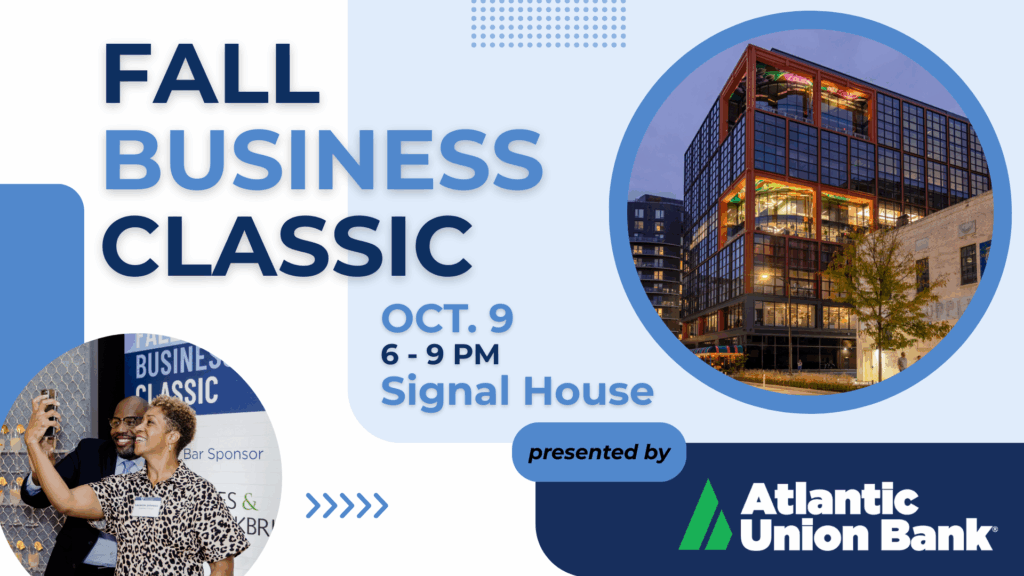
Read our June 2025 Newsletter here
Letter to WMATA and WMSC Boards Urging Dispute Resolution Process for Safety Technology Adoption
Update: Following our letter to the WMATA and WMSC Boards, we’re pleased to see ATO formally approved for the Green and Yellow lines, a major step forward for safer, more efficient transit.
About this Letter of Advocacy:
In this letter to the WMATA and WMSC Boards, the Greater Washington Board of Trade urges the establishment of a formal process for resolving disputes over proven transit safety technologies, citing the years-long delay in approving Automatic Train Operation. The letter highlights the risks this poses to Metro performance, regional mobility, and the economic competitiveness of Greater Washington.
Letter to Advocacy:
Dear Chair Hart and Chair Santos,
The recent decision by the Washington Metrorail Safety Commission (WMSC) to approve Automatic Train Operation (ATO) on the Green and Yellow Metrorail lines is a welcome and long-overdue step forward for our region. It’s a meaningful move toward enhancing safety while restoring the speed, reliability, and consistency riders expect—along with greater capacity and long-term cost savings for the system.
As Metro regains ridership and reconnects communities, modern tools like ATO are essential. Riders depend on Metro to get to work, access essential services, and participate fully in our economy. Expanding ATO will save time, improve the rider experience, reduce operator fatigue, and enhance safety—benefits already demonstrated on the Red Line. It also sends a strong signal to companies already here—and those looking to invest—that Greater Washington is committed to modern, efficient infrastructure that supports business growth and workforce mobility.
The long delay in approving ATO highlighted a deeper challenge: WMATA and WMSC lack a clear process for resolving differences over proven safety technologies and other issues. There’s no appeals pathway, no neutral third party, and no structured way to quickly move forward when views diverge. That creates gridlock—and undermines progress.
From a business standpoint, this kind of misalignment poses real risk. Metro is not just a transit system—it’s essential for a competitive regional economy. It drives commerce, lifts property values, and connects people to jobs, education, and opportunity. As the federal government continues to evolve and decentralize, we need Metro to operate at its full potential to attract talent, support innovation, and realize our economic promise. In a world defined by speed, data, and disruption, delays in adopting safe, widely used
technologies don’t just slow trains—they slow the entire region.

It’s time for a fix. I call on the WMATA and WMSC Boards to establish a formal process for resolving disputes—one that includes third-party mediation when needed, public reporting of decisions, and a commitment to timely, evidence-based outcomes. The DMVMoves initiative has already shown what’s possible when our regional bodies work together with purpose.
If no progress is made by year’s end, the Greater Washington Board of Trade will encourage leaders in the District, Maryland, and Virginia to amend the WMSC Compact to require such a process. Many elected officials have already expressed concern about the lack of coordination and transparency that marked the ATO decision.

We should not have to rely on legislative action. A shared commitment to better governance—balancing strong oversight with a clear path to modernization—will move the region forward and strengthen trust across the board.
Sincerely,
Jack McDougle
President & CEO
Greater Washington Board of Trade
GWBOT May 2025 Legislative Update
The Board of Trade’s advocacy, convening, and thought leadership activities support regional outcomes that will help Greater Washington grow and adapt for generations to come. The GWBOT Legislative Update shares legislation and policy insights from the Greater Washington region.