The Board of Trade remains focused on advancing the priorities that matter most to Greater Washington. This August newsletter shows a variety of engagements we have had across Greater Washington with members and public officials, while also showcasing meaningful updates on priorities we are following in the region. We also have a variety of member news updates that showcase regional collaboration!
Category: Latest Updates
Celebrating Executive Assistants with Connection and Conversation

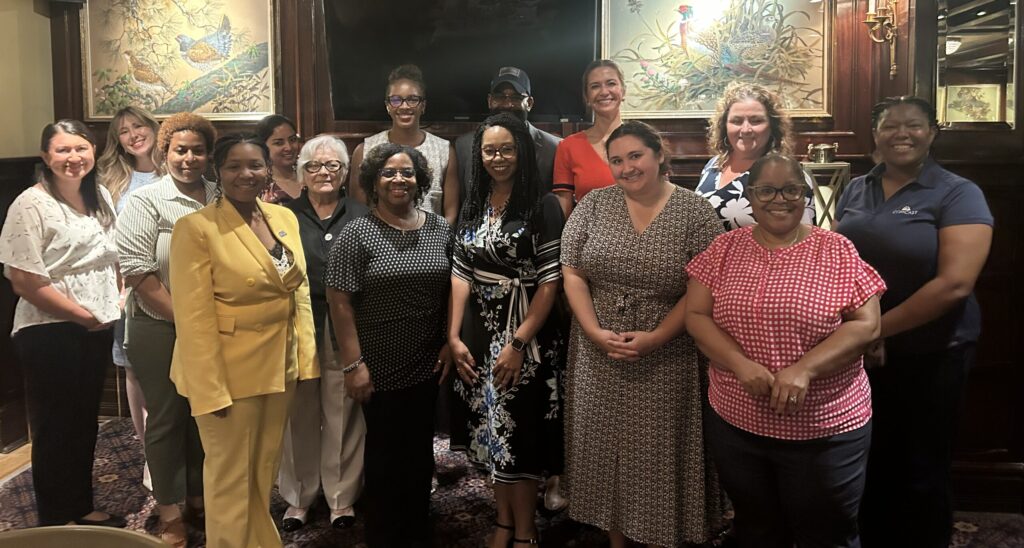
The Board of Trade had the pleasure of convening a group of executive assistants for an appreciation lunch at Old Ebbitt Grill in downtown Washington, D.C., on August 20. The gathering offered a rare opportunity for EAs — so often working diligently behind the scenes — to step out from behind the computer, connect with peers, and share experiences in a supportive and energizing setting.
As part of our professional development roundtable series, the event was designed not only to celebrate executive assistants but also to equip them with tools that support their work. Our featured speaker, Ernie Davis, Personal & Executive L&B Coach, led a thoughtful session on Myers-Briggs Strategy for Managing, Influencing, & Understanding Difficult People. With over 60 million people worldwide having taken the Myers-Briggs personality test, the discussion highlighted how understanding personality preferences can strengthen communication and relationships in both professional and personal contexts.
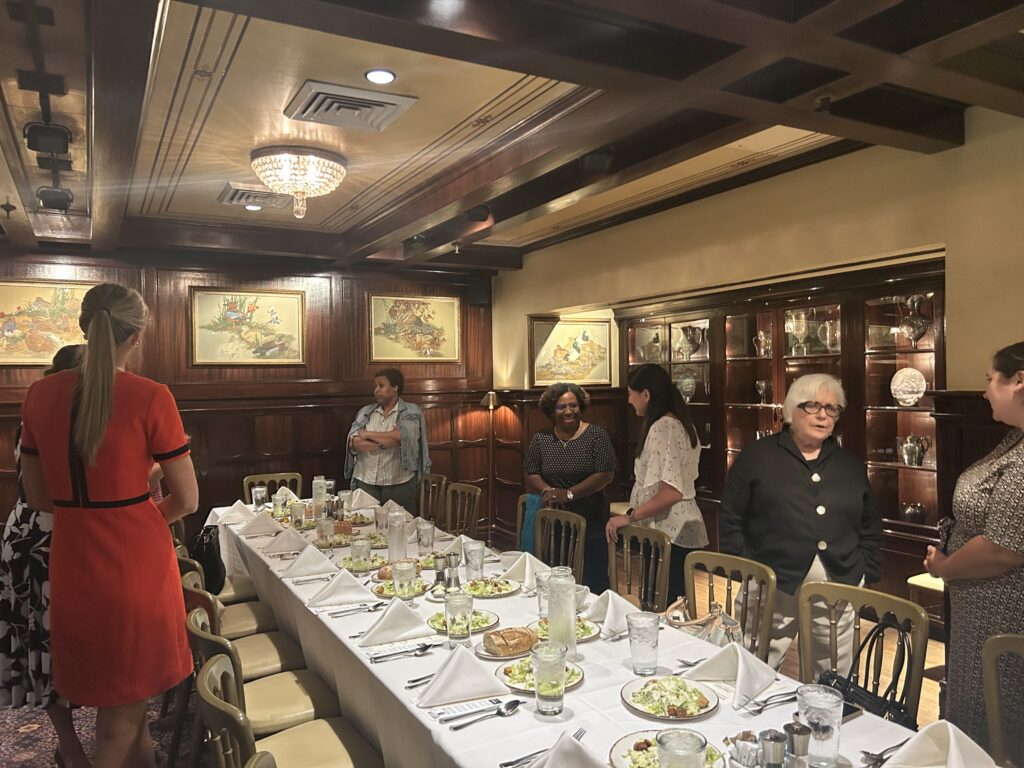
Many in the group were surprised to see their personality type shift from when they last took the test, which sparked an engaging conversation about how we evolve over time. The group also reflected on the qualities they share — being organized, effective communicators, and highly observant — while noting that individuals who don’t fit the “traditional” mold of extroverted or fact-driven can bring equally valuable strengths.
Ernie encouraged participants to lean into their natural preferences and show up authentically. “If you show up to work every day outside of who you are, that’s a fast track to burnout,” he reminded the group. His message resonated deeply, reinforcing the importance of authenticity not just in leadership, but in every role that helps an organization thrive.
The energy in the room was infectious. Attendees lingered after the session, continuing conversations and sharing stories—leaving the lunch both appreciated and better equipped as they head into a busy fall season. Beyond the camaraderie, the session offered a practical reminder of how professional development can directly support executive assistants in their critical roles: stronger communication, sharper self-awareness, and strategies to reduce burnout while amplifying their impact on the teams they support.
We are grateful to every executive assistant for the hard work, resilience, and dedication they bring to their roles each day. We look forward to reconvening this group soon and continuing to build this community through future gatherings in our professional development roundtable series.

Learn More and Register for Annual Meeting
Statement: Board of Trade on President’s Announcement to Deploy National Guard Troops in Washington, DC

“The Greater Washington Board of Trade shares the priority of keeping our communities safe and ensuring that people and businesses can thrive without disruption. Public safety is the foundation of a strong economy and quality of life.
In recent years, the District has made meaningful progress in reducing crime, with violent crime and property crime now at some of the lowest levels in recent memory. These gains are the result of sustained efforts by city leadership, law enforcement, business leaders, community organizations, and residents working together.
We welcome continued federal cooperation and coordination to build on this success. However, the National Guard’s mission is not law enforcement, and the deployment of troops for this purpose is likely unnecessary. We encourage federal leaders to work closely with District officials to support proven, community-based strategies that enhance safety while respecting the rights and trust of all residents.
The Board of Trade remains committed to fostering a safe, resilient, and inclusive Capital Region for all who live, work, and visit here.”
ABOUT THE BOARD OF TRADE
The Greater Washington Board of Trade, founded in 1889, is the region’s premier non-partisan business organization representing industry, nonprofits, universities, and government agencies. The Board of Trade addresses complex and always-evolving business concerns that stretch across the District of Columbia, suburban Maryland and Northern Virginia, with a priority focus on inclusive economic growth, improving the business climate, and enhancing the region’s economic competitiveness.
READ MORE POLICY ISSUES AND TOPICS THE BOARD OF TRADE IS FOLLOWING
- Letter of Support for Proposed I-495 Southside Express Lanes Project
- Board of Trade Supports RFK Site Redevelopment
- Beyond the Data: 2024 NAEP math results are alarming
- Looking Ahead: The Road to 2025 and Beyound for GWBOT Policy Team
- Waterway Economics: Funding increases for region’s Post of Baltimore and Port of Virginia
- Testimony: Downtown Arena Revitalization Act of 2024 (DC B25-1004)
GWBOT July/August 2025 Legislative Update
The Board of Trade’s advocacy, convening, and thought leadership activities support regional outcomes that will help Greater Washington grow and adapt for generations to come. The GWBOT Legislative Update shares legislation and policy insights from the region.
Read our July/August 2025 Legislative Update here
Why culture, lifestyle, and place matter to Greater Washington’s economic future

From tech talent and research strength to public purpose and inclusive growth, our Greater Washington region has the ingredients to lead as a global innovation powerhouse. But bold coordination is needed.
Our President & CEO, Jack McDougle, shares in his latest Washington Business Journal viewpoint that we must transform into an innovation-led economy, elevating cultural strengths key to shaping the future of our region. From Smithsonian museums to vibrant food halls and miles of urban trails, the region’s quality-of-life assets are powerful drivers of economic growth. They attract talent, foster belonging, and create the “vibe” that makes people choose to stay, build, and invest here.
ABOUT THE BOARD OF TRADE
The Greater Washington Board of Trade, founded in 1889, is the region’s premier non-partisan business organization representing industry, nonprofits, universities, and government agencies. The Board of Trade addresses complex and always-evolving business concerns that stretch across the District of Columbia, suburban Maryland and Northern Virginia, with a priority focus on inclusive economic growth, improving the business climate, and enhancing the region’s economic competitiveness.
READ MORE POLICY ISSUES AND TOPICS THE BOARD OF TRADE IS FOLLOWING
- Beyond the Data: 2024 NAEP math results are alarming
- Looking Ahead: The Road to 2025 and Beyound for GWBOT Policy Team
- Virginia gubernatorial candidate Abigail Spanberger meets with Greater Washington’s business community
- Waterway Economics: Funding increases for region’s Post of Baltimore and Port of Virginia
- Testimony: Downtown Arena Revitalization Act of 2024 (DC B25-1004)
Testimony to DC Council: Board of Trade Supports Bill for RFK Site Redevelopment

Update: The Washington Commanders secured a major milestone in the effort to bring professional football back to the District. On August 1st, the D.C. Council voted 9–3 in favor of legislation that would pave the way for the redevelopment of the RFK Stadium site, thus marking a pivotal first step in transforming one of the city’s most iconic but long-dormant properties into a vibrant, multi-use destination. This vote signals renewed momentum for a project that has implications far beyond the stadium walls. At its core, the redevelopment of the RFK site represents a commitment to regionalism with an investment in shared assets that generate economic activity, draw visitors, and enhance quality of life across jurisdictional lines.
About this Testimony:
The Board of Trade testified a second time before the D.C. Council and sent a letter to Council Chairman Phil Mendelson in support of Mayor Muriel Bowser’s proposal to bring the Washington Commanders back to the District as part of a larger mixed-use redevelopment of the RFK site. We again highlighted the opportunity not just as a sports project, but as a catalyst for long-term economic growth, fiscal strength, and regional competitiveness.
Previous Testimony on RFK Site Redevelopment to D.C. Council
Testimony Recording from DC Council Meeting:
Letter to Chairman Mendelson:
Good Morning, Chairman Mendelson and members of the Council.
Thank you for the opportunity to speak on behalf of the Greater Washington Board of Trade. Founded in 1889, our nonpartisan organization represents hundreds of employers across the Greater Washington region—spanning industry, nonprofits, universities, and government agencies. We’re committed to advancing inclusive economic growth and strengthening the city’s competitive position.
My name is Daniel Flores, and I’m here to express our strong support for the Mayor’s proposal to bring the Washington Commanders back to the District through a new stadium and mixed use development at the old RFK stadium site. This moment is about far more than building a stadium—it’s about unlocking the full potential of a high-impact site to become a bold, mixed-use destination that embodies the future of urban development. With smart, forward-looking planning, this space can be transformed into a thriving hub for housing, small businesses, transit, recreation, and cultural activity.
As the District stands at a critical crossroads, we must pursue ambitious solutions that don’t just maintain the status quo but reshape it. This is a once-in-a-generation opportunity to catalyze long-term prosperity, create new jobs, and strengthen our city’s position as a vibrant, resilient, and equitable capital for decades to come. With a record $2.7 billion private investment—the largest in D.C.’s history—augmented by thoughtfully designed public infrastructure, this project can:
- Support over 30,000 jobs and generate $4 billion in new tax revenue and unlock billions more in direct spending.
- Revitalize the RFK campus with new housing including 5,000-6,000 new homes for more than 10,000 residents across the campus with at least 30% affordable, maintaining The Fields at RFK and investing $89 million to construct a new state-of-the-art youth sports complex, new parks, retail, recreation, hospitality, and more.
- Generate long-term economic diversification through the develop of an inclusive, vibrant neighborhood that serves expanded opportunities for residents, supports small businesses, and boosts regional tourism.
We recognize the District faces fiscal constraints. That’s precisely why this investment is critical—it leverages private capital to grow the tax base and secure the city’s long-term financial stability, and we have seen the successful transformative power of these kind of investments before. While we have seen several successful projects around the city, including the redevelopments of Nationals Park, Audi Field, and The Wharf—we believe the RFK project has the ability to surpass many of these incredibly successful projects we have already seen throughout the city.
Time, however, is not on our side. Delays in legislative action or infrastructure investment threaten to derail the project timeline. Missing critical benchmarks this year could push back the stadium’s opening beyond the 2030 NFL season—and with that delay, the District could forfeit an estimated $750 million in lost economic impact from major events like the 2031 FIFA Women’s World Cup, the Rugby World Cup, a full season of Commanders home games, and large-scale concerts. This is more than an opportunity cost—it’s a concrete loss to city revenues, jobs, and visibility on the global stage. Additionally, failing to act could invite the opportunity for federal action to interfere with this redevelopment as it can be a signature achievement for the District—one that honors its past, serves its people, and inspires confidence in its future.
Let’s be clear: this is more than a stadium project. It’s a transformative vision for over 190 acres of largely dormant land in the heart of our capital city. It’s a chance to create an inclusive, vibrant neighborhood that reflects D.C.’s values and positions us as a national leader in urban renewal.
On behalf of the Board of Trade, I urge the Council to act with urgency and conviction. The pieces are in place and now is the moment to move forward to deliver not just 190 acres of largely dormant land in the core of the district, but a project that will shape the city’s future for generations to come.
Thank you for your time, and for your leadership on this critical issue.
Sincerely,
Jack McDougle
President & CEO
Greater Washington Board of Trade
GWBOT July 2025 Newsletter
The Board of Trade remains focused on advancing the priorities that matter most to Greater Washington. This July newsletter shows a variety of engagements we have had across Greater Washington with members and public officials, while also showcasing meaningful updates on priorities we are following in the region. We also have a variety of member news updates that showcase regional collaboration!
Read our July 2025 Newsletter here
So Much Power, No Platform: Executive Leaders Discuss Fixing the Disconnect in Regional Progress

The Capital Region stands at a pivotal crossroads. We have all the assets we need to be one of the world’s most competitive, inclusive, and resilient economic hubs — yet we lack the collective operating system to truly activate them.
At the Board of Trade’s recent Executive Leadership Roundtable in partnership with Comcast, leaders across business, education, and civic sectors agreed: Our region is not short on resources. We are rich in capital, talent, innovation, and infrastructure, but these elements operate in silos.
We heard a striking metaphor: “Our region is an app store without an operating system.” We have incredible individual capabilities, but they are not plugged into a cohesive system that drives shared outcomes.
Participants emphasized that to transform, we must:
- Move from a zero-sum mindset to shared growth.
- Align educational and workforce systems with the region’s evolving economic identity.
- Streamline regulatory frameworks to support speed and innovation.
- Shift from process-driven philanthropy to outcome-focused investment.

Inclusion remains a central imperative. With deep disparities in literacy, income, and access to opportunity — for example, 47% of adults in Ward 7 read at a first-grade level — we cannot build a prosperous region without confronting these foundational issues.
As one participant noted, “We have the assets of a Silicon Valley, but not the mindset.” Changing this requires collective vision and action across public and private sectors, underpinned by bold leadership.
Participants explored forward-looking strategies to ensure the Capital Region remains competitive, resilient, and inclusive. Insights from this session will help shape ongoing regional dialogues and inform the collaborative work of the Potomac Conference — a platform designed to synthesize diverse perspectives and surface shared priorities across jurisdictions and sectors.
The time to act is now. We can no longer afford to admire our challenges — we must design, build, and sustain the systems that will define our shared future.
Thank you to Comcast and its government affairs executive, Misty Allen, for partnering and helping us facilitate this discussion. Learn more about the work of Comcast’s Project UP and how this initiative is helping expand internet access around Greater Washington and the United States: https://bit.ly/4lOoMQU
Letter of Support for Proposed I-495 Southside Express Lanes Project
About this Letter of Support:
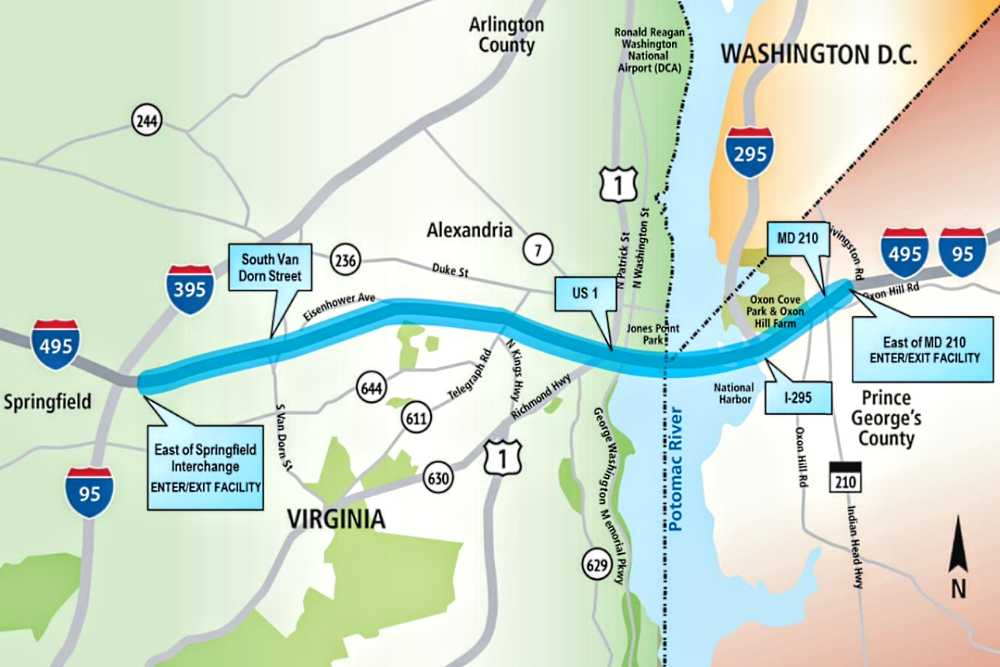
In a June 26 letter to the Transportation Planning Board, the Greater Washington Board of Trade expressed strong support for the proposed I-495 Southside Express Lanes project, citing its potential to ease congestion, support transit, and strengthen regional competitiveness. The letter highlights the project’s preservation of free lanes, addition of high-occupancy toll lanes, and integration of multimodal infrastructure including express bus service, biking, and pedestrian access. It also emphasizes the importance of maintaining right-of-way for future Metrorail expansion and notes that the project delivers critical improvements without new taxes. The Board urged VDOT to move forward, calling the investment essential for economic resilience and mobility in Greater Washington.
Letter of Support:
Chair James Walkinshaw,
On behalf of the Greater Washington Board of Trade, I write to express strong support for the proposed I-495 Southside Express Lanes project, now under review through the National Environmental Policy Act (NEPA) process.
Founded in 1889, the Board of Trade is the region’s leading non-partisan business organization, representing a broad cross-section of industries, nonprofits, universities, and government agencies across D.C., suburban Maryland, and Northern Virginia. We focus on inclusive economic growth, a competitive business climate, and strategic investments in transportation and infrastructure that drive regional vitality and quality of life. That’s why we support proposals like the new express lanes from Springfield across the Woodrow Wilson Bridge to I-295 — a forward-thinking, multimodal solution to one of our region’s most critical transportation challenges.
This project will benefit all who live, work, and travel in the corridor. It preserves the existing free lanes while adding high-occupancy toll lanes that are free for transit and carpoolers. It also includes critical investments in transit, biking, and pedestrian access. Notably, it preserves the right-of-way for future Metrorail expansion across the Woodrow Wilson Bridge and provides immediate funding for express bus service to build ridership and strengthen future demand.
Most importantly, this solution balances the urgent need for mobility improvements with long-term environmental and equity considerations. Without action, travel times on this segment of the Beltway are projected to double in the coming decades — worsening access to jobs, increasing emissions, and undermining the region’s economic resilience.
This project unlocks billions of dollars in transportation infrastructure investment without raising taxes or diverting funding from other critical regional needs. For our region to remain competitive and connected in a fast-changing economy, that kind of infrastructure investment is not just welcome — it’s essential.
We urge the Virginia Department of Transportation to move forward with the I-495 Southside Express Lanes project and to continue engaging stakeholders throughout implementation. The Board of Trade stands ready to support this effort and work collaboratively with our public and private partners to ensure a more connected, competitive, and sustainable region.
Sincerely,
Jack McDougle
President & CEO
Greater Washington Board of Trade
A new identity for Greater Washington: From policy powerhouse to innovation engine | WBJ Viewpoint
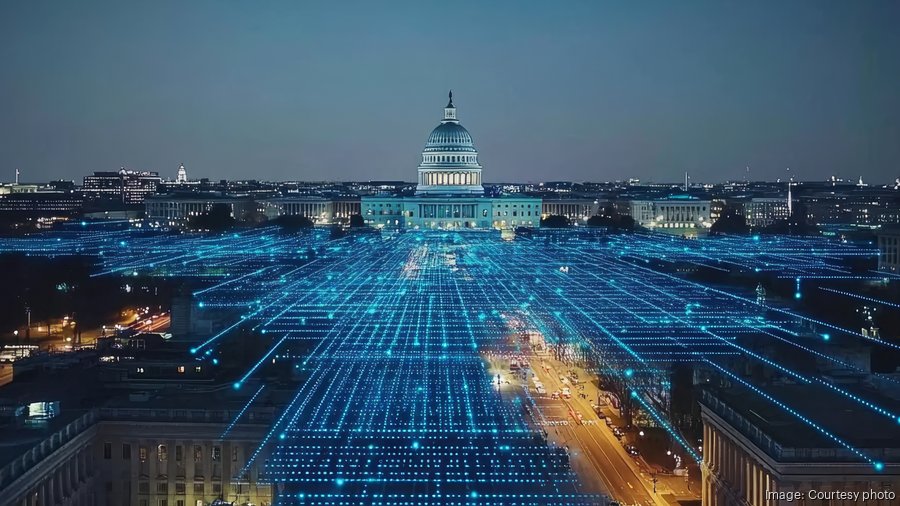
From tech talent and research strength to public purpose and inclusive growth, our Greater Washington region has the ingredients to lead as a global innovation powerhouse. But bold coordination is needed.
In his Washington Business Journal viewpoint, our President & CEO, Jack McDougle, highlights the region’s unique advantages—policy expertise, technical talent, and public purpose—and outlines six strategic priorities to turn ambition into impact.
ABOUT THE BOARD OF TRADE
The Greater Washington Board of Trade, founded in 1889, is the region’s premier non-partisan business organization representing industry, nonprofits, universities, and government agencies. The Board of Trade addresses complex and always-evolving business concerns that stretch across the District of Columbia, suburban Maryland and Northern Virginia, with a priority focus on inclusive economic growth, improving the business climate, and enhancing the region’s economic competitiveness.
READ MORE POLICY ISSUES AND TOPICS THE BOARD OF TRADE IS FOLLOWING
- Beyond the Data: 2024 NAEP math results are alarming
- Looking Ahead: The Road to 2025 and Beyound for GWBOT Policy Team
- Virginia gubernatorial candidate Abigail Spanberger meets with Greater Washington’s business community
- Waterway Economics: Funding increases for region’s Post of Baltimore and Port of Virginia
- Testimony: Downtown Arena Revitalization Act of 2024 (DC B25-1004)