The Board of Trade remains focused on advancing the priorities that matter most to Greater Washington. This March newsletter highlights a variety of engagements we have had across Greater Washington with members and public officials, as well as meaningful updates on the priorities we are following in the region. We also have a variety of member news updates that showcase regional collaboration!
Author: Board of Trade
What We’re Hearing Across Greater Washington This Spring

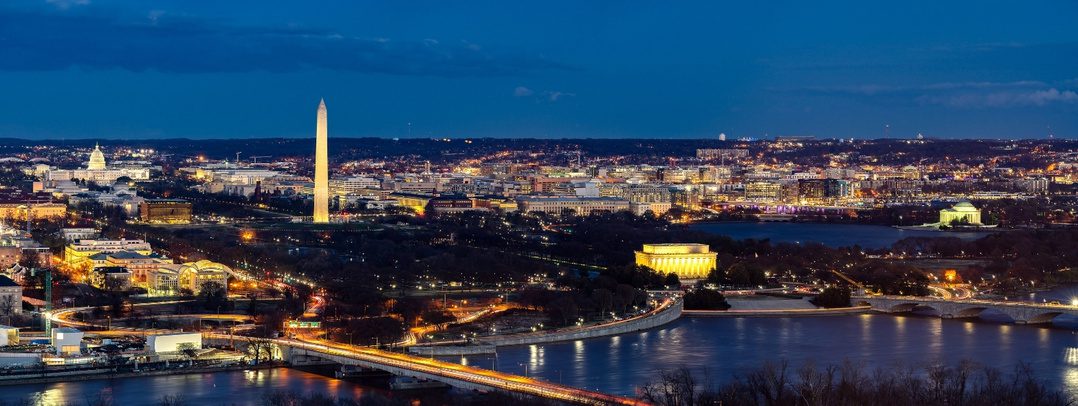
There is a lot moving across the region right now.
Not all of it fits neatly into one category, and not all of it is happening in one place. Some of the biggest conversations shaping Greater Washington this spring are unfolding in Richmond and Annapolis. Others are playing out in the District, through the D.C. mayoral race, the evolving council landscape, and ongoing debates about how the city grows, governs, and competes.
Taken together, they point to something bigger: this is a moment when leadership, infrastructure, workforce, and policy decisions are converging in ways that will shape the region’s future.
Transportation is one of the clearest examples. Metro funding remains a central regional priority, not simply as a transit issue, but as part of the broader question of how Greater Washington supports mobility, access, and long-term economic growth. At the same time, conversations around autonomous vehicles continue to test how quickly local policy can keep up with emerging technologies and changing transportation models.
The American Legion Memorial Bridge is another example of how these issues are becoming more connected. What was once framed primarily as a roadway project now sits inside a broader conversation about corridor planning, congestion, transit, and multimodal investment. After the previous P3 arrangement ended, Maryland shifted toward a more expansive approach that includes transit, ridesharing, bicycle and pedestrian connections, and related improvements across the corridor. That broader lens is important, and it aligns with the kind of holistic, multimodal thinking the Board of Trade has continued to emphasize.
Energy is also becoming harder to separate from growth and competitiveness. Discussions around grid reliability, energy demand, and data centers are no longer niche policy conversations. They are increasingly tied to business investment, infrastructure readiness, cost, and the region’s long-term ability to support innovation, retain growing companies, and create the conditions for business expansion.
That broader competitiveness conversation also includes how the region supports business growth from within. Across Greater Washington, there is growing recognition that success is not only about attracting the next major employer. It is also about helping existing companies grow, scale, and stay here. That includes stronger support for firms that have moved beyond the startup stage but need better access to capital, operational guidance, and regional networks to reach the next level.
The workforce conversation is shifting too. Leaders are looking beyond immediate hiring needs to think more broadly about federal workforce transitions, changing skill demands, and how technology is reshaping the labor market. That, in turn, is putting more attention on education, certifications, and better coordination between employers and workforce systems.
Meanwhile, activity in the Virginia and Maryland General Assemblies continues to shape the landscape in real time. Budget debates, transportation funding questions, tax policy, workforce priorities, and business climate concerns are all part of that picture. These are state-level decisions, but their effects are regional.
And then there is D.C., where the upcoming mayoral race and council contests carry implications that extend well beyond campaign politics. The mayoral race reflects competing ideas about affordability, growth, labor, and development, all at a time when the city is still working through downtown recovery, fiscal pressure, and broader economic transition. That matters for the District, but it also matters for the region as a whole.
What ties all of these conversations together is not that they are identical. It is that they increasingly overlap. Mobility affects growth. Energy affects competitiveness. Workforce affects business planning and opportunity. Elections affect policy direction. State budget decisions affect regional systems. And for employers, institutions, and civic leaders across Greater Washington, those intersections matter.
That is the Board of Trade’s role in this moment: helping bring together business, policy, and civic perspectives across jurisdictions so that members are not just reacting to individual headlines, but engaging with the bigger regional picture.
Our spring calendar is taking shape around many of the issues already driving conversation across the region, from elections and legislative developments to energy, mobility, education, workforce, and business growth. These gatherings are not just opportunities to stay informed. They are opportunities to engage with peers, hear directly from decision-makers, and contribute to the conversations helping shape your business and Greater Washington’s future.
More Content From Board of Trade
Autonomous Vehicles Need a Clear Path Forward in Greater Washington
National AV Safety Forum | Autonomous Vehicles Need a Clear Path Forward in Greater Washington
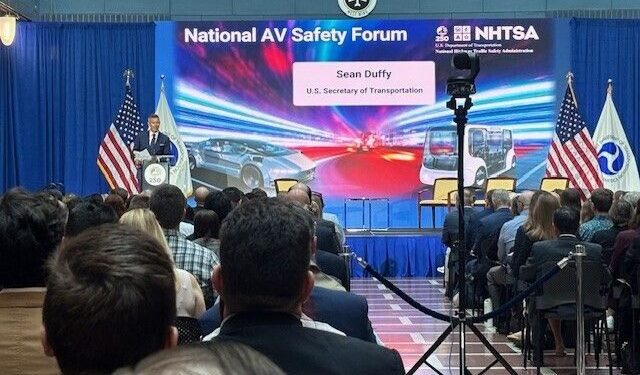
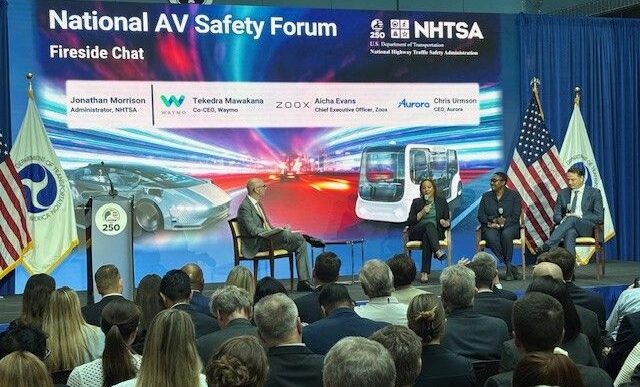
The conversation around autonomous vehicles has moved well beyond theory. At the U.S. Department of Transportation’s National AV Safety Forum on March 10, federal officials and industry leaders made clear that the question is no longer whether this technology is advancing. It is whether government can create a regulatory path that keeps safety at the center while allowing innovation to move from pilots to real-world deployment. The National Highway Traffic Safety Administration (NHTSA) used the forum to outline a federal automated vehicle framework focused on safety oversight, removing unnecessary regulatory barriers, and enabling commercial deployment.
That matters for Greater Washington. In cities such as Phoenix and Los Angeles, AV deployment is already moving beyond pilot programs, with expanding service, transit connections, and new operational investments showing what real-world integration can look like. Yet Greater Washington still does not have a clear regional path for fully autonomous vehicle deployment.
Federal momentum is real, but local policy still determines what happens on our streets
One of the clearest messages from the forum was that federal leadership can help modernize outdated rules, set clearer standards, and build public confidence in autonomous vehicle technology, especially because many existing safety rules were written for vehicles built around a human driver. NHTSA’s framework reflects that reality.
But AV deployment will not be decided at the federal level alone. In Greater Washington, state law, local permitting, roadway ownership, emergency response protocols, and agency coordination all shape whether companies can move from testing to service.
Today, D.C.’s legal framework remains limited to testing. In Maryland, SB909 would establish statewide standards for fully autonomous vehicles, but it remains pending. In Virginia, SB670 would create a framework for commercial fully autonomous vehicles, yet lawmakers delayed action and may revisit it next year.
If federal officials are signaling that the U.S. needs clearer rules of the road, Greater Washington cannot answer with a patchwork of delays, half-steps, and conflicting local standards.
The DMV’s fragmentation is not just inconvenient. It is a competitive disadvantage
This region already knows the cost of fragmentation. Transportation, land use, and infrastructure decisions are too often made jurisdiction by jurisdiction, even when the economy functions as one region. Autonomous vehicle policy is now running into that same problem. A technology that may function seamlessly in one jurisdiction becomes harder to scale if every border introduces a different set of rules, approvals, or operating conditions.
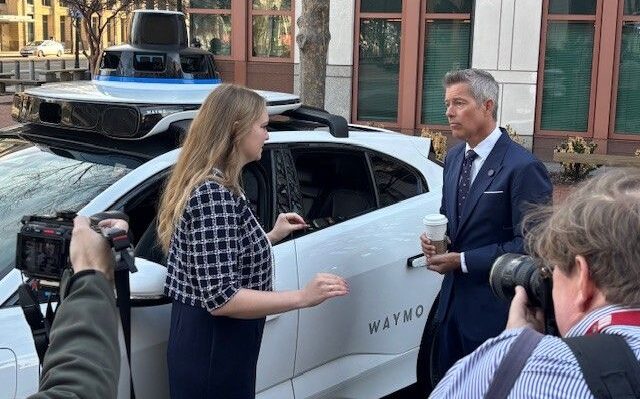
Meanwhile, the industry is not standing still. Waymo is already operating at significant scale nationally, with more than 400,000 weekly rides and nearly 200 million fully autonomous miles on public roads. In Phoenix, the company has continued expanding service and investing in U.S. fleet manufacturing. In Los Angeles, it has tested ways to connect AV service with public transit trips. Greater Washington, by contrast, is still working through the rules needed to move beyond testing.
If this region wants to attract investment, support innovation, and shape how these systems fit into transit and regional mobility, it cannot remain a market where companies can test but not meaningfully deploy.
This should not be a debate about one company. It should be a debate about the right framework
The Board of Trade’s role is not to pick winners. It is to help shape the policy environment the region needs to compete.
That means being clear-eyed about both opportunity and responsibility. AV policy should be safety-first, with transparency, clear interaction protocols for first responders and law enforcement, strong data and cybersecurity expectations, and coordination with existing transportation systems. Maryland’s pending bill offers one example of what that framework can include, from insurance and first responder interaction plans to compliance with federal safety standards and data privacy protections.
But getting the framework right is not only about managing risk. It is also about unlocking real public benefits. Autonomous vehicles can help expand mobility for seniors and people with disabilities, support first-mile/last-mile connections to transit, and reduce dangerous human driving behaviors that continue to contribute to roadway deaths. At the forum, NHTSA acknowledged AVs’ potential safety and mobility benefits while making clear that enforcement and oversight will remain essential.
For Greater Washington, this is not a theoretical debate about the future. It is a practical policy question about how we modernize our transportation system to make the region more connected, more accessible, and more economically competitive.
A clear regional path is within reach
The path forward should be straightforward. D.C., Maryland, and Virginia need to move toward a more aligned framework for testing, deployment, and commercial operation. Local governments and transportation agencies should treat AVs as part of a broader mobility strategy, especially where they can complement transit through first-mile/last-mile connections, station access, and congestion relief. And the region needs to stop confusing caution with inaction. Safety oversight and public trust are essential, but endless delay is not a strategy.
The federal government has signaled that it wants to modernize the regulatory conversation around autonomous vehicles. Greater Washington now has an opportunity to lead with a framework that reflects both innovation and responsibility.
The Board of Trade will remain actively engaged in that work, bringing together business, government, and transportation stakeholders to support a more integrated, regionally aligned approach to autonomous vehicle policy that prioritizes safety, builds public trust, and recognizes AVs as one part of a larger system for improving mobility, access, and regional competitiveness.
Check out more of where our organization is focused in the region on our Policy & Priorities page.
Engage Further on Transportation in Greater Washington
Connection Through Innovation: Highlights from the 2025 Capital Region Transportation Forum
Letter of Support: Fully Autonomous Vehicle Legislation (SB670) in Virginia
A New Era of Collaboration: We Need the Big Three to Finally Bring the DMV Together | WBJ Viewpoint

In this Washington Business Journal Viewpoint, ‘A New Era of Collaboration: We Need the Big Three to Finally Bring the DMV Together,’ our President & CEO Jack McDougle, argues that Greater Washington’s economic competitiveness now depends on sustained, measurable regional coordination among Maryland, Virginia, and D.C. It points to the Feb. 5 meeting of Maryland Gov. Wes Moore, Virginia Gov. Abigail Spanberger, and D.C. Mayor Muriel Bowser as a promising signal, but emphasizes that symbolism must turn into a new operating model built on alignment and execution.
The piece outlines a blueprint for regionalism that treats the DMV as one integrated “portfolio,” combining Maryland’s bio-health and research strengths, Virginia’s tech and defense corridors, and D.C.’s urban core and global visibility into a single growth engine. It calls for public institutions to shift from a jurisdiction-first posture to true partnership with the private sector, and to remove barriers that prevent companies from scaling locally—especially regulatory, licensing, and permitting friction that acts like a hidden tax when businesses expand across borders.
Finally, it identifies talent mobility, transportation, and energy as the region’s key productivity pillars. The author urges reciprocity for professional credentials, deeper alignment between higher education and industry, and a unified mobility strategy that treats roads, transit, WMATA funding, and land use as one system. On energy, it warns that AI, data centers, and advanced research require reliable power at scale—and that fragmented planning and slow interconnection threaten both investment and household affordability. The Viewpoint concludes by calling for sustained joint action and cross-sector collaboration, with the Greater Washington Board of Trade positioning itself as a ready partner to help drive regional alignment.
ABOUT THE BOARD OF TRADE
The Greater Washington Board of Trade, founded in 1889, is the region’s premier non-partisan business organization representing industry, nonprofits, universities, and government agencies. The Board of Trade addresses complex and always-evolving business concerns that stretch across the District of Columbia, suburban Maryland, and Northern Virginia, with a priority focus on inclusive economic growth, improving the business climate, and enhancing the region’s economic competitiveness.
READ MORE POLICY ISSUES AND TOPICS THE BOARD OF TRADE IS FOLLOWING
- Beyond the Data: 2024 NAEP math results are alarming
- Looking Ahead: The Road to 2025 and Beyound for GWBOT Policy Team
- Virginia gubernatorial candidate Abigail Spanberger meets with Greater Washington’s business community
- Waterway Economics: Funding increases for region’s Post of Baltimore and Port of Virginia
- Testimony: Downtown Arena Revitalization Act of 2024 (DC B25-1004)
Letter of Support: Fully Autonomous Vehicle Legislation (SB670) in Virginia
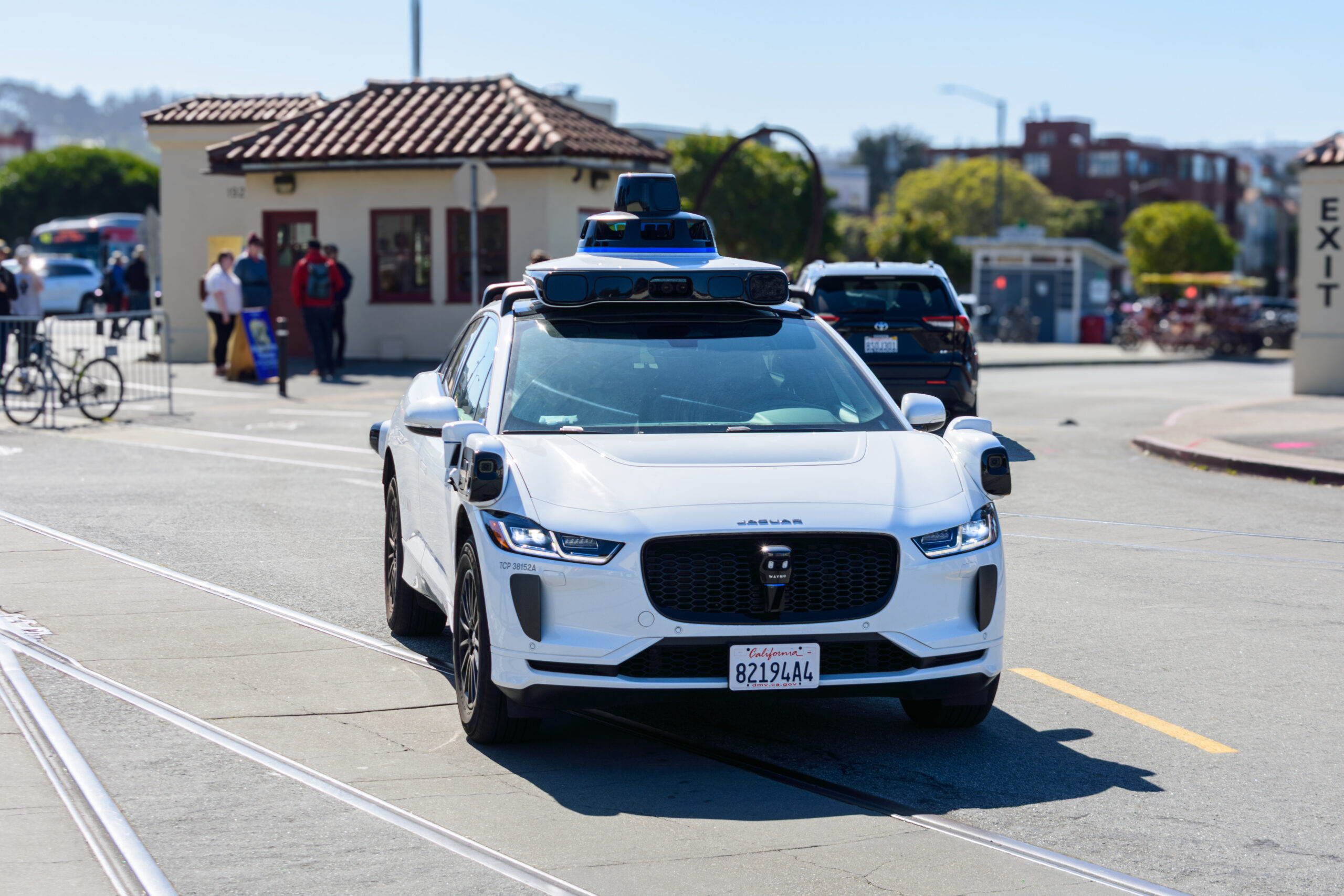
Update: This proposed comprehensive framework bill for commercial autonomous vehicles in the state has been postponed for a second year. The Board of Trade will continue to support legislation that brings safe and logical next-generation mobility solutions to Greater Washington.
About this Letter of Support:
In its letter of support for SB670, the Greater Washington Board of Trade urges Virginia lawmakers to advance a clear regulatory framework for autonomous vehicles. The Board argues that the bill will help position Virginia as a leader in next-generation mobility by supporting innovation, economic growth, public safety, and long-term regional competitiveness.
Submitted Letter of Support:
DOWNLOAD HERE
March 2, 2026
Dear Chair Delaney and Vice Chair Reid:
I write to express our support for SB 670 as it comes before the House Transportation Subcommittee on Innovation.
Autonomous vehicle technology is no longer experimental. It is already operating in major U.S. markets, including Phoenix, San Francisco, Austin, and Las Vegas, under structured regulatory frameworks. States that provide clear, predictable rules are attracting investment, research partnerships, and high-skilled jobs in advanced mobility. Those that hesitate are watching that innovation and capital flow elsewhere.
Virginia is well positioned to lead. The Commonwealth’s strengths in artificial intelligence, cybersecurity, logistics, and advanced research make it a natural hub for
next-generation transportation systems. What is needed is regulatory clarity. SB 670 provides that framework while maintaining appropriate oversight and public safety.
Concerns about safety and workforce impacts deserve serious consideration, but they are best addressed through thoughtful policy, not delay. Properly regulated autonomous systems have the potential to improve safety, enhance traffic flow, and increase efficiency. AV deployment will also create new opportunities in fleet operations, software engineering, systems maintenance, and infrastructure modernization. The question isnot whether this technology will advance, but where the economic benefits will accrue.
As our region works to diversify beyond federal reliance and build a stronger digital-era economy, transportation innovation is directly tied to competitiveness. SB 670 signals that Virginia intends to shape the future of mobility rather than react to it.
We appreciate your leadership and thoughtful consideration of this measure and stand ready to serve as a resource as it moves forward.
Respectfully,
Jack McDougle
President & CEO
Greater Washington Board of Trade
Strengthening the DMV Region’s Energy Future

The conversation around Greater Washington’s (DMV) energy future has shifted from a distant policy debate to a defining operational reality.
At our recent GWBOT Executive Lunch, the dialogue wasn’t just about kilowatts and transmission lines; it was about the collective resilience of our region and the urgent need to respond to an energy system that is changing faster than our infrastructure can keep pace.
The Stark Reality: A Surge in Energy Demand
The data behind this shift is staggering. Kevin Carey from AOBA highlighted insights from PJM Interconnection that paint a clear picture of the road ahead: we are facing a projected 30GW of load growth between 2025 and 2030, with an additional 30GW+ expected by 2040. This surge is largely propelled by our digital-first economy, with U.S. power demand from data centers expected to more than double from current levels.
While demand is skyrocketing, our ability to meet it remains constrained. In 2025, only about 2 GW of new generation came online in PJM; a significant drop from the 5 GW added just the year prior. Perhaps most concerning is the bottleneck in the construction queue; of the ~44 GW of capacity currently in development, roughly three-quarters remain stalled in engineering or procurement.
What Those Numbers Mean to Regional Leaders
The conversation revealed a shared understanding: energy reliability is the silent engine of regional economic development. Whether it’s Washington Gas emphasizing the importance of a diverse energy mix or WTOP sharing its ability to report on the infrastructure that connects us, every leader in the room recognized that our collective growth depends on a modern, robust grid.
For our nonprofits and small businesses, the challenge is one of bandwidth. When you are heavily focused on a daily critical mission, whether it’s community health or essential services, finding the time to navigate complex energy policy can feel like an impossible addition to an already full plate. However, we discussed how even small, incremental steps, like understanding your organization’s capacity tag or advocating for streamlined local permitting, can make a difference.
Leaders from Perkins Eastman and the Universities at Shady Grove urged us to build with adaptability in mind, pointing to the miles of railroad infrastructure that made perfect sense in one era, only to be torn out as technology and growth patterns changed. We must move quickly to support projects like Valley Link and Joshua Falls, but do so informed by innovative insight and research. We can’t afford temporary fixes; we need long-life infrastructure that keeps power dependable and costs predictable for employers across the region.
A Call for Collaborative Action for Energy Future
The takeaway from our discussion was clear: the grid is the floor upon which we all stand. To keep it solid, we must collaborate to support each other and quickly address these critical needs with the most innovative and thought-out approach possible. Join the conversation in addressing critical questions such as:
- How can we streamline the 75% of stalled projects in the queue to get them online faster?
- How do we ensure our smallest community anchors aren’t left behind as energy costs fluctuate?
- Are we building the infrastructure that will still be powering the DMV 50 years from now?
Now is the time for coordinated action across employers, utilities, and local jurisdictions. We encourage all our members to engage with our energy policy initiatives and join the solutioning for a reliable, sustainable, and affordable power system.
To learn more about how your organization can be involved in our energy initiative, reach out to [email protected].
Insights from the Table is a membership-driven series of specific takeaways from our Executive Lunches, where local and state leaders help inform our organization’s decisions and guide the work we do in a rapidly evolving regional environment. Your impact and insights matter to the growth of Greater Washington.
GWBOT February 2026 Newsletter
The Board of Trade remains focused on advancing the priorities that matter most to Greater Washington. This February newsletter highlights a variety of engagements we have had across Greater Washington with members and public officials, as well as meaningful updates on the priorities we are following in the region. We also have a variety of member news updates that showcase regional collaboration!
Read our February 2026 Newsletter here
Board of Trade honors Jeremy Blank at Annual Chair’s Dinner
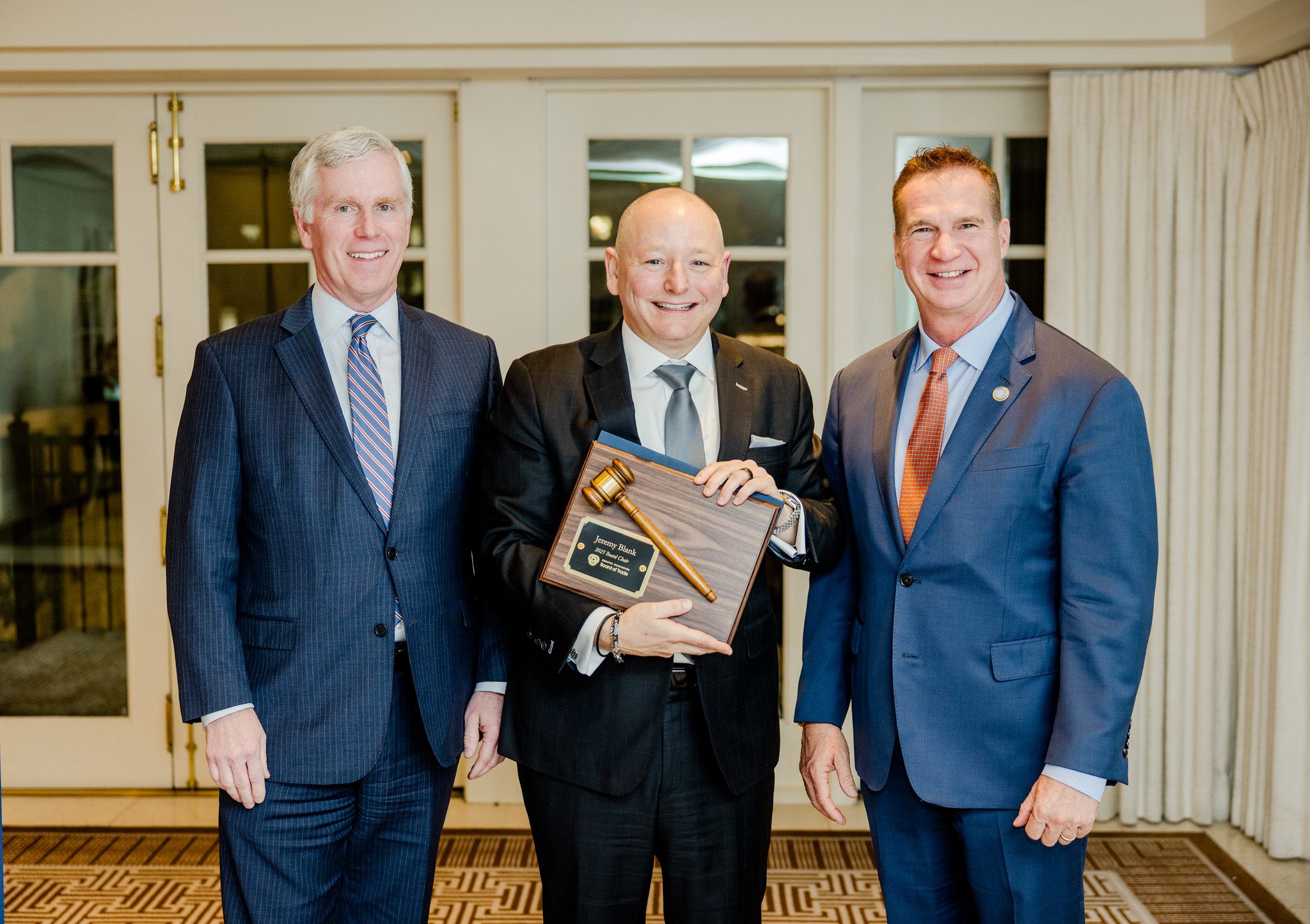
Each year, the Board of Trade honors our outgoing Chair with an evening of celebration alongside board colleagues, coworkers, family, and friends. We were proud to host our Annual Chair’s Dinner recognizing Jeremy Blank, our 2025 Board Chair and a principal at Deloitte, in downtown Washington, D.C., at The Hay-Adams.
In 2025, the Board of Trade welcomed 29 new members, delivered 120+ programs and gatherings, achieved 91% member retention, and expanded our reach through stronger regional engagement in D.C., Maryland, and Virginia.
Throughout his term, Jeremy helped guide the Board with steady dedication and a clear commitment to strengthening the Greater Washington region. His chairmanship reflected what makes this organization unique: a shared belief that when business leaders come together with purpose, they can help move the region forward.
Thank you to our board members, invited guests, and everyone who made the evening special, including a warm welcome for incoming Chair Tyler Anthony. Building on this year’s progress, we look forward to advancing our region’s work in 2026.
See pictures from the Chair’s Dinner below:

About Greater Washington Board of Trade:
The Greater Washington Board of Trade, founded in 1889, is the region’s premier non-partisan business organization representing industry, nonprofits, universities, and government agencies. The Board of Trade addresses complex and always-evolving business concerns that stretch across the District of Columbia, suburban Maryland, and Northern Virginia, with a priority focus on inclusive economic growth, improving the business climate, and enhancing the region’s economic competitiveness. Learn more about the Board of Trade and its mission at www.boardoftrade.org.
Our Next Signature Event:

Expediting Delivery of the American Legion Memorial Bridge and I-495 & I-270 Managed Lane Project
About This Advocacy Effort:
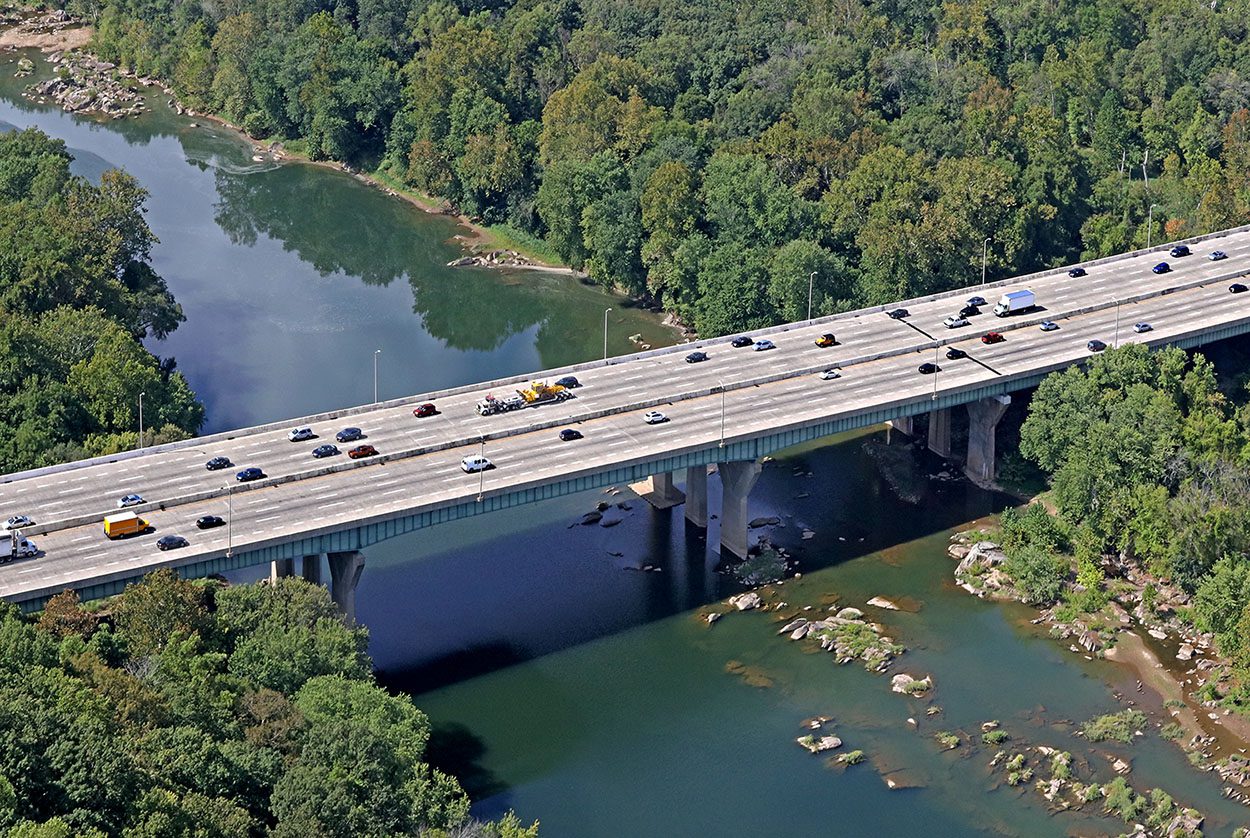
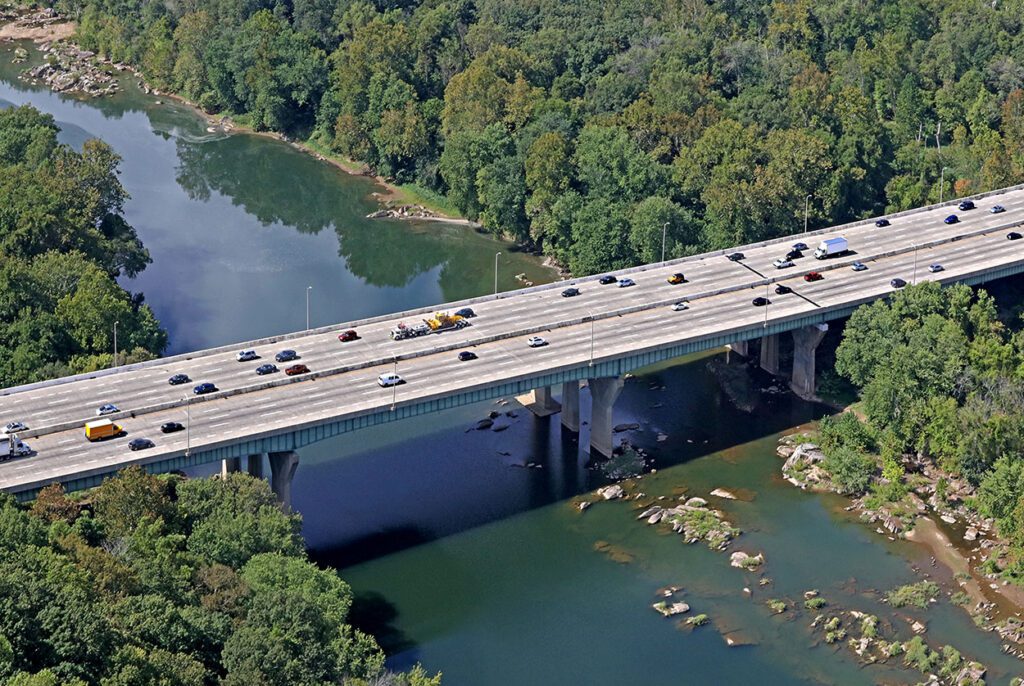
Expediting Delivery of the American Legion Memorial Bridge is a must for Greater Washington to thrive. Below is part of the Board of Trade’s response to the Federal Highway Administration’s Request for Information on accelerating delivery of the American Legion Memorial Bridge replacement and the I-495/I-270 managed lanes corridor. It outlines why the bridge is a linchpin for regional mobility and economic competitiveness—and recommends a unified, multimodal corridor approach that pairs transit integration and modern technology with a Public-Private Partnership (DBFOM) delivery model to reduce risk, attract investment, and move faster. It also highlights key barriers (funding, cross-jurisdiction complexity, regulatory uncertainty), strategies to expedite construction, and the economic cost of delay for commuters, employers, and freight movement. Read the executive summary below or download our full response.
Executive Summary
The Greater Washington Board of Trade (the Board of Trade) is the region’s premier nonpartisan business organization. For more than 135 years, we have represented all industry sectors across the District of Columbia, suburban Maryland, and Northern Virginia, serving as a primary convener to advance business competitiveness, inclusive growth, and regional livability.
Greater Washington is undergoing a profound economic transformation. The region’s historic reliance on the federal government is shifting toward a more diversified economy driven by artificial intelligence, biotechnology, cybersecurity, and other advanced industries. To remain globally competitive and to sustain the federal government’s own economic and national security interests our shared infrastructure must evolve.
Investing in the American Legion Memorial Bridge (ALMB) is therefore a strategic imperative for both Maryland and the federal government. As the bridge approaches the end of its useful life in 2028, it represents not only a critical transportation asset, but one of the most important federal–state infrastructure partnership opportunities in the nation.
While Greater Washington is now the most congested region in the United States, with daily gridlock costing billions in lost productivity, the central issue is not simply congestion. Mobility is now a core economic and national competitiveness function. The efficiency with which people and goods move determines whether the region can support federal missions, attract private investment, expand workforce participation, spur innovation, and sustain long-term growth.
We Cannot Compete Through Congestion
Greater Washington’s roadway system is fundamentally constrained. Unlike most major metropolitan regions, which benefit from inner and outer beltways, the Capital Region relies on a single overburdened loop to serve both local and national travel demand. Every chokepoint now carries national economic consequences.
Relying solely on traditional public funding for multibillion-dollar infrastructure investments is neither feasible nor equitable. Competing with global hubs such as London, Toronto, and Houston requires demonstrating a willingness at both the state and federal levels to invest now, responsibly and creatively, in the systems that underpin long-term competitiveness.
A Unified, Multimodal Corridor Strategy
The solution is not piecemeal projects, but a unified, multimodal corridor strategy for the I-270 and I-495 system. Given limited physical space and a single Capital Beltway, the objective must be to maximize throughput.
This requires integrating highways, transit, and technologies where rail, bus, and roadways operate as a single ecosystem. Only through this level of integration can the region meaningfully reduce congestion, improve reliability, and support long-term economic growth.
In 2019, the Board of Trade and the Greater Washington Partnership convened the Capital Regional Transportation Forum, leading to the Capital Beltway Accord, a joint Maryland–Virginia commitment to address the ALMB bottleneck and pursue a coordinated corridor strategy.
The replacement and modernization of the American Legion Memorial Bridge is the linchpin of this system and a cornerstone of North–South regional connectivity. The South Side Project is equally critical, unlocking the eastern and southern Beltway, improving freight movement, expanding access to jobs and housing, and strengthening trip reliability across the metropolitan area.
Leveraging P3s and Federal Investment
These projects are too critical and too large to be delivered through state level public funding alone. Public-Private Partnerships (P3s), supported by strong federal investment, should serve as a core delivery mechanism for the corridor.
P3s enable faster project delivery, introduce private-sector innovation, transfer risk, and unlock substantial private capital while positioning Maryland to maximize federal investment and meet USDOT’s expectations for performance, cost discipline, and schedule certainty.
We recommend a Public-Private Partnership using a Design-Build-Finance-Operate-Maintain (DBFOM) revenue-risk model to align federal priorities, state leadership, and private capital around long-term performance, accountability, and regional impact. This approach not only adds capacity to the corridor, but it introduces demand management in the form of dynamically priced express lanes, which offer reliable travel times for drivers when they need it and are willing to pay for it. This travel time reliability is also enjoyed by transit riders, as transit vehicles will use the express lanes at no cost.
By advancing a unified federal–state strategy that leverages private investment and modern delivery models, Maryland and the federal government can transform the region’s transportation system from a structural constraint into a national competitive asset.
Additional Advocacy Around This Topic
Letter of Support for Proposed I-495 Southside Express Lanes Project
Letter of Advocacy: Maryland and Virginia must Prioritize Reconstruction of American Legion Bridge
America’s 250th Regional Resources and Festivities Guide
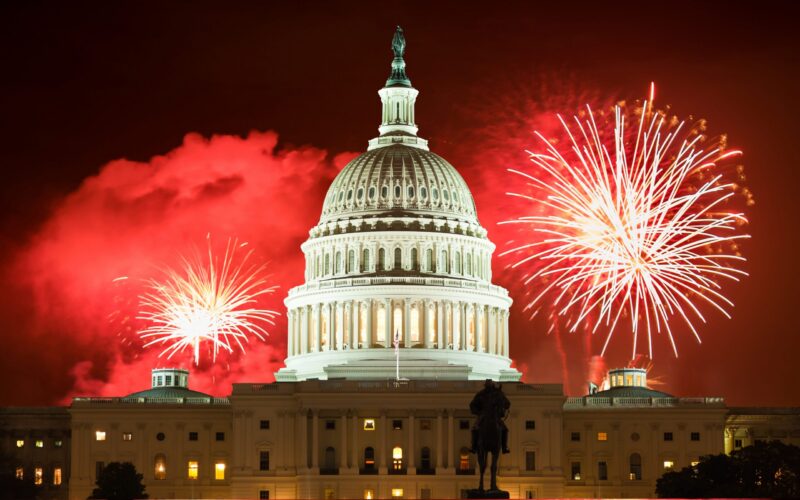
On July 4, 2026, our nation will commemorate the 250th anniversary of the signing of the Declaration of Independence. This historic milestone offers a moment to reflect on our shared past, honor the contributions of all Americans, and look ahead to the future we aspire to build for generations to come.
Across the Greater Washington region, the Semiquincentennial will also bring unique celebrations, events, and opportunities that highlight our nation’s history and showcase the strength, diversity, and innovation of our regional community.
Browse the resources and festivities below to get a full picture of how Greater Washington will mark this once-in-a-generation milestone.
Regional Resources & Festivities:
American250
America250 is a nonpartisan initiative working to engage every American in commemorating the 250th anniversary of our country. This multi-year effort, from now through July 4, 2026, is an opportunity to pause and reflect on our nation’s past, honor the contributions of all Americans, and look ahead toward the future we want to create for the next generation and beyond.
Trust for the National Mall
Inspired by this monumental moment, the Trust for the National Mall and the National Park Service are building legacy restoration projects, civic learning opportunities and volunteer programs on the National Mall and at the White House and President’s Park.
Freedom250
Freedom 250 is a national, non-partisan organization helping lead the celebration of our Nation’s 250th birthday. Working together with the White House Task Force 250, federal agencies, and the Commission, Freedom 250 serves as the official public-private partnership that connects, aligns, and amplifies national and local efforts to deliver the defining presidential moments of this anniversary year.
Our Shared Future: 250 – Smithsonian
The Smithsonian will celebrate the nation’s successes, contemplate the consequences of our history, commemorate the sacrifices of those who have worked to uphold the nation’s ideals, and ask Americans to commit to advancing our democracy and preserving our shared future.
DC 250
From monumental events and historic exhibitions to once-in-a-lifetime experiences, Washington, DC already has an incredible lineup of ways to honor 250 years of American independence in 2026. Stay up to date with special programming and need-to-know info so that you can make the most of this unforgettable milestone.
VA 250
Established by the General Assembly in 2020, VA250 serves to commemorate the 250th anniversary of the American Revolution, the Revolutionary War, and the Independence of the United States in the Commonwealth of Virginia.
Maryland 250 Commission
In observance of America’s 250th anniversary, Maryland is looking back at its state’s contributions to American history through the eyes and experiences of fellow Marylanders. This commemoration is for every one of us, from the Chesapeake Bay to the mountain peaks out west. Attend events, get involved, give back, and gain perspective.
Mount Vernon 250
In spring 2026, Mount Vernon will unveil a revitalized George Washington exhibit. This updated space will focus on why Washington matters today and how the decisions he made in his lifetime continue to impact us in the 21st century.
Daughters of the American Revolution
In celebration of our country’s 250th anniversary, the Daughters of the American Revolution are privileged to present this special event, which will underscore the immense contribution of women veterans and spotlight the impact they have made throughout our nation’s history.
Freedom 250 Grand Prix
The Freedom 250 Grand Prix of Washington, D.C., will recognize the historic milestone of America’s independence and celebrate the unparalleled tradition and legacy of America’s motorsports industry.
About the Greater Washington Board of Trade
The Greater Washington Board of Trade, founded in 1889, is the region’s premier non-partisan business organization representing industry, nonprofits, universities, and government agencies. The Board of Trade addresses complex and always-evolving business concerns that stretch across the District of Columbia, suburban Maryland, and Northern Virginia, with a priority focus on inclusive economic growth, improving the business climate, and enhancing the region’s economic competitiveness. Learn more about the Board of Trade and its mission at www.boardoftrade.org.