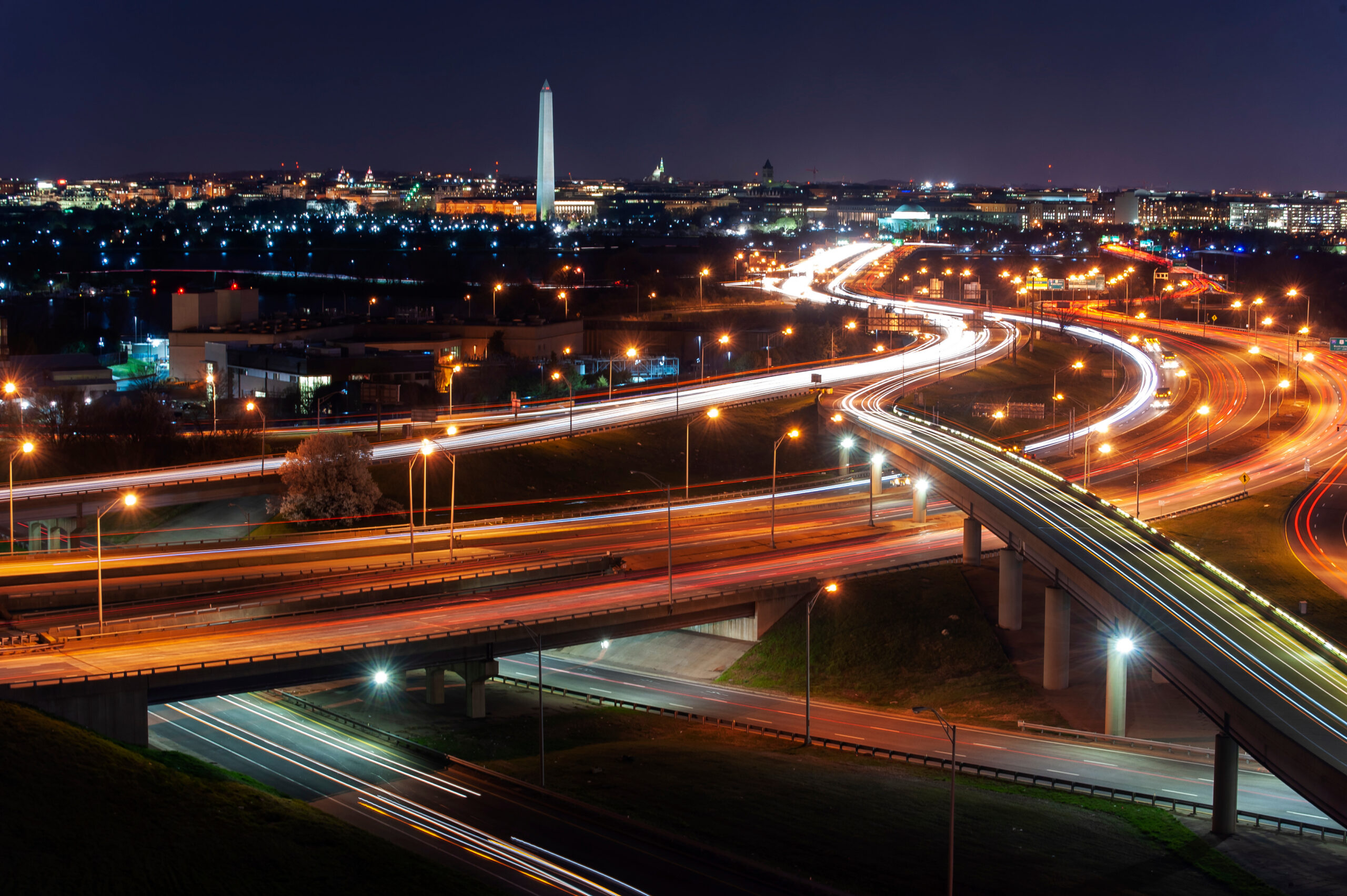
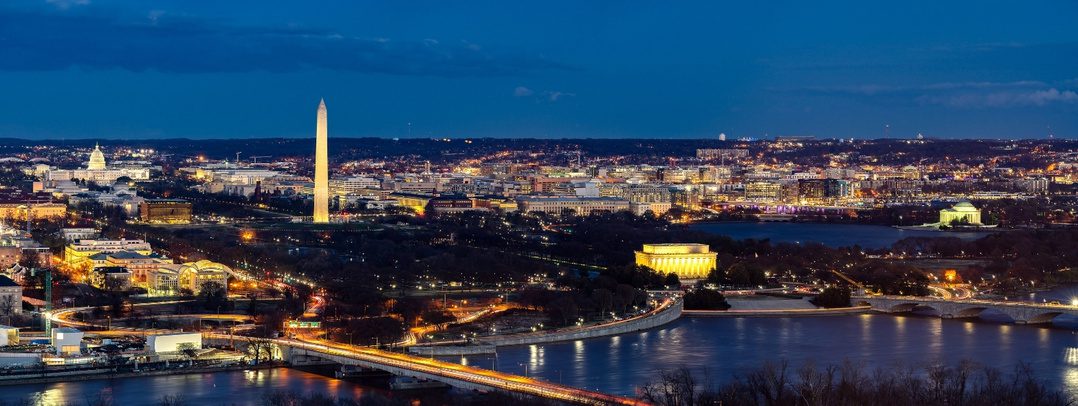
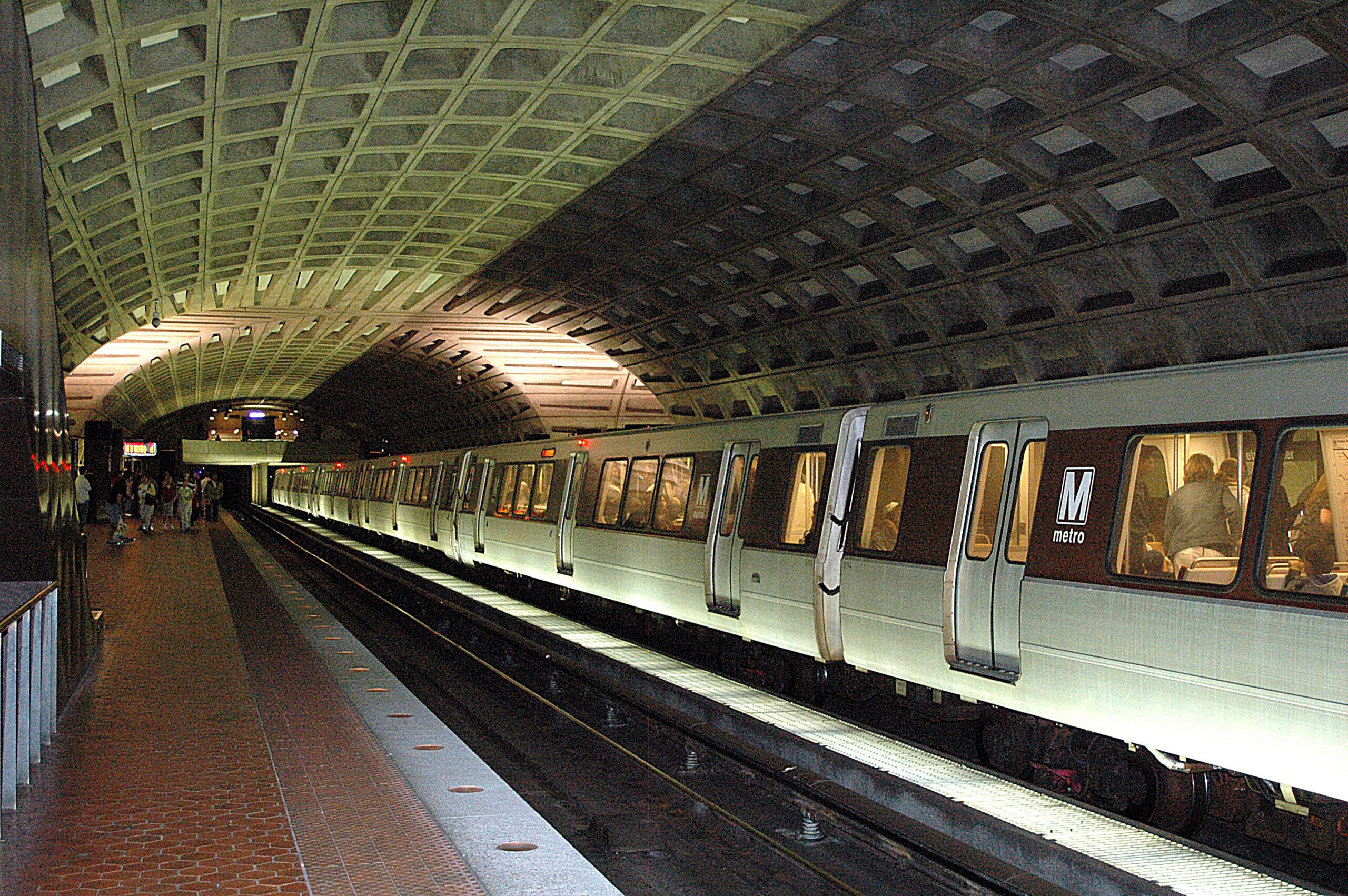
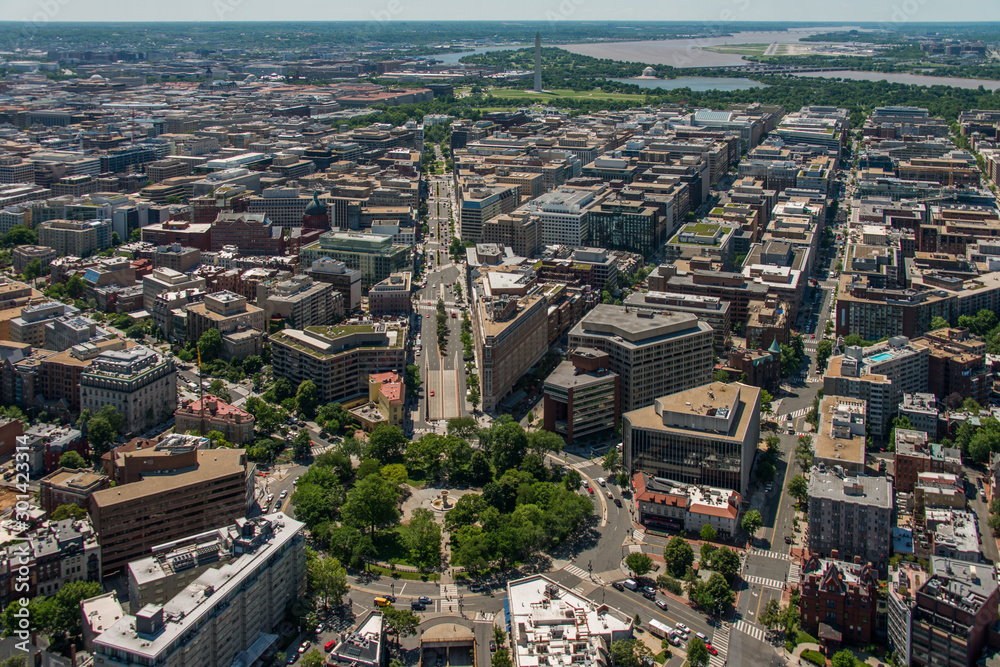
Greater Washington’s transportation network serves as a major regional asset. Commuter rail systems, bus networks, airports, highways, and bridges connect people and businesses because stakeholders in D.C., Maryland, and Virginia have spent decades building one of the country’s most extensive transportation networks.
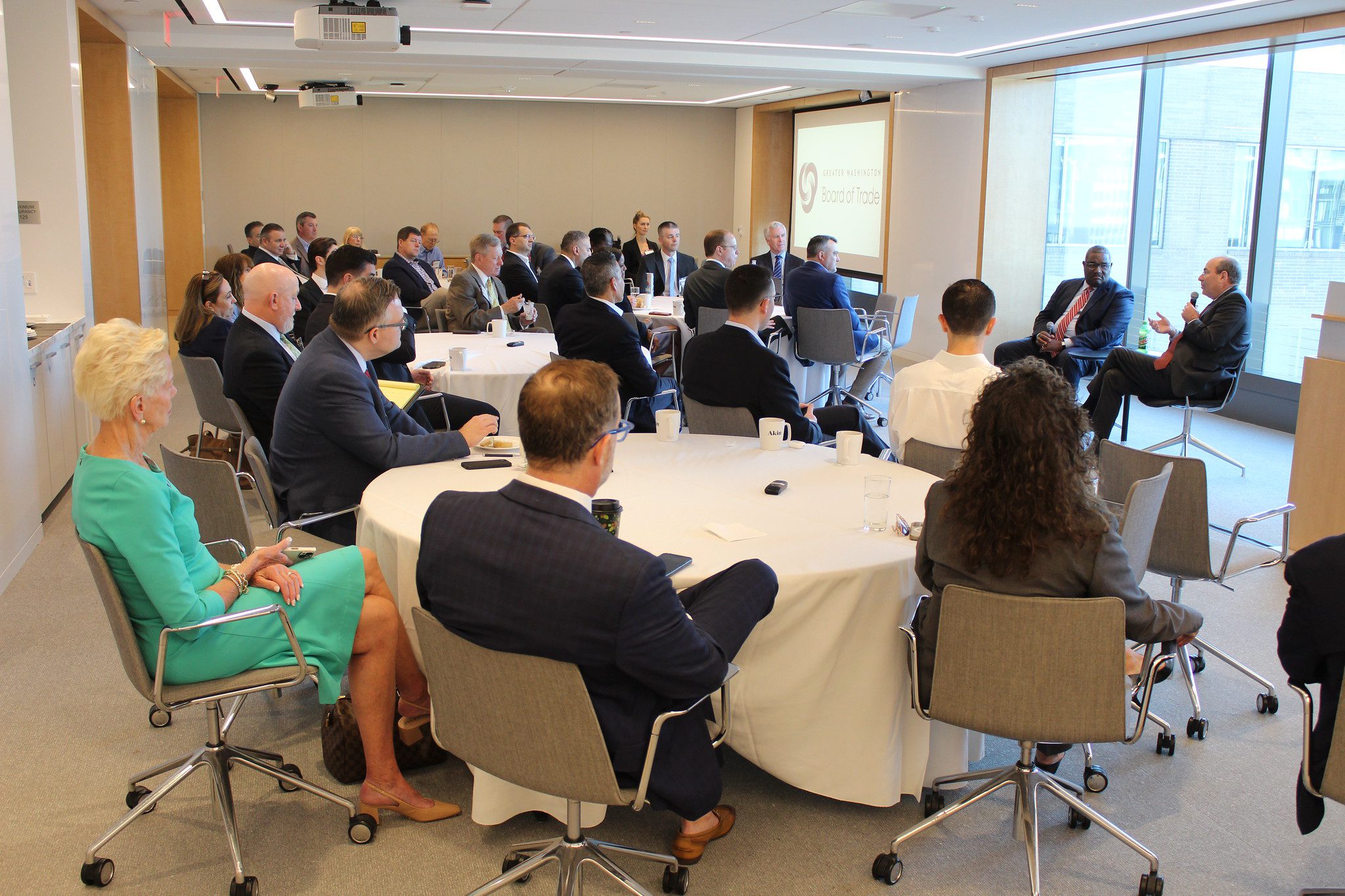
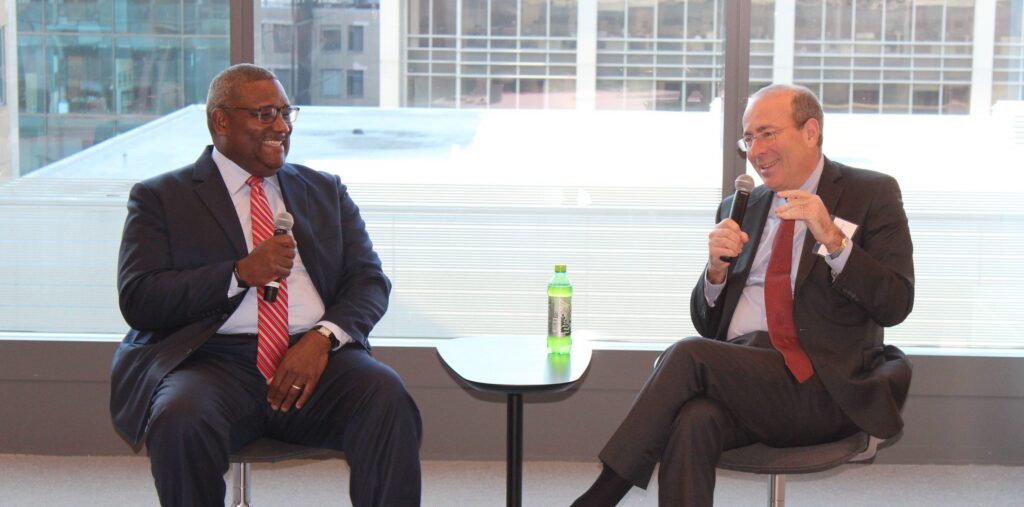
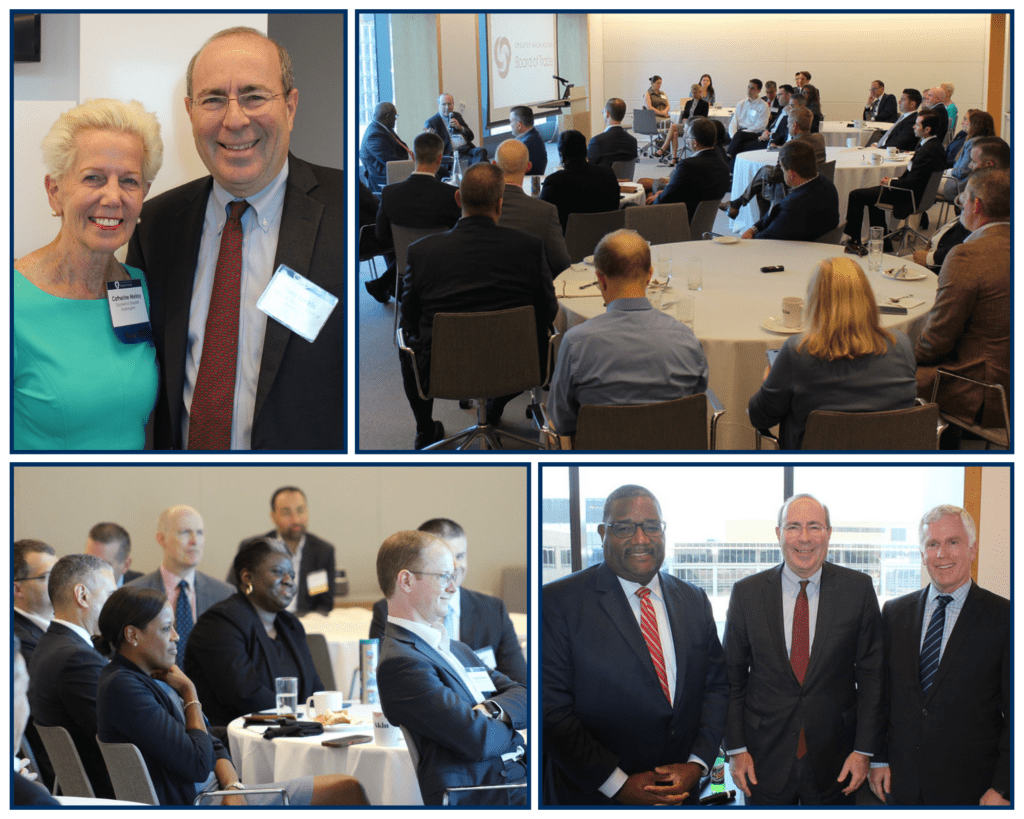
At the Board of Trade’s recent Executive Lunch, sponsored by United Airlines, regional business leaders discussed how Greater Washington can ensure the network lives up to its full potential. As commuting patterns shift, hybrid work continues to reshape travel demand, and economic activity spreads across multiple job centers, the region’s transportation future depends not only on building new infrastructure, but on maximizing the systems already in place.
The question now circulating among our members and partners is whether that foundation is working as well as it should for the people and businesses that depend on it every day. Below are some key considerations when addressing transportation in our region.
Making the Most of What We Have Built
Mobility patterns across the region have shifted, and transit systems have an opportunity to evolve alongside them. Hybrid work schedules, flexible hours, and employment spread across multiple job centers rather than a single downtown core have made commuting patterns more varied and less predictable than they once were. While traffic volumes have rebounded since before the pandemic, the way people move throughout the region is evolving beyond the traditional commuting patterns many transit systems were originally designed to serve.
Leaders at this lunch were clear on what this moment calls for. Progress is not about pouring concrete or extending lines. It is about making existing systems smarter, moreresponsive, and more aligned with how people live and work across the DMV today.
A Region That Moves as One
Greater Washington functions as a single regional economy, and there is growing recognition that it should move like one. Virginia, Maryland, and the District each operate their own transit systems, and closing the gaps between them in fare structures, schedules, and cross-jurisdictional routes represents one of the most promising opportunities the region has right now.
Better coordination across those systems would mean more than added convenience. A more seamlessly connected network expands access to jobs, widens the talent pool for employers, and strengthens the regional economy as a whole. Participants at this lunch were encouraged by the momentum behind regional collaboration and recognized the Board of Trade’s efforts in this space as a key driver of progress across the region.
Mobility Drives Opportunity
Reliable, well-coordinated transit shapes where businesses choose to locate and how broadly opportunity is distributed across the region. When people can move efficiently, labor markets deepen, employers can hire from a wider geography, and residents have more genuine choices about where to live and work.
Participants discussed the importance of thinking about mobility more holistically, recognizing that the region’s transportation network supports far more than the traditional daily commute. It also underscores how the DMV’s competitive edge lies in its multi-jurisdictional structure, where cross-boundary movement helps drive a more dynamic and interconnected regional economy.
The sentiment in the room was optimistic. The opportunity ahead is to fully maximize the region’s mobility ecosystem by strengthening regional connectivity, improving coordination across jurisdictions, and ensuring that the systems that support movement throughout Greater Washington continue to evolve alongside the region itself.
To learn more about how your organization can be involved in our mobility initiatives, reach out to [email protected].
Insights from the Table is a membership-driven series of takeaways from our Executive Lunches, where local and regional leaders help inform the Board of Trade’s thinking and shape the work we do in a rapidly evolving environment. These conversations help surface the practical challenges, emerging priorities, and regional opportunities that matter most to Greater Washington’s future.
In his latest Washington Business Journal Viewpoint column, Jack McDougle, President & CEO of the Greater Washington Board of Trade, examines how federal job reductions, commercial real estate uncertainty, and a shifting innovation economy are reshaping the District’s fiscal and competitive outlook. The piece notes that more than 22,000 federal jobs, representing $3.7 billion in annualized pay, have been lost in the District over the past year, adding pressure to a tax base already challenged by downtown office vacancies and changing patterns of investment.
For McDougle, the question facing D.C. is not only how to close near-term fiscal gaps, but how to define the kind of economy the city wants to build for the future. He argues that sustained opportunity depends on a stronger long-term strategy focused on business formation, job creation, housing supply, workforce development, infrastructure, public safety, and a policy environment that encourages investment.
The column also highlights the importance of fiscal discipline and reducing barriers to growth. As the District moves through a consequential election cycle, McDougle calls on leaders and candidates to clearly explain how they would improve competitiveness, expand opportunity, support investment, and align fiscal choices with a coherent long-term vision.
The Greater Washington Board of Trade, founded in 1889, is the region’s premier non-partisan business organization representing industry, nonprofits, universities, and government agencies. The Board of Trade addresses complex and always-evolving business concerns that stretch across the District of Columbia, suburban Maryland, and Northern Virginia, with a priority focus on inclusive economic growth, improving the business climate, and enhancing the region’s economic competitiveness.
READ MORE POLICY ISSUES AND TOPICS THE BOARD OF TRADE IS FOLLOWING
Greater Washington’s future is being shaped by the decisions, investments, and partnerships happening now.
In this May 2026 issue of our newsletter, we spotlight the conversations driving that work, including Jack McDougle’s latest viewpoint on D.C.’s competitive future, takeaways from our Executive Leadership Roundtable with Richmond Fed President & CEO Tom Barkin, and updates on regional priorities, member news, and upcoming programs.
Explore the latest insights, events, and opportunities to stay connected across the National Capital Region.
Tom Barkin of the Federal Reserve Bank of Richmond sits down for a discussion with Tony Pierce of Akin to share his insights on the economy and Greater Washington workforce trends.
When economic conditions shift rapidly, executive engagement with regional leaders becomes essential. Conversations like these with the Federal Reserve Bank of Richmond help leaders connect economic trends to the business realities facing Greater Washington.
At a recent Executive Leadership Roundtable hosted by the Greater Washington Board of Trade, Tom Barkin, President & CEO of the Federal Reserve Bank of Richmond, joined regional leaders and moderator Tony Pierce, Partner at Akin, for a candid discussion on the economy. Topics ranged from inflation and interest rates to workforce shifts, housing, technology, energy, health care, defense, and global trade.
Key questions included how Greater Washington can compete for talent, attract investment, address federal uncertainty, expand housing, manage energy, and adapt to a technology-driven workforce.
Greater Washington Board of Trade members continue to engage with topics that impact business in our region. This timely discussion brought together members from a variety of industry sectors.
Throughout the discussion, Barkin returned to a consistent theme: the economy is being shaped by uncertainty, but that uncertainty is not affecting every region, industry, or household in the same way.
For Board of Trade members, it allowed for more understanding about economic conditions, addressing Greater Washington’s unique challenges, and advancing regional competitiveness.
See below for further detailed takeaways and highlights.
Key Takeaways from the discussion
National economic conditions remain resilient but uneven. Barkin noted that consumer spending and business investment have held up nationally, even as repeated supply shocks; inflation pressures and policy uncertainty continue to affect business planning.
Greater Washington faces distinct regional pressures. Barkin emphasized that the regional economy is closely tied to the federal government, and federal workforce changes are creating challenges that may not be fully reflected in traditional unemployment data.
Housing remains central to competitiveness. The conversation connected housing affordability, permitting, land availability and commute patterns to the region’s ability to attract and retain workers.
AI is both disruptive and productive. Barkin said artificial intelligence may disrupt some jobs in the near term while creating new opportunities over time, especially as businesses use technology to improve productivity.
Data centers are reshaping economic development and energy planning. Barkin described data centers as strong contributors to the tax base and construction activity, but less powerful than long-term job creators. He also raised questions about energy capacity, grid investment, and the risk of overbuilding.
Demographics are changing the labor market. An aging population, lower labor force growth and slower immigration are shifting the economic development conversation from attracting jobs to attracting workers.
Defense remains a regional strength. Barkin pointed to Greater Washington’s concentration of federal agencies, contractors, security clearances, and specialized talent as a continuing advantage for defense and mission-critical industries.
Q&A Highlights
How could a Federal Reserve leadership transition affect policy?
Barkin said a leadership change would not affect the Fed’s core mandate, though changes could affect the tone, process, and communication style of the Federal Reserve, resulting in less precise signaling. While the Fed chair is one vote among a broader committee, the chair plays an important role in helping identify consensus. .
How is the national economy performing?
Barkin described the national economy as resilient but still affected by repeated supply shocks, including the pandemic, labor shortages, geopolitical instability, tariffs, and energy pressures. He explained that supply shocks are difficult because they can push prices higher while also weakening demand. Despite those pressures, he noted that consumer spending and business investment have remained relatively strong, though not evenly across all households and sectors.
How is Greater Washington’s economy different from the national economy?
Barkin made a clear distinction between national trends and Greater Washington’s regional conditions. He noted that the region is facing added pressure because of its close connection to the federal government, including workforce changes, relocations, and broader policy uncertainty. He contrasted this with faster-growing markets in the Carolinas (especially around housing affordability), while noting that Northern Virginia remains somewhat stronger because of defense and technology.
What role do data centers play in the regional economy?
Barkin identified data centers as one of the strongest areas of investment across the region, especially as artificial intelligence increases demand for electricity, grid capacity, and digital infrastructure. However, he described data centers as a complicated economic development tool because they can strengthen the tax base and create construction activity without producing large numbers of permanent jobs. He also raised concerns about energy planning and the risk of overbuilding infrastructure if long-term AI demand does not materialize as expected.
What is AI’s likely impact on jobs?
Barkin said AI is likely to be disruptive in the near term and job-creative over the long term. He noted that some white-collar roles, software development jobs, and workers who do not learn how to use AI tools may be more exposed to disruption. At the same time, he said AI could improve productivity and eventually create new types of work, similar to how previous technologies reshaped the labor market.
What role does trust play in AI adoption?
Barkin emphasized that trust will shape how quickly AI is adopted, especially in high-stakes fields such as health care, law, finance and professional services. He noted that people may accept AI-generated information or recommendations, but many will still want human judgment and accountability. Barkin compared this to how consumers gradually learned to trust online payments and mobile banking over time.
How does housing affect regional competitiveness?
Barkin said housing affordability remains one of Greater Washington’s most important competitiveness challenges. He pointed to permitting, land availability, taxes, impact fees, environmental reviews and development uncertainty as factors limiting supply. He noted that the region will need more creative approaches to housing if it wants to attract and retain the workers needed for long-term growth.
How are demographic changes affecting the labor market?
Barkin said demographic change is reshaping the economy by slowing labor force growth. He pointed to the retirement of baby boomers, lower fertility rates, slower immigration and changing workforce participation as long-term pressures. As a result, he said economic development is increasingly shifting from attracting jobs to attracting and retaining workers.
What sectors may remain strong?
Barkin identified defense as one of Greater Washington’s strongest sectors because of the region’s concentration of federal agencies, contractors, secure facilities, specialized workers, and clearances. He also discussed health care as a sector with long-term demand because of aging demographics, though he noted the industry faces challenges around cost, payment models, and workforce supply. Other areas such as cybersecurity, engineering, skilled trades and infrastructure-related work may also remain important as the economy evolves.
What is the outlook for trade and foreign direct investment?
Barkin described the trade environment as uncertain, with many companies still assessing how tariffs will affect sourcing, pricing, and investment decisions. He said many firms are pursuing a “China plus one” strategy by maintaining some presence in China while adding capacity in other countries. He noted that some foreign direct investment may increase in the U.S. but questioned how much of it is truly new versus already planned.
What should regional leaders take away from the discussion?
The conversation reinforced that Greater Washington is navigating several connected challenges at once, including federal workforce shifts, housing affordability, AI adoption, data center growth, energy demand, demographics, inflation and global trade. Barkin’s comments showed how these issues affect talent, investment, operations, and long-term planning. For regional leaders, the takeaway is that competitiveness will depend on alignment around housing, transportation, energy, workforce development, and a business climate that supports growth.
Thank you again to the Federal Reserve Bank of Richmond for providing our members with these insights and Akin Gump Strauss Hauer & Feld LLP for hosting this discussion.
Learn more about the Board of Trade’s policy efforts here. And check out more events and programs here.
Previous Discussion with the Federal Reserve Bank of Richmond
The Greater Washington Board of Trade submitted a letter of support for Subtitle E, the WMATA Joint Development Properties Tax Abatement Act of 2026, in the Fiscal Year 2027 Budget Support Act. The letter urges the D.C. Council to preserve the proposal as a practical tool to support housing production, neighborhood activity, ridership, and future tax base growth around Metro-owned properties.
The Honorable Phil Mendelson Chairman, Council of the District of Columbia John A. Wilson Building 1350 Pennsylvania Avenue NW Washington, DC 20004
Dear Chairman Mendelson:
On behalf of the Greater Washington Board of Trade, I am writing to express our support for Subtitle E, the WMATA Joint Development Properties Tax Abatement Act of 2026, in the Fiscal Year 2027 Budget Support Act.
The District is in a moment that calls for a clear focus on growth and long-term fiscal strength. Metro is central to that work, and the land around Metro stations should be working harder for the city. These sites are among the District’s strongest opportunities to support housing production, neighborhood activity, ridership, and future tax base growth.
This proposal is a practical tool to help unlock that opportunity.
The Board of Trade has consistently supported efforts that help WMATA improve service, control costs, increase ridership, and identify new revenue opportunities. Making better use of Metro-owned property advances that same goal and gives the District another way to turn existing public assets into broader economic value.
This proposal also responds to the market reality facing many development projects today. If the District wants more housing and stronger activity around Metro stations, it needs tools that help viable projects move forward when current conditions make them difficult to deliver. That is exactly the kind of targeted approach the District should preserve.
We recognize that every fiscal decision requires careful judgment. In this case, preserving the subtitle would support the District’s housing and economic development goals while advancing the same revenue diversification and asset activation the region has been asking WMATA to pursue.
For these reasons, we respectfully encourage you to support Subtitle E and keep the WMATA Joint Development Properties Tax Abatement Act of 2026 in the Budget Support Act.
Sincerely,
Jack McDougle President & CEO Greater Washington Board of Trade
About the Board of Trade
The Greater Washington Board of Trade, founded in 1889, is the region’s premier non-partisan business organization representing industry, nonprofits, universities, and government agencies. The Board of Trade addresses complex and always-evolving business concerns that stretch across the District of Columbia, suburban Maryland, and Northern Virginia, with a priority focus on inclusive economic growth, improving the business climate, and enhancing the region’s economic competitiveness.
The Greater Washington Board of Trade submitted testimony urging the D.C. Council to protect the District’s full commitment to WMATA funding in the Fiscal Year 2027 budget.
The testimony emphasizes that Metro is essential economic infrastructure for residents, workers, employers, visitors, and the District’s long-term competitiveness, and calls for sustained investment to build on recent service, safety, and reliability improvements.
Councilmember Allen, thank you for the opportunity to submit this written testimony regarding funding for WMATA. My name is Jack McDougle, President and CEO of the Greater Washington Board of Trade. We represent hundreds of businesses and employers across the Washington metropolitan region. Our message is direct: Metro is not a budget line item. It is economic infrastructure as essential to the District’s future as its roads, its schools, and its public safety systems. It must be funded accordingly.
The Board of Trade has urged the Council to recognize that the District cannot cut its way to a stronger economy. Growth requires investment in the systems that make Washington, D.C. competitive. Metro sits at the center of that case.
Metro is the engine of the District’s economy.
Metro moves more than people; it enables the economic activity upon which the District’s tax base depends. Every day, Metro connects workers to employers, residents to opportunity, and visitors to the institutions that make Washington one of the world’s great cities.
For the more than 40 percent of D.C. households without a car, especially for residents east of the Anacostia River in Wards 7 and 8, Metro is not a convenience. It is the primary means of accessing jobs, healthcare, and education. Reducing Metro service is not an inconvenience for these residents. It is a barrier to economic participation. A growth strategy that leaves behind the residents most dependent on transit is not a growth strategy at all.
But Metro’s value extends far beyond those who depend on it most. A truly world-class transit system is one that every resident, regardless of income, neighborhood, or circumstance, chooses to ride because it is reliable, safe, and convenient. When a professional in Cleveland Park takes the Red Line instead of sitting in traffic on Connecticut Avenue, when a family in Petworth hops the Green Line to a Nationals game, when a Georgetown student commutes by bus rather than by car, Metro is doing exactly what great transit should do: giving everyone a better option. The goal is not a system that serves as a last resort for those with no alternative. It is a system that earns its riders across the full spectrum of the city and in doing so, reduces congestion, lowers emissions, and strengthens the case for sustained public investment.
For employers, Metro is workforce infrastructure. Law firms, hospitals, restaurants, hotels, retailers, and government contractors all depend on a system that reliably brings workers to their doors. As hybrid work has given workers greater flexibility about where they choose to live and work, transit reliability has become a decisive factor in recruitment and retention. When Metro underperforms, employers bear the cost in productivity, in narrowed labor pools, and in competitive disadvantage relative to peer cities.
Washington welcomed millions of visitors in past years, generating billions in economic activity and hundreds of millions in tax revenue. The vast majority rely on Metro to experience the city. A tourist from Reagan National who visits the Mall, the Zoo, and the Convention Center may take four or more Metro trips in a single day. Multiply that across millions of annual visitors, and the connection between Metro reliability and tourism revenue is unmistakable. Degraded service translates directly into a less attractive destination, and that damage compounds over time.
Station areas are also engines of commercial and residential development, generating property tax revenue that helps stabilize the District’s finances. Weakening Metro weakens this economic geography. The fiscal consequences extend well beyond the transit system itself.
The District must protect its funding commitment.
The District is one of three jurisdictions that fund WMATA through dedicated annual contributions. These are not discretionary line items. They are the foundation on which WMATA’s operating and capital plans are built. Reductions in the District’s contribution risk triggering service cuts, deferred maintenance, and capital delays, costs that would far exceed any near-term savings.
The Board of Trade strongly urges the Committee to protect the District’s full Metro funding commitment in the FY 2027 budget. We also encourage District leaders to champion a durable, dedicated regional funding mechanism in coordination with Maryland, Virginia, and Congress. The District should not solve this alone, but it must continue to lead.
Now is the moment to build on Metro’s progress.
WMATA has made meaningful strides. Ridership is recovering. On-time performance has improved. Safety investments are yielding results. The system is demonstrating that sustained, committed funding produces a better rider experience and a more reliable platform for the economic activity the District depends on.
This progress is not an argument for complacency. It is an argument for continuity. The gains of recent years were hard-won, and they are not yet locked in. Sustained investment is what converts improvement into permanence. The Board of Trade urges the Committee to recognize that this is precisely the moment to reinforce success, to give WMATA the stable funding foundation it needs to extend these gains, complete critical capital projects, and deliver the level of service that residents, workers, and visitors deserve.
Conclusion
Councilmember Allen, Metro is central to every goal the District has set for itself: growing its economy, closing opportunity gaps, attracting residents and employers, and competing as a world-class city. Sustained investment in Metro is not separate from the District’s fiscal strategy. It is one of the core commitments that makes that strategy achievable.
A city that moves well is a city that works. And a city that works is better positioned to grow its tax base, support its residents, and sustain its finances over the long term. This is one of the most consequential economic investments the District can make.
Thank you.
About the Board of Trade
The Greater Washington Board of Trade, founded in 1889, is the region’s premier non-partisan business organization representing industry, nonprofits, universities, and government agencies. The Board of Trade addresses complex and always-evolving business concerns that stretch across the District of Columbia, suburban Maryland, and Northern Virginia, with a priority focus on inclusive economic growth, improving the business climate, and enhancing the region’s economic competitiveness.
Curiosity is more than a mindset. It is a competitive advantage.
In his latest Washington Business Journal Viewpoint column, Jack McDougle, President & CEO of the Greater Washington Board of Trade, reflects on how moments of exploration, from the moon landing to the Artemis mission, show what is possible when curiosity is sustained through investment, talent, risk-taking, and collaboration.
For Greater Washington, that lesson is especially important. As the region continues to shift from a federal-centered economy to a more diversified, innovation-driven one, McDougle argues that our greatest assets, including world-class research institutions, leading universities, mission-driven talent, federal leadership, and a growing technology sector, must be better connected and supported across D.C., Maryland, and Virginia.
The column makes the case for reducing friction for businesses, strengthening access to capital, investing in research and commercialization, supporting reliable energy infrastructure, and building a talent pipeline that prepares people to solve real-world problems. With the right commitment, Greater Washington can turn curiosity into action and compete more effectively in the next era of innovation.
The Greater Washington Board of Trade, founded in 1889, is the region’s premier non-partisan business organization representing industry, nonprofits, universities, and government agencies. The Board of Trade addresses complex and always-evolving business concerns that stretch across the District of Columbia, suburban Maryland, and Northern Virginia, with a priority focus on inclusive economic growth, improving the business climate, and enhancing the region’s economic competitiveness.
READ MORE POLICY ISSUES AND TOPICS THE BOARD OF TRADE IS FOLLOWING
The Board of Trade submitted written testimony before the D.C. Council’s Committee on Transportation and Environment, including the committee’s chair, Councilmember Charles Allen, regarding the one-year extension of the Net Zero Energy Building Code Deadline proposed by Mayor Muriel Bowser. The Board of Trade’s testimony supports Mayor Bowser’s proposed one-year extension of the Net Zero Energy Building Code deadline, framing it as a pragmatic pause rather than a retreat from climate goals. The testimony argues that more District-specific analysis is needed to understand the policy’s potential impacts on housing costs, energy bills, building feasibility, and electric grid readiness. It also raises concerns that accelerating building electrification without adequate infrastructure investment could create reliability challenges for the region. The Board urges the Council to use the additional year to develop impartial, independently verified data that can guide a more informed path forward.
Chairperson Charles Allen and members of the Committee, thank you for the opportunity to submit testimony on this important matter.
I am writing in support of Mayor Bowser’s one-year extension of the Net Zero Energy Building Code deadline, as transmitted in the FY27 Budget Support Act, and I urge this Committee to allow that provision to advance through the markup process.
A Pragmatic Pause Not a Retreat
The Net Zero Energy requirement, which would ban natural gas in all new buildings and major renovations effective December 31, 2026, is sweeping policy with significant consequences for housing costs, energy reliability, and grid infrastructure. The Mayor’s request for a one-year enforcement delay is not opposition to the goal. It is a responsible call to build the evidentiary record this policy has never had: one that goes beyond BEPS compliance tracking to provide a clear, District-specific analysis of its costs, its feasibility, its impact on housing affordability and energy bills, and the readiness of our electric grid to absorb the load. That is a reasonable ask the Council should support.
The DC Council Has Already Recognized the Burden of Compliance
Earlier this year, the Council voted unanimously on legislation introduced by Councilmember Lewis George to exempt DC government buildings, projects, and contractors from the Net Zero mandate. That unanimous vote speaks for itself. Every member of this body recognized that the cost and feasibility burden of compliance is significant enough to shield the District’s own projects from it. If the mandate is workable, District government buildings should be subject to it. If they are not, we owe the private sector the same honest accounting before the deadline arrives.
Grid Readiness Is Not a Minor Technical Detail
Space heating is the single largest energy end-use in residential and commercial buildings in this region. Electrifying that load, even incrementally through new construction, will fundamentally change the demand profile on PEPCO’s distribution system, shifting the grid from its historical summer-peaking pattern to a new winter-peak one. The infrastructure investments needed to accommodate that shift have not been made, have not been funded, and are not reflected in DOEE’s implementation planning.
The scale of what is being proposed should not be understated. During Winter Storm Fern, our regional gas system delivered 1.6 billion cubic feet of natural gas in a single day, the thermal equivalent of running 11 Calvert Cliffs nuclear reactors simultaneously. That capacity does not exist on the electric grid today, and PJM has documented significant and growing constraints on transmission capacity and generation adequacy across the region. Accelerating the electrification of building loads without commensurate grid investment does not advance our reliability goals. It threatens them.
The Ask Is Simple
Support the Mayor’s one-year extension. Use that year to do the work that should have been done before this deadline was set: rigorous, District-specific analysis of cost, feasibility, grid readiness, and housing impact. Good climate policy requires good data. What this moment calls for is impartial, independently verified data; analysis that all parties, including this Committee, can trust. We are committed to supporting that effort and stand ready to work with research partners to help produce it. The Council deserves more than dueling projections; it deserves a rigorous, credible foundation on which to make this decision. A one-year pause to get this right is not a step backward; it is the responsible path forward.
Thank you.
ABOUT THE BOARD OF TRADE
The Greater Washington Board of Trade, founded in 1889, is the region’s premier non-partisan business organization representing industry, nonprofits, universities, and government agencies. The Board of Trade addresses complex and always-evolving business concerns that stretch across the District of Columbia, suburban Maryland, and Northern Virginia, with a priority focus on inclusive economic growth, improving the business climate, and enhancing the region’s economic competitiveness.
The Greater Washington Board of Trade submitted written testimony before the D.C Council’s Committee of the Whole regarding Mayor Bowser’s proposed Fiscal Year 2027 budget.
The testimony emphasizes that Washington, D.C. is at a pivotal economic moment as shifting demand patterns, lower office utilization, slower population growth, and changes in the tax base create both fiscal pressure and an opportunity to redefine the District’s economic model. The Board of Trade urges the Council to focus on long-term growth, competitiveness, fiscal discipline, and policies that expand opportunity rather than relying on broad-based tax increases or short-term budget fixes.
The testimony also calls for a multi-year fiscal framework, a comprehensive review of the District’s competitiveness, streamlined permitting and approvals, reduced regulatory burdens, and stronger performance standards for core services such as public safety, transportation, permitting, and education.
Chairman Mendelson, members of the Council. My name is Jack McDougle, President and CEO. Thank you for the opportunity to submit testimony on the Mayor’s proposed Fiscal Year 2027 budget.
Established in 1889, the Greater Washington Board of Trade is the region’s longest-standing business organization. We convene leaders across business, government, academia, and the nonprofit sector to advance policies and partnerships that drive economic growth, innovation, and opportunity. We are committed to a fiscally sound, economically competitive, and forward-looking District of Columbia.
The budget before you arrives at a pivotal moment, not only because of the fiscal pressures it reflects, but because of the opportunity it presents. Washington, D.C. is undergoing a structural economic transition. Demand patterns are shifting, office utilization remains below prior levels, population growth has slowed, and the composition of the tax base is changing in real time. These dynamics are creating near-term fiscal strain and urgency for the District to redefine its economic model and sharpen its competitive position.
The District has the assets to compete at the highest level: a mission-driven workforce, proximity to federal policy, and a strong base in technology, professional services, and emerging industries. The question is not whether D.C. can grow; it’s whether policy choices will enable that growth or constrain it.
Too often, fiscal discussions focus on closing short-term gaps through one-time measures or incremental tax increases. That may balance a budget, but it does not position the city for long-term success. This moment calls for a different lens, one grounded in economic aspiration and competitiveness. Delivering for residents, particularly those most vulnerable, requires a growing economy that expands opportunity rather than redistributes within a constrained base.
At its core, the choice before the Council is straightforward: manage through extraction by raising costs on a constrained base or expand the base through growth by making D.C. more competitive.
Align Fiscal Strategy with Long-Term Growth
The District’s fiscal challenge is structural and will not be resolved through temporary measures. Recent budgets have relied on fund balance drawdowns and tax increases to sustain spending, neither a substitute for structural alignment. One provides one-time relief; the other increases the cost of living and doing business, often at the expense of the growth needed to sustain the very programs residents rely on.
A growth-oriented fiscal strategy requires discipline: aligning recurring expenditures with sustainable revenues while prioritizing investments that expand the economic base. We recommend adopting a multi-year fiscal framework establishing a clear path to structural balance, with defined milestones and transparency.
Make Competitiveness a Core Budget Principle
The District operates within a highly competitive regional and national landscape. D.C.’s tax burden is already high relative to neighboring jurisdictions and many peer cities causing households and businesses to increasingly explore other options. Additional increases would directly impact decisions about where to live, work, and invest.
The experience of other cities is instructive. In New York City, reliance on a narrow base of high-income taxpayers has increased revenue volatility. In Seattle, targeted business taxes are influencing long-term investment decisions. In San Francisco, cumulative high costs and regulatory friction have contributed to weaker demand and slower recovery. As the Brookings Institution Metro Monitor notes, the Washington region has lagged peer regions in delivering broadly shared growth, underscoring the need to expand the economic base, not simply redistribute within it.
We urge the Council to hold the line on new broad-based tax increases and undertake a comprehensive review of the District’s competitiveness across tax and regulatory policy. Competitiveness should be a standing principle in fiscal decision-making.
Remove Barriers to Growth
Expanding the tax base requires removing barriers to housing, business formation, and economic activity. Housing production is slowed by lengthy permitting timelines, uncertain entitlement processes, and high regulatory costs, limiting population growth and demand. Businesses face similar friction in starting, scaling, and operating in the District.
The District should prioritize:
Streamlined permitting and faster approvals
Greater predictability in zoning and entitlement
Reduction of unnecessary regulatory and cost burdens
These are high-impact, low-cost reforms that can materially improve the District’s growth trajectory and expand access to opportunity across communities.
Improve Core Service Performance
Competitiveness is not defined by cost alone; it is defined by performance. Public safety, transportation, permitting, and education shape how residents and businesses experience the city. When these systems underperform, they disproportionately affect communities that rely most on consistent, high-quality services.
The District should establish clear performance standards, measure and publicly report outcomes, and align budgets with demonstrated results. Improving service delivery strengthens both competitiveness and equity and is central to a growth strategy that works for all residents.
Conclusion: Define the Next Economy
The decisions made in this budget will shape the District’s economic trajectory for years to come. This is not simply about closing a fiscal gap, it’s about defining the next phase of D.C.’s economy.
We urge the Council to take the long view: focus on growth, strengthen competitiveness, and align fiscal policy with clear economic aspirations. A growing economy is the foundation for delivering sustained opportunity and support for all residents.
The Greater Washington Board of Trade stands ready to partner with the Council and the Executive in advancing this work. Thank you for the opportunity to submit this testimony. We welcome any questions.
ABOUT THE BOARD OF TRADE
The Greater Washington Board of Trade, founded in 1889, is the region’s premier non-partisan business organization representing industry, nonprofits, universities, and government agencies. The Board of Trade addresses complex and always-evolving business concerns that stretch across the District of Columbia, suburban Maryland, and Northern Virginia, with a priority focus on inclusive economic growth, improving the business climate, and enhancing the region’s economic competitiveness.
The Board of Trade remains focused on advancing the priorities that matter most to Greater Washington. This April, we had two newsletters that highlighted a variety of engagements we have had across Greater Washington with members and public officials, as well as meaningful updates on the priorities we are following in the region. We also have a variety of member news updates that showcase regional collaboration!
Highlights you will read about in our Early April Newsletter:
Jack McDougle’s latest Viewpoint calls for reimagining K-12 education to better prepare students for the region’s innovation economy and long-term competitiveness.
The 106th Mid-Winter Dinner, presented by PNC Bank, brought together business, government, and civic leaders at the Washington National Cathedral for an evening celebrating regional relationships and collaboration.
A new Board of Trade article argues that Greater Washington needs a stronger mobility mindset and more coordinated transportation solutions to support growth and economic opportunity.
WMATA is marking 50 years of Metrorail service, recognizing Metro’s lasting role in keeping the region connected.
The newsletter also spotlights spring member programming, regional news, and member updates from organizations across Greater Washington.
Highlights you will read about in our Late April Newsletter:
The Board of Trade’s DC Election Watch series brought members together for timely conversations with Councilmember Kenyan McDuffie and Councilmember Brooke Pinto on the District’s future, including public safety, economic growth, affordability, and fiscal strength.
Jack McDougle’s latest Viewpoint explores how curiosity, long-term thinking, and stronger regional coordination can help Greater Washington compete in the next era of innovation.
The Spring Board of Directors meeting at Pepco’s downtown D.C. headquarters focused on mobility, energy, infrastructure, and the investments needed to support regional growth.
A new Board of Trade feature looks at how rising AI adoption is increasing pressure on energy systems and why energy reliability is becoming a growing business concern in Greater Washington.
The newsletter also highlights upcoming member programs, regional news, and member updates from organizations that are part of the Board of Trade.