2025 Virginia Election Results and Insights

2025 Virginia Election Results and Insights

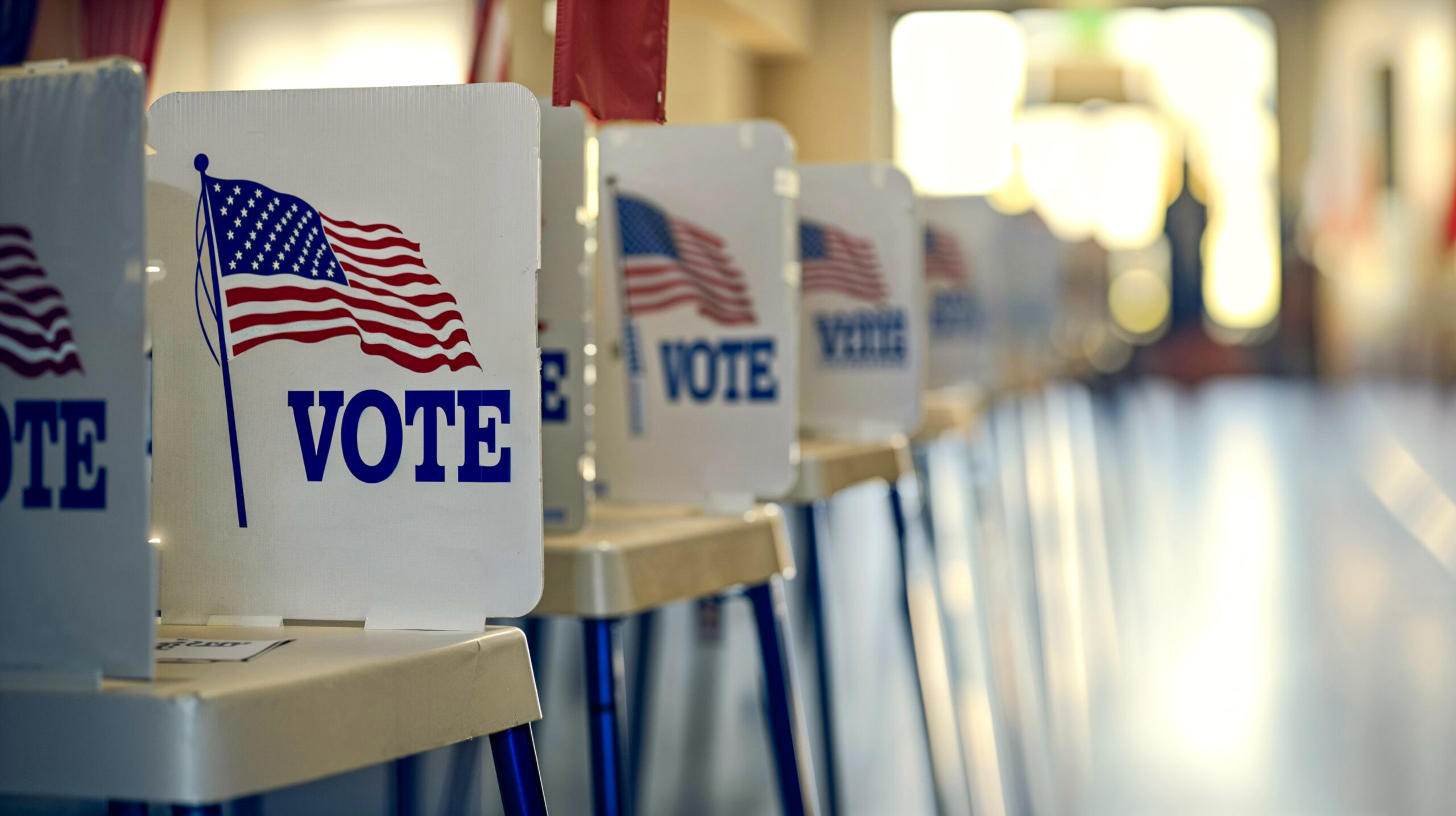
Here is a look at the 2025 Virginia election results following a historic Election Day in the Commonwealth, which will influence how the Greater Washington region’s business community engages with various opportunities and issues.

Virginia voters made history in the 2025 general election by electing Abigail Spanberger as the Commonwealth’s next governor, as she will be the first woman to hold the position in the state’s history. Spanberger, a former U.S. Representative, won the November 4 election against Republican nominee Winsome Earle-Sears by securing approximately 57 percent of the vote, with Earle-Sears receiving about 42 percent. Her inauguration will also mark the first time in the Commonwealth’s history that both the governor and lieutenant governor are women. 

In January 2025, the Board of Trade hosted Abigail Spanberger (then a candidate for Virginia governor) at our downtown Washington, D.C. offices for a policy discussion with business leaders from the region. During that event, she shared her vision for Virginia as a destination for work, living, and innovation, highlighting critical issues such as workforce development, transportation, and housing. She emphasized the importance of public-private collaboration, noting that improving infrastructure, broadband access, and regional connectivity in Northern Virginia, the D.C. region, and surrounding areas requires a shared approach. Her remarks also highlighted how the Greater Washington region can capitalize on its proximity to federal institutions, its educated workforce, and its established business base to boost competitiveness. This conversation underscored our shared interests in workforce readiness, infrastructure, and inclusive growth. 

In addition to the governor’s race, voters selected a new lieutenant governor and attorney general, with democrats winning both contests, resulting in a unified Democratic administration. In the lieutenant governor and attorney general races, voters selected Ghazala Hashmi as lieutenant governor and Jay Jones as attorney general. Hashmi’s election marked a milestone as she became the first Muslim woman elected to statewide office in Virginia. Jay Jones prevailed over incumbent Jason Miyares, becoming the first African American attorney general in the history of Virginia.  

State officials have indicated that the formal certification of results will occur later in November, after which planning will begin for the inauguration ceremony in Richmond. The event, traditionally held on the second Saturday in January, will officially mark the start of the new four-year term. 

As the Board of Trade continues to engage with leaders across the region, we look forward to working constructively with the incoming administration in Virginia to deepen regional coordination, align policy and infrastructure priorities, and support the economic vitality of the Greater Washington region.  


Previous Election Guide Before Election

This 2025 Virginia Election Guide reflects the Board of Trade’s commitment to supporting a thriving Greater Washington, as we track statewide and local elections in Virginia to better understand how their outcomes may shape the business community.

The 2025 Virginia gubernatorial election is underway with Election Day set for November 4, and early in-person voting has already begun. Because Virginia governors are barred by state law from serving consecutive terms, the current governor, Glenn Youngkin, cannot run again. Therefore, two major candidates are Abigail Spanberger, a former U.S. Representative, and Winsome Earle-Sears, the current lieutenant governor. No matter who wins the general election, Virginia is set to elect a woman as governor for the first time this fall. 

For lieutenant governor, voters will decide between Democratic state Sen. Ghazala Hashmi and Republican John Reid. Additionally, Republican Attorney General Jason Miyares is seeking reelection and is facing Democratic challenger Jay Jones, an attorney and former state delegate. 

All 100 seats in the House of Delegates are on the ballot this year in Virginia. Democrats held a 51-49 majority heading into this year’s election. You can find your House district here and a list of candidates running for the House of Delegates listed here: Virginia Dept. of Elections: November 4, 2025 Gen Elect House of Del/ 

Most jurisdictions in Virginia have local races of some sort, whether they are contests for mayor, county board, school board, city council or sheriff. Check the full list of local races on the Virginia Department of Elections website to learn more. 

Key Dates Include:  

  • Friday, Oct. 24: Last day to register or update your address to vote a regular ballot for this election AND last day to request that a ballot be mailed to you. Click here to check your registration. 
  • Voters may register in person after this date, through Election Day, and vote using a provisional ballot 
  • Saturday, Oct. 25: Local voter registration offices open for in-person voting 
  • Saturday, Nov. 1: Last day to vote early in-person at your local voter registration office 
  • Tuesday, Nov. 4: Election Day. Vote at your polling place. Polls are open 6 a.m. to 7 p.m. 

More about the Greater Washington Board of Trade:

The Greater Washington Board of Trade, founded in 1889, is the region’s premier non-partisan business organization representing industry, nonprofits, universities, and government agencies. The Board of Trade addresses complex and always-evolving business concerns that stretch across the District of Columbia, suburban Maryland, and Northern Virginia, with a priority focus on inclusive economic growth, improving the business climate, and enhancing the region’s economic competitiveness. Learn more about the Board of Trade and its mission at www.boardoftrade.org. 

LEARN MORE ABOUT THIS SIGNATURE EVENT

This 2025 Virginia Elections Guide will continue to be updated as we get closer to November 4th and stay engaged with the Board of Trade after Election Day to learn more about policy implications. 

Board of Trade Addresses ‘Workplace of Tomorrow’ at GW Business & Policy Forum

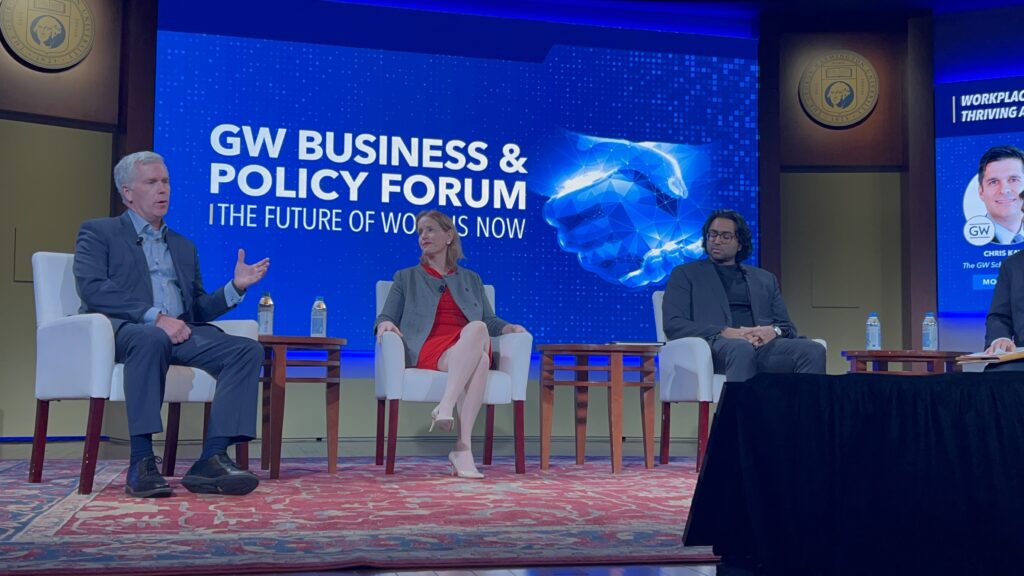
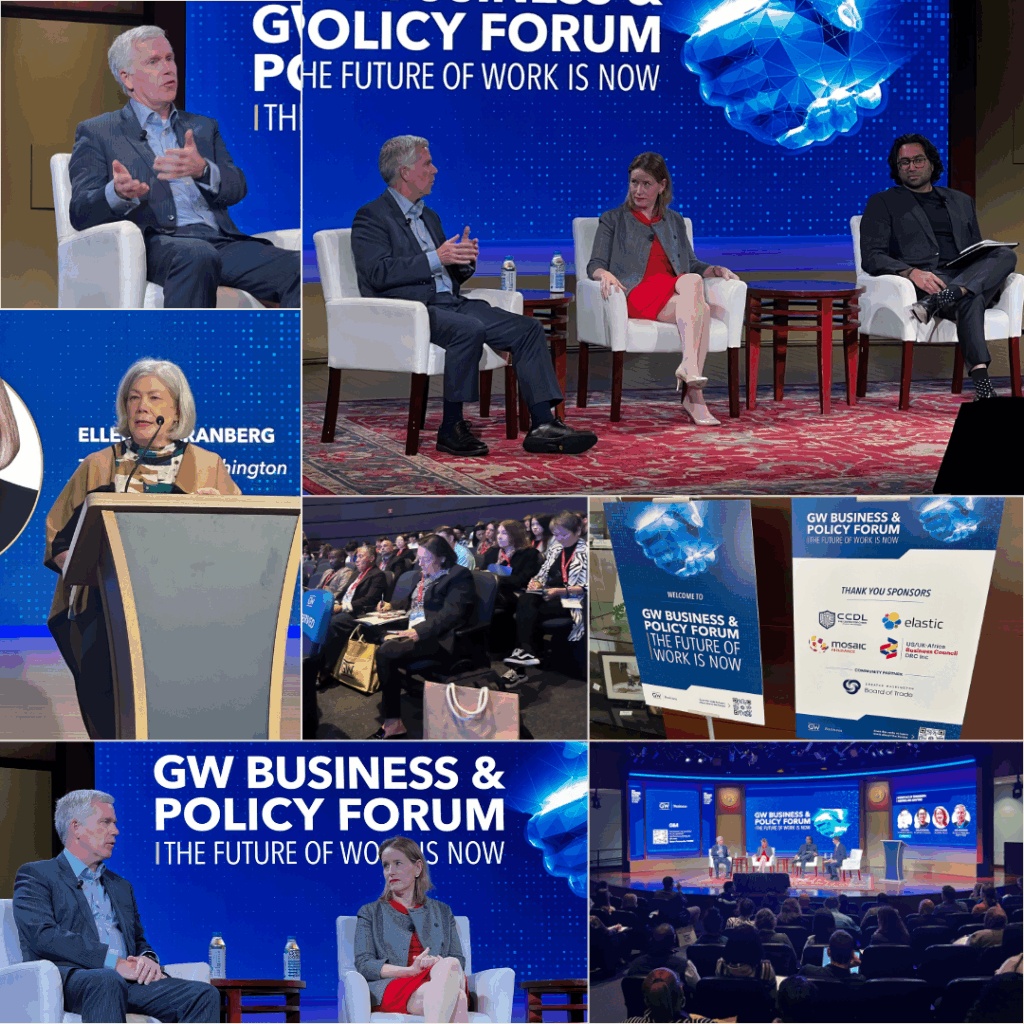
The Board of Trade joined regional leaders and MBA students at George Washington University’s Business & Policy Forum on October 22 to explore how innovation and policy are shaping the workplace of tomorrow and the region’s economic future.

The George Washington University School of Business reconvened its third annual Business & Policy Forum, “The Future of Work is Now,” to explore the opportunities and implications the future of work holds for technology, organizations, employees, and policymakers. Additional topics ranged from adapting and thriving in the workplace of tomorrow to sustainability and social impact.

Our President & CEO, Jack McDougle, joined fellow panelists to discuss the future of workforce and technology, sharing insights on how our region can adapt, invest, and lead in a rapidly changing economy. Jack outlined the strengths of the Greater Washington region: a highly educated workforce, deep federal roots, and a vibrant entrepreneurial ecosystem that now ranks fifth nationally in venture capital investment. Yet, he warned that the same proximity to government that fuels stability can also breed risk aversion. For the region to fully leverage its advantages, both the public and private sectors must embrace a mindset of experimentation.

He pointed to Washington, D.C.’s delayed legislation on autonomous vehicles, noting how it has affected investment from Waymo and other innovators in the field—highlighting the region’s technical strength but cautious regulatory pace. “If we want to position ourselves as a global hub for innovation,” he said, “we need to demonstrate that we are willing to take on innovative technologies.”

The panel holistically closed with a reminder that, despite the promises of technology, progress depends on people’s willingness to adapt and challenge the status quo, underscoring the urgent need for cultural and institutional agility as the region prepares for the next wave of economic change. And that forward-thinking companies and organizations must be willing to experiment, collaborate, and rethink the traditional definition of workforce to best be equipped to thrive in the future.

We also heard from George Washington University President, Ellen Granberg, about how the university is helping grow opportunities and engage the community.

Forum attendees not only heard from several of the most influential figures in the future of work, but also enjoyed a premier networking opportunity to engage with key players, discover the innovations shifting business landscapes, and learn to adapt to changing work environments.

Thank you to The George Washington University and The George Washington University School of Business for helping grow Greater Washington! Events like this highlight the power of collaboration across business, government, and education to strengthen our region’s competitiveness and inclusive growth.

Learn more about where the Board of Trade is positioned on certain policy and legislation efforts in our region: https://bit.ly/4qu3Odh

Statement: Board of Trade Applauds Thoughtful Transportation Planning Board Action on I-495 Southbound Plan

About Statement:

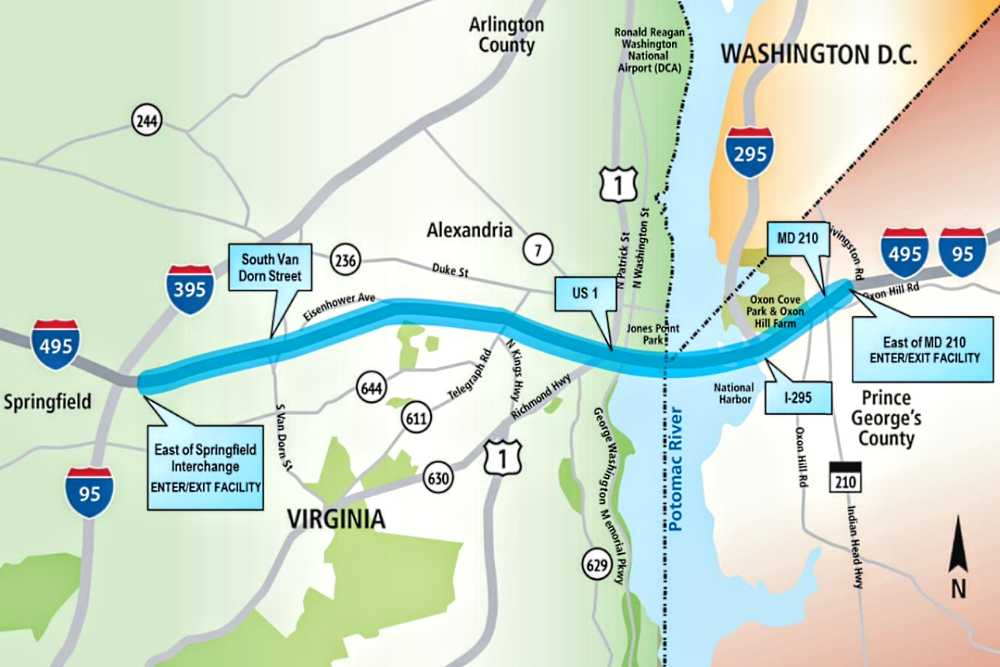
The Board of Trade applauds the Transportation Planning Board’s decision this week to defer action on the I-495 Southside Express Lanes project — a step that reflects real progress toward a coordinated, forward-looking transportation strategy for our region.

Official Statement:

DOWNLOAD HERE

October 15, 2025

This week’s vote by the Metropolitan Washington Council of Governments’ Transportation Planning Board (TPB) to defer action on the I-495 Southside Express Lanes project reflects real progress and a responsible approach to one of our region’s most complex transportation challenges. We thank the TPB and its members for keeping the project moving forward by allowing additional time to refine details, address legitimate concerns, and strengthen collaboration across jurisdictions.

The express lanes proposal offers a critical piece of regional infrastructure that must be viewed in the context of the entire Capital Beltway, including the American Legion Bridge, to ensure we are building a cohesive system that advances sustainable growth, mobility, and environmental goals. Projects of this scale demand careful planning, meaningful public engagement, and coordination among Maryland, Virginia, and the District of Columbia to deliver real value for the people and businesses of Greater Washington.

At the same time, we must act with urgency. Our competitiveness depends on how quickly we modernize the infrastructure that connects our communities, employers, and talent. Deliberation should not become delay. This pause should be used productively to build consensus and align priorities so implementation can proceed efficiently once the path is clear.

The Board of Trade supports leaders across all jurisdictions working together with renewed focus, transparency, and speed. Our region’s success depends on a seamless, connected transportation network. We commend the TPB for its principled leadership and commitment to regional collaboration. Working together, we can turn this pause into momentum and advance a stronger, more holistic solution that moves people and goods safely, reliably, and competitively for decades to come.

More About The Board of Trade:

The Greater Washington Board of Trade, founded in 1889, is the region’s premier non-partisan business organization representing industry, nonprofits, universities, and government agencies. The Board of Trade addresses complex and always-evolving business concerns that stretch across the District of Columbia, suburban Maryland, and Northern Virginia, with a priority focus on inclusive economic growth, improving the business climate, and enhancing the region’s economic competitiveness. Learn more about the Board of Trade and its mission at www.boardoftrade.org.

Statement on a Potential Federal Government Shutdown

Below is a statement from our President & CEO, Jack McDougle, on the potential federal government shutdown. The shutdown would significantly impact families, communities, and businesses in the Greater Washington region. 

Statement:

“A federal government shutdown would be damaging, especially now. It would hit contractors, small businesses, and service providers first and ripple through paychecks and operations across hospitality, public safety, healthcare, transportation, research, housing, and retail, undercutting confidence and slowing the region’s momentum at a critical time.

The federal enterprise must modernize to compete in a changing global economy: digitize services and operations, streamline procurement, right-size facilities and programs, and strengthen accountability and outcomes. But shutting the government down is not reform. It is costly, avoidable, and counterproductive.

Any continuing resolution is only a stopgap. Differences should be resolved in advance through regular order and timely appropriations, not brinkmanship. Congress and the Administration must finalize a bipartisan funding agreement now to give employers and families the predictability they need, then pursue negotiations through a normal, transparent budget process that improves outcomes without risking paychecks or public services.”

Jack McDougle, President & CEO

Board of Trade Logo

About the Greater Washington Board of Trade

The Greater Washington Board of Trade, founded in 1889, is the region’s premier non-partisan business organization representing industry, nonprofits, universities, and government agencies. The Board of Trade addresses complex and always-evolving business concerns that stretch across the District of Columbia, suburban Maryland, and Northern Virginia, with a priority focus on inclusive economic growth, improving the business climate, and enhancing the region’s economic competitiveness. Learn more about the Board of Trade and its mission at www.boardoftrade.org.

More from the Greater Washington Board of Trade: 

Check out our latest Newsletter sharing regional business news in our region: https://bit.ly/4n9inkc

Check out our latest Legislative Update sharing polices and pieces of legislation impacting our region: https://bit.ly/4mJcZ75

Building Momentum for RFK Stadium Redevelopment Project

The future of RFK Stadium is moving closer to reality after September 17, when D.C. Council voted again in favor of the RFK stadium redevelopment legislation. Redeveloping RFK is not just about building a stadium; it’s about creating a 21st-century destination that reflects the values and ambitions of the District and its residents. The Board of Trade is proud to be a leading voice in shaping that future, and we will remain engaged as the process advances.  (Statement: D.C. Council final vote for redevelopment funding on Sept. 17)

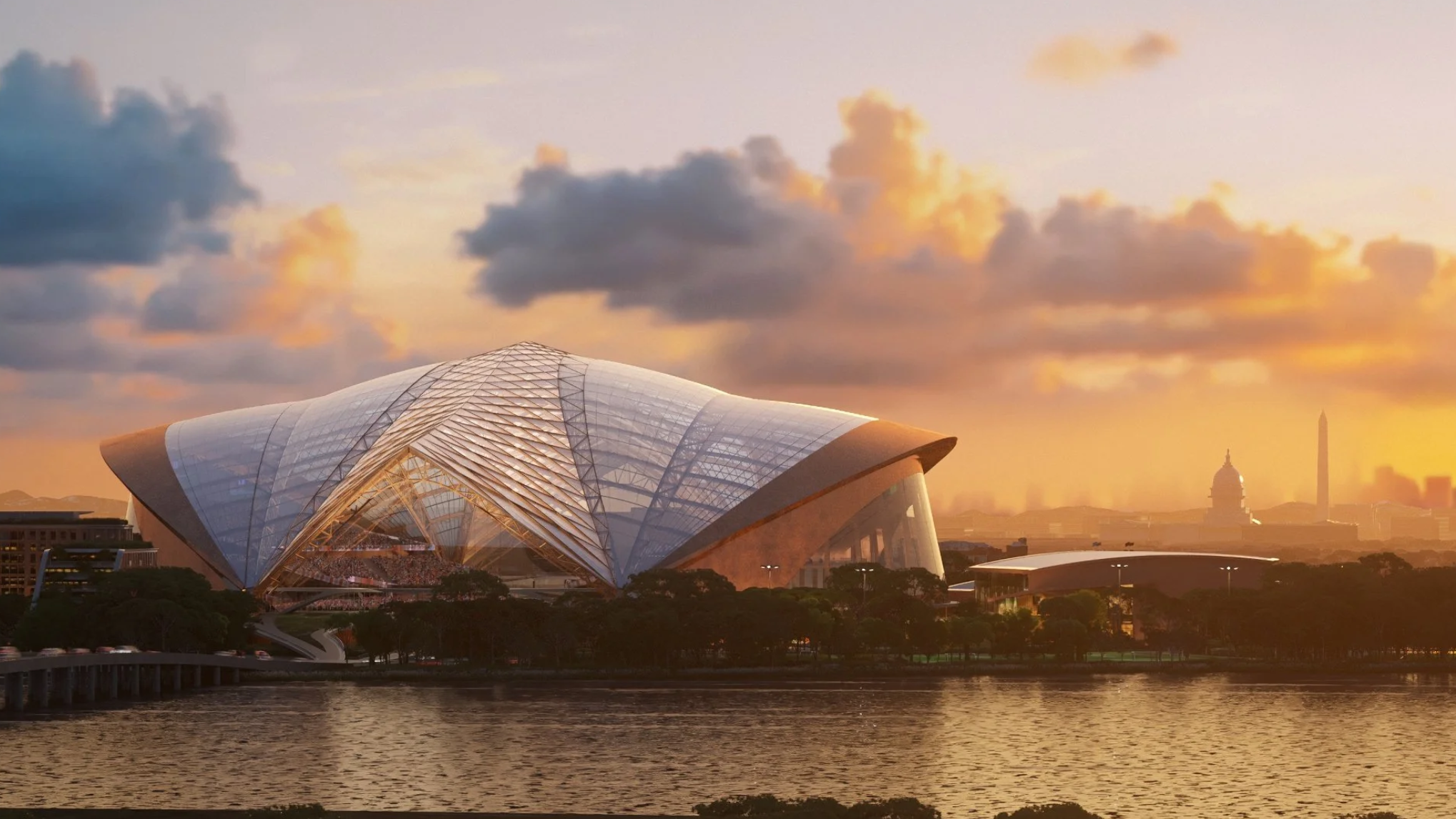
This project represents more than bricks and mortar; it is a chance to reshape an iconic site into a destination that drives economic growth, improves connectivity, and enhances the quality of life across the District and region. The project will create 14,000 construction jobs and 2,000 permanent jobs, generating $4 billion in tax revenue and more than $15.6 billion in direct spending over 30 years. Spanning about 180 acres of the former RFK Stadium site, the campus will transform today’s underused riverfront parcel into a vibrant mixed-use neighborhood.


This RFK Stadium stie redesign rendering is provided by KATO. See more here: https://www.rfknewstadium.com/


Earlier this year, the Board of Trade, city officials, and other local and regional groups testified before the D.C. Council in support of legislation that would unlock the potential of the RFK site and allow the city to move forward with a transformative vision, including: 

  • Letters of support were submitted to the D.C. Council outlining the opportunity to transform the District through a 65,000-seat roofed stadium for the Washington Commanders, designed to host not only football but also up to 200 annual events, including concerts and cultural gatherings.
  • In initial testimony before the D.C. Council, the case was made for legislation to unlock the potential of the RFK site and advance a broader vision for redevelopment. The testimony highlighted priorities such as strong transit connections, economic competitiveness, and community benefits. Specific elements included 6,000 new housing units (with at least 30% affordable), hotel rooms, new restaurants and retail, parking, an $89 million youth sportsplex, activation of the Fields at RFK, expanded green space, riverfront access, and walkable parks. (read our testimony here 
  • Subsequent testimony supported the RFK Stadium funding bill and underscored the importance of timely action to prioritize infrastructure, affordable housing, and adherence to construction timelines. (read our second testimony here) 
  • In addition, Mayor Bowser and community leaders convened engagement events, including a rally at the Wilson Building and a stakeholder event hosted by the Mayor, to highlight the redevelopment’s potential business opportunities. These gatherings drew attention to the broad community and economic impacts of this once-in-a-generation project.

Throughout the entire process, we have been in ongoing dialogue with the Washington Commanders to ensure that the project balances economic competitiveness with community needs — from workforce opportunities to improved transit access and mixed-use development that serves residents and businesses alike. With upgraded utilities, new roadways, improved transit access, and vibrant hospitality districts like the Riverfront and Plaza, the project will revitalize the site and surrounding neighborhoods. It will serve as a community anchor by blending housing, commerce, recreation, and entertainment into a powerful driver of growth for the District.

The Board of Trade will continue to champion this redevelopment as an engine of growth, connectivity, and opportunity for the entire region. We look forward to continuing conversations with the Commanders, community leaders, and stakeholders to unlock all that the RFK site has to offer.  

Learn more about how we engage with leaders at the federal, state, and local levels to ensure that the voices of Greater Washington’s business community are heard: https://www.bot.org/business-policy-greater-washington-dc/

Statement: Board of Trade on President’s Announcement to Deploy National Guard Troops in Washington, DC

“The Greater Washington Board of Trade shares the priority of keeping our communities safe and ensuring that people and businesses can thrive without disruption. Public safety is the foundation of a strong economy and quality of life.

In recent years, the District has made meaningful progress in reducing crime, with violent crime and property crime now at some of the lowest levels in recent memory. These gains are the result of sustained efforts by city leadership, law enforcement, business leaders, community organizations, and residents working together.

We welcome continued federal cooperation and coordination to build on this success. However, the National Guard’s mission is not law enforcement, and the deployment of troops for this purpose is likely unnecessary. We encourage federal leaders to work closely with District officials to support proven, community-based strategies that enhance safety while respecting the rights and trust of all residents.

The Board of Trade remains committed to fostering a safe, resilient, and inclusive Capital Region for all who live, work, and visit here.”

ABOUT THE BOARD OF TRADE

The Greater Washington Board of Trade, founded in 1889, is the region’s premier non-partisan business organization representing industry, nonprofits, universities, and government agencies. The Board of Trade addresses complex and always-evolving business concerns that stretch across the District of Columbia, suburban Maryland and Northern Virginia, with a priority focus on inclusive economic growth, improving the business climate, and enhancing the region’s economic competitiveness.  

READ MORE POLICY ISSUES AND TOPICS THE BOARD OF TRADE IS FOLLOWING

Why culture, lifestyle, and place matter to Greater Washington’s economic future

From tech talent and research strength to public purpose and inclusive growth, our Greater Washington region has the ingredients to lead as a global innovation powerhouse. But bold coordination is needed.

Our President & CEO, Jack McDougle, shares in his latest Washington Business Journal viewpoint that we must transform into an innovation-led economy, elevating cultural strengths key to shaping the future of our region. From Smithsonian museums to vibrant food halls and miles of urban trails, the region’s quality-of-life assets are powerful drivers of economic growth. They attract talent, foster belonging, and create the “vibe” that makes people choose to stay, build, and invest here.

READ THE FULL ARTICLE HERE

ABOUT THE BOARD OF TRADE

The Greater Washington Board of Trade, founded in 1889, is the region’s premier non-partisan business organization representing industry, nonprofits, universities, and government agencies. The Board of Trade addresses complex and always-evolving business concerns that stretch across the District of Columbia, suburban Maryland and Northern Virginia, with a priority focus on inclusive economic growth, improving the business climate, and enhancing the region’s economic competitiveness.  

READ MORE POLICY ISSUES AND TOPICS THE BOARD OF TRADE IS FOLLOWING

Testimony to DC Council: Board of Trade Supports Bill for RFK Site Redevelopment

Update: The Washington Commanders secured a major milestone in the effort to bring professional football back to the District. On August 1st, the D.C. Council voted 9–3 in favor of legislation that would pave the way for the redevelopment of the RFK Stadium site, thus marking a pivotal first step in transforming one of the city’s most iconic but long-dormant properties into a vibrant, multi-use destination. This vote signals renewed momentum for a project that has implications far beyond the stadium walls. At its core, the redevelopment of the RFK site represents a commitment to regionalism with an investment in shared assets that generate economic activity, draw visitors, and enhance quality of life across jurisdictional lines.

About this Testimony:

The Board of Trade testified a second time before the D.C. Council and sent a letter to Council Chairman Phil Mendelson in support of Mayor Muriel Bowser’s proposal to bring the Washington Commanders back to the District as part of a larger mixed-use redevelopment of the RFK site. We again highlighted the opportunity not just as a sports project, but as a catalyst for long-term economic growth, fiscal strength, and regional competitiveness.

Previous Testimony on RFK Site Redevelopment to D.C. Council

Testimony Recording from DC Council Meeting: 

Letter to Chairman Mendelson:

DOWNLOAD HERE

July 31, 2025

Good Morning, Chairman Mendelson and members of the Council. 

Thank you for the opportunity to speak on behalf of the Greater Washington Board of Trade. Founded in 1889, our nonpartisan organization represents hundreds of employers across the Greater Washington region—spanning industry, nonprofits, universities, and government agencies. We’re committed to advancing inclusive economic growth and strengthening the city’s competitive position. 

My name is Daniel Flores, and I’m here to express our strong support for the Mayor’s proposal to bring the Washington Commanders back to the District through a new stadium and mixed use development at the old RFK stadium site. This moment is about far more than building a stadium—it’s about unlocking the full potential of a high-impact site to become a bold, mixed-use destination that embodies the future of urban development. With smart, forward-looking planning, this space can be transformed into a thriving hub for housing, small businesses, transit, recreation, and cultural activity.  

As the District stands at a critical crossroads, we must pursue ambitious solutions that don’t just maintain the status quo but reshape it. This is a once-in-a-generation opportunity to catalyze long-term prosperity, create new jobs, and strengthen our city’s position as a vibrant, resilient, and equitable capital for decades to come. With a record $2.7 billion private investment—the largest in D.C.’s history—augmented by thoughtfully designed public infrastructure, this project can: 

  • Support over 30,000 jobs and generate $4 billion in new tax revenue and unlock billions more in direct spending.  
  • Revitalize the RFK campus with new housing including 5,000-6,000 new homes for more than 10,000 residents across the campus with at least 30% affordable, maintaining The Fields at RFK and investing $89 million to construct a new state-of-the-art youth sports complex, new parks, retail, recreation, hospitality, and more.  
  • Generate long-term economic diversification through the develop of an inclusive, vibrant neighborhood that serves expanded opportunities for residents, supports small businesses, and boosts regional tourism.  

We recognize the District faces fiscal constraints. That’s precisely why this investment is critical—it leverages private capital to grow the tax base and secure the city’s long-term financial stability, and we have seen the successful transformative power of these kind of investments before. While we have seen several successful projects around the city, including the redevelopments of Nationals Park, Audi Field, and The Wharf—we believe the RFK project has the ability to surpass many of these incredibly successful projects we have already seen throughout the city.  

Time, however, is not on our side. Delays in legislative action or infrastructure investment threaten to derail the project timeline. Missing critical benchmarks this year could push back the stadium’s opening beyond the 2030 NFL season—and with that delay, the District could forfeit an estimated $750 million in lost economic impact from major events like the 2031 FIFA Women’s World Cup, the Rugby World Cup, a full season of Commanders home games, and large-scale concerts. This is more than an opportunity cost—it’s a concrete loss to city revenues, jobs, and visibility on the global stage. Additionally, failing to act could invite the opportunity for federal action to interfere with this redevelopment as it can be a signature achievement for the District—one that honors its past, serves its people, and inspires confidence in its future. 

Let’s be clear: this is more than a stadium project. It’s a transformative vision for over 190 acres of largely dormant land in the heart of our capital city. It’s a chance to create an inclusive, vibrant neighborhood that reflects D.C.’s values and positions us as a national leader in urban renewal.  

On behalf of the Board of Trade, I urge the Council to act with urgency and conviction. The pieces are in place and now is the moment to move forward to deliver not just 190 acres of largely dormant land in the core of the district, but a project that will shape the city’s future for generations to come. 

Thank you for your time, and for your leadership on this critical issue. 

Sincerely, 

Daniel Flores

Vice President of Regional Engagement 

Greater Washington Board of Trade

Featured Members