Coffee & Conversation Recap: Confronting Hunger and Economic Insecurity in Greater Washington

Coffee & Conversation Recap: Confronting Hunger and Economic Insecurity in Greater Washington

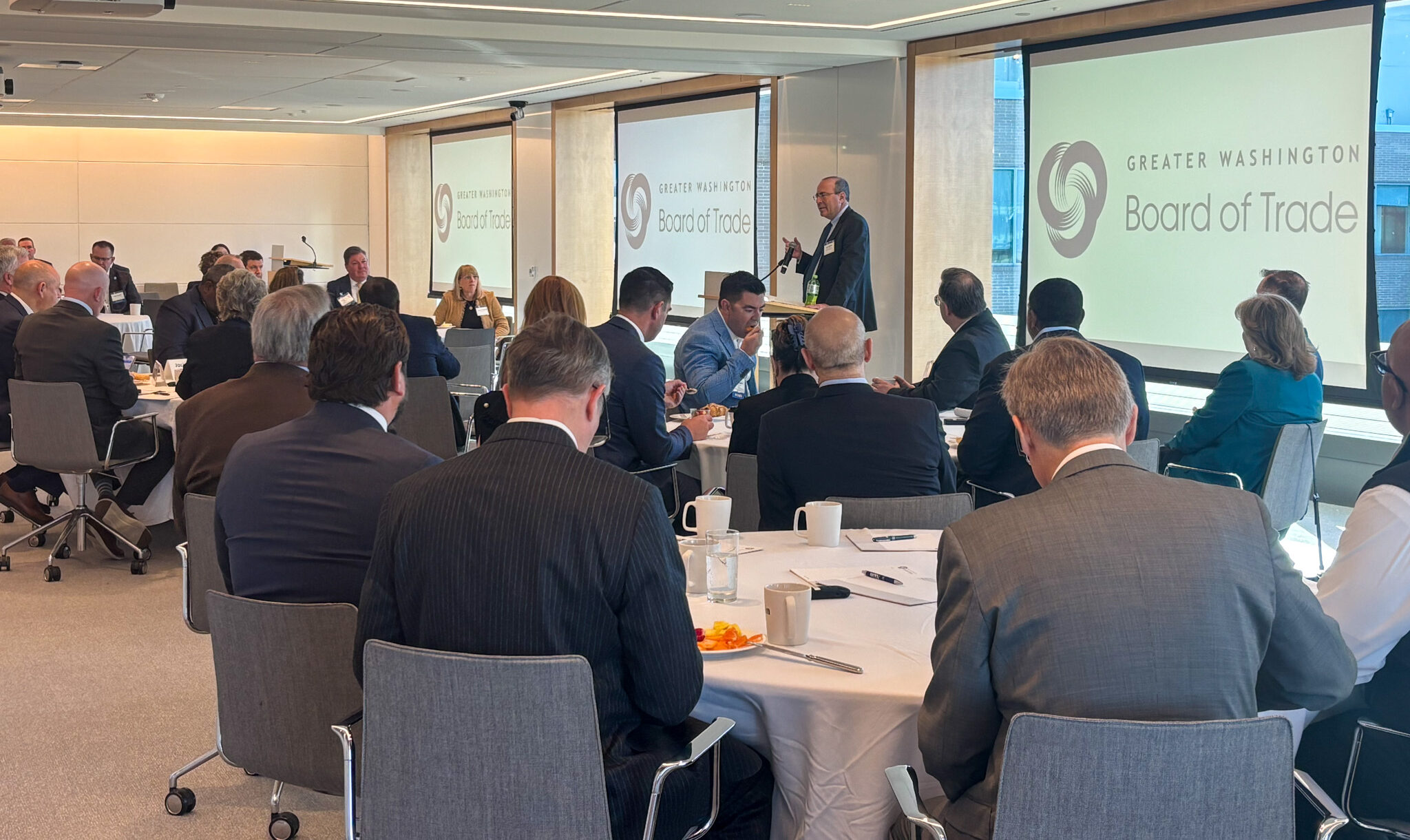
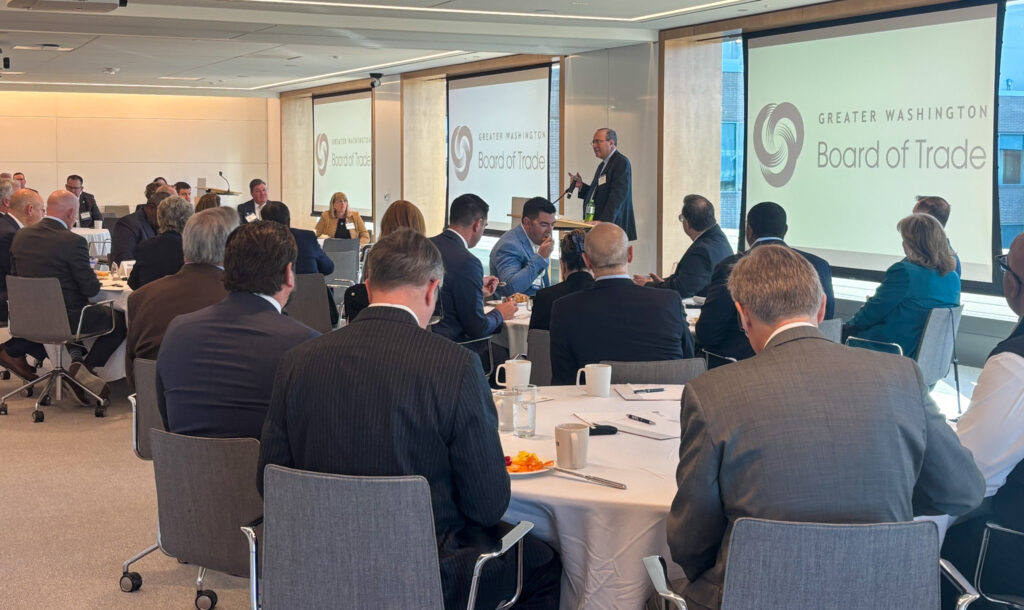
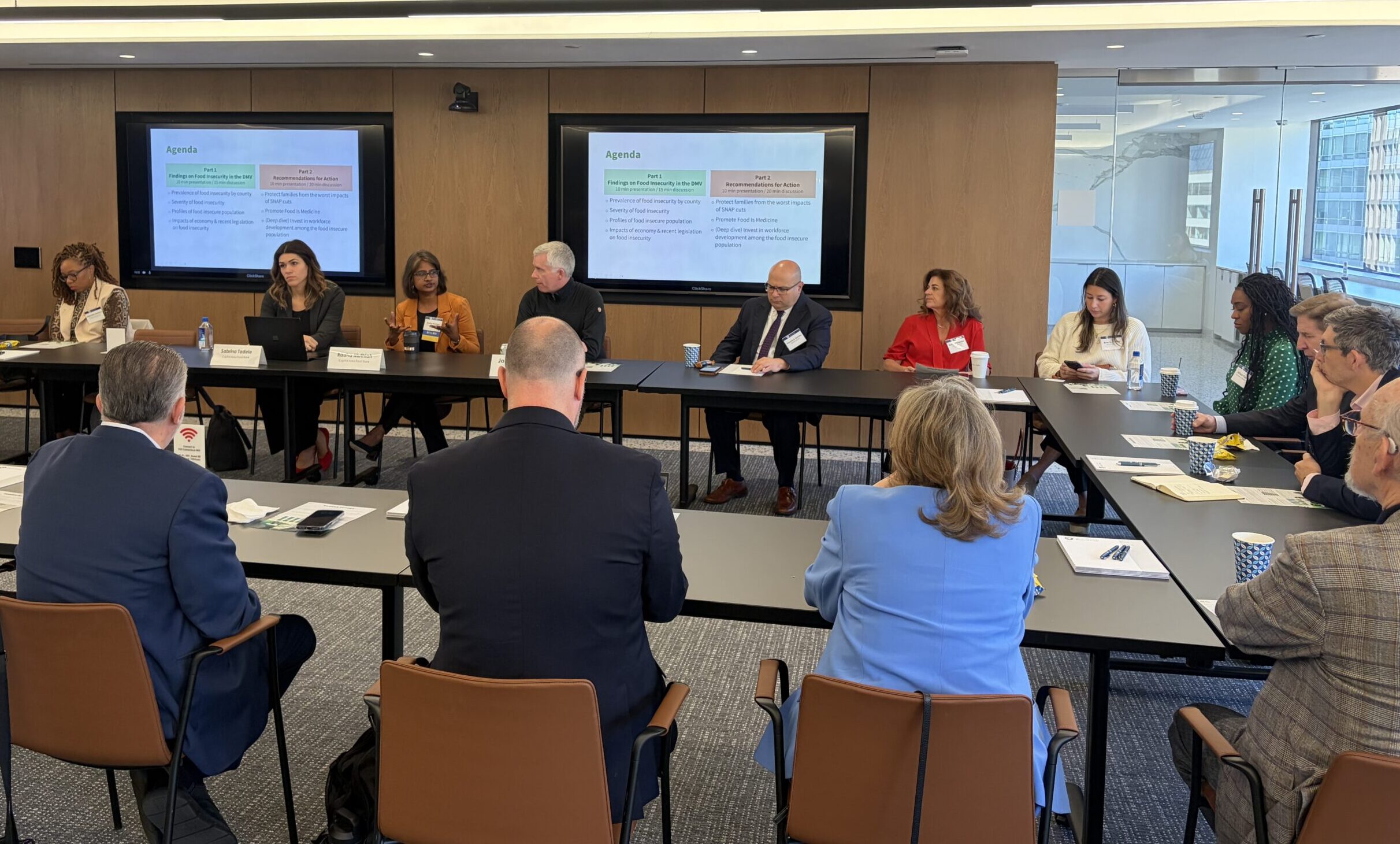
October’s Coffee & Conversation featured leaders from the Capital Area Food Bank (CAFB), who shared key findings from their 2025 Hunger Report – a sobering look at how economic pressures, wage stagnation, and federal workforce transitions are shaping food insecurity across the region. 

According to CAFB’s research with NORC at the University of Chicago, 36% of households in the DMV are food insecure, a rate that has remained elevated for two consecutive years. County rates range from 22% in Arlington to 49% in Prince George’s County, underscoring how widespread and persistent this challenge has become. The report points to deepening strain on working families as inflation outpaces wages and pandemic-era support expires. 

“We see families borrowing against their futures to meet today’s basic needs,” said CAFB President & CEO Radha Muthiah. “People are skipping savings, taking on credit-card debt, and even withdrawing from retirement accounts just to put food on the table.” 

Many food-insecure households include employed adults – teachers, healthcare workers, and public servants – earning too little to meet the region’s $140,000 living-wage threshold for a family of four. The conversation highlighted that solving hunger isn’t simply about distributing more food – it’s about strengthening the systems that enable financial stability. 

CAFB leaders shared examples of innovative partnerships that bundle food assistance with healthcare and workforce training, including Food Is Medicine programs with area hospitals and grocery-card stipends for college students pursuing credentials in high-demand fields. These integrated approaches aim to improve both individual well-being and regional productivity. 

Board of Trade President & CEO Jack McDougle closed by underscoring the economic stakes: 

“Food insecurity isn’t just a social issue; it’s an economic one. If we want Greater Washington to reach its full potential, we need to connect more people to opportunity and stability.” 


What the Business Community Can Do 

The conversation turned to practical steps the private sector can take to help reverse these trends: 

  • Advocate and support efforts that protect access to nutrition and healthcare programs like SNAP and school meals, which help working families stay afloat. 
  • Promote “Food Is Medicine” partnerships by engaging with healthcare systems and nonprofits to strengthen community health and workforce resilience. 
  • Invest in upskilling and talent pathways—collaborate with colleges and training providers to recruit, mentor, and support individuals moving into living-wage careers. 

By working together across sectors, employers can help address the root causes of hunger while building a healthier, more productive regional economy. 

Read the full 2025 Hunger Report: Capital Area Food Bank Hunger Report 2025 

About Coffee & Conversation

Coffee & Conversation brings Board of Trade members together for interactive, member-led discussions on timely topics shaping Greater Washington. Each session features a concise expert briefing, open dialogue, and time for coffee and networking – offering valuable insights, peer exchange, and meaningful professional connections.

Visit boardoftrade.org/events for more programming.

​​Thank you to the Capital Area Food Bank for partnering on this vital discussion that engages our members and partners in the region.

GWBOT October 2025 Newsletter

The Board of Trade remains focused on advancing the priorities that matter most to Greater Washington. This October newsletter shows a variety of engagements we have had across Greater Washington with members and public officials, while also showcasing meaningful updates on priorities we are following in the region. We also have a variety of member news updates that showcase regional collaboration!

Read our October 2025 Newsletter here

Voices from the Table: September Insights

When leaders in Greater Washington gather around a table, bonds form and conversations deepen. At the Board of Trade’s weekly Executive Meals, those connections become catalysts — helping executives see challenges differently, surface new opportunities, and drive change for the Capital Region. 

A Region in Transition 

September’s conversations reflected both the pressures and possibilities of this moment. Leaders acknowledged workforce stress, the pace of technological change, and cultural polarization. Yet the dialogue pointed less to obstacles and more to strengths — adaptability, optimism, and collaboration. 

Board of Trade President & CEO, Jack McDougle, emphasized that the Capital Region is not defined by its federal footprint. With only one-fifth of jobs tied directly to government, our future depends on how we cultivate talent, embrace innovation, and invest in infrastructure. 

Leadership tone also stood out as a competitive asset. Calm, integrity, and optimism aren’t just virtues — they shape how organizations, and the region as a whole, navigate turbulence. 

Executives also highlighted the foundations needed to scale a digital economy: reliable energy, cybersecurity, and modern infrastructure. Federal spending tied to industrial policy and technology adoption creates clear opportunities for regional firms and talent. But seizing these gains must be balanced with protecting nonprofits, universities, and services that risk being left behind. 

Food for Thought 

These conversations didn’t aim for answers, but for sharper questions. Among those, the region must keep asking: 

  • How can we unlock adaptability by aligning talent, innovation, and infrastructure? 
  • What does optimism in leadership look like when uncertainty surrounds us? 
  • How do we turn AI into an engine for both opportunity and responsibility? 
  • What bold steps would move the Capital Region from fragmented to united? 
  • How do we capture the upside of federal investment in energy and technology while protecting the nonprofits and services our communities rely on? 

Looking Ahead 

The Capital Region’s competitiveness will not be defined by uncertainty, but by how we adapt together. The Board of Trade will continue convening these conversations, ensuring that executive voices shape not only individual strategies but the collective future of our region together. 

Shaping the Future: Recap of the Fall 2025 Board of Directors Meeting

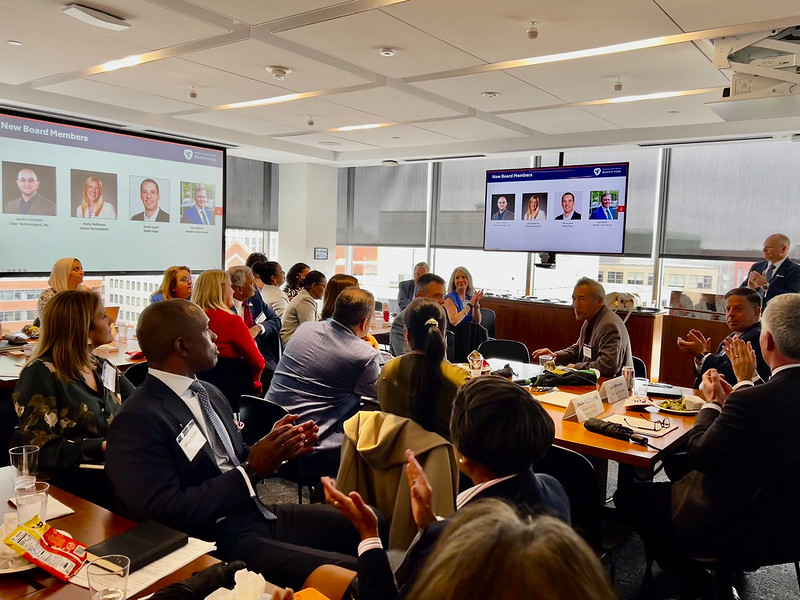
The Greater Washington Board of Trade’s Fall Board Meeting – generously hosted by board member Ian Jefferson and the team at McKinsey & Company – brought together leaders from across the region to focus on two priorities shaping Greater Washington’s future: delivering collaborative progress and shaping a stronger regional identity. 

Collaborative Progress in Action 

Energy in the room was high as members discussed how cross-sector collaboration is moving the region forward. 

Key highlights included: 

  • DMV Moves: advancing a dedicated funding strategy to ensure reliable, sustainable transit for the region. 
  • DMV Monitor: a newly launched regional platform that now provides a unified, trusted set of data across jurisdictions to guide policy and investment. 
  • Talent Capital: launching October 1, designed to make it easier for people in the National Capital Region to connect with jobs, training, coaching, events, and entrepreneurial resources – a platform built here, for this region, to support both workers and employers. 

Together, these initiatives reflect the power of aligned leadership and collective action to tackle complex challenges. 

Photo Sep 17 2025, 12 51 13 PM

Reimagining Our Regional Identity 

A second focus of the meeting was the region’s narrative – how we define Greater Washington and the impact that story has on our competitiveness. 

In partnership with APCO Worldwide – with special thanks to board member Evan Kraus and his talented team – board members took part in an interactive branding exercise building on this year’s conversations about positioning Greater Washington as more than a government town: a place where talent, culture, innovation, and opportunity converge. 

While participants explored ideas like Capitalize Your Future and Move With Us as ways to capture the region’s strengths, Jack McDougle emphasized that the real takeaway isn’t about picking a slogan – it’s about leaders across sectors speaking with a united, confident voice about Greater Washington so that, over time, this shared narrative strengthens our identity and attracts more talent, investment, and innovation. 

Looking Ahead 

The meeting closed with a shared understanding: building a stronger regional identity takes time, resources, and collective leadership – but it’s already underway.

From funding transit and unifying data to shaping the narrative that defines Greater Washington, the Board of Trade will continue to convene, lead, advocate, and innovate to keep the region competitive. 

Together, we are laying the groundwork for Greater Washington to be recognized not only as the nation’s capital but as a region of opportunity – where talent, culture, and innovation drive long-term growth. 

Unlocking Connection Through Storytelling: Leadership Lessons from the O Museum

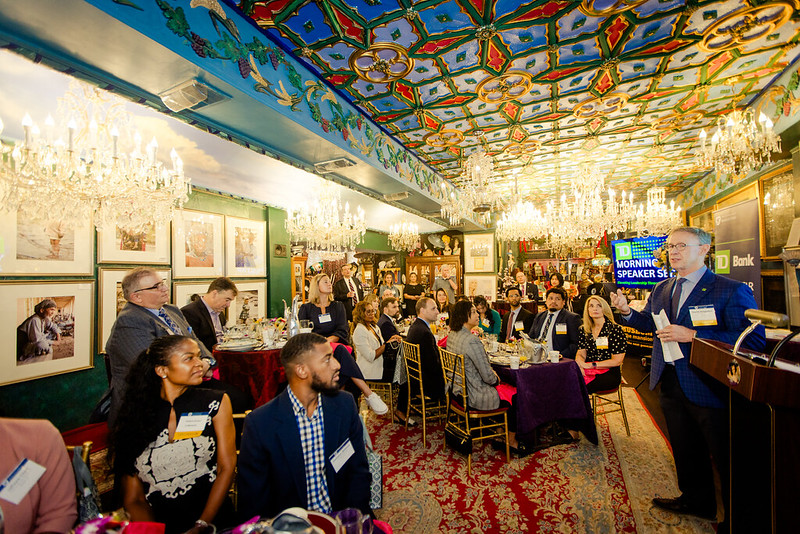
As today’s leaders navigate increasingly complex environments, the 2025 TD Bank Morning Star Speaker Series reminds us that leadership growth is strengthened through the stories we tell, the challenges we share, and the connections we build.

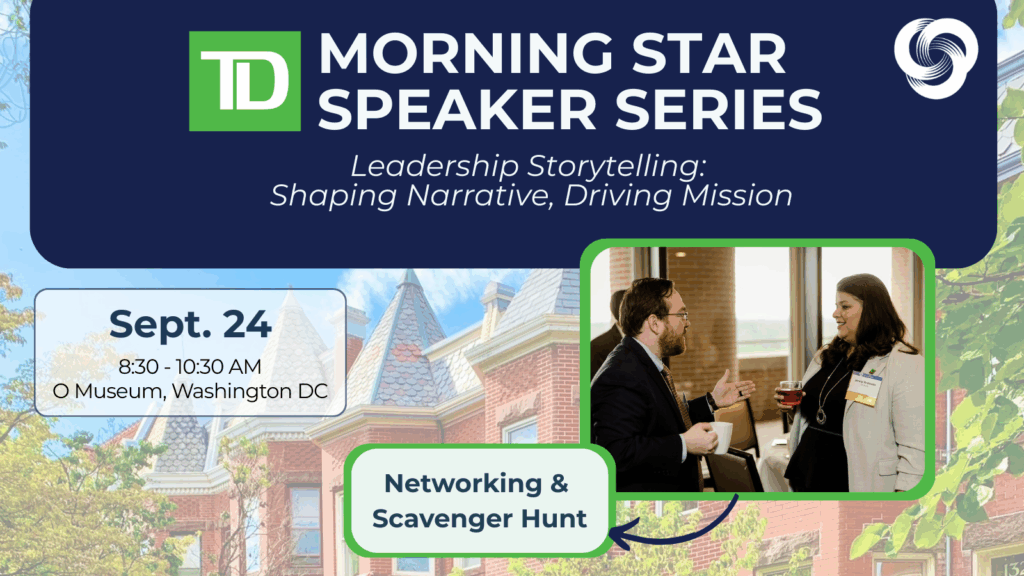
On September 24th in Washington, D.C., the Board of Trade, in partnership with TD Bank and the O Street Museum (O Museum), hosted the final session of this year’s series: The Power of Storytelling in Leadership. Surrounded by hidden doors and eclectic artifacts, attendees explored how storytelling can turn everyday interactions into meaningful experiences.

Change, Connection, and the Stories Between

The conversation wove together insights from H. Leonards, founder of the O Museum, and David Hargadon of TD Bank. Leonards reminded guests that creativity, curiosity, and imagination create space for growth and “real change comes from changing one heart at a time.” Hargadon built on this message, sharing how storytelling can strengthen relationships and leadership presence. Networking, he emphasized, isn’t about exchanging cards but about sharing short, memorable moments that reveal values, build trust, and humanize leadership.

Those ideas came to life as participants set out on a scavenger hunt through the museum, using artifacts as prompts for conversation. A vintage guitar might spark a story about teamwork; a hidden door could inspire reflection on navigating change. What could have been ordinary networking quickly became an exercise in discovery, showing how curiosity and shared experience can turn small interactions into genuine connection.

TD092425-223

Lessons That Last

The morning’s conversations left participants with reminders to carry forward:

  • Connection matters: Memorable anecdotes make conversations more impactful.
  • Identity is built through story: Consistent messages reinforce both personal and organizational brands.
  • Resilience inspires: Sharing challenges demonstrates courage and motivates others.

Celebrating the 2025 Series

This session concluded the 2025 TD Bank Morning Star Speaker Series, which over three installments focused on emotional intelligence, collaboration, and storytelling. Across the year, participants gained practical tools, shared experiences, and meaningful dialogue that turned leadership concepts into human connection.

As the Board of Trade looks ahead, that spirit will continue, creating opportunities for Greater Washington leaders to grow and lead in ways that are, in the words of TD Bank, unexpectedly human.

Special Thanks

The Greater Washington Board of Trade extends its thanks to TD Bank for 18 years of partnership in fostering unexpectedly human leadership experiences, and to the O Museum for hosting this imaginative and engaging session.

Founder of the O Museum and beloved figure in Washington, H. Leonards has devoted her life to building spaces that spark curiosity, creativity, and social change. She is also the visionary behind 51 Steps to Freedom®, an app and living trail that turns D.C. into the largest outdoor museum, bringing history to life for a new generation.

Connect This Fall: Upcoming Board of Trade Events for Our Members

Fall at the Greater Washington Board of Trade is when the energy of our region truly comes alive. Our calendar is brimming with gatherings that spark ideas, deepen relationships, and put business leaders at the center of conversations shaping what’s next for Greater Washington.

This season blends time-honored traditions with fresh opportunities—signature celebrations, exclusive executive forums, and policy discussions that set the tone for the months ahead. Many of these are member-only, designed to give our community unparalleled access to peers and decision-makers in trusted, candid settings.

Momentum is building, and you’ll want to be part of it. Explore the full calendar at www.bot.org/events or reach out at [email protected] to secure your place before these high-demand opportunities fill.

***These events below are for members of the Board of Trade and not open to the general public***

🍂Upcoming Fall Programs & Events🍂

Professional Development: Leadership Through Storytelling & Connection

The third session of the TD Bank Morning Star Series takes leadership learning out of the boardroom and into the O Museum. Through a guided scavenger hunt, participants will explore new ways to spark conversations, share stories, and build authentic connections.

Learn More & Register


Policy Briefing: Federal Priorities & Regional Impact

Executive Level, Members Only

Join fellow executives for a tactical briefing on the federal policies shaping the Capital Region. John Hallmark, EY’s U.S. Political & Legislative Leader, will share timely updates on looming deadlines and what they mean for our economy, workforce, and operations.

Space is Limited – Reserve Your Seat Today


Signature Event: Fall Business Classic

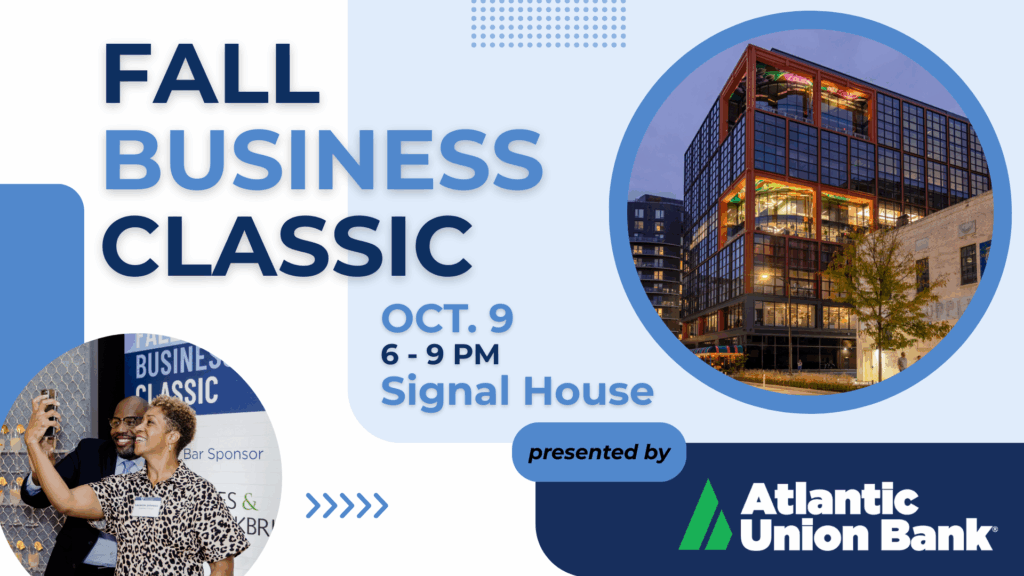
One of Greater Washington’s most beloved traditions returns—this year at Signal House, a stunning rooftop venue in Union Market. Join hundreds of business, government, and civic leaders for an evening of networking, connection, and celebration in one of D.C.’s most vibrant neighborhoods.

Register Today


Regional Insights: 2025 Hunger Report

Fresh insights from the 2025 Hunger Report reveal powerful connections between food security, workforce readiness, and regional competitiveness. Join Radha Muthiah, President & CEO of the Capital Area Food Bank, for a dialogue on what the data means for business leaders and how collaboration can drive resilience.

Join the Conversation


Executive Insights: Economic Trends & Regional Competitiveness

Executive Level, Members Only 

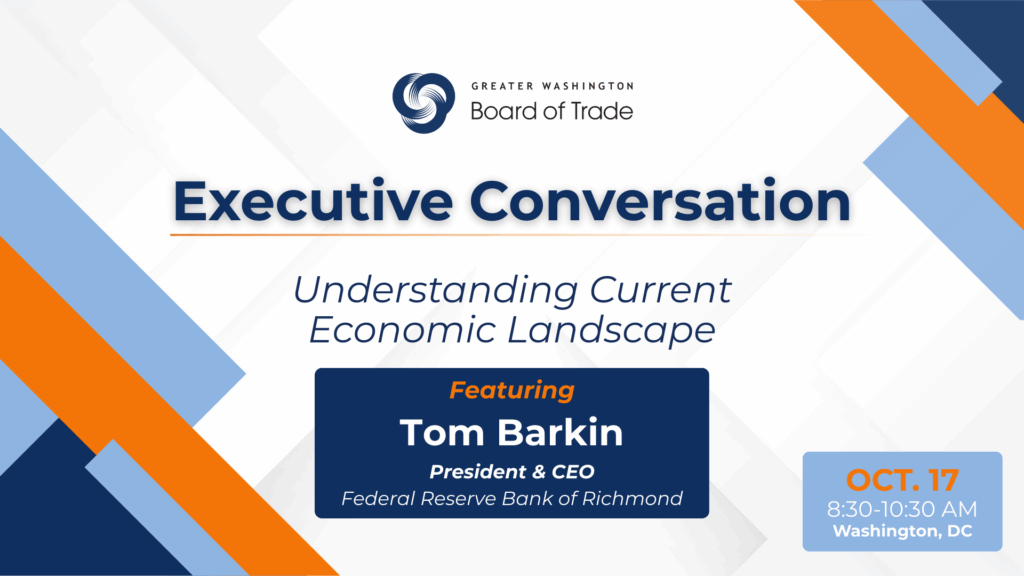
As Greater Washington faces budget uncertainty, housing challenges, and workforce shifts, business leaders need clear perspective on the economic forces shaping our region. In this private, conversational roundtable, Tom Barkin, President & CEO of the Federal Reserve Bank of Richmond, will share the Fed’s outlook and engage members in candid dialogue on competitiveness.

Space is Limited – Reserve Your Seat Today


Leadership Insights: Adapting to Policy Change

Federal policymaking is moving fast, with ripple effects on budgets, workforce priorities, and the region’s competitiveness. Guided by experts from K&L Gates, this session will cut through the noise and connect national decisions to practical strategies for Greater Washington’s business leaders.

Join the Conversation


Signature Event: 136th Annual Meeting

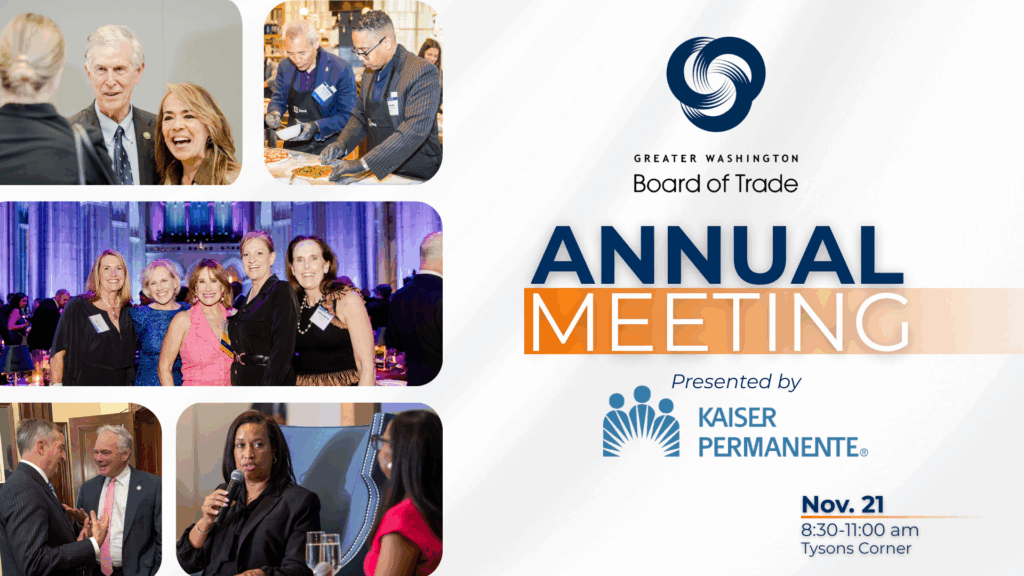
Since 1889, the Board of Trade’s Annual Meeting has brought members together to celebrate progress and set priorities for the year ahead. This cornerstone gathering is a must-attend for industry leaders, offering unmatched networking and a shared vision for Greater Washington’s future.

Register Today


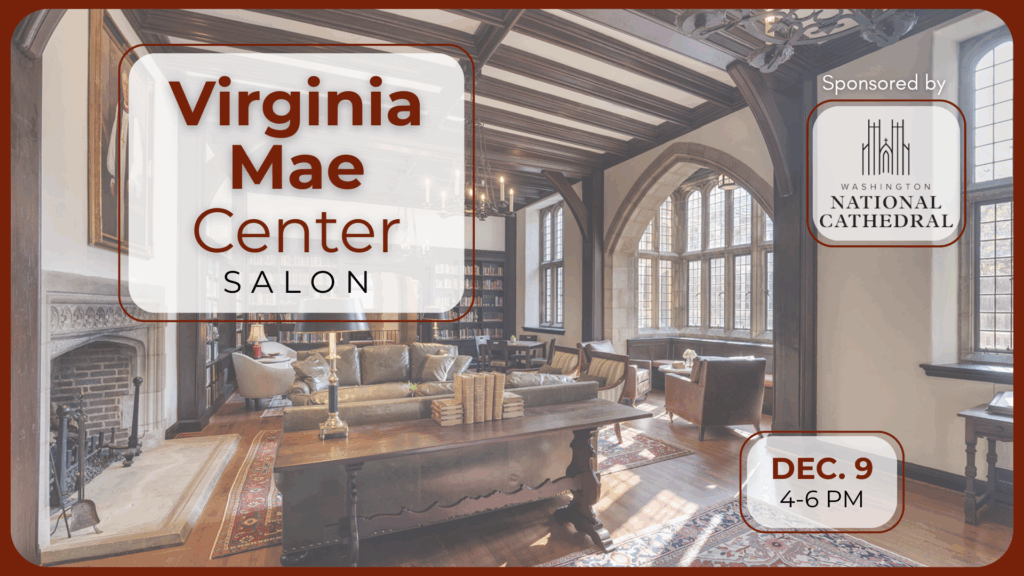
Executive Networking: Virginia Mae Center Salon

Executive Level, Members Only 
Experience the beauty of the newly renovated Virginia Mae Center while connecting with fellow executives in an intimate, year-end gathering. Enjoy seasonal flavors and candid conversation as we close the year with perspective and shared connections.

Secure Your Spot

Celebrating Executive Assistants with Connection and Conversation


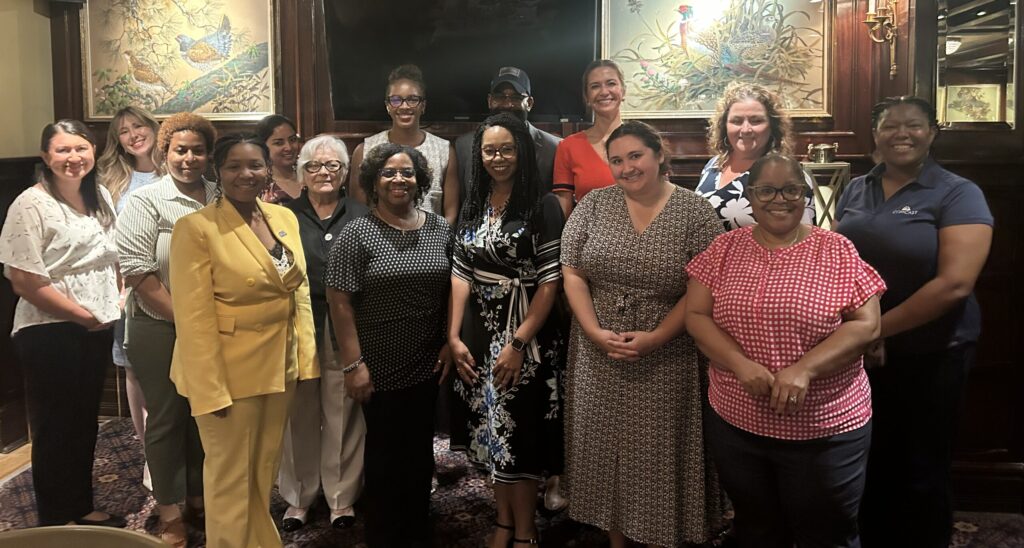
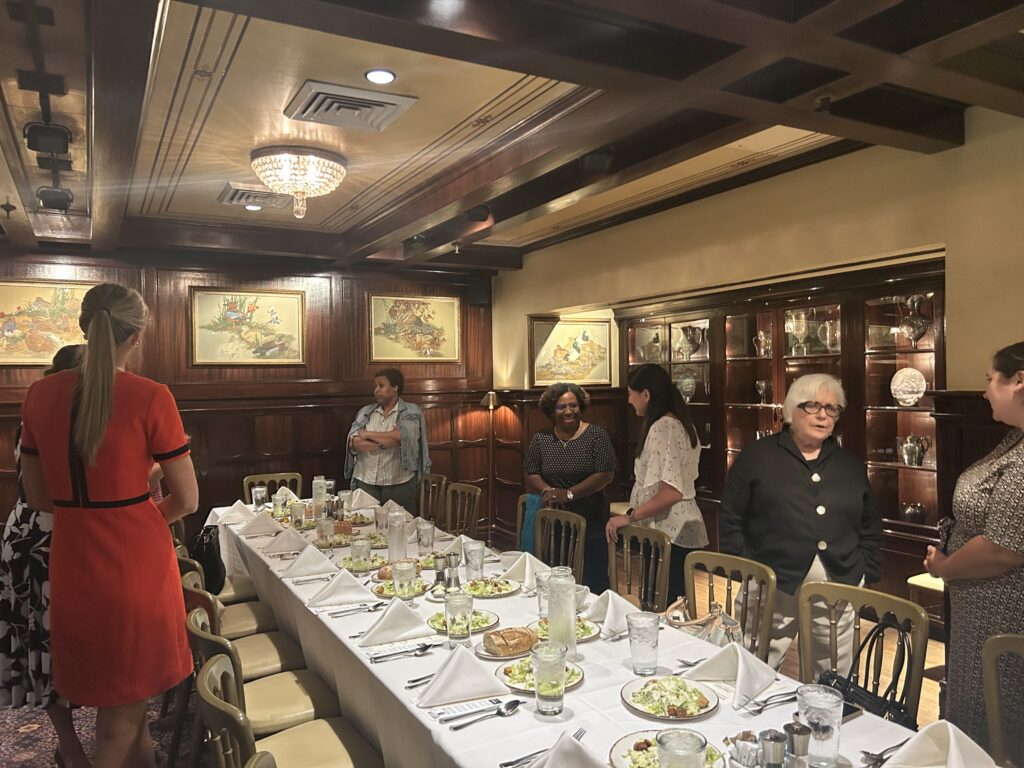
The Board of Trade had the pleasure of convening a group of executive assistants for an appreciation lunch at Old Ebbitt Grill in downtown Washington, D.C., on August 20. The gathering offered a rare opportunity for EAs — so often working diligently behind the scenes — to step out from behind the computer, connect with peers, and share experiences in a supportive and energizing setting. 

As part of our professional development roundtable series, the event was designed not only to celebrate executive assistants but also to equip them with tools that support their work. Our featured speaker, Ernie Davis, Personal & Executive L&B Coach, led a thoughtful session on Myers-Briggs Strategy for Managing, Influencing, & Understanding Difficult People. With over 60 million people worldwide having taken the Myers-Briggs personality test, the discussion highlighted how understanding personality preferences can strengthen communication and relationships in both professional and personal contexts. 

Many in the group were surprised to see their personality type shift from when they last took the test, which sparked an engaging conversation about how we evolve over time. The group also reflected on the qualities they share — being organized, effective communicators, and highly observant — while noting that individuals who don’t fit the “traditional” mold of extroverted or fact-driven can bring equally valuable strengths. 

Ernie encouraged participants to lean into their natural preferences and show up authentically. “If you show up to work every day outside of who you are, that’s a fast track to burnout,” he reminded the group. His message resonated deeply, reinforcing the importance of authenticity not just in leadership, but in every role that helps an organization thrive. 

The energy in the room was infectious. Attendees lingered after the session, continuing conversations and sharing stories—leaving the lunch both appreciated and better equipped as they head into a busy fall season. Beyond the camaraderie, the session offered a practical reminder of how professional development can directly support executive assistants in their critical roles: stronger communication, sharper self-awareness, and strategies to reduce burnout while amplifying their impact on the teams they support. 

We are grateful to every executive assistant for the hard work, resilience, and dedication they bring to their roles each day. We look forward to reconvening this group soon and continuing to build this community through future gatherings in our professional development roundtable series. 


Learn More and Register for Annual Meeting

Learn More and Register for Fall Business Classic

So Much Power, No Platform: Executive Leaders Discuss Fixing the Disconnect in Regional Progress

The Capital Region stands at a pivotal crossroads. We have all the assets we need to be one of the world’s most competitive, inclusive, and resilient economic hubs — yet we lack the collective operating system to truly activate them.

At the Board of Trade’s recent Executive Leadership Roundtable in partnership with Comcast, leaders across business, education, and civic sectors agreed: Our region is not short on resources. We are rich in capital, talent, innovation, and infrastructure, but these elements operate in silos.

We heard a striking metaphor: “Our region is an app store without an operating system.” We have incredible individual capabilities, but they are not plugged into a cohesive system that drives shared outcomes.

Participants emphasized that to transform, we must:

  • Move from a zero-sum mindset to shared growth.
  • Align educational and workforce systems with the region’s evolving economic identity.
  • Streamline regulatory frameworks to support speed and innovation.
  • Shift from process-driven philanthropy to outcome-focused investment.


Inclusion remains a central imperative. With deep disparities in literacy, income, and access to opportunity — for example, 47% of adults in Ward 7 read at a first-grade level — we cannot build a prosperous region without confronting these foundational issues.

As one participant noted, “We have the assets of a Silicon Valley, but not the mindset.” Changing this requires collective vision and action across public and private sectors, underpinned by bold leadership.

Participants explored forward-looking strategies to ensure the Capital Region remains competitive, resilient, and inclusive. Insights from this session will help shape ongoing regional dialogues and inform the collaborative work of the Potomac Conference — a platform designed to synthesize diverse perspectives and surface shared priorities across jurisdictions and sectors.

The time to act is now. We can no longer afford to admire our challenges — we must design, build, and sustain the systems that will define our shared future.

Thank you to Comcast and its government affairs executive, Misty Allen, for partnering and helping us facilitate this discussion. Learn more about the work of Comcast’s Project UP and how this initiative is helping expand internet access around Greater Washington and the United States: https://bit.ly/4lOoMQU

Elevating Leadership Through Human Connection: Strategic Decision-Making in the Kitchen

As today’s leaders navigate increasingly complex environments, the 2025 TD Bank Morning Star Speaker Series offers a refreshing reminder: some of the most powerful leadership lessons happen not in the boardroom, but in dynamic, human-centered experiences.

On June 26, the Board of Trade, in partnership with TD Bank and MGM National Harbor, hosted the second installment of this year’s Morning Star Speaker Series—Strategic Leadership Through Culinary Teamwork. Set in the warm, vibrant space of Osteria Costa, the event brought together senior executives and rising leaders for an interactive experience centered on collaboration, trust, and shared ownership.

From the Kitchen to the Leadership Table

The session featured MGM Executive Chef Anthony Cieplinski, who guided attendees through a hands-on culinary challenge—crafting custom pizzas in pairs—while delivering thoughtful insights on leadership dynamics. As teams worked side-by-side, they reflected on the parallels between kitchen collaboration and business decision-making: adapting in real time, listening actively, and trusting others to lead.

Key Takeaways on Collaborative Leadership

Throughout the session, themes of trust-building, flexibility, and mentorship came to life in unexpectedly resonant ways:

  • Strategic Communication – Whether deciding on toppings or navigating high-stakes meetings, clear communication and active listening are essential.
  • Adaptability Under Pressure – As in any kitchen, unexpected changes require composure and creativity—skills equally vital in today’s fast-paced business world.
  • Shared Ownership – From crust to concept, attendees were reminded that strong teams thrive when responsibility and recognition are shared.

Following the culinary session, attendees enjoyed a seated lunch featuring their handmade pizzas. Table discussions encouraged reflection on leadership styles, mentorship, and how trust and adaptability are cultivated within teams.

The format fostered thoughtful dialogue and meaningful peer exchange, creating a warm, relaxed environment where laughter, storytelling, and real connection took center stage. With just about 30 participants, the setting allowed for deep conversations and strong takeaways that will stay with attendees long after the final slice was served.

Looking Ahead

This was the second session in the 2025 Morning Star Speaker Series. The final session, NextGen Leadership Storytelling, will take place in the fall and focus on helping executives communicate with authenticity, confidence, and clarity.

Special Thanks

The Greater Washington Board of Trade extends its deep appreciation to TD Bank for 18 years of partnership and continued investment in human-centered leadership development, and to MGM National Harbor for their generous hospitality and commitment to cultivating inclusive, people-first experiences.

Investing in What Works: Mayor Bowser on Building a Smarter, Stronger DC

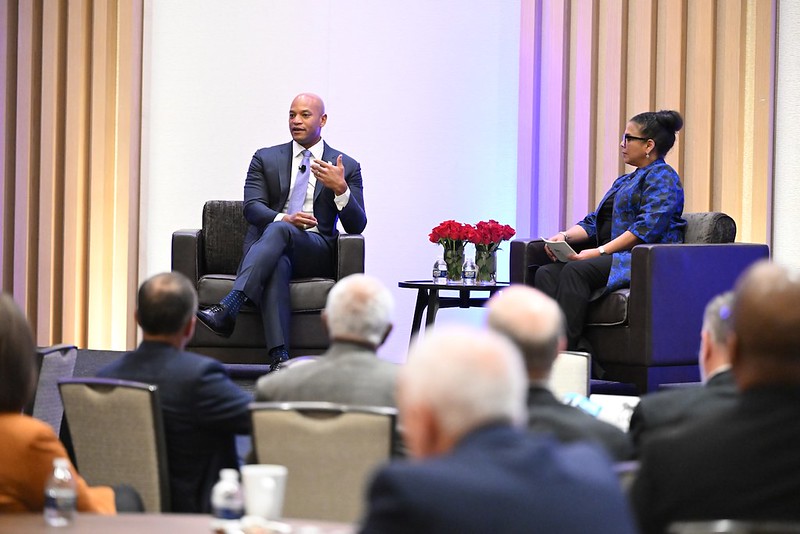
As Greater Washington navigates rapid economic change and shifting federal dynamics, the Greater Washington Board of Trade convened a timely and candid conversation with D.C. Mayor Muriel Bowser on June 12, 2025. The fireside chat, hosted in partnership with Holland & Knight LLP and moderated by Executive Partner Janene Jackson, brought together leaders across sectors to explore the District’s fiscal outlook, strategic investments, and long-term vision for inclusive growth.

Mayor Bowser addressed the District’s most pressing economic challenges, including a projected $1 billion revenue shortfall over the next four years,  driven largely by anticipated federal workforce reductions. Despite this difficult terrain, she reaffirmed her commitment to a growth-oriented budget.

“We’re right-sizing our spending and growing our revenue, with no new taxes,” Mayor Bowser said. “We have to grow our economy, diversify our base, and help D.C. residents transition into new, high-quality jobs.”

Driving Strategic Investment Across the City

Throughout the conversation, Mayor Bowser outlined key priorities from her FY26 budget and Budget Support Act, emphasizing investments that modernize systems, expand opportunity, and maintain the District’s economic resilience:

  • Tech Ecosystem Growth – A new Technology Ecosystem Fund and reviving parts of the Qualified High-Tech Company Incentive are designed to attract startups and scale-ups, leveraging the region’s tech talent and strengthening D.C.’s competitiveness as a center for innovation.
  • Workforce Mobility – Investments in career and technical education, the DC Infrastructure Academy, and expanded procurement for local businesses aim to create upward mobility—particularly for residents in Wards 5, 7, and 8. Since 2015, the District’s spending with D.C.-based businesses has grown from $300 million to over $1.5 billion annually.
  • Downtown Revitalization – The FY26 budget includes $17 million for public spaces, including the Gallery Square project and the revitalization of Farragut Square, McPherson Square, and Lafayette Park, part of a broader strategy to draw new investment, foot traffic, and vibrancy to downtown.
  • Housing & Rental Reform – Mayor Bowser reaffirmed her commitment to affordable housing production while advocating for reforms to the Tenant Opportunity to Purchase Act (TOPA) and pandemic-era rental policies to stabilize D.C.’s housing ecosystem and re-attract capital investment.
  • Public Safety & Infrastructure Modernization – New funding for 911 infrastructure (including a commitment to its updated and remodeled 2nd 911 Call Center), law enforcement drones, and asset lifecycle planning is part of a citywide push to modernize public services and ensure a safe, reliable foundation for growth.

VIEW MORE PHOTOS FROM THIS EVENT

The Future of RFK and Federal Alignment

Mayor Bowser also offered a bold vision for the RFK Stadium site—a catalytic 180-acre redevelopment opportunity that would include a new stadium, mixed-use housing, recreation space, and an entertainment district along the Anacostia River.

“If it was just a stadium, we wouldn’t be as interested,” she noted. “This is about unlocking the full potential of the site—for our residents and for the future of the city.”

Turning to federal workforce and infrastructure policy, Mayor Bowser emphasized the importance of regional alignment and cross-jurisdictional collaboration. She called on public and private leaders to push for federal reinvestment and a renewed commitment to in-person work in the capital.

A Call to Action for the Business Community

The session concluded with a direct message to business and civic leaders: remain engaged, advocate for change, and help move the District’s growth agenda forward.

“Don’t bet against the District,” Mayor Bowser said. “But don’t sit on the sidelines either. If we’re still having this conversation next year and haven’t made progress—shame on us.”

This special session is part of the Board of Trade’s broader mission to shape a next-generation regional economy—one built on digital transformation, inclusive growth, and stronger public-private partnerships. We extend our deep thanks to Mayor Bowser for her continued leadership, and to Holland & Knight and Janene Jackson for making this powerful dialogue possible.

Watch the whole conversation between Mayor Bowser and the Board of Trade below:

Featured Members