
Letter of Support: ‘Local Funds Act of 2025’ Protects DC’s Authority to Spend Locally Raised Revenue

Letter of Support: ‘Local Funds Act of 2025’ Protects DC’s Authority to Spend Locally Raised Revenue

About this Letter of Support:

Greater Washington Board of Trade President & CEO Jack McDougle submitted testimony to the United States House of Representatives showing strong support for the District of Columbia Local Funds Act of 2025 (S. 1077), a bipartisan bill that protects D.C.’s authority to spend its locally raised revenue, without cost to the federal government. Passage of this legislation is essential to preventing a $1.1 billion budget shortfall and ensuring continued funding for core public services that underpin the economic health of the District and the entire metropolitan region. The following testimony outlines the business community’s position and the critical importance of timely congressional action.

Letter of Support: 

DOWNLOAD HERE

March 27, 2025

Dear Mr. Speaker (Mike Johnson) and Representative Hakeem Jefferies,

On behalf of the Greater Washington Board of Trade — representing the business community of the D.C. metropolitan region since 1889 — I write to express our strong support for the District of Columbia Local Funds Act of 2025 (S. 1077).

This bipartisan legislation, which passed the Senate unanimously on March 14, affirms D.C.’s authority to spend its locally raised revenues and averts an immediate $1.1 billion budget shortfall. It is essential to sustaining the economic stability of the District and the broader regional economy. We urge the House to pass this bill without delay.

The District raises the vast majority of its revenue independently—there is no cost to the federal government. In fact, the Congressional Budget Office confirms that S. 1077 has no impact on the federal budget. What it does do is allow the District to implement its Fiscal Year 2025 budget, which Congress already approved through continuing resolutions in September and December (P.L. 118-83 and P.L. 118-158).

These funds are critical to the operation of public services and infrastructure that underpin D.C.’s and the region’s economic health — transportation, public safety, healthcare, education, and more. Without them, the resulting budget gap would ripple across the region, weakening consumer confidence, shrinking business revenue, and putting jobs at risk. The impact wouldn’t stop at the District’s borders — it would affect the entire regional economy, including D.C.’s 700,000 residents and the nearly 26 million visitors who came to the nation’s capital last year.

From retail and real estate to hospitality and professional services, businesses across sectors would feel the blow. Abrupt cuts at this scale would increase costs, slow investment, and threaten the momentum of recovery and growth – especially needed as efforts continue to transform the federal government.

We fully support the importance of fiscal responsibility, including reducing the national debt. But for over two decades, every continuing resolution has included language allowing D.C. to spend its own locally passed, balanced budget. This year should be no different.

Economic strength in the Greater Washington region is not just a local issue — it’s a matter of national importance. Congress must give the District the certainty it needs to manage its finances and sustain the services that drive this region forward.

We respectfully urge you to support S. 1077, and we stand ready to work with you to keep our region strong, stable, and growing.

Sincerely,

Jack McDougle

President & CEO 

Greater Washington Board of Trade


See Additional Testimonies and Letters of Support we have submitted recently:

Testimony to DC Council: Workforce Strategies Must Support Economic Growth and Resilience

Letter to Congress: Addressing Concerns with House Concurrent Resolution 14

Testimony: Submitted to DC Council, Committee on Business & Economic Development

Congress Should Preserve DC’s Home Rule and Withdraw the Bowser Act | WBJ Viewpoint
Letter of Advocacy: Maryland and Virginia must Prioritize Reconstruction of American Legion Bridge

About Letter of Advocacy:

This letter was sent to both Governor Wes Moore of Maryland and Governor Glenn Youngkin of Virginia to rally support for the reconstruction of the American Legion Bridge, which is a vital transportation asset to our growing region. The Board of Trade joined other Washington Region Transportation Coalition members as part of these advocacy efforts.

Letter of Advocacy: 

DOWNLOAD HERE

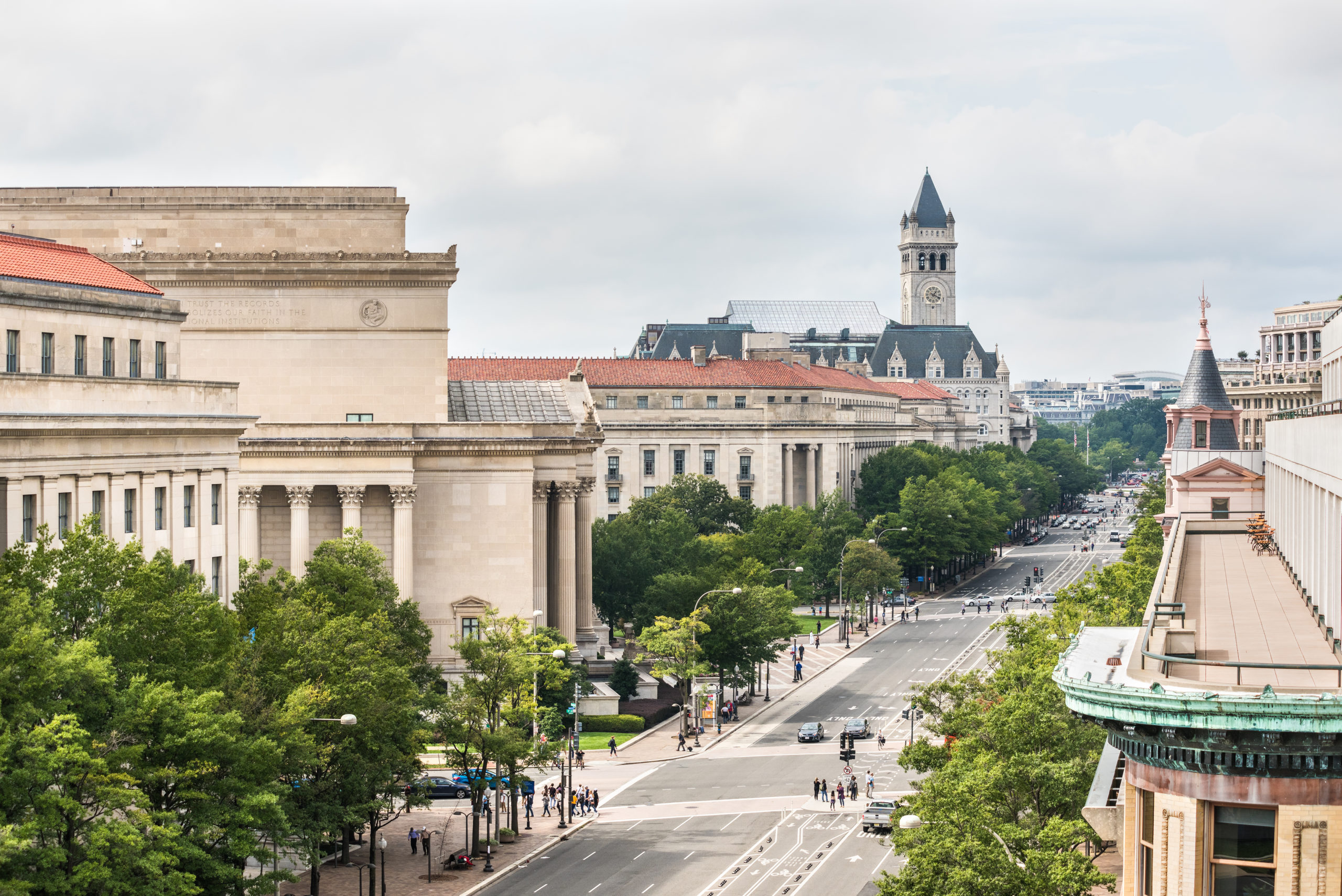
As representatives of the vast majority of private and nonprofit employers across the DC region, we are writing to urge Maryland and Virginia to prioritize reconstruction of the American Legion Bridge, an essential part of the DC region’s transportation infrastructure that is reaching the end of its useful life and needs to be replaced. 

Before the pandemic, the American Legion Bridge was widely recognized as the DC region’s worst traffic bottleneck. The Bridge carried a daily average of 250,000 vehicles and 375,000 people to jobs, housing, and commerce throughout our community. For comparison, the 2024 daily average ridership for the entire Metrorail system was 350,000 trips. Now that most public and private sector employees across the DC area have returned to the office, the number of people who rely on this bridge daily is growing, and if left unaddressed, this vital transportation corridor will continue to see further crippling congestion and delays.  

As the only bridge directly connecting the DC region’s two largest jurisdictions – Fairfax and Montgomery Counties – the American Legion Bridge is critical to both the economic prosperity and security of the Nation’s Capital. When a tanker truck overturned on the bridge in 2018, it created a 24-hour traffic nightmare that brought our entire community to a standstill. Now the Maryland Department of Transportation has confirmed that the Bridge will reach the end of its useful life by 2030 and must be replaced.   

Our region cannot afford to wait any longer to address this critical regional connection. Maryland and Virginia must take action immediately to ensure that this bridge is replaced and meets the long-term transportation needs of our community.  

We urge you to prioritize this essential regional connection to meet the growing transportation, economic development, and national security needs of the Greater Washington region. 

Thank you for your time and consideration of this important matter. 

Sincerely, 

Washington Region Transportation Coalition Members

Testimony: Submitted to DC Council, Committee on Business & Economic Development

About this Testimony:

Greater Washington Board of Trade President & CEO Jack McDougle submitted testimony to the District of Columbia Council’s Committee on Business and Economic Development for the hearing titled Building a Resilient Economy: Strategies for the District’s Future Growth, Investment, and Stability. This testimony to D.C. Council highlights the critical issue of building a resilient economy for the District of Columbia, especially as the federal government continues to transform and shrink across the region.

Submitted Testimony:

DOWNLOAD HERE

Thank you for the opportunity to provide this testimony on the critical issue of building a resilient economy for the District of Columbia. As the federal government continues to transform and shrink across the region, we face a defining moment—one that demands bold action and a strategic reimagining of our economic future. We recognize and appreciate the significant efforts already underway and the progress that has been made, but there is still more to do to ensure long-term economic stability and growth.  

The District’s economic stability has long been anchored by the presence and spending power of the federal government. However, that model is no longer sustainable. Federal employment is shrinking, office vacancies are climbing, and contracting dollars are declining. While this presents clear challenges, it also creates a pivotal opportunity to reimagine our economic foundation—one that is more innovative, diverse, and competitive, positioning the District and our region as a leader in the 21st-century global economy. 

This shift demands more than incremental adjustments—it requires a bold economic roadmap, strategic investments in key industries, and a unified regional approach to ensure long-term growth and stability. At the same time, it’s important to recognize that the federal government will always be a foundational part of our economy. The goal is not to sever ties with the federal sector—but to better leverage a transformed federal presence while expanding non-government private sector leadership to build a more balanced and resilient economy. 

Building a Bold Economic Roadmap 

The District must continue to build and enhance their comprehensive Economic Roadmap that sets clear goals, leverages strategic assets, improves the business environment, reduces reliance on federal employment and spending while maximizing the benefits of a federal presence. This roadmap should focus on: 

  • Reconfiguring Federal Assets: Continue efforts to reconfigure underutilized federal buildings and land, expanding opportunities for mixed-use developments, innovation hubs, and business incubators.  
  • Encouraging Private Sector Investment: Continue developing and refining targeted incentives to attract and retain private sector businesses in high-growth industries. We must reduce barriers to entry for businesses and make the District a more attractive place to launch and grow a business. 
  • Leveraging Federal Transitions: Capitalize on the shift toward remote work and federal downsizing by encouraging private sector expansion into vacated spaces and enhance tax incentives for companies to establish headquarters and operations in the District. 
  • Strengthening Federal-Private Collaboration: Establish more formal partnerships between federal agencies, local government, and the business community to promote knowledge sharing, contracting opportunities, and innovation. 

We cannot allow federal retrenchment to limit our future. Instead, we must seize this moment to redefine our economic identity—moving from a government-dependent city to a dynamic, innovation-driven economy. 

Fueling Innovation and Entrepreneurship 

Innovation and entrepreneurship must be at the heart of our economic strategy. To make Greater Washington a national leader in innovation, we need to: 

  • Expand the Startup Ecosystem: Create new incubators, co-working spaces, and maker hubs to support early-stage businesses. 
  • Increase Access to Capital: Encourage more public-private funds to provide seed and growth-stage capital. 
  • Support Full Life-Cycle Growth: Ensure that startups have the resources not only to launch but to scale and thrive—through mentorship, market access, capital and strategic partnerships. 
  • Leverage Universities and Research Institutions: Foster stronger connections between the District’s and region’s universities and the business community to accelerate tech transfer and commercialization. 
  • Align Federal and Private Innovation: Encourage greater collaboration between federal research and private sector innovation. Federal labs, data, and research capacity are among our greatest underutilized assets—linking them with private sector investment could unlock tremendous growth potential. 

Greater Washington has the talent, infrastructure, and intellectual capital to lead the nation in innovation—we need to unlock that potential with targeted, sustained investment and the right operating environment. 

Diversifying and Strengthening the Economic Base 

A resilient economy is a diversified economy. To build long-term economic strength, the District must focus on accelerating growth in high-potential sectors that are less dependent on federal activity while harnessing federal resources to strengthen those industries: 

  • Technology: Expand support for software development, data analytics, artificial intelligence, and fintech companies. Federal data and research capabilities present a unique opportunity to fuel growth in these areas. 
  • Life Sciences: Strengthen the District’s position as a biotech and health innovation hub through research incentives and partnerships with leading medical institutions and eventually federal research agencies. 
  • Clean Energy: Build on the District’s climate commitments by expanding renewable energy infrastructure and incentivizing clean-tech development.  
  • Cybersecurity: Leverage our proximity to federal agencies and defense contractors to position the District as a leader in cybersecurity and data protection. Establishing a national cybersecurity innovation hub in the District could create thousands of high-paying jobs and drive private sector investment. 

By targeting these sectors and others such as hospitality, education, and media, the District can create a more balanced and competitive economy that drives sustainable growth and job creation—while strategically using federal resources to strengthen these industries. 

Empowering a Future-Ready Workforce 

Economic resilience depends on a workforce that is prepared to meet the needs of a changing economy. We must align our education and workforce development systems with the demands of growth industries: 

  • Expand Education-to-Employment Pathways: Strengthen partnerships between high schools, community colleges, universities, and employers to create clear pathways into high-demand fields. 
  • Support Federal-to-Private Sector Transitions: Expand retraining programs to help former federal employees transition into private sector roles in tech, healthcare, and other high-growth industries. The skills and experience of the federal workforce represent a significant asset that we cannot afford to waste. 
  • Invest in Skills Development: Increase access to apprenticeships, vocational training, and reskilling programs, with a focus on digital literacy, technical skills, and new economy jobs. 
  • Promote Economic Inclusion: Ensure that economic growth benefits all communities by removing barriers to employment and investing in workforce training for underrepresented groups. Don’t limit employment opportunities only to DC. 

An adaptable, skilled workforce will be the foundation of a more competitive and resilient District economy. 

Unifying Regional Efforts for Greater Impact 

Economic challenges and opportunities don’t stop at the District’s borders. To maximize growth, we must strengthen regional collaboration across government, business, and academia: 

  • Support a Regional Economic Development Strategy: Align economic development goals with Maryland and Virginia to create a unified strategy for attracting investment and growing key industries. 
  • Enhance Transportation and Infrastructure Connectivity: Improve transit options and regional infrastructure to increase mobility and economic integration. 
  • Coordinate Business Attraction and Retention: Work with regional partners to create competitive incentives and reduce duplicative efforts. 
  • Leverage Federal and Regional Assets: Develop a coordinated plan to maximize the economic potential of federal properties and regional research institutions. 

A unified regional approach will give the District a competitive edge in the global marketplace and drive collective economic growth. 

Conclusion 

The shrinking federal footprint is just the start of District’s economic future—it is a defining opportunity to build a more dynamic, innovative, and resilient economy. By developing a bold economic roadmap, creating a more supportive business environment, fueling innovation, diversifying our economic base, empowering a future-ready workforce, and strengthening regional collaboration, we can position the District not only to withstand future economic shocks but to emerge stronger and more competitive. 

But this isn’t about replacing the federal government—it’s about strategically using the strength of the federal presence to fuel private sector growth and innovation. We need to transition from a government-dependent city to a government-enhanced city—where federal resources, workforce expertise, and strategic positioning are leveraged to build a broader, more dynamic economic base. 

The time for action is now. The decisions we make today will determine whether the District remains tethered to the past—or becomes a global leader in economic resilience and innovation. 

Thank you for the opportunity to testify.  

Letter to Congress: Addressing Concerns with House Concurrent Resolution 14

About this Letter:

Jack McDougle, President & CEO of the Greater Washington Board of Trade, has sent a letter to Senator John Thune and Speaker Mike Johnson expressing deep concerns over House Concurrent Resolution 14 (H.Con.Res.14) and its potentially devastating impact on the region’s economy and budget funding for Washignton, D.C. This letter was also sent to additional congressional leaders in the House and Senate who represent our region. A similar piece of legislation was also submitted to the U.S. Senate.

Letter to Congress:

DOWNLOAD HERE

March 11, 2025

Dear Senator John Thune and Speaker Mike Johnson, 

I’m writing on behalf of the Greater Washington Board of Trade, which has represented the business community of the Washington metropolitan region since 1889, to express our deep concern about the harmful impacts of House Concurrent Resolution 14 (H.Con.Res.14). This bill would inflict serious economic harm not only on government workers and contractors but on the broader business community, working families, and the overall economic stability of our region. We urge you to work toward a more balanced and sustainable solution. 

The consequences of this bill would extend well beyond the public sector, creating a ripple effect throughout the broader economy. Abrupt federal spending cuts at this scale would weaken consumer demand, lower business revenues, and drive-up unemployment. Businesses large and small—especially those in retail, hospitality, real estate, and professional services—would face declining sales and rising costs as reduced spending and economic uncertainty take hold.  

Infrastructure and public services, including transportation, public safety, healthcare, and education, would also suffer, further straining business operations and reducing overall economic productivity. The combined effect of declining business confidence, lower investment, and financial strain would threaten long-term growth and regional competitiveness well beyond any short-term economic downturn. 

While we recognize and support the importance of fiscal responsibility, especially bringing down the national debt and lowering debt service payments, the scale and speed of the proposed cuts would cause more harm than good. Deficit reduction cannot come at the expense of jobs, economic stability, and essential services. A destabilized economy in the capital region would have far-reaching national and global consequences. 

Instead of indiscriminate, across-the-board cuts that threaten economic stability, we urge you to consider more targeted and thoughtful strategies to reduce costs. A few examples: 

  • Modernizing government operations through increased automation and streamlined processes to reduce costs while improving efficiency. Creating better experiences for the American people. 
  • Reducing waste and inefficiency in federal contracting by improving oversight, implementing targeted cuts, and eliminating redundant programs would result in significant savings without undermining economic growth or essential services. 
  • Reforming healthcare spending by focusing on preventive care and reducing administrative overhead would generate long-term savings without compromising coverage or quality of care. 
  • Closing tax loopholes and improving enforcement to ensure fair tax compliance would raise revenue, create a level playing field, and reduce the deficit without undercutting business growth or middle-class stability. 

The proposed budget cuts, on the other hand, would have specific and measurable negative effects, including: 

  1. Increased Risk of a Long-Term Recession Across Our Region – The Chief Financial Officer (CFO) of the District of Columbia has issued a revised economic forecast showing a reduction in local revenues of more than $1 billion over the financial plan period, with an average annual decrease of approximately $342.1 million from FY 2026 through FY 2028. 
  2. Widespread Private Sector Job Losses and Economic Instability – The House budget bill could result in the loss of 50,000 to 75,000 private-sector, non-government contractor jobs in the Greater Washington region over the next two years. The hardest-hit sectors would likely include retail, hospitality, real estate, professional services, and healthcare due to lower spending and overall economic activity. 
  3. Strain on Small Businesses and Reduced Investment – Small and mid-sized businesses in the Greater Washington area generate over $120 billion in annual economic activity. The House bill would weaken business revenues and limit access to capital, leading to business closures and reduced investment in growth. 
  4. Education Crisis and Lower Student Outcomes – The proposed budget requires the House Education and Workforce Committee to identify $330 billion in spending reductions over ten years, which could impact federal education programs. While the resolution does not explicitly mandate cuts to Title I grants, the scale of reductions raises concerns about funding for teachers, instructional materials, and support services. These cuts could lead to larger class sizes, reduced access to special education and mental health resources, and fewer after-school programs. Research shows that such conditions contribute to higher dropout rates, lower academic performance, and diminished workforce readiness, ultimately limiting future economic mobility.
  5. Increased Crime and Public Safety Challenges – Cuts to federal funding would undermine public safety efforts. Reduced support for mental health services, substance abuse programs, and job training initiatives would remove critical resources that help prevent crime and reduce recidivism. A weakened local law enforcement infrastructure would diminish the ability to respond to public safety threats and maintain order. 
  6. Strains on Public Infrastructure and Services – Substantial cuts to federal funding for transportation and healthcare would have immediate consequences for the region’s quality of life. The Washington Metro system, which serves more than 800,000 riders daily, would face service disruptions, increased fares, and reduced reliability—deterring both workers and businesses from staying in the region. Healthcare access, particularly for underserved communities, would also suffer as federal support for Medicaid and local health programs is scaled back, which would affect all patients. 
  7. Housing Market and Financial Instability – A rise in unemployment and reduced confidence would hit the housing market hard. Home prices in the region, which have risen steadily over the past decade, would decline by 5% to 8% within the next year as demand weakens. Increased foreclosures and higher rental costs would add to financial strains for working families and undermine regional bank stability. 
  8. Growing Federal Deficits Despite Cuts – Ironically, the proposed cuts are unlikely to meaningfully reduce the deficit. The CBO has projected that reduced economic activity resulting from these cuts could lower tax revenues by $150 billion over the next decade, undermining deficit reduction efforts. Increased demand for unemployment assistance and other social programs would likely offset much of the intended savings. 
  9. Loss of Global Competitiveness – The Greater Washington region is a critical economic engine for the nation. Disruption here would have a detrimental effect on global confidence in the U.S. economy. Reduced business confidence and weakened infrastructure would make it harder to attract and retain talent, driving business activity to competitor markets abroad. 

The economic strength of the Greater Washington region is not just a local concern—it’s a matter of national importance. The businesses, workers, and families that power this region’s economy need thoughtful and balanced solutions, not short-sighted austerity. We strongly urge you to work toward a bipartisan solution that preserves economic stability, protects jobs, and supports businesses of all sizes. The Greater Washington Board of Trade stands ready to work with you and your colleagues to craft a more responsible and sustainable path forward. 

We cannot cut our way to prosperity. We must manage our resources responsibly and make smart investments in our shared future. Thank you for your attention to this critical issue. 

Sincerely, 

Jack McDougle 

President and CEO

Greater Washington Board of Trade 


See Additional Testimonies and Letters of Support we have submitted recently:

Testimony to DC Council: Workforce Strategies Must Support Economic Growth and Resilience

Letter of Support: ‘Local Funds Act of 2025’ Protects DC’s Authority to Spend Locally Raised Revenue

Testimony: Submitted to DC Council, Committee on Business & Economic Development

Congress Should Preserve DC’s Home Rule and Withdraw the Bowser Act | WBJ Viewpoint
Congress Should Preserve DC’s Home Rule and Withdraw the Bowser Act | WBJ Viewpoint
Federal Policy & Washington DC’s Economic Future

The future of Washington, D.C., as a vibrant economic hub, depends on smart federal policy decisions that ensure continued investments, support the workforce, and keep agencies in the region. The proposed Bowser Act would restrict D.C.’s self-governance by imposing an additional layer of federal oversight, a change that could impact the city’s future growth and success.

In a new Washington Business Journal viewpoint, Board of Trade President & CEO Jack McDougle discusses why federal officials must work with the D.C. Government to ensure the District has long-term economic stability. As Congress considers policies for the District, such as the Bowser Act, it’s essential to recognize its broader implications for businesses and communities.

READ THE FULL ARTICLE HERE

D.C. is not just the seat of the federal government; it’s a vital economic hub that drives regional and national prosperity.

The Board of Trade continues to advocate for policies that:

  • Retain federal agencies in the region to sustain jobs and economic activity 
  • Support workforce transitions and investments in economic mobility
  • Preserve D.C.’s ability to govern itself, ensuring the region remains competitive and economically resilient 

Federal policy decisions don’t just impact the District, they shape Greater Washington’s entire regional economy.

ABOUT THE BOARD OF TRADE

The Greater Washington Board of Trade, founded in 1889, is the region’s premier non-partisan business organization representing industry, nonprofits, universities, and government agencies. The Board of Trade addresses complex and always-evolving business concerns that stretch across the District of Columbia, suburban Maryland and Northern Virginia, with a priority focus on inclusive economic growth, improving the business climate, and enhancing the region’s economic competitiveness.  

READ MORE POLICY ISSUES AND TOPICS THE BOARD OF TRADE IS FOLLOWING

LEARN ABOUT UPCOMING BOARD OF TRADE MEMBER OPPORTUNITIES

A Community Conversation with 11th Street Bridge Park

Fireside Chat on AI with Congressman Don Beyer

Letter of Support: Enable Enhanced Broadband Deployment for Improved Connectivity in Prince George’s County

About Letter of Support:

The Greater Washington Board of Trade signed on to this letter of support with our member Crown Castle, which advocates for implementing Crown Castle’s Rapid Connect fiber construction method, an innovative way of building fiber to expand broadband access in our community.

Letter of Support:

DOWNLOAD HERE

We are writing to advocate for the implementation of Crown Castle’s Rapid Connect fiber construction method, an innovative way of building fiber to expand broadband access in our community. While the County’s Department of Public Works & Transportation and Department of Permitting, Inspections and Enforcement has been engaged since the spring of 2024, we have yet to see movement on its implementation.  

Rapid Connect uses a small moving crew and safety vehicles to simultaneously cut, place, and seal underground fiber. This method meets the highest safety standards, is environmentally conscious, minimizes disruption and community impact, reduces deployment time, and blends seamlessly into our streetscape. As a result of this simplified construction process, Crown Castle can complete fiber construction in weeks instead of months, and at a fraction of the cost.  

Data demand is growing quickly. For instance, it’s expected that mobile data traffic in North America will grow by 150% by 2029. Improved connectivity is crucial for improving access to vital resources and services, including educational opportunities, digital healthcare, connected transportation, public safety and many of the Plan Prince George’s 2035 strategies. As connectivity demands surge, Rapid Connect is the fastest and most effective solution to build networks that can keep pace with each community’s growing needs. In Addition, embracing this type of innovation can help communities become broadband ready and more competitive as states allocate funding. Crown Castle has successfully rolled out Rapid Connect in neighboring communities, including Montgomery County, D.C., and Alexandria.  

We urge the County to support the adoption of Rapid Connect. Modern life depends on broadband access, and Rapid Connect can expand access much faster than traditional construction methods to foster a more connected community and ensure Prince George’s County remains competitive and prosperous. 

Sincerely, 

Ashley Greenspan 

External Affairs – DC, MD & VA 

Crown Castle 

Testimony: Downtown Arena Revitalization Act of 2024 (DC B25-1004)

About this Testimony: 

The Greater Washington Board of Trade has expressed strong support for the Downtown Arena Revitalization Act of 2024, emphasizing its potential to drive economic development, boost regional vitality, and enhance downtown Washington, D.C. recovery efforts. Highlighting the Capital One Arena’s legacy of hosting over 47 million visitors and 4,500 events since 1997, the Board underscores the significant impact of this district on local businesses, tax revenue, and the city’s cultural fabric.

Testimony Submitted:

DOWNLOAD HERE

November 13, 2024

Dear Chairman Mendelson, 

On behalf of the Greater Washington Board of Trade, I am writing to convey our strong support for the Downtown Arena Revitalization Act of 2024. This legislation presents a significant opportunity to advance economic development, enhance our region, and preserve the dynamic atmosphere of downtown Washington, D.C. This initiative is particularly important as we strive to recover from the economic challenges of recent years.  

The proposed act aligns with the Board of Trade’s mission to advance a prosperous, inclusive, and vibrant regional economy. The revitalization of the downtown arena district, which is home to Capital One Arena and supported by our member organizations, including Monumental Sports & Entertainment, Clyde’s Restaurant Group, Capital One Bank, and the Washington Metropolitan Area Transit Authority (WMATA), will have a meaningful impact on the region. Since 1997 the Capital One Arean has hosted 47 million people and more than 4,500 events that support local businesses, drives tax revenue, and contribute significantly to the cultural fabric of our city. A revitalized arena district will build upon this success by attracting more visitors, creating new job opportunities, and catalyzing further investment in downtown Washington. 

Our members recognize the critical role that a modernized arena district can play in sustaining and expanding these benefits. For instance, Monumental Sports’ commitment to enhancing the fan and visitor experience will be a boon for tourism, hospitality, and retail sectors, which are vital components of the downtown economy. WMATA also stands to benefit through increased ridership, connecting more residents and visitors with downtown events and activities, and supporting the ongoing financial health of our public transit system. 

We urge the D.C. Council to move forward with this legislation and invest strongly in our community’s future. We appreciate your consideration and look forward to working together to realize the full potential of this bill. 

Thank you for your leadership and commitment to a stronger, more dynamic Washington, D.C. 

Testimony: DC Public Space Committee Hearing on small cell infrastructure to enhance 5G internet access

About this Testimony: 

The Board of Trade has been a strong supporter of small cell infrastructure deployment in Washington D.C. to expand 5G internet access, which will provide better wireless service for first responders, allow for better education resources for students, and help grow community connectivity. On July 18, Danial Flores, GWBOT’s Vice President of Government Relations, submitted a testimony at D.C. Council’s Public Space Committee hearing.

Testimony Submitted:

DOWNLOAD HERE

July 18, 2024

Good morning and thank you to the Public Space Committee for allowing me to testify this morning on the importance of small cells in Washington, D.C.

My name is Daniel Flores, Vice President, Government Relations. I’m speaking today on behalf of the Greater Washington Board of Trade, which represents all industry sectors in the District of Columbia, suburban Maryland, and northern Virginia. For over 130 years, we have prided ourselves on our non-partisan commitment to the businesses that make our region thrive.

One of our top priorities as an organization is to support innovative solutions that improve our economy here in the DMV – and we believe that the proposal under consideration is one of those innovative solutions.

Considering we’re all joining this meeting via Zoom this morning, we all know just how important connectivity is to conducting business in our modern world. Innovative technology and connectivity have been proven to create better access to health, transportation, education and more.

But in pockets of the DMV, particularly high-traffic areas like downtown D.C., it can sometimes be hard to access cellular service. We commend the Public Space Committee for taking action in 2019 to allow the installation of small cells on existing infrastructure, but more must be done to ensure that all of D.C. has ready access to cell service.

The proposal before the Public Space Committee would allow small cells to be installed as standalone poles. An estimated 80 poles are needed to greatly improve connectivity throughout the District, and these poles would be as unobtrusive as the light poles or the Capital Bike Share stands we have all grown used to seeing throughout the city. This commonsense solution doesn’t even cost any taxpayer funding; rather, the carriers will cover the costs of installing the small cells and bringing greater connectivity to the District. It’s a win for businesses, for residents, for visitors, and for our government.

Without the installation of new small cells, D.C. runs the risk of falling behind in today’s digital economy at time when mobile data consumption is growing exponentially. Average monthly mobile data usage in North America is expected to grow by 216% per smartphone by 2028, and 5G networks will carry an estimated 69% of total mobile data traffic. Wireless “smart cities” will see $160 billion in benefits and savings through things like lower energy use and congestion. Throughout the United States, 5G connectivity is expected to drive up sales by $2.7 trillion and add up to $1.5 trillion to the U.S. GDP by 2025. Closer to home, the 5G economy is estimated to provide over $8.6 billion in economic benefits to D.C. and over 23,000 jobs.

The Greater Washington Board of Trade urges the Public Space Committee to approve the installation of standalone small cells throughout the District. Thank you for your consideration.

Testimony: Support for DC’s ‘BEST Act’, advancing economic equity and fostering entrepreneurship

About this Testimony:

Board of Trade President & CEO Jack McDougle submitted testimony on May 9, 2024, in favor of fully supporting the BEST Act, which was before the D.C. Council’s Department of Licensing and Consumer Protection Oversight Hearing before the Committee on Public Works and Operations. This piece of legislation would help spark economic equity and allow for a community that fosters entrepreneurship, which is much needed to help spark economic growth in the Greater Washington region.

Submitted Testimony: 

DOWNLOAD HERE

On behalf of the Greater Washington Board of Trade, we submit testimony in full support to the BEST Act and underscore its critical importance in advancing economic equity and fostering entrepreneurship in the District of Columbia.  

In Mayor Bowser’s Fiscal Year 2025 Budget Proposal, the inclusion of funding for the BEST Act reflects a strategic investment in our city’s economic vitality and the well-being of our communities. By reducing licensing fees, streamlining business license categories, alleviating late fees, and exempting micro-businesses earning less than $10,000 in annual revenue from licensing fees, the BEST Act addresses longstanding barriers to entrepreneurship, particularly for those from traditionally disadvantaged backgrounds. 

The Board of Trade recognizes the transformative potential of the BEST Act in promoting economic inclusivity and opportunity. Its provisions align with our commitment to fostering a business environment that empowers entrepreneurs from all walks of life to thrive and succeed. By leveling the playing field and removing obstacles to entry, the BEST Act paves the way for greater economic participation and prosperity for all residents of our District. 

Moreover, the Council’s Office of Racial Equity has affirmed that the BEST Act is poised to improve economic outcomes for Black, Indigenous, and other residents of color who seek to establish or grow their businesses. In a budgetary climate marked by heightened challenges for marginalized communities, it is imperative that the Council supports initiatives like the BEST Act, which serve as critical lifelines to entrepreneurship and economic advancement. 

Furthermore, the Board of Trade firmly believes that the BEST Act will contribute to the District’s ongoing recovery from the pandemic and promote small business growth. By fostering an environment conducive to entrepreneurship and innovation, the BEST Act will drive job creation, stimulate economic activity, and fortify our city’s resilience in the face of adversity. 

In conclusion, I urge you to support and prioritize the full funding of the BEST Act. By doing so, we reaffirm our collective commitment to building a more inclusive, vibrant, and prosperous economy for the benefit of all residents of our District. 

Thank you for your attention and dedication to this matter. 

Letter of Support: Virginia’s budget funding of WMATA and vital regional transportation

About this Letter of Support:

Board of Trade President Jack McDougle wrote a Letter of Support to Virginia Governor Glenn Youngkin, encouraging and praising the efforts of Virginia lawmakers addressing the short-term funding gap that WMATA was facing that could have impacted vital regional transportation in Downtown D.C., Northern Virginia, and suburban Maryland.

Submitted Letter: 

Dear Governor Youngkin, 

The Greater Washington Board of Trade continues to support Virginia by providing FY25 and FY26 funding for the Washington Metropolitan Area Transit Authority (WMATA). 

The importance of Metro to Virginia’s economic development cannot be overstated. Proximity to frequent, safe, and reliable Metro service is instrumental in attracting major investments, corporate relocations, the expansion of our regional workforce, and our overall quality of life. The economic activity supported by Metrorail contributes an estimated $1 billion annually in state tax revenues, benefiting not only Northern Virginia but the entire Commonwealth. 

We commend your efforts to work with lawmakers to reach a consensus on the biennium budget and urge you and the General Assembly to prioritize funding for Metro. The General Assembly had allocated $65 million for FY25 and $87 million for FY26, both to be matched by Northern Virginia jurisdictions. These funds constitute the essential minimum required to address Metro’s operating funding shortfall and meet formula commitments made by DC and Maryland.  

Metro is making progress as it rebuilds from the fallout caused by the pandemic, leading the nation in recovering passengers. Still, there are long-term governance, operating, and financial deficiencies that must be addressed. We are prepared to play a significant role in the recently announced effort between WMATA and the Metropolitan Washington Council of Governments to address these issues to ensure the system remains viable for the long-term.  

I urge you and the General Assembly to work towards a budget that includes adequate support for this essential transportation system. Thank you for your attention to this matter and for your dedication to the prosperity of Virginia. 

Featured Members