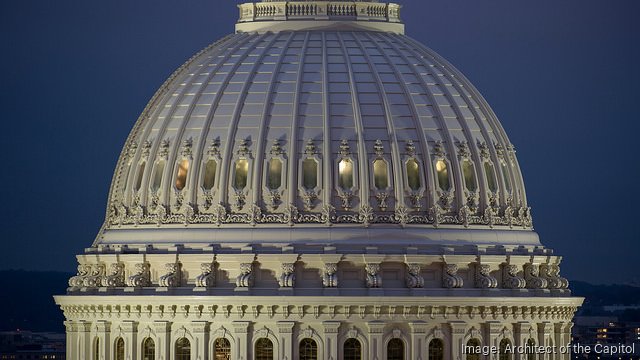
Congress Should Preserve DC’s Home Rule and Withdraw the Bowser Act | WBJ Viewpoint

Congress Should Preserve DC’s Home Rule and Withdraw the Bowser Act | WBJ Viewpoint

Federal Policy & Washington DC’s Economic Future

The future of Washington, D.C., as a vibrant economic hub, depends on smart federal policy decisions that ensure continued investments, support the workforce, and keep agencies in the region. The proposed Bowser Act would restrict D.C.’s self-governance by imposing an additional layer of federal oversight, a change that could impact the city’s future growth and success.

In a new Washington Business Journal viewpoint, Board of Trade President & CEO Jack McDougle discusses why federal officials must work with the D.C. Government to ensure the District has long-term economic stability. As Congress considers policies for the District, such as the Bowser Act, it’s essential to recognize its broader implications for businesses and communities.

READ THE FULL ARTICLE HERE

D.C. is not just the seat of the federal government; it’s a vital economic hub that drives regional and national prosperity.

The Board of Trade continues to advocate for policies that:

  • Retain federal agencies in the region to sustain jobs and economic activity 
  • Support workforce transitions and investments in economic mobility
  • Preserve D.C.’s ability to govern itself, ensuring the region remains competitive and economically resilient 

Federal policy decisions don’t just impact the District, they shape Greater Washington’s entire regional economy.

ABOUT THE BOARD OF TRADE

The Greater Washington Board of Trade, founded in 1889, is the region’s premier non-partisan business organization representing industry, nonprofits, universities, and government agencies. The Board of Trade addresses complex and always-evolving business concerns that stretch across the District of Columbia, suburban Maryland and Northern Virginia, with a priority focus on inclusive economic growth, improving the business climate, and enhancing the region’s economic competitiveness.  

READ MORE POLICY ISSUES AND TOPICS THE BOARD OF TRADE IS FOLLOWING

LEARN ABOUT UPCOMING BOARD OF TRADE MEMBER OPPORTUNITIES

A Community Conversation with 11th Street Bridge Park

Fireside Chat on AI with Congressman Don Beyer

Letter of Support: Enable Enhanced Broadband Deployment for Improved Connectivity in Prince George’s County

About Letter of Support:

The Greater Washington Board of Trade signed on to this letter of support with our member Crown Castle, which advocates for implementing Crown Castle’s Rapid Connect fiber construction method, an innovative way of building fiber to expand broadband access in our community.

Letter of Support:

DOWNLOAD HERE

We are writing to advocate for the implementation of Crown Castle’s Rapid Connect fiber construction method, an innovative way of building fiber to expand broadband access in our community. While the County’s Department of Public Works & Transportation and Department of Permitting, Inspections and Enforcement has been engaged since the spring of 2024, we have yet to see movement on its implementation.  

Rapid Connect uses a small moving crew and safety vehicles to simultaneously cut, place, and seal underground fiber. This method meets the highest safety standards, is environmentally conscious, minimizes disruption and community impact, reduces deployment time, and blends seamlessly into our streetscape. As a result of this simplified construction process, Crown Castle can complete fiber construction in weeks instead of months, and at a fraction of the cost.  

Data demand is growing quickly. For instance, it’s expected that mobile data traffic in North America will grow by 150% by 2029. Improved connectivity is crucial for improving access to vital resources and services, including educational opportunities, digital healthcare, connected transportation, public safety and many of the Plan Prince George’s 2035 strategies. As connectivity demands surge, Rapid Connect is the fastest and most effective solution to build networks that can keep pace with each community’s growing needs. In Addition, embracing this type of innovation can help communities become broadband ready and more competitive as states allocate funding. Crown Castle has successfully rolled out Rapid Connect in neighboring communities, including Montgomery County, D.C., and Alexandria.  

We urge the County to support the adoption of Rapid Connect. Modern life depends on broadband access, and Rapid Connect can expand access much faster than traditional construction methods to foster a more connected community and ensure Prince George’s County remains competitive and prosperous. 

Sincerely, 

Ashley Greenspan 

External Affairs – DC, MD & VA 

Crown Castle 

Testimony: Downtown Arena Revitalization Act of 2024 (DC B25-1004)

About this Testimony: 

The Greater Washington Board of Trade has expressed strong support for the Downtown Arena Revitalization Act of 2024, emphasizing its potential to drive economic development, boost regional vitality, and enhance downtown Washington, D.C. recovery efforts. Highlighting the Capital One Arena’s legacy of hosting over 47 million visitors and 4,500 events since 1997, the Board underscores the significant impact of this district on local businesses, tax revenue, and the city’s cultural fabric.

Testimony Submitted:

DOWNLOAD HERE

November 13, 2024

Dear Chairman Mendelson, 

On behalf of the Greater Washington Board of Trade, I am writing to convey our strong support for the Downtown Arena Revitalization Act of 2024. This legislation presents a significant opportunity to advance economic development, enhance our region, and preserve the dynamic atmosphere of downtown Washington, D.C. This initiative is particularly important as we strive to recover from the economic challenges of recent years.  

The proposed act aligns with the Board of Trade’s mission to advance a prosperous, inclusive, and vibrant regional economy. The revitalization of the downtown arena district, which is home to Capital One Arena and supported by our member organizations, including Monumental Sports & Entertainment, Clyde’s Restaurant Group, Capital One Bank, and the Washington Metropolitan Area Transit Authority (WMATA), will have a meaningful impact on the region. Since 1997 the Capital One Arean has hosted 47 million people and more than 4,500 events that support local businesses, drives tax revenue, and contribute significantly to the cultural fabric of our city. A revitalized arena district will build upon this success by attracting more visitors, creating new job opportunities, and catalyzing further investment in downtown Washington. 

Our members recognize the critical role that a modernized arena district can play in sustaining and expanding these benefits. For instance, Monumental Sports’ commitment to enhancing the fan and visitor experience will be a boon for tourism, hospitality, and retail sectors, which are vital components of the downtown economy. WMATA also stands to benefit through increased ridership, connecting more residents and visitors with downtown events and activities, and supporting the ongoing financial health of our public transit system. 

We urge the D.C. Council to move forward with this legislation and invest strongly in our community’s future. We appreciate your consideration and look forward to working together to realize the full potential of this bill. 

Thank you for your leadership and commitment to a stronger, more dynamic Washington, D.C. 

Testimony: DC Public Space Committee Hearing on small cell infrastructure to enhance 5G internet access

About this Testimony: 

The Board of Trade has been a strong supporter of small cell infrastructure deployment in Washington D.C. to expand 5G internet access, which will provide better wireless service for first responders, allow for better education resources for students, and help grow community connectivity. On July 18, Danial Flores, GWBOT’s Vice President of Government Relations, submitted a testimony at D.C. Council’s Public Space Committee hearing.

Testimony Submitted:

DOWNLOAD HERE

July 18, 2024

Good morning and thank you to the Public Space Committee for allowing me to testify this morning on the importance of small cells in Washington, D.C.

My name is Daniel Flores, Vice President, Government Relations. I’m speaking today on behalf of the Greater Washington Board of Trade, which represents all industry sectors in the District of Columbia, suburban Maryland, and northern Virginia. For over 130 years, we have prided ourselves on our non-partisan commitment to the businesses that make our region thrive.

One of our top priorities as an organization is to support innovative solutions that improve our economy here in the DMV – and we believe that the proposal under consideration is one of those innovative solutions.

Considering we’re all joining this meeting via Zoom this morning, we all know just how important connectivity is to conducting business in our modern world. Innovative technology and connectivity have been proven to create better access to health, transportation, education and more.

But in pockets of the DMV, particularly high-traffic areas like downtown D.C., it can sometimes be hard to access cellular service. We commend the Public Space Committee for taking action in 2019 to allow the installation of small cells on existing infrastructure, but more must be done to ensure that all of D.C. has ready access to cell service.

The proposal before the Public Space Committee would allow small cells to be installed as standalone poles. An estimated 80 poles are needed to greatly improve connectivity throughout the District, and these poles would be as unobtrusive as the light poles or the Capital Bike Share stands we have all grown used to seeing throughout the city. This commonsense solution doesn’t even cost any taxpayer funding; rather, the carriers will cover the costs of installing the small cells and bringing greater connectivity to the District. It’s a win for businesses, for residents, for visitors, and for our government.

Without the installation of new small cells, D.C. runs the risk of falling behind in today’s digital economy at time when mobile data consumption is growing exponentially. Average monthly mobile data usage in North America is expected to grow by 216% per smartphone by 2028, and 5G networks will carry an estimated 69% of total mobile data traffic. Wireless “smart cities” will see $160 billion in benefits and savings through things like lower energy use and congestion. Throughout the United States, 5G connectivity is expected to drive up sales by $2.7 trillion and add up to $1.5 trillion to the U.S. GDP by 2025. Closer to home, the 5G economy is estimated to provide over $8.6 billion in economic benefits to D.C. and over 23,000 jobs.

The Greater Washington Board of Trade urges the Public Space Committee to approve the installation of standalone small cells throughout the District. Thank you for your consideration.

Testimony: Support for DC’s ‘BEST Act’, advancing economic equity and fostering entrepreneurship

About this Testimony:

Board of Trade President & CEO Jack McDougle submitted testimony on May 9, 2024, in favor of fully supporting the BEST Act, which was before the D.C. Council’s Department of Licensing and Consumer Protection Oversight Hearing before the Committee on Public Works and Operations. This piece of legislation would help spark economic equity and allow for a community that fosters entrepreneurship, which is much needed to help spark economic growth in the Greater Washington region.

Submitted Testimony: 

DOWNLOAD HERE

On behalf of the Greater Washington Board of Trade, we submit testimony in full support to the BEST Act and underscore its critical importance in advancing economic equity and fostering entrepreneurship in the District of Columbia.  

In Mayor Bowser’s Fiscal Year 2025 Budget Proposal, the inclusion of funding for the BEST Act reflects a strategic investment in our city’s economic vitality and the well-being of our communities. By reducing licensing fees, streamlining business license categories, alleviating late fees, and exempting micro-businesses earning less than $10,000 in annual revenue from licensing fees, the BEST Act addresses longstanding barriers to entrepreneurship, particularly for those from traditionally disadvantaged backgrounds. 

The Board of Trade recognizes the transformative potential of the BEST Act in promoting economic inclusivity and opportunity. Its provisions align with our commitment to fostering a business environment that empowers entrepreneurs from all walks of life to thrive and succeed. By leveling the playing field and removing obstacles to entry, the BEST Act paves the way for greater economic participation and prosperity for all residents of our District. 

Moreover, the Council’s Office of Racial Equity has affirmed that the BEST Act is poised to improve economic outcomes for Black, Indigenous, and other residents of color who seek to establish or grow their businesses. In a budgetary climate marked by heightened challenges for marginalized communities, it is imperative that the Council supports initiatives like the BEST Act, which serve as critical lifelines to entrepreneurship and economic advancement. 

Furthermore, the Board of Trade firmly believes that the BEST Act will contribute to the District’s ongoing recovery from the pandemic and promote small business growth. By fostering an environment conducive to entrepreneurship and innovation, the BEST Act will drive job creation, stimulate economic activity, and fortify our city’s resilience in the face of adversity. 

In conclusion, I urge you to support and prioritize the full funding of the BEST Act. By doing so, we reaffirm our collective commitment to building a more inclusive, vibrant, and prosperous economy for the benefit of all residents of our District. 

Thank you for your attention and dedication to this matter. 

Letter of Support: Virginia’s budget funding of WMATA and vital regional transportation

About this Letter of Support:

Board of Trade President Jack McDougle wrote a Letter of Support to Virginia Governor Glenn Youngkin, encouraging and praising the efforts of Virginia lawmakers addressing the short-term funding gap that WMATA was facing that could have impacted vital regional transportation in Downtown D.C., Northern Virginia, and suburban Maryland.

Submitted Letter: 

Dear Governor Youngkin, 

The Greater Washington Board of Trade continues to support Virginia by providing FY25 and FY26 funding for the Washington Metropolitan Area Transit Authority (WMATA). 

The importance of Metro to Virginia’s economic development cannot be overstated. Proximity to frequent, safe, and reliable Metro service is instrumental in attracting major investments, corporate relocations, the expansion of our regional workforce, and our overall quality of life. The economic activity supported by Metrorail contributes an estimated $1 billion annually in state tax revenues, benefiting not only Northern Virginia but the entire Commonwealth. 

We commend your efforts to work with lawmakers to reach a consensus on the biennium budget and urge you and the General Assembly to prioritize funding for Metro. The General Assembly had allocated $65 million for FY25 and $87 million for FY26, both to be matched by Northern Virginia jurisdictions. These funds constitute the essential minimum required to address Metro’s operating funding shortfall and meet formula commitments made by DC and Maryland.  

Metro is making progress as it rebuilds from the fallout caused by the pandemic, leading the nation in recovering passengers. Still, there are long-term governance, operating, and financial deficiencies that must be addressed. We are prepared to play a significant role in the recently announced effort between WMATA and the Metropolitan Washington Council of Governments to address these issues to ensure the system remains viable for the long-term.  

I urge you and the General Assembly to work towards a budget that includes adequate support for this essential transportation system. Thank you for your attention to this matter and for your dedication to the prosperity of Virginia. 

Testimony: Support for Addressing Crime Trends Now Amendment Act of 2023

About this Testimony: 

In this testimony, the Greater Washington Board of Trade expresses support for Mayor Bowser’s B25-555, the ACT Now Amendment of 2023, emphasizing that public safety is a top concern for the region’s business community. The statement highlights rising violent crime, carjackings, youth crime, and organized retail theft, while urging a comprehensive approach that includes both prevention and accountability.

The testimony also stresses the need for adequately staffed and resourced law enforcement and argues that improving safety is essential to the District’s economic recovery, including downtown revitalization.

Video of Testimony:

Written Testimony Submitted:

DOWNLOAD HERE

November 29, 2023

Good afternoon, Chairwoman Pinto, committee members, and staff. My name is Kyle McColgan, and I serve as the Senior Vice President of Policy at the Greater Washington Board of Trade. We are a pro-business and non-partisan organization supporting all industry sectors in the District of Columbia, suburban Maryland, and Northern Virginia, having done so for the last 134 years. I appreciate the opportunity to testify in front of you all today in support of Mayor Bowser’s bill B25-555, the ACT Now Amendment of 2023. 

I would first like to thank Chairwoman Pinto on her efforts thus far to address the issue of crime, particularly that of violent crime, and the many challenges it creates for citizens and businesses alike within the District. The emergency legislation passed and extended this year was a step in the right direction, as was the introduction of the Secure DC Plan.  

With homicides topping 250 this year already, a two-decade high, roughly 900 carjackings – 77% of which involved a firearm, and a rise in youth related crime, public safety has quickly risen to the most concerning and pressing issue shared amongst the business community. 

We at the Greater Washington Board of trade are firm believers that a comprehensive approach, that includes both addressing the underlying structures which lead to crime and more immediate actions to hold offenders accountable, is the only way to solve this complex and challenging issue. 

While addressing violent crime must be a priority for our communities and businesses to thrive, we cannot disregard other criminal activity. This proposed legislation takes aim at addressing a concern our members have been impacted by – organized retail theft. DC saw the highest per capital rate of theft across the nation (2829 per 100,000 residents) exceeding what would be expected via population share in the nation by 69%. Retailers of all shapes and sizes have been negatively impacted by increases in theft – with some choosing to implement costly internal security measures to help mitigate the issue themselves. While protecting their goods is a priority – most important is the safety and security of their employees and customers, who are at risk of becoming victims themselves as these thefts are carried out. The business community would greatly appreciate increased efforts and means to hold those who commit these crimes accountable.  

It is also necessary to have an adequately staffed law enforcement entity who is provided with the resources and means to effectively do their jobs. This legislation would help to support an environment where this is possible. 

Without addressing crime and public safety, there will be no meaningful recovery, not just in the District’s downtown area, but in its entirety. While this bill is a component in assisting with the recovery, we urge the Council to continue their efforts to comprehensively resolve this issue. 

Thank you for the opportunity to testify, I am happy to answer any questions.  

Sincerely, 

Kyle McColgan

Senior Vice President, Policy 

Greater Washington Board of Trade

Challenge to the Perimeter Rule could impact region and cause more delays at Reagan National Airport

According to AAA, nearly 51 million people across the United States are expected to travel this Fourth of July, four million of which will do so by flying. Holiday travel can be a nightmare at airports, Reagan National (DCA) here in Greater Washington being no exception. While that certainly does not make DCA unique, what does is the longstanding Perimeter and Slot Rules, ensuring that holiday travel chaos is not an everyday experience for those coming in and out of Reagan National. 

The Perimeter Rule limits nonstop flights at DCA to a maximum of 1,250 miles, unless there is an exemption granted by the Federal Government, of which there are currently 40. While the slot rule dictates the frequency of flights taking off and landing, helping to control congestion. With DCA being constrained by space, limiting the runway and terminal capacity, these rules were and still are necessary to provide travelers with the safest and most efficient services possible.  

While Reagan may be constrained in terms of space, the other two major airports in the region are not. Baltimore Washington International (BWI) and Dulles International (IAD) are both growing and ready to bring on additional flights servicing stops across the county and world. What we have in this region is three airports working together, which they have done for years, to create an ecosystem capable of servicing the residents and visitors of DC and its neighbors.  

Unfortunately, there is an effort making its way through Congress that would change these rules resulting in a far less enjoyable experience at DCA, while upending the functioning ecosystem of our region’s three major airports.  

According to an internal Federal Aviation Administration analysis, which was done in part as a response to a study produced by those in favor of change or elimination of the rules, “additional flights at DCA would likely have a negative impact on operational performance and the passenger experience.” Further, the addition of only 20 daily round trip operations would increase delays by nearly 26% and the addition of 25 daily round trip operations would increase delays by more than a third.  

The additional flights would also contribute to the already strained infrastructure within and around Reagan. From the full parking decks to the gridlocked roadways, and overcrowded terminals, there is only so much capacity that can be handled before significant negative customer experiences become the norm. It is irrelevant how many flights and destinations are added if the service provided is unreliable and chaotic. 

Considerable investments have been made complementing the existing ecosystem of our region’s airports. Just last year, the $3 billion Silver Line extension was completed, providing travelers using IAD direct access to the nation’s capital and surrounding jurisdictions via public transit.  

Upending this functioning and productive relationship between our region’s airports while simultaneously creating a worse customer experience for those using Reagan is what Greater Washington would get in return for changes to the Perimeter and Slot rules. Let’s keep the status quo.  

Featured Members