Virginia Primary Day: What the region’s business community needs to know

Virginia Primary Day: What the region’s business community needs to know

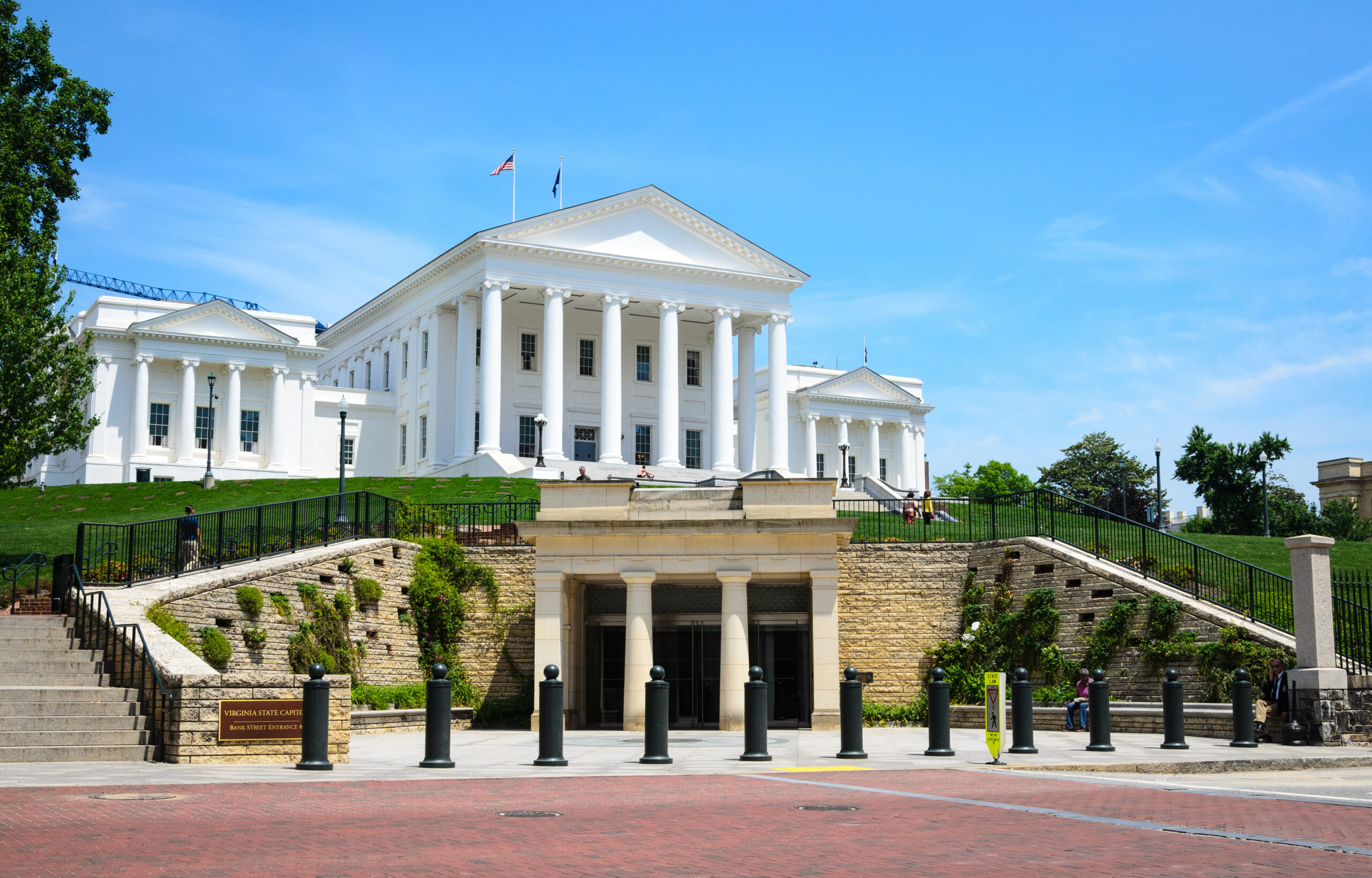
Virginians will head to the polls Tuesday, June 20, to cast their votes in the primary, ahead of November’s general election in which every seat of the Commonwealth’s legislature will be on the ballot. This year’s election is unique for several reasons, the most notable being that it is the first since the new legislative districts were drawn. 

Redistricting has had significant impacts: 

Virginia adopted a constitutional amendment in 2020 that established a bipartisan redistricting commission, composed of state legislators and political appointees, who were tasked with drafting and approving new state and federal district maps. However, the commission was unable to reach a consensus on either the state or federal maps, resulting in the Supreme Court of Virginia having to step into the matter. The Supreme Court appointed two “special masters,” one from each of the two political parties, to draw the maps in an “apolitical and nonpartisan manner.” In December 2021, the Supreme Court approved the final drawings of the three maps (State House, State Senate, and U.S. Congress), setting the stage for the next decade of political battles in the Commonwealth.  

The new maps were composed without considering incumbent residency, resulting in multiple sitting Delegates (44) and Senators (19) being pitted against their fellow colleagues and other seats with no incumbents. This left many legislators in a tough position by potentially having to face a contested primary or a general election against a fellow sitting member of the General Assembly. Ultimately, these new dynamics resulted in many state lawmakers choosing not to seek reelection, while some moved into a district with a more favorable political environment.  
 
Veteran lawmakers out as a result of redistricting:
 
Nearly a third of the 140 districts in the Commonwealth will not have an incumbent represented in the primary election next week. To put this into perspective, you would have to look back to the 2011 election to find a cycle where even half that many districts were open-seat primaries. Remember this represents the minimum number of new General Assembly members, as some incumbents could lose in their respective primary or general election.  

While the turnover in Virginia’s legislature will be historic in terms of raw numbers, another influential factor at play is who those incumbents not seeking reelection are and the leadership positions they hold. Delegate Kathy Byron, Republican Chair of the House Commerce and Energy Committee, Delegate Rob Bell, Republican Chair of the House Courts of Justice Committee, and Delegate Margaret Ransone, Republican Chair of the House Privileges and Elections Committee are all retiring.  

The Senate will face even greater leadership changes, with the retirements of Democratic Majority Leader and chair of the Senate Commerce and Labor Committee Senator Dick Saslaw along with Republican Minority Leader Senator Tommy Norment. Senator Louise Lucas, president pro tempore and Democratic Chair of the Senate Education and Health Committee and the Senate Rules Committee, is facing a hotly contested primary against Senator Lionell Spruill, Democratic Chair of the Senate Privileges and Elections Committee. Additionally, Senator Janet Howell, Democratic Chair of the Senate Finance and Appropriations Committee, Senator John Edwards, Democratic Chair of the Senate Judiciary Committee, and Senator Lynwood Lewis, Democratic Chair of the Senate Local Government Committee are also retiring.  
 
Northern Virginia shaping diverse representation and influence in House & Senate: 

Northern Virginia will look a lot different in terms of representation in the General Assembly come the start of next session – Jan. 10, 2024. With the Commonwealth’s population shifting, Northern Virginia added two new Senate and two new House districts through the redistricting process. This gives it 12 out of 40 Senate districts and 30 out of 100 House districts.  

However, with the turnover and retirement of incumbent legislators, namely that of Senator Saslaw, it is unclear if Northern Virginia will wield the same level of influence in Richmond than it has in the past. Priorities of these newly elected officials, not just those in Northern Virginia, are also worth keeping an eye on. This year’s pool of candidates from both parties is more diverse by gender, race, and experience. It makes sense to assume that their policy initiatives and priorities could shift from their predecessors, even if they are from the same party.  

 We will have to wait until November to see who controls the House, currently held by the Republicans, and the Senate, currently held by the Democrats. With such tight margins and so much uncertainty created from the redistricting process, it is anyone’s guess as to what will happen. What is certain though, is that there will be a considerable number of new legislators in Richmond and new names in many leadership positions come next session.  
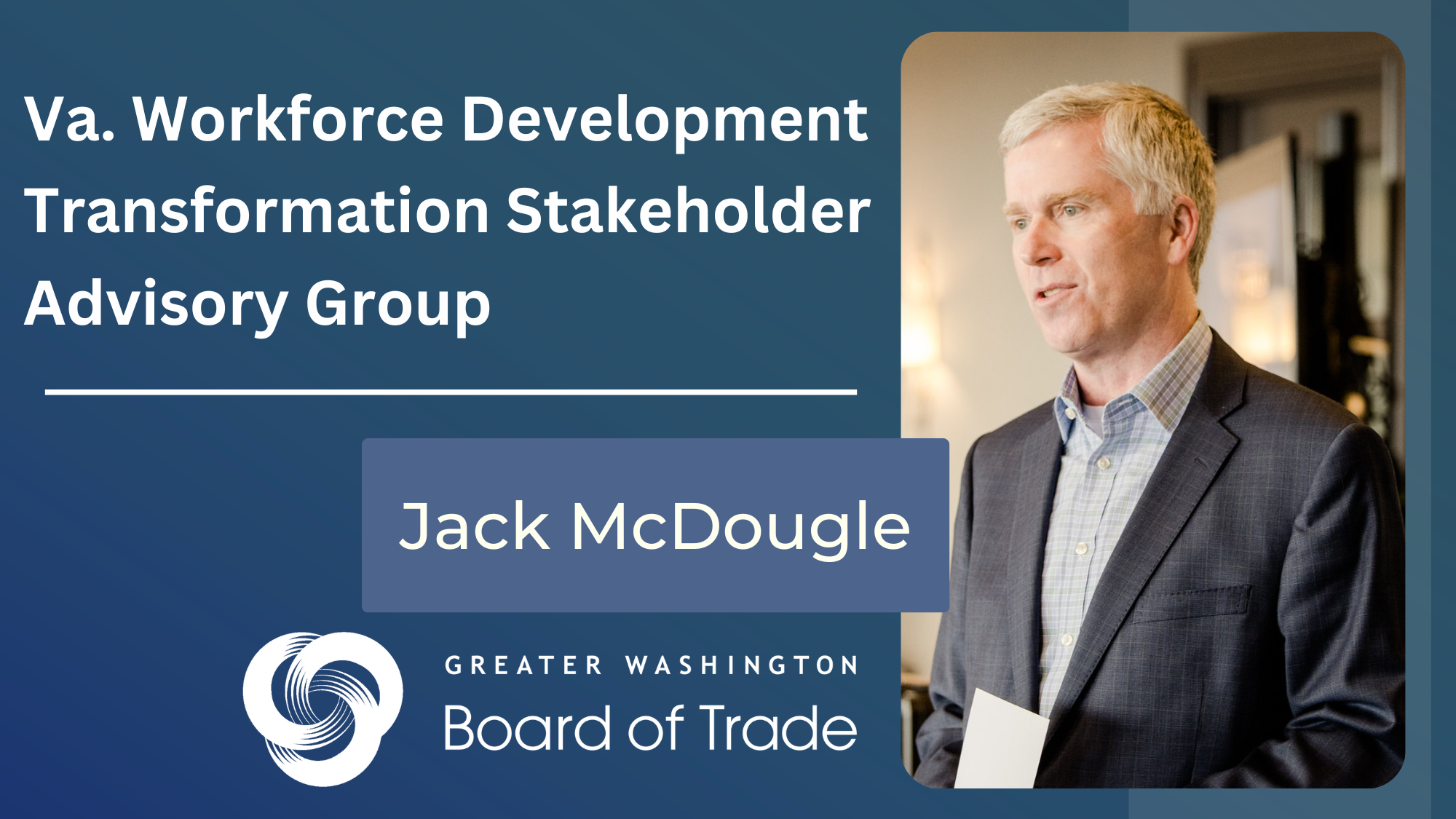
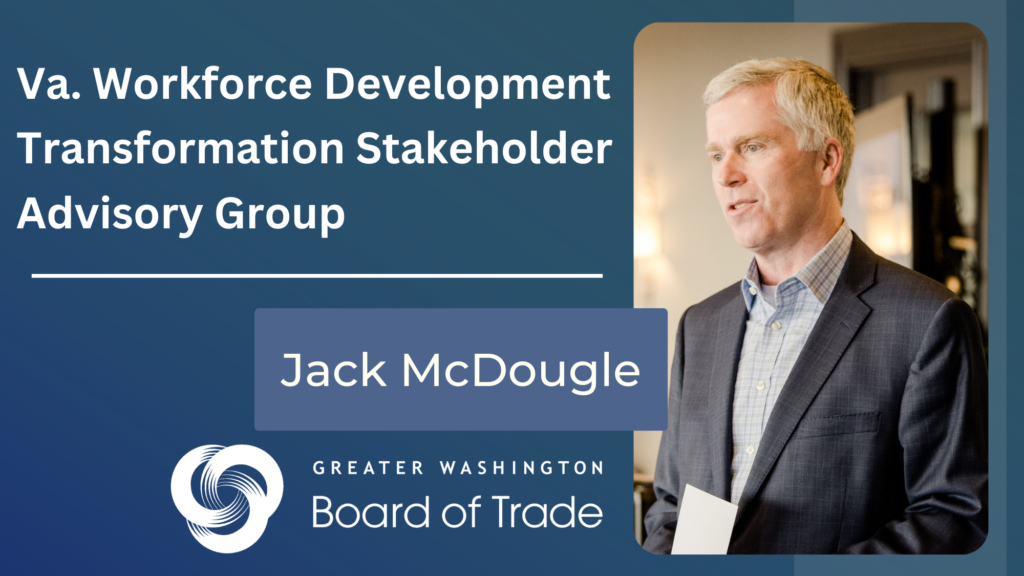
Jack McDougle joins Virginia Workforce Development Transformation Stakeholder Advisory Group

Greater Washington Board of Trade President & CEO Jack McDougle has been appointed to Virginia’s Workforce Development Transformation Stakeholder Advisory Group.

Virginia’s Secretary of Labor, Bryan Slater, selected McDougle, who will join a talented group of regional experts that will push to ensure Virginia’s workforce talent can find economic success in the Commonwealth and the Greater Washington region.

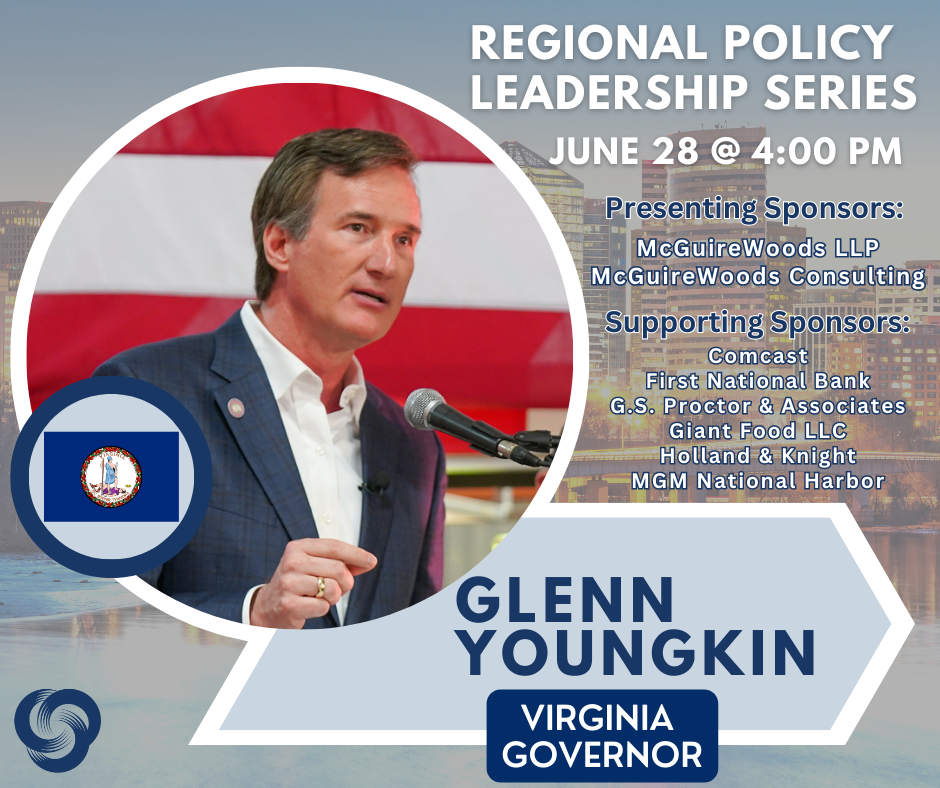
This advisory group is part of establishing the Virginia Department of Workforce Development and Advancement, which was established through Governor Glenn Youngkin’s signing of House Bill 2195 and Senate Bill 1470 that by law allows for the creation of this department.

Secretary Slatter will convene this Stakeholder Advisory Group for the purpose of advising him during the program transition period from July 1, 2023, through September 30, 2024.

The Board of Trade’s expansive representation of the business community will ensure that the perspectives and needs of employers and employees are well-represented in shaping these workforce development programs.

CLICK HERE TO LEARN MORE REGISTER FOR THIS EVENT

May 2023 Policy Update: What our team is working on in Greater Washington region

WHAT WE’VE BEEN DOING

The Board of Trade has spent the last month actively engaging in policy and advocacy efforts across the region. We met with Maryland’s Transportation Secretary Paul Wiedefeld to discuss significant infrastructure projects impacting the region. This included projects such as construction of the Purple Line and the American Legion Bridge/I-270 traffic relief plan.

We also hosted a dinner with several of the region’s Chambers focusing on the impact newly passed legislation will have on economic development and what key issues the business community continues to face. The Board of Trade was excited to partner with MGM National Harbor to host a lunch with Prince George’s County Executive, and newly announced candidate for US Senate, Angela Alsobrooks. The County Executive shared her thoughts on the FBI HQ relocation efforts, transit-oriented developments, the Commander’s new ownership and its impact on the stadium location, the county’s budget, education spending, and crime.

Our work this May also included a webinar we hosted with police chiefs from Fairfax County, Prince George’s County, and Washington DC. The event covered various issues on public safety impacting the Greater Washington community, including violent and non-violent crime, the rise in carjackings, regional law enforcement collaboration, workforce issues and efforts to resolve them, along with the impacts of technology on policing.

REGIONAL BREAKDOWN

With both Maryland and Virginia having concluded their legislative sessions, much of the focus in the region for our Policy & Advocacy team has been in DC, where its council is currently at the tail end of its budget process. It has been a difficult budget season for DC, as federal dollars from the pandemic dry up and revenues continue to shrink.

Ensuring that Downtown DC comes back stronger than ever is crucial to the future success of the city, which is why the Board of Trade focused on advocacy efforts pertaining to the 2024 DC Budget. Joining several like-minded organizations, we advocated for the removal of the proposed $2 congestion fee for rideshares serving downtown, the delayed implementation of the Building Energy Improvement Standards (BEPS), and the delayed implementation of the Parking Benefit Equivalent. Last week, DC Council took its first of two votes on the budget, which we were pleased to see included a reduced congestion fee ($.25) and delayed implementation of both BEPS and the Parking Benefit Equivalent. Unfortunately, the council decided to pull the majority of capital funding dedicated to the K Street Transitway and repurpose it for other initiatives. Considering the likelihood of continued budget issues next year, finding $100+ million in funding for K Street may prove difficult.

In Maryland, Governor Wes Moore has been busy with bill signings. While there was speculation that he could become the first Maryland Governor in more than 100 years not to veto a single piece of legislation, he issued his first veto along with allowing 10 pieces of legislation to become law without his signature, in his final acts pertaining to this year’s session. Of his three vetoes, two were related to legislation that already passed in another form and the third was a bill impacting the process of awarding commuter bus contracts that was passed over objection from the Maryland Transportation Administration.

Virginia received welcoming news in the form of April’s revenue projections. Year-to-date general fund revenues remain ahead of the updated December 2022 forecast by roughly $500 million – as April revenues declined less than expected projections. This is particularly significant as potential for a special session remains to determine what to do with the Commonwealth’s multibillion-dollar surplus. Several legislators wanted to see updated projections prior to deciding where the surplus should go. With the better-than-expected revenue projections, Governor Youngkin and House Republicans will continue to push for tax relief.

Featured Members