What Maryland’s Session Revealed About the Region’s Next Test
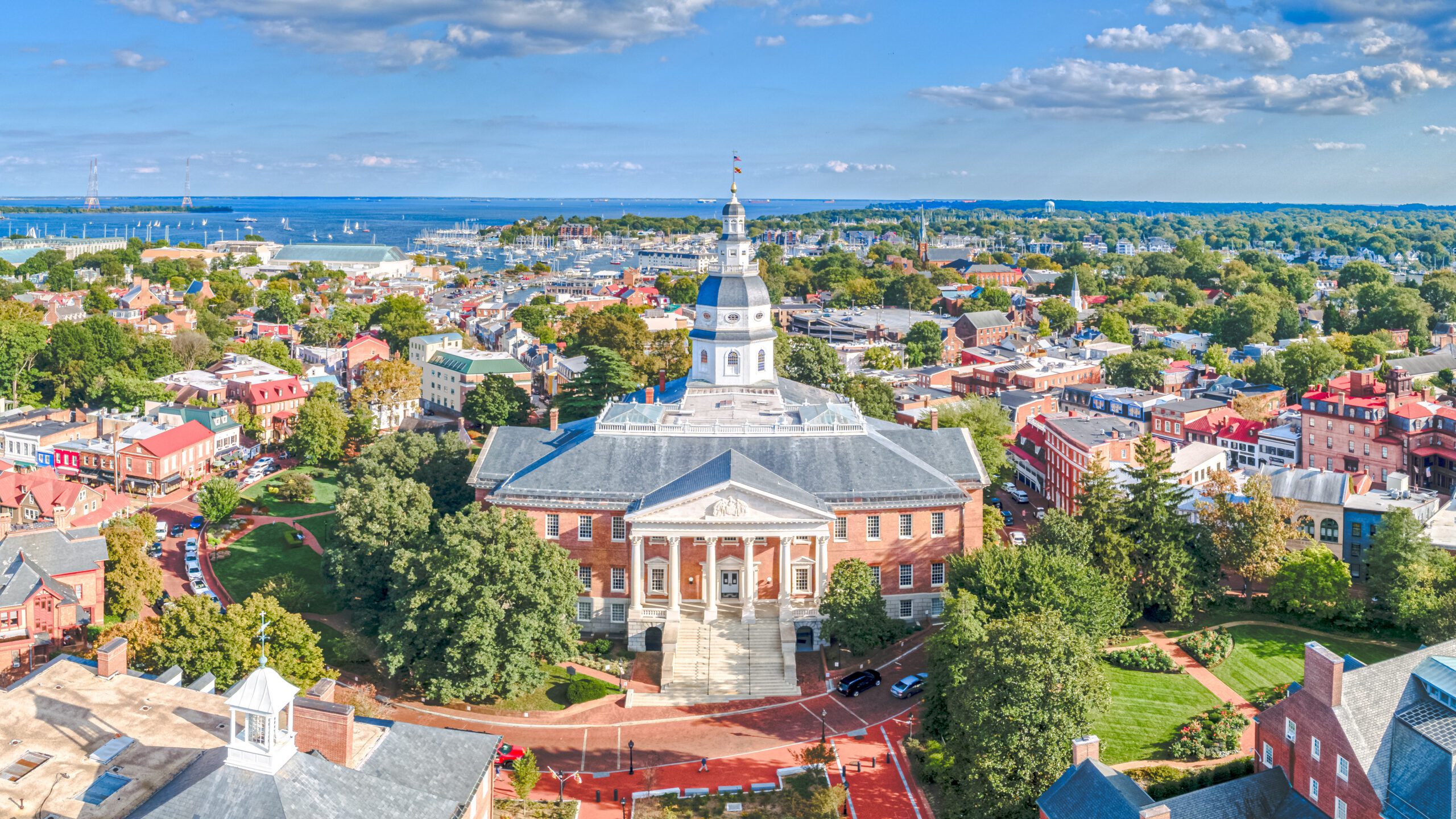
At a recent Board of Trade executive lunch in Bethesda, members and regional policy leaders discussed what happened in Annapolis during Maryland’s legislative session and what it means for Greater Washington. The conversation quickly showed that the state’s session raised questions beyond Maryland, highlighting how policy decisions can impact our region.
Metro funding, housing costs, energy rates, business taxes, infrastructure, and affordability are often debated separately. In practice, they are deeply connected. Housing, transit, energy, taxes, regulation, and workforce access all shape how important projects can move forward, and if businesses can grow.
That is what often gets lost in session coverage. The bills matter. The votes matter. But the deeper question is whether the policy environment is making it easier or harder for the region to thrive in the future.
The Budget Was Balanced, but the Pressure Remains
Maryland avoided a major tax fight this session. The FY2027 budget closed the immediate gap through spending restraint, fund transfers, targeted reductions, and other budget actions, without relying on new broad-based tax or fee increases.
That helped stabilize the near-term picture, but it did not erase the underlying challenge. Structural shortfalls are still projected, which means the same questions will return next year around funding, cuts, delays, and revenue. For members, that pressure eventually shows up in agencies, transportation programs, local governments, and the cost of doing business.
Metro funding is one example. Maryland made progress this session on dedicated capital funding for WMATA, but the proposal did not reach final passage. The need remains.
RELATED CONTENT: Support for Maryland’s Metro Funding Modification Act of 2026
RELATED CONTENT: Addressing Regional Transit Funding in Montgomery County
Metro has made real gains in performance, safety, ridership, and reliability. But it cannot plan around uncertainty every budget cycle. It needs dedicated, bondable, inflation-sensitive capital funding to maintain the system and reduce long-term costs.
Metro is still too often treated as a local benefit for Montgomery and Prince George’s counties. That misses the larger point about how Marylanders travel to and through Greater Washington in their professional and personal lives. Metro also supports the federal government, job centers, downtown recovery, housing near stations, and access to opportunities across the DMV. Just like people, ideas and investments must be able to travel and be shared.
Affordability Is Where the Tradeoffs Show Up
Everyone is talking about affordability. Residents feel it. Employers feel it. Local governments feel it.
But affordability can become too broad to guide decisions unless policymakers ask a harder question: are our choices making the region more affordable, or are they adding costs faster than residents and businesses can absorb?
Participants of our recent discussion pointed to the cumulative effect of well-intended policy goals. Housing affordability, climate goals, clean energy, transportation access, labor standards, stormwater rules, local fees, and public benefits all have their own rationale. But when layered onto a project without enough attention to cost, timing, or implementation, they can make the end goal harder to reach.
That does not mean the goals are wrong. It means the math has to matter.
Housing is where these contradictions often show up first. Maryland has taken steps to encourage more housing, including transit-oriented development. But statewide intent still runs into local processes, where projects face hearings, financing gaps, opposition, and delays.
Energy is another test. Rising electric costs are now a household affordability issue, a housing issue, a data center issue, and a business location issue. The region is trying to meet cleaner-energy goals while demand increases and grid constraints become more evident.
If policy raises costs faster than residents and businesses can manage, support for the goals themselves becomes harder to sustain.
The Region Is Competing With Itself
Maryland is weighing Metro, the Baltimore Red Line, the American Legion Memorial Bridge, the Key Bridge, the Purple Line, and other infrastructure needs. D.C. continues managing budget strain and downtown recovery. Virginia has its own transportation and tax debates. Counties are facing local revenue pressure while being asked to produce more housing and maintain services.
Each jurisdiction has its own politics. The economy does not.
Workers cross borders. Employers compare jurisdictions. Investors choose where a project can be penciled. Residents look for housing they can afford near jobs, schools, transit, and services.
This is the central regional tension: we operate as one economy, but we fund, regulate, and permit as though we are separate markets. That fragmentation raises costs, slows decision-making, and makes large-scale solutions harder to achieve.
The business climate question is getting sharper because Maryland is not making decisions in a vacuum. Virginia is next door. D.C. is working through its own economic reset. Other states are competing for employers, investment, and talent.
Participants raised concerns about service taxes, local tax pressure, rent control, energy costs, regulatory complexity, and slow administrative processes. No single issue tells the whole story, but together they shape business decisions.
This matters even more in a region affected by federal workforce reductions and contracting uncertainty. Some workers may start consulting firms or small businesses. Some companies may rethink their footprint. Some investors may look for lower-cost, lower-friction markets.
If the region wants growth, it has to make choosing growth easier.
Where the Board of Trade Will Stay Focused
The Board of Trade’s role is to keep the region focused on the whole picture. That means advocating for dedicated capital funding for Metro, connecting housing and transportation policy, and elevating business competitiveness across tax, regulatory, energy, and permitting decisions.
The takeaway from the lunch was not that Maryland failed. It was that the next phase must require more discipline.
Greater Washington has the assets most regions would envy: talent, institutions, infrastructure, universities, federal presence, private-sector depth, and global reach. But assets alone are not a strategy.
The region’s next test is whether it can make decisions that support growth instead of making growth harder to deliver. That is where the Board of Trade will stay focused.
To learn more about how your organization can be involved in our mobility initiatives, reach out to [email protected].
Insights from the Table is a membership-driven series of takeaways from our Executive Lunches, where local and regional leaders help inform the Board of Trade’s thinking and shape the work we do in a rapidly evolving environment. These conversations help surface the practical challenges, emerging priorities, and regional opportunities that matter most to Greater Washington’s future.
Become a member today
We need your voice at the table to make Greater Washington a place where everyone can succeed