Regional Energy Outlook: Leaders Gather to Build a Shared Path for DMVs Energy Future
Preview:
Regional leaders came together for the Graeter Washington Board of Trade’s Regional Energy Outlook hosted by MGM National Harbor and its President & COO, Melonie Johnson. This event helped advance a coordinated approach to energy affordability, reliability, and sustainability, with a focus on building the infrastructure the region’s future economy will demand, at what may be the most critical moment for energy policy, regulation, and construction in a generation.
For Greater Washington to meet its rapidly growing energy needs, a diverse mix of energy solutions and stronger coordination across jurisdictions will be needed to strengthen the region’s long-term competitiveness through energy solutions.
Making this a reality started at the Regional Energy Outlook, held on July 16, featuring a fireside chat with Maryland Governor Wes Moore, presentations from Pepco Holdings President and CEO Tyler Anthony and Holland & Knight Partner Willie Phillips, and a panel of leaders in energy, technology, and academia. Together, they examined the challenges and solutions impacting regional energy affordability and reliability.
“Energy is a defining issue for Greater Washington’s future,” said Jack McDougle. “Today’s conversations reinforced that meeting our growing energy needs while keeping power affordable, reliable, and sustainable will require strong leadership, regional collaboration, and practical solutions.”
More than a look at the challenges ahead, the Regional Energy Outlook reflected the region’s capacity to meet them. The insights and discussions below highlight the ideas shaping that work and the opportunities to turn shared understanding into coordinated regional action.
A Regional Challenge Requires a Regional Response
Energy influences nearly every part of Greater Washington’s economy, from business investment and housing costs to institutional growth and emerging technologies. As electricity demand rises, pressure is increasing on an energy system that crosses jurisdictional boundaries, making the consequences of delayed or fragmented decisions a shared regional challenge.
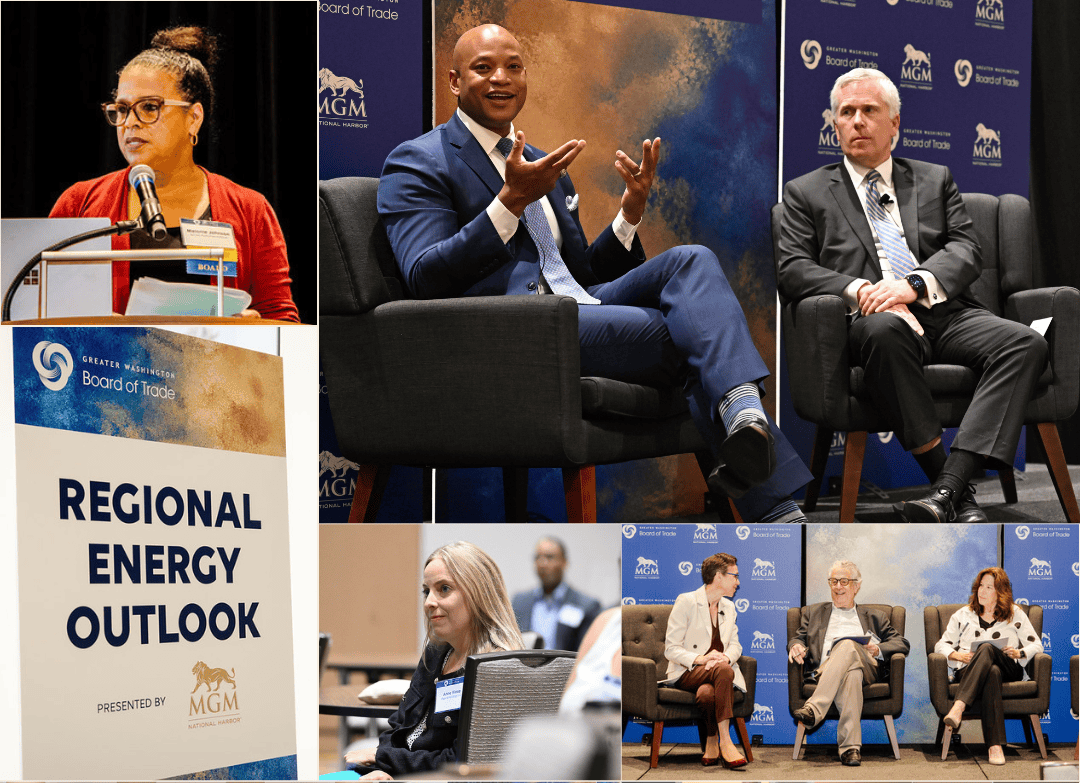
Willie Phillips, partner at Holland & Knight and former chairman of the Federal Energy Regulatory Commission, opened the program’s data-driven discussion by examining the regulatory, market, and infrastructure forces shaping the regional energy landscape.
His presentation established an important foundation for the conversations that followed: Greater Washington cannot address its energy needs through isolated decisions. The region must better align its planning, investments, policies, and timelines around a shared understanding of the system.
Understanding Today’s Energy Reality
Tyler Anthony provided a closer look at how Pepco is responding to the changing energy landscape and preparing its system for the demands ahead.
As electricity becomes more central to transportation, buildings, technology, and the broader economy, utilities must plan not only for higher demand but also for where and when that demand will emerge. Maintaining reliable service will require sustained investment in infrastructure, careful long-term planning, and closer coordination with regulators, governments, businesses, and communities.
“The real question for myself and the other Pepco employees in the room is: How do I keep that same reliability, number two in the country, and how do I do it for 20 percent less cost? That’s the new challenge,” said Anthony. “I’ve got to drive costs out of my business because today’s top three priorities in my world are affordability, affordability, affordability.”
The discussion reinforced that reliability cannot be taken for granted. The decisions made today and over upcoming legislative sessions about transmission, distribution, generation, and project development will shape whether the region can meet future demand without placing unnecessary pressure on customers or constraining economic growth.
Building What Comes Next
The “Building What’s Next” panel moved the conversation from the current energy picture to the technologies and partnerships that can help strengthen it.
Moderated by Anne Khademian, executive director of The Universities at Shady Grove, the panel featured Carol Lane, senior vice president of government affairs at X-energy; Ali Mehrizi-Sani, director of Virginia Tech’s Power and Energy Center; and Bob Mazer, co-founder of FLEXNODE.
The panel discussion explored the potential of advanced nuclear energy, microgrids, modular infrastructure, storage, grid modernization, and other innovations. While each technology offers different benefits, the broader takeaway was clear: no single solution will meet all of Greater Washington’s energy needs.
The region will need a diverse and flexible strategy that allows multiple technologies to contribute to affordability, reliability, sustainability, and resilience.
Connecting Infrastructure, Innovation, and Talent
New technology and infrastructure will also require a workforce capable of developing, operating, and securing the next generation of energy systems.
The panel also highlighted the important role universities, research institutions, and industry partnerships can play in preparing engineers, technicians, researchers, and other energy professionals. These institutions can also help move promising ideas from research environments into real-world application.
“We often focus on technology, but technology doesn’t innovate itself. People do. In Maryland, D.C., and Virginia, we have many of the necessary ingredients,” said Mehrizi-Sani. “What I would like to see is government, industry, and universities coming together to create seamless pathways for developing, retaining, and even importing talent. If we have the right talent, everything else becomes much easier.”
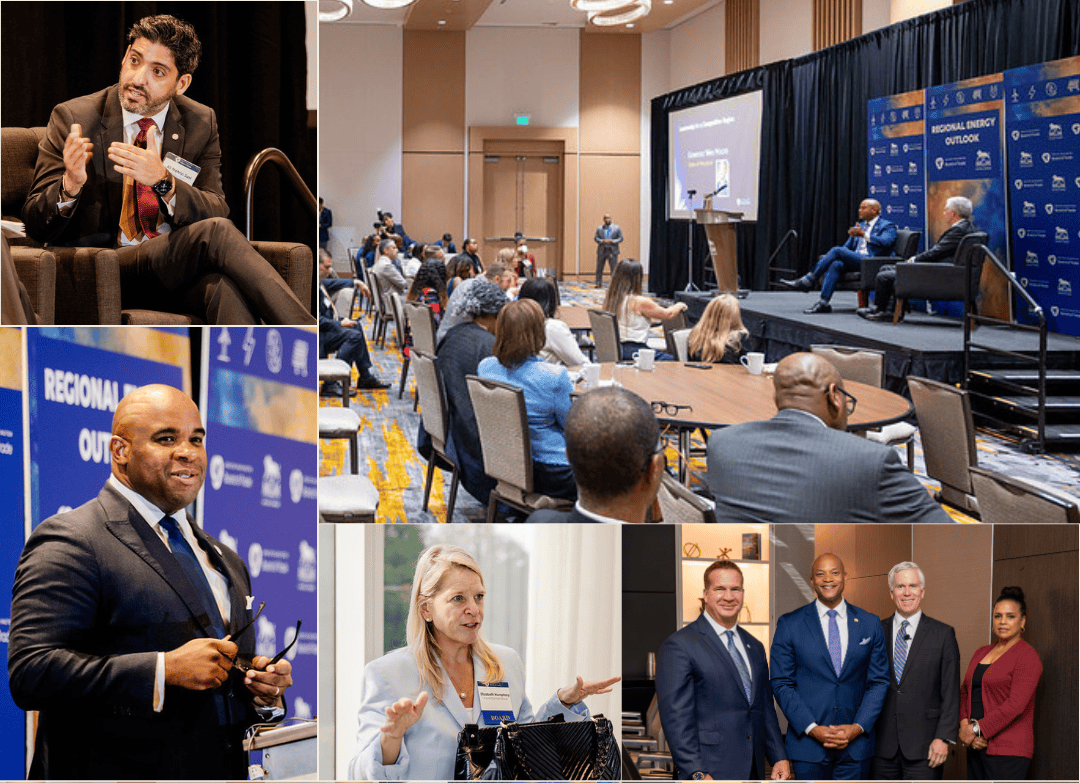
Greater Washington’s concentration of universities, research organizations, technology companies, and public-sector institutions gives it a strong foundation for this work. Turning those assets into a regional advantage will require deeper collaboration among educators, employers, utilities, and government.
Governor Wes Moore Calls for Urgency and Coordination
The event concluded with a fireside conversation between Governor Wes Moore and Board of Trade President and CEO Jack McDougle focused on energy affordability and infrastructure, and how leadership plays a role in policy surrounding regional demand.
Governor Moore addressed the immediate pressure rising energy costs are placing on families and businesses while emphasizing the need for a stronger long-term system. He advocated for a diverse approach that considers nuclear power alongside solar, wind, battery storage, transmission, and other energy solutions.
“We have rules and regulations that, frankly, were not made for a moment like this,” said Gov. Moore. “Our administration is laser-focused on lowering costs and delivering reliable energy that is quicker, cleaner, and cheaper.”
He also identified the pace of permitting and project approvals as a major barrier. Infrastructure cannot help meet growing demand if projects remain delayed by processes and regulations developed for a different energy environment.
The conversation connected energy capacity to the growth of artificial intelligence and other data-intensive industries. These technologies could create new opportunities across healthcare, education, public safety, and the broader economy, but their potential depends on access to sufficient, reliable, and affordable power.
Turning Regional Momentum Into Action
The Regional Energy Outlook made clear that Greater Washington does not have to choose between affordability, reliability, sustainability, and growth. The challenge is building a coordinated energy agenda capable of advancing them together.
That will require faster infrastructure development, a diverse mix of energy sources and technologies, investment in talent, and greater alignment across D.C., Maryland, and Virginia. It will also require sustained engagement from business, government, utilities, universities, and communities.
Thank you to MGM National Harbor for hosting this valuable discussion.
Become a member today
We need your voice at the table to make Greater Washington a place where everyone can succeed