
Ready Before It Matters: Major General Antoinette R. Gant on Leadership, Resilience and the National Capital Region

Some experiences change how you hear the conversation that follows.
For members of the Greater Washington Board of Trade, laying a wreath at the Tomb of the Unknown Soldier at Arlington National Cemetery on the eve of September 11 was one of them.
The ceremony was solemn and deeply moving. It also reminded us that Greater Washington is unlike any other metropolitan region in the country. We are a place where the responsibilities of a major regional economy intersect every day with the responsibilities of the nation’s capital.
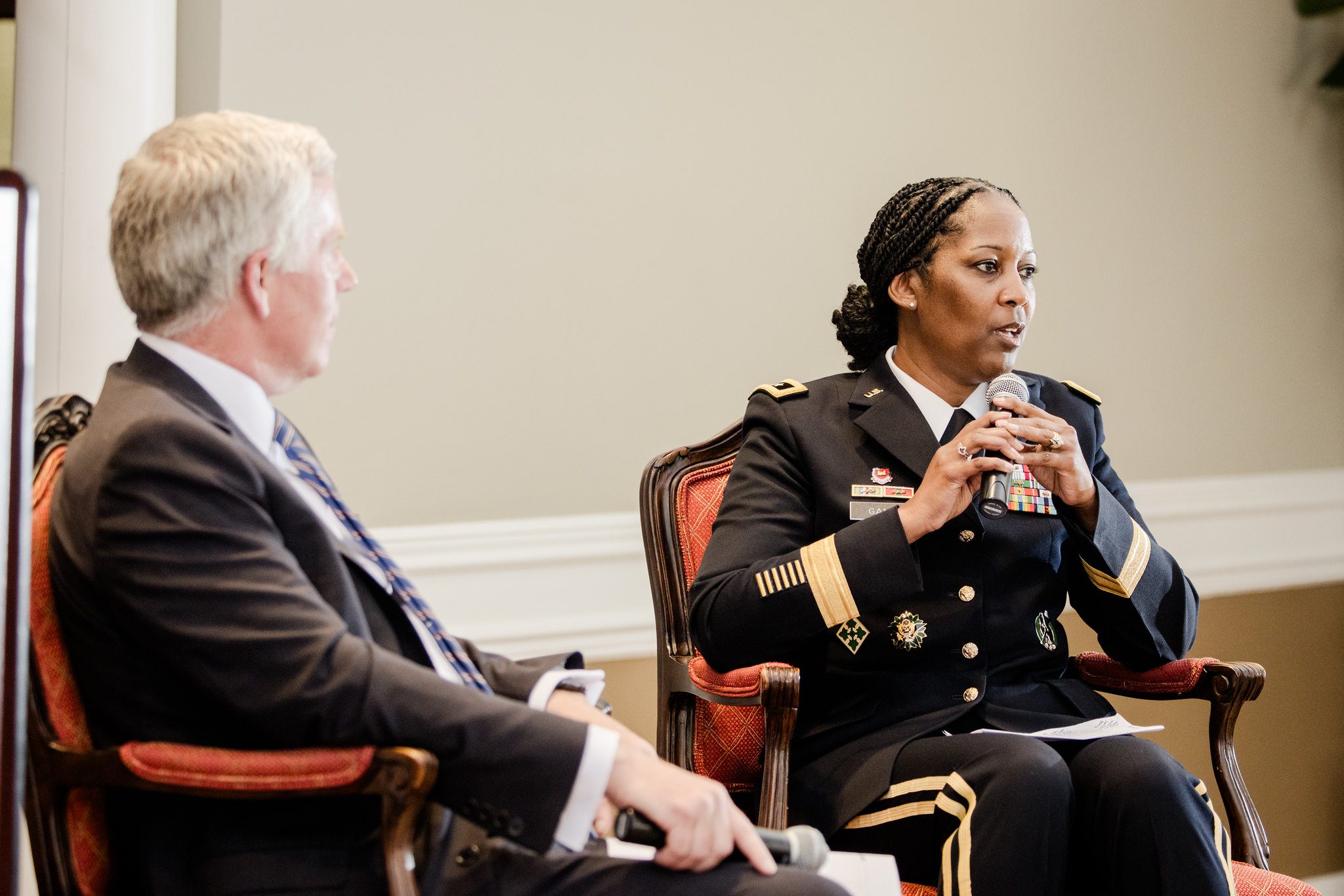
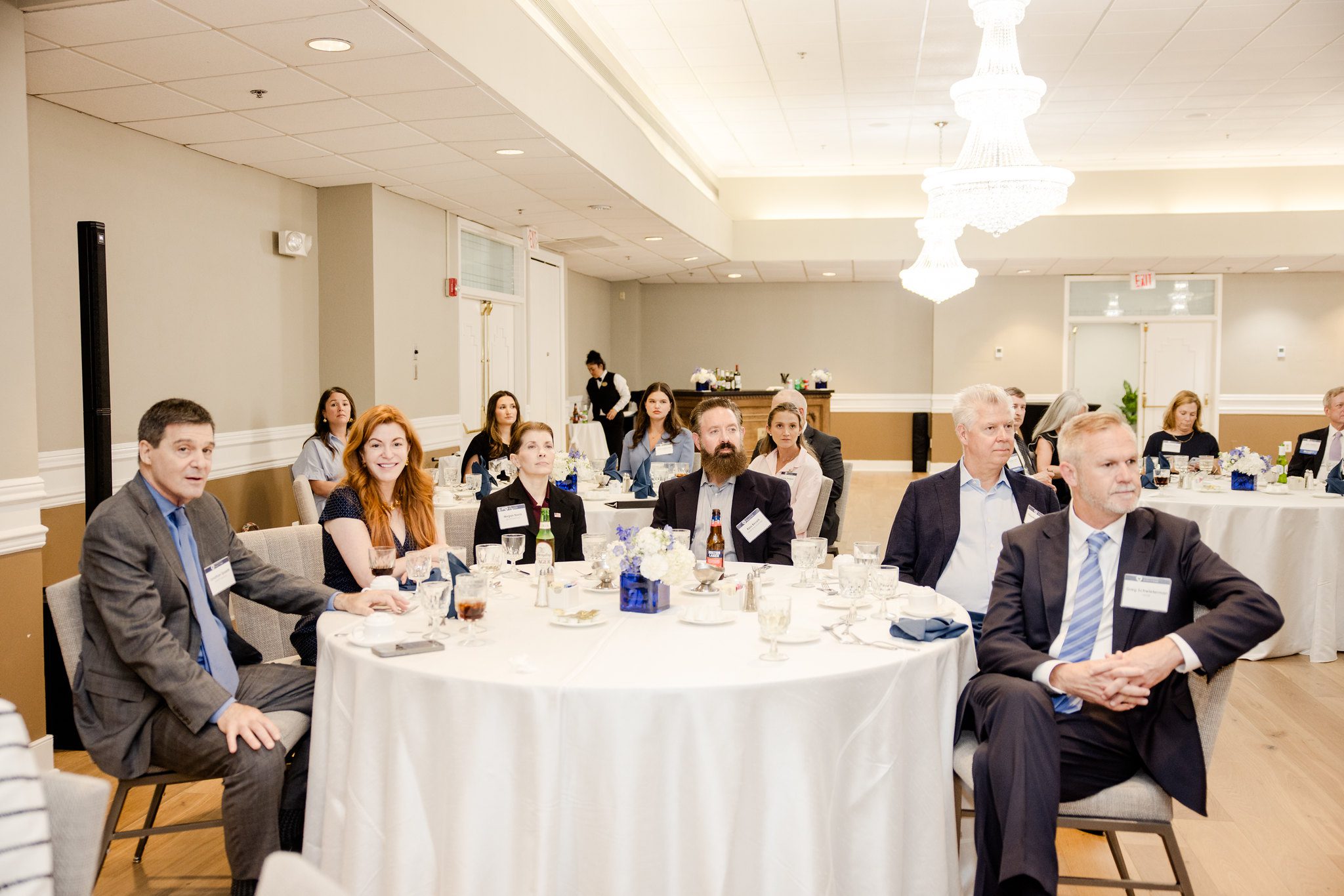
We carried that perspective with us later that evening, as members gathered at Spates Community Club for dinner and a conversation between Board of Trade President & CEO Jack McDougle and Major General Antoinette R. Gant, Commanding General of the U.S. Army Military District of Washington and Commander of Joint Task Force–National Capital Region.
Their discussion ranged from leadership and military readiness to technology, infrastructure, and emergency preparedness. But one idea connected nearly every part of the conversation: Readiness is built long before you need it.
Resilience is a regional responsibility
Most people know the Military District of Washington through its highly visible ceremonial role. But much of its mission happens outside public view.
Major General Gant described responsibilities that include continuity of government, emergency response, and preparing for circumstances in which the region’s ability to function suddenly becomes a national concern.
The military depends on many of the same systems the rest of Greater Washington does: power and water, transportation and communications, technology, businesses and people.
Regional resilience cannot belong to a single agency, government, or sector. It has to be built together.
For the Board of Trade, that responsibility is tangible. We are the civilian business representative on the National Capital Region Task Force supporting National Special Security Events, working alongside military, federal, state, and local leaders to prepare for major planned events and coordinate when the unexpected happens.
It is a unique role for a business organization, and it gives us a firsthand view of how interconnected this region is.
It also reinforces a principle that extends across our work: the strongest time to build relationships is before you need them.
“Reps and sets”
Major General Gant used a simple phrase when discussing preparedness: “reps and sets.”
Organizations improve their ability to respond together by practicing together, testing systems, understanding one another’s capabilities, and finding weaknesses before a crisis exposes them.
That principle extends well beyond emergency management.
Energy affects economic growth. Transportation affects access to talent. Technology intersects with security and competitiveness. Businesses depend on the infrastructure and policies around them to succeed.
These are connected systems, and they work better when the relationships between them already exist.
That is one reason the Board of Trade is investing more deeply in regional partnerships, research, and analysis. Across energy, mobility, business growth, and economic competitiveness, the goal is not simply to react to the next challenge. It is to better understand what is coming and help the region prepare for it.
Transformation happens while you are moving
Major General Gant described a military adapting to technologies, threats, and operating environments that are changing quickly. Her own experience has reinforced the importance of looking beyond your organization for answers.
In Afghanistan, she served alongside partners from 23 countries, each bringing different experiences and approaches to the same mission. She spoke about the value of listening, learning how others solve problems, and remaining open to ideas that may not come from within your own organization.
That mindset matters even more as the pace of change accelerates. Organizations cannot always wait until every answer is known. They have to test, learn, and adjust as conditions evolve.
That creates an important role for the private sector.
The military needs access to emerging technology and expertise, while businesses can bring different perspectives to the challenges military and public-sector leaders are trying to solve. The opportunity is broader than contracting. It is an exchange of ideas, expertise, and relationships.
Major General Gant offered a simple example. After attending a previous Board of Trade Annual Meeting, she later reached back to connect with one of the speakers and bring that private-sector perspective into a military leadership setting.
That is what a connected regional ecosystem can do.
Greater Washington’s unique responsibility
Earlier in the evening, Jack provided members with an update on a region undergoing significant change.
There is no shortage of individual issues competing for attention: energy, mobility, fiscal pressures, technology, business growth, and an evolving economic base among them.
The conversation with Major General Gant offered a useful way to see those issues together.
Our job as regional leaders is not simply to respond well when circumstances force us to. It is to build the capacity, relationships, information, and trust that allow us to respond well when the moment arrives.
Laying the wreath at the Tomb of the Unknown Soldier was a powerful reminder of service and sacrifice. The conversation that followed reminded us of our responsibility.
Greater Washington is home to institutions and missions of enormous national importance, alongside millions of people, thousands of businesses, and a deeply interconnected regional economy.
Keeping it strong requires recognizing that none of us operates in isolation.
Build the relationships. Test the systems. Keep learning. Prepare together.
Become a member today
We need your voice at the table to make Greater Washington a place where everyone can succeed