Maximizing Greater Washington’s Transit Network to Strengthen Regional Mobility
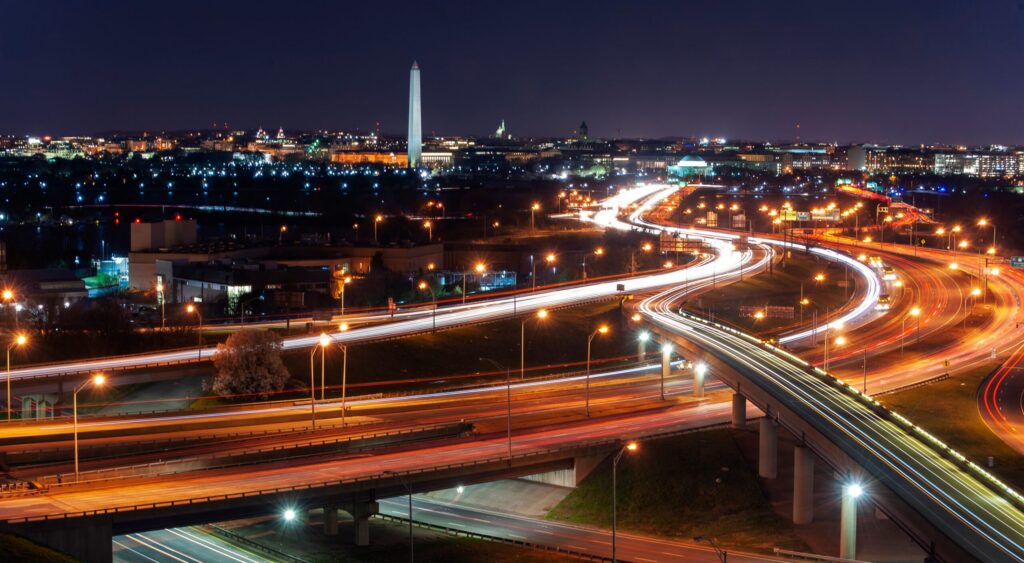
Greater Washington’s transportation network serves as a major regional asset. Commuter rail systems, bus networks, airports, highways, and bridges connect people and businesses because stakeholders in D.C., Maryland, and Virginia have spent decades building one of the country’s most extensive transportation networks.
At the Board of Trade’s recent Executive Lunch, sponsored by United Airlines, regional business leaders discussed how Greater Washington can ensure the network lives up to its full potential. As commuting patterns shift, hybrid work continues to reshape travel demand, and economic activity spreads across multiple job centers, the region’s transportation future depends not only on building new infrastructure, but on maximizing the systems already in place.
The question now circulating among our members and partners is whether that foundation is working as well as it should for the people and businesses that depend on it every day. Below are some key considerations when addressing transportation in our region.
Making the Most of What We Have Built
Mobility patterns across the region have shifted, and transit systems have an opportunity to evolve alongside them. Hybrid work schedules, flexible hours, and employment spread across multiple job centers rather than a single downtown core have made commuting patterns more varied and less predictable than they once were. While traffic volumes have rebounded since before the pandemic, the way people move throughout the region is evolving beyond the traditional commuting patterns many transit systems were originally designed to serve.
Leaders at this lunch were clear on what this moment calls for. Progress is not about pouring concrete or extending lines. It is about making existing systems smarter, more responsive, and more aligned with how people live and work across the DMV today.
A Region That Moves as One
Greater Washington functions as a single regional economy, and there is growing recognition that it should move like one. Virginia, Maryland, and the District each operate their own transit systems, and closing the gaps between them in fare structures, schedules, and cross-jurisdictional routes represents one of the most promising opportunities the region has right now.
Better coordination across those systems would mean more than added convenience. A more seamlessly connected network expands access to jobs, widens the talent pool for employers, and strengthens the regional economy as a whole. Participants at this lunch were encouraged by the momentum behind regional collaboration and recognized the Board of Trade’s efforts in this space as a key driver of progress across the region.
Mobility Drives Opportunity
Reliable, well-coordinated transit shapes where businesses choose to locate and how broadly opportunity is distributed across the region. When people can move efficiently, labor markets deepen, employers can hire from a wider geography, and residents have more genuine choices about where to live and work.
Participants discussed the importance of thinking about mobility more holistically, recognizing that the region’s transportation network supports far more than the traditional daily commute. It also underscores how the DMV’s competitive edge lies in its multi-jurisdictional structure, where cross-boundary movement helps drive a more dynamic and interconnected regional economy.
The sentiment in the room was optimistic. The opportunity ahead is to fully maximize the region’s mobility ecosystem by strengthening regional connectivity, improving coordination across jurisdictions, and ensuring that the systems that support movement throughout Greater Washington continue to evolve alongside the region itself.
To learn more about how your organization can be involved in our mobility initiatives, reach out to [email protected].
Insights from the Table is a membership-driven series of takeaways from our Executive Lunches, where local and regional leaders help inform the Board of Trade’s thinking and shape the work we do in a rapidly evolving environment. These conversations help surface the practical challenges, emerging priorities, and regional opportunities that matter most to Greater Washington’s future.
Read More: Insights from the Table
Keeping Greater Washington Connected Requires a New Mobility Mindset
Become a member today
We need your voice at the table to make Greater Washington a place where everyone can succeed