
Federal Reserve’s Tom Barkin Discusses Economy, Workforce Shifts, and Regional Competitiveness
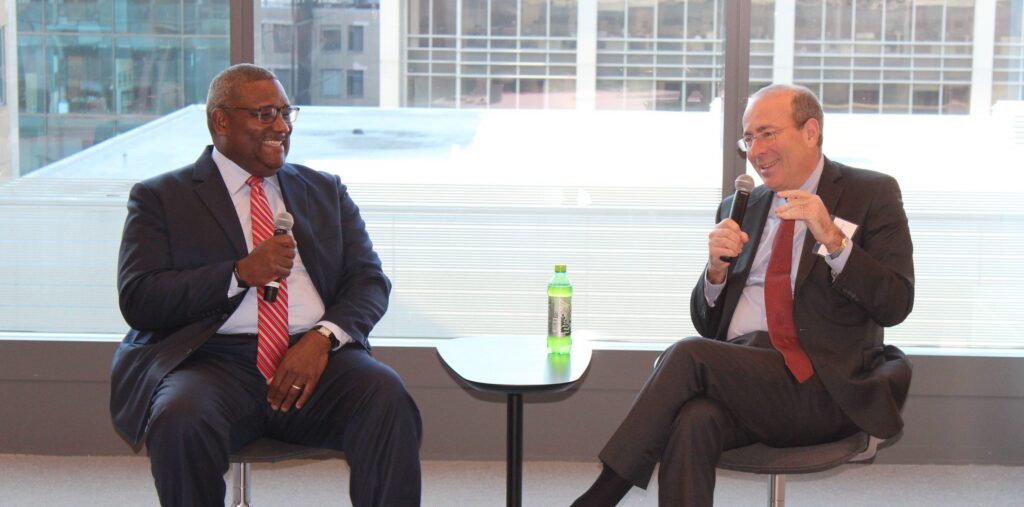
When economic conditions shift rapidly, executive engagement with regional leaders becomes essential. Conversations like these with the Federal Reserve Bank of Richmond help leaders connect economic trends to the business realities facing Greater Washington.
At a recent Executive Leadership Roundtable hosted by the Greater Washington Board of Trade, Tom Barkin, President & CEO of the Federal Reserve Bank of Richmond, joined regional leaders and moderator Tony Pierce, Partner at Akin, for a candid discussion on the economy. Topics ranged from inflation and interest rates to workforce shifts, housing, technology, energy, health care, defense, and global trade.
Key questions included how Greater Washington can compete for talent, attract investment, address federal uncertainty, expand housing, manage energy, and adapt to a technology-driven workforce.
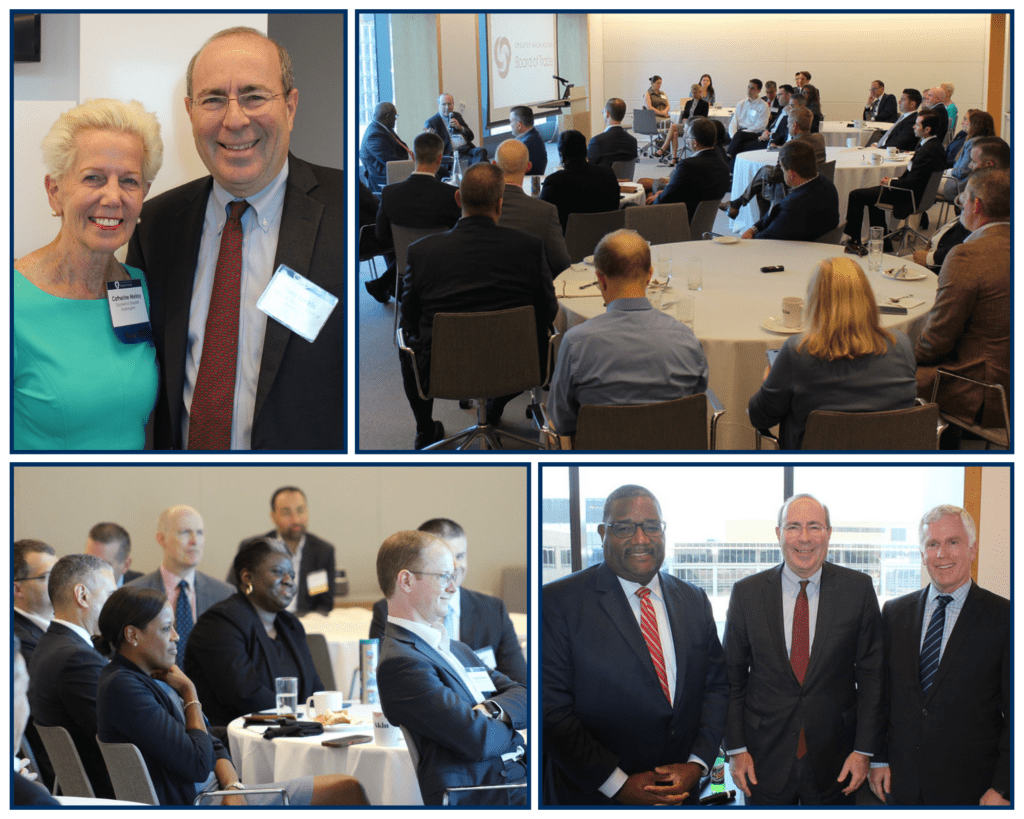
More Pictures From This Discussion
Throughout the discussion, Barkin returned to a consistent theme: the economy is being shaped by uncertainty, but that uncertainty is not affecting every region, industry, or household in the same way.
For Board of Trade members, it allowed for more understanding about economic conditions, addressing Greater Washington’s unique challenges, and advancing regional competitiveness.
See below for further detailed takeaways and highlights.
Key Takeaways from the discussion
- National economic conditions remain resilient but uneven. Barkin noted that consumer spending and business investment have held up nationally, even as repeated supply shocks; inflation pressures and policy uncertainty continue to affect business planning.
- Greater Washington faces distinct regional pressures. Barkin emphasized that the regional economy is closely tied to the federal government, and federal workforce changes are creating challenges that may not be fully reflected in traditional unemployment data.
- Housing remains central to competitiveness. The conversation connected housing affordability, permitting, land availability and commute patterns to the region’s ability to attract and retain workers.
- AI is both disruptive and productive. Barkin said artificial intelligence may disrupt some jobs in the near term while creating new opportunities over time, especially as businesses use technology to improve productivity.
- Data centers are reshaping economic development and energy planning. Barkin described data centers as strong contributors to the tax base and construction activity, but less powerful than long-term job creators. He also raised questions about energy capacity, grid investment, and the risk of overbuilding.
- Demographics are changing the labor market. An aging population, lower labor force growth and slower immigration are shifting the economic development conversation from attracting jobs to attracting workers.
- Defense remains a regional strength. Barkin pointed to Greater Washington’s concentration of federal agencies, contractors, security clearances, and specialized talent as a continuing advantage for defense and mission-critical industries.

Q&A Highlights
How could a Federal Reserve leadership transition affect policy?
Barkin said a leadership change would not affect the Fed’s core mandate, though changes could affect the tone, process, and communication style of the Federal Reserve, resulting in less precise signaling. While the Fed chair is one vote among a broader committee, the chair plays an important role in helping identify consensus. .
How is the national economy performing?
Barkin described the national economy as resilient but still affected by repeated supply shocks, including the pandemic, labor shortages, geopolitical instability, tariffs, and energy pressures. He explained that supply shocks are difficult because they can push prices higher while also weakening demand. Despite those pressures, he noted that consumer spending and business investment have remained relatively strong, though not evenly across all households and sectors.
How is Greater Washington’s economy different from the national economy?
Barkin made a clear distinction between national trends and Greater Washington’s regional conditions. He noted that the region is facing added pressure because of its close connection to the federal government, including workforce changes, relocations, and broader policy uncertainty. He contrasted this with faster-growing markets in the Carolinas (especially around housing affordability), while noting that Northern Virginia remains somewhat stronger because of defense and technology.
What role do data centers play in the regional economy?
Barkin identified data centers as one of the strongest areas of investment across the region, especially as artificial intelligence increases demand for electricity, grid capacity, and digital infrastructure. However, he described data centers as a complicated economic development tool because they can strengthen the tax base and create construction activity without producing large numbers of permanent jobs. He also raised concerns about energy planning and the risk of overbuilding infrastructure if long-term AI demand does not materialize as expected.
What is AI’s likely impact on jobs?
Barkin said AI is likely to be disruptive in the near term and job-creative over the long term. He noted that some white-collar roles, software development jobs, and workers who do not learn how to use AI tools may be more exposed to disruption. At the same time, he said AI could improve productivity and eventually create new types of work, similar to how previous technologies reshaped the labor market.
What role does trust play in AI adoption?
Barkin emphasized that trust will shape how quickly AI is adopted, especially in high-stakes fields such as health care, law, finance and professional services. He noted that people may accept AI-generated information or recommendations, but many will still want human judgment and accountability. Barkin compared this to how consumers gradually learned to trust online payments and mobile banking over time.
How does housing affect regional competitiveness?
Barkin said housing affordability remains one of Greater Washington’s most important competitiveness challenges. He pointed to permitting, land availability, taxes, impact fees, environmental reviews and development uncertainty as factors limiting supply. He noted that the region will need more creative approaches to housing if it wants to attract and retain the workers needed for long-term growth.
How are demographic changes affecting the labor market?
Barkin said demographic change is reshaping the economy by slowing labor force growth. He pointed to the retirement of baby boomers, lower fertility rates, slower immigration and changing workforce participation as long-term pressures. As a result, he said economic development is increasingly shifting from attracting jobs to attracting and retaining workers.
What sectors may remain strong?
Barkin identified defense as one of Greater Washington’s strongest sectors because of the region’s concentration of federal agencies, contractors, secure facilities, specialized workers, and clearances. He also discussed health care as a sector with long-term demand because of aging demographics, though he noted the industry faces challenges around cost, payment models, and workforce supply. Other areas such as cybersecurity, engineering, skilled trades and infrastructure-related work may also remain important as the economy evolves.
What is the outlook for trade and foreign direct investment?
Barkin described the trade environment as uncertain, with many companies still assessing how tariffs will affect sourcing, pricing, and investment decisions. He said many firms are pursuing a “China plus one” strategy by maintaining some presence in China while adding capacity in other countries. He noted that some foreign direct investment may increase in the U.S. but questioned how much of it is truly new versus already planned.
What should regional leaders take away from the discussion?
The conversation reinforced that Greater Washington is navigating several connected challenges at once, including federal workforce shifts, housing affordability, AI adoption, data center growth, energy demand, demographics, inflation and global trade. Barkin’s comments showed how these issues affect talent, investment, operations, and long-term planning. For regional leaders, the takeaway is that competitiveness will depend on alignment around housing, transportation, energy, workforce development, and a business climate that supports growth.
Thank you again to the Federal Reserve Bank of Richmond for providing our members with these insights and Akin Gump Strauss Hauer & Feld LLP for hosting this discussion.
Learn more about the Board of Trade’s policy efforts here. And check out more events and programs here.
Previous Discussion with the Federal Reserve Bank of Richmond
Executive Leadership Roundtable Recap: What Regional Leaders Are Watching
Executive Leadership Roundtable Recap: Leaders Respond to a Changing Economy
Become a member today
We need your voice at the table to make Greater Washington a place where everyone can succeed