Autonomous Vehicles Need a Clear Path Forward in Greater Washington
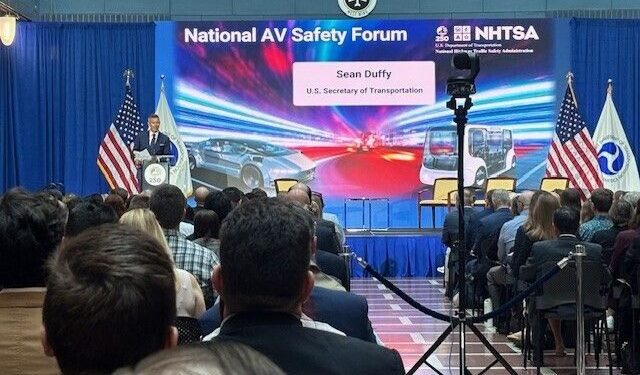
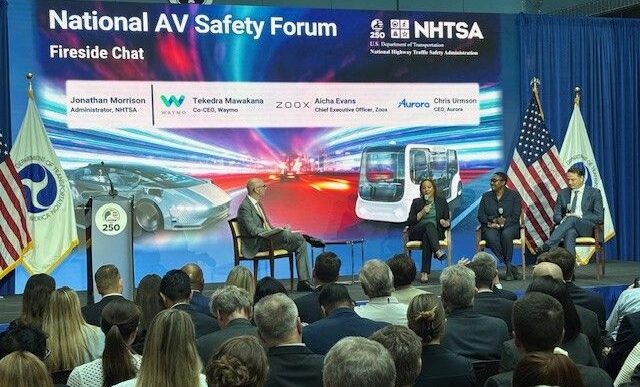
The conversation around autonomous vehicles has moved well beyond theory. At the U.S. Department of Transportation’s National AV Safety Forum on March 10, federal officials and industry leaders made clear that the question is no longer whether this technology is advancing. It is whether government can create a regulatory path that keeps safety at the center while allowing innovation to move from pilots to real-world deployment. The National Highway Traffic Safety Administration (NHTSA) used the forum to outline a federal automated vehicle framework focused on safety oversight, removing unnecessary regulatory barriers, and enabling commercial deployment.
That matters for Greater Washington. In cities such as Phoenix and Los Angeles, AV deployment is already moving beyond pilot programs, with expanding service, transit connections, and new operational investments showing what real-world integration can look like. Yet Greater Washington still does not have a clear regional path for fully autonomous vehicle deployment.
Federal momentum is real, but local policy still determines what happens on our streets
One of the clearest messages from the forum was that federal leadership can help modernize outdated rules, set clearer standards, and build public confidence in autonomous vehicle technology, especially because many existing safety rules were written for vehicles built around a human driver. NHTSA’s framework reflects that reality.
But AV deployment will not be decided at the federal level alone. In Greater Washington, state law, local permitting, roadway ownership, emergency response protocols, and agency coordination all shape whether companies can move from testing to service.
Today, D.C.’s legal framework remains limited to testing. In Maryland, SB909 would establish statewide standards for fully autonomous vehicles, but it remains pending. In Virginia, SB670 would create a framework for commercial fully autonomous vehicles, yet lawmakers delayed action and may revisit it next year.
If federal officials are signaling that the U.S. needs clearer rules of the road, Greater Washington cannot answer with a patchwork of delays, half-steps, and conflicting local standards.
The DMV’s fragmentation is not just inconvenient. It is a competitive disadvantage
This region already knows the cost of fragmentation. Transportation, land use, and infrastructure decisions are too often made jurisdiction by jurisdiction, even when the economy functions as one region. Autonomous vehicle policy is now running into that same problem. A technology that may function seamlessly in one jurisdiction becomes harder to scale if every border introduces a different set of rules, approvals, or operating conditions.
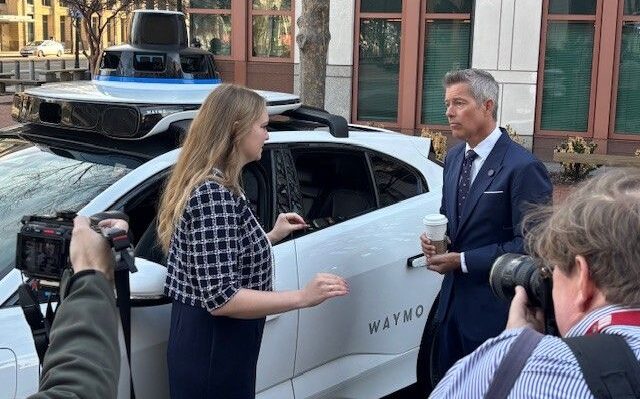
Meanwhile, the industry is not standing still. Waymo is already operating at significant scale nationally, with more than 400,000 weekly rides and nearly 200 million fully autonomous miles on public roads. In Phoenix, the company has continued expanding service and investing in U.S. fleet manufacturing. In Los Angeles, it has tested ways to connect AV service with public transit trips. Greater Washington, by contrast, is still working through the rules needed to move beyond testing.
If this region wants to attract investment, support innovation, and shape how these systems fit into transit and regional mobility, it cannot remain a market where companies can test but not meaningfully deploy.
This should not be a debate about one company. It should be a debate about the right framework
The Board of Trade’s role is not to pick winners. It is to help shape the policy environment the region needs to compete.
That means being clear-eyed about both opportunity and responsibility. AV policy should be safety-first, with transparency, clear interaction protocols for first responders and law enforcement, strong data and cybersecurity expectations, and coordination with existing transportation systems. Maryland’s pending bill offers one example of what that framework can include, from insurance and first responder interaction plans to compliance with federal safety standards and data privacy protections.
But getting the framework right is not only about managing risk. It is also about unlocking real public benefits. Autonomous vehicles can help expand mobility for seniors and people with disabilities, support first-mile/last-mile connections to transit, and reduce dangerous human driving behaviors that continue to contribute to roadway deaths. At the forum, NHTSA acknowledged AVs’ potential safety and mobility benefits while making clear that enforcement and oversight will remain essential.
For Greater Washington, this is not a theoretical debate about the future. It is a practical policy question about how we modernize our transportation system to make the region more connected, more accessible, and more economically competitive.
A clear regional path is within reach
The path forward should be straightforward. D.C., Maryland, and Virginia need to move toward a more aligned framework for testing, deployment, and commercial operation. Local governments and transportation agencies should treat AVs as part of a broader mobility strategy, especially where they can complement transit through first-mile/last-mile connections, station access, and congestion relief. And the region needs to stop confusing caution with inaction. Safety oversight and public trust are essential, but endless delay is not a strategy.
The federal government has signaled that it wants to modernize the regulatory conversation around autonomous vehicles. Greater Washington now has an opportunity to lead with a framework that reflects both innovation and responsibility.
The Board of Trade will remain actively engaged in that work, bringing together business, government, and transportation stakeholders to support a more integrated, regionally aligned approach to autonomous vehicle policy that prioritizes safety, builds public trust, and recognizes AVs as one part of a larger system for improving mobility, access, and regional competitiveness.
Engage Further on Transportation in Greater Washington
Connection Through Innovation: Highlights from the 2025 Capital Region Transportation Forum
Letter of Support: Fully Autonomous Vehicle Legislation (SB670) in Virginia
Become a member today
We need your voice at the table to make Greater Washington a place where everyone can succeed