Councilmember Brooke Pinto on Public Safety, Economic Growth, and D.C.’s Federal Relationship
The Board of Trade has extended invitations to other candidates in these races and continues to welcome opportunities for members to hear directly from those seeking to lead and represent the District.
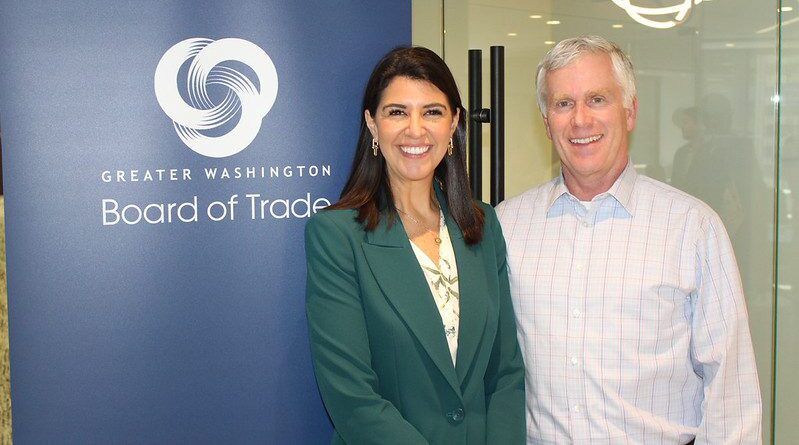
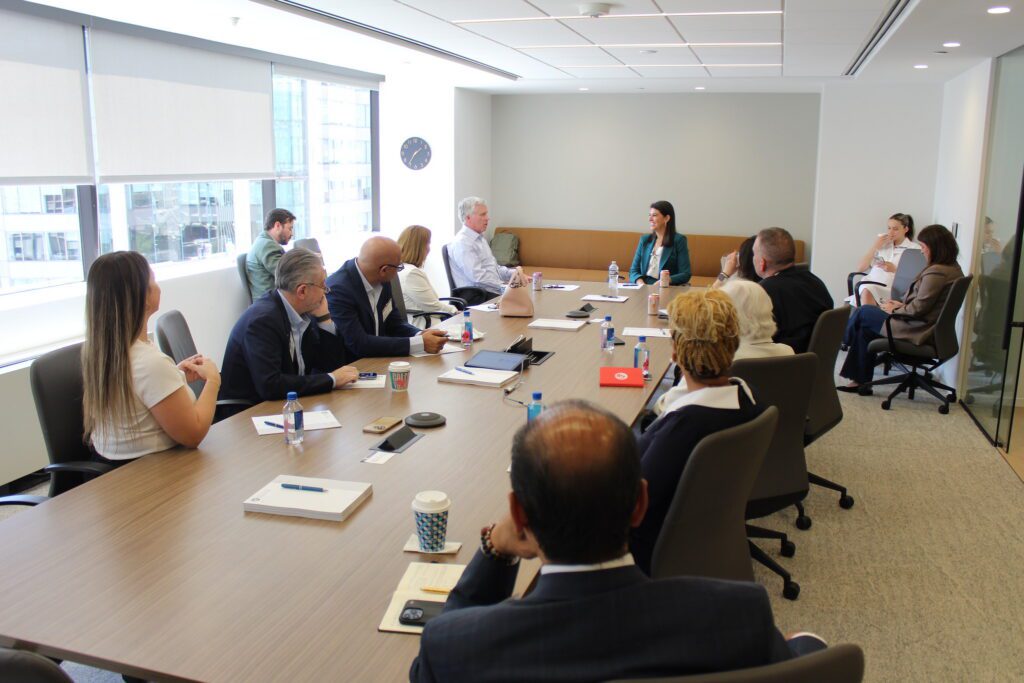
As part of the Greater Washington Board of Trade’s DC Election Watch series, members gathered for a candid conversation with Councilmember Brooke Pinto, who is running to represent the District in Congress.
For D.C., the congressional delegate seat has always carried unusual weight. Without full voting representation in Congress, the District relies on its delegate to help protect local priorities, build federal relationships, defend home rule, and pursue opportunities tied to the city’s unique role as the nation’s capital.
D.C. cannot afford to treat this seat as ceremonial. At a time when Congress continues to influence the District’s budget authority, public safety laws, courts, federal land use, Medicaid funding, and local autonomy, this election comes at a pivotal moment.
Pinto, who represents Ward 2 and chairs the D.C. Council’s Committee on the Judiciary and Public Safety, made the case for a pragmatic, results-focused approach to the District’s next chapter.
“We can’t keep doing things the same way we’ve been doing it,” Pinto said. “Our city is in a very interesting moment.”
Key Takeaways from the Discussion
- Pinto connected the delegate role to D.C.’s ability to protect itself and compete for the future. She described federal engagement as essential to defending home rule, protecting local decision-making, and pursuing opportunities around public safety, housing, land use, and economic development.
- She framed public safety as foundational. As Judiciary chair, Pinto helped lead Secure D.C. and said the city must remain focused on prevention, accountability, and better coordination across government.
- She argued that growth and equity are connected. Pinto said business growth, housing production, and a stable tax base are part of how D.C. funds schools, health care, public safety, housing, and the social safety net.
- She called for a more predictable and competitive business climate. Pinto said D.C. must reduce barriers, avoid policies that weaken competitiveness, and be more intentional about attracting employers, residents, investment, and new industries.
- She emphasized fiscal responsibility as part of sustaining public priorities. Pinto opposed the business activity tax and argued that D.C. needs durable revenue to support the services residents rely on.
Below are a few highlights from the conversation.
Q&A Highlights
Why is the congressional delegate role especially important right now?
Pinto said the District’s relationship with Congress has become more urgent, particularly as federal lawmakers have considered proposals affecting D.C.’s budget, public safety laws, Medicaid funding, local autonomy, and courts.
She said the delegate role requires daily relationship-building on the Hill, both to push back against harmful interference and to identify opportunities for federal partnership.
“What started as a defensive posture of, I need to go there to protect the District, remains true,” Pinto said. “But I also think there are so many exciting opportunities for the District if we lean in and get this relationship right.”
Pinto pointed to opportunities around federal investment, underused GSA buildings, National Park Service land, opportunity zones, housing, and economic development.
How would she approach working with Congress while protecting D.C.’s autonomy?
Pinto said D.C.’s representative must be able to work with members of both parties while remaining clear about the District’s interests and autonomy.
She described federal engagement not as a concession on home rule, but as a practical necessity for protecting the District’s budget, laws, courts, and long-term interests.
That could include pushing back against harmful federal intervention, advancing judicial nominations, strengthening public safety infrastructure, unlocking underused federal assets, supporting housing, and bringing new investment to the nation’s capital.
Pinto said success in the delegate role will not always mean public credit. Sometimes, she said, it will mean securing wins behind the scenes.
“If it supports our residents and our businesses, my name doesn’t need to be anywhere on it,” she said.
How does Pinto view the moment D.C. is in now?
Pinto described her time on the Council in phases: pandemic response, recovery, public safety, and now what she sees as a pivot toward growth.
She said the District cannot remain overly reliant on the federal government and must be more assertive about attracting employers, residents, entrepreneurs, new industries, and investment.
“The number one thing that businesses want is predictability,” Pinto said. “And we don’t have a lot of predictability in our market right now.”
For Pinto, that means D.C. must become easier to live in, work in, visit, and do business in.
“If we get it right, we’ll look back 10 years from now and say that was the moment in 2026 that we pivoted and stopped being shy about the fact that we are the best city in the world,” she said.
How does public safety fit into D.C.’s future?
Pinto described 2023 as a defining year for public safety and said crime shaped nearly every conversation she had with residents, employers, and community leaders.
As chair of the Judiciary and Public Safety Committee, Pinto helped lead Secure D.C., a major legislative package focused on prevention, accountability, and government coordination.
She said public safety must remain a top priority because the city cannot meet its broader goals if residents, workers, visitors, and businesses do not feel safe.
“Every person deserves to be safe. Period,” Pinto said.
How does she connect economic growth with support for residents?
One of Pinto’s clearest points was that D.C. should not treat economic growth and support for vulnerable residents as competing priorities.
Instead, she argued that the District’s ability to fund schools, housing, public safety, health care, and the social safety net depends on a strong and stable tax base.
“In order to support the people who are most vulnerable, excellent education, safety, and the social safety net that we are so proud of in D.C., we have to ensure that there’s a funding stream to do so,” Pinto said.
For Pinto, business growth, housing production, and competitiveness are not separate from equity. They are part of how the city sustains the services and opportunities residents rely on.
What did she say about taxes and competitiveness?
Asked about proposals such as a business activity tax, Pinto was direct.
“I do not support the business activity tax,” she said.
She said D.C. must be realistic about competition from other markets and the choices residents, employers, and investors can make when costs rise or the policy environment becomes less predictable.
Pinto framed the issue as one of fiscal sustainability: D.C. needs the revenue to invest in public priorities, and that requires policies that help retain and grow the people, businesses, and jobs that generate that revenue.
What policy priorities should business and civic leaders watch?
Pinto highlighted two major legislative packages.
The first, Prosper D.C., includes proposals focused on business growth, headquarters attraction, hiring D.C. residents, downtown conversions, university partnerships, tech innovation, and paid work opportunities for young people.
The second, the HOMES Act, focuses on making it easier and more affordable to build housing in the District. Pinto said her broader housing agenda also includes federal policy changes, including revisiting constraints that limit housing production and making better use of vacant office space.
Pinto encouraged Board of Trade members to engage early and constructively on both efforts.
For Board of Trade members, the conversation was a reminder that the delegate race is not ceremonial. It is about who can help protect D.C.’s autonomy, strengthen federal relationships, compete for investment, and advance the conditions that allow residents, businesses, and neighborhoods to thrive.
Note: The Board of Trade has extended invitations to other candidates in these races and continues to welcome opportunities for members to hear directly from those seeking to lead and represent the District.
More Regional Policy Discussion
A New Era of Collaboration: We Need the Big Three to Finally Bring the DMV Together | WBJ Viewpoint
Become a member today
We need your voice at the table to make Greater Washington a place where everyone can succeed