Shaping Our Own Future: Takeaways from the 2026 Annual Meeting
For generations, Greater Washington has helped shape America’s future. Now, the region faces an opportunity to bring that same ambition to shaping its own.
On November 20, the Greater Washington Board of Trade brought together business, government and community leaders for its 2026 Annual Meeting, presented by Kaiser Permanente. The meeting provided an opportunity to reflect on a consequential year for the region, recognize the leadership and partnerships that have advanced our shared priorities, and consider what it will take to build a more dynamic, innovative and competitive regional economy.
From the changing federal footprint and growing infrastructure demands to artificial intelligence, workforce transformation and the future of regional collaboration, the morning’s conversations reinforced both the urgency of the challenges before us and the opportunities within our reach.
Several themes emerged throughout the program.
Greater Washington Must Take Greater Ownership of Its Economic Future
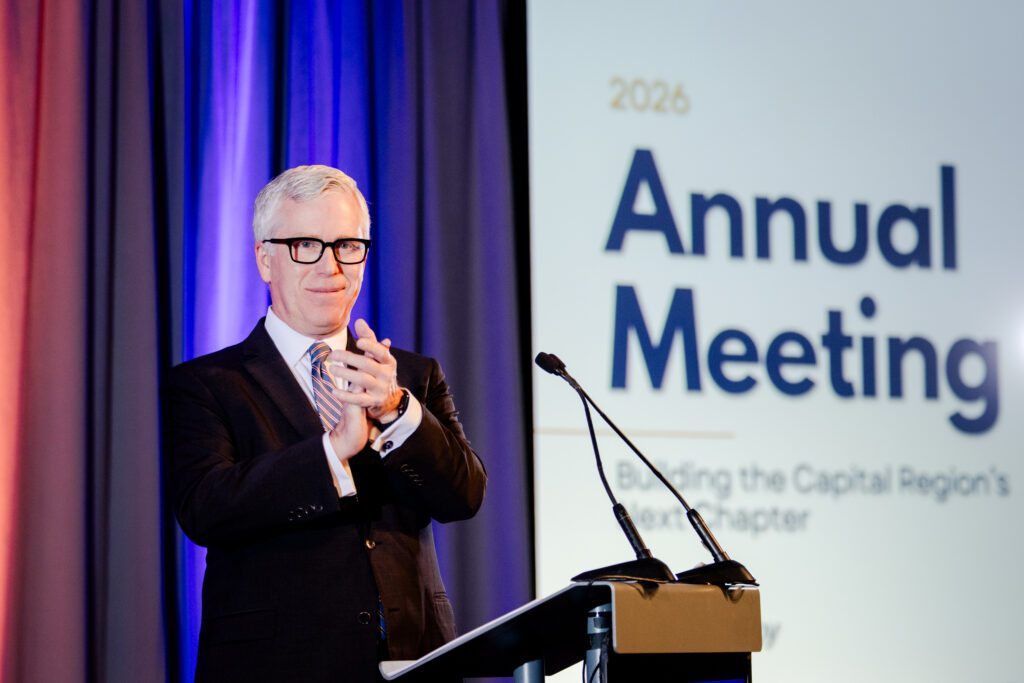
Last year, Board of Trade President and CEO Jack McDougle described the moment facing Greater Washington as consequential. Reflecting on the developments of 2026, he offered an updated characterization: “Consequential 2.0.”
Changes to the federal government’s workforce, investments and physical footprint, coupled with emerging technologies, increasing infrastructure demands, affordability concerns and fiscal pressures, are challenging the foundations on which the regional economy has been built for generations.
“The economy that brought us here is not the economy that will carry us forward,” McDougle said.
While the federal government remains an important part of Greater Washington’s economy, the region must be increasingly deliberate about cultivating new sources of growth and opportunity.
Greater Washington has considerable assets to build upon, including exceptional talent, world-class universities and research institutions, innovative businesses, global connections and access to policymakers. The challenge is putting those assets to work in new ways and with greater purpose.
That also requires recognizing that while our jurisdictions will continue to compete for jobs and investment, Greater Washington’s greatest economic competition lies beyond its borders.
The Board of Trade’s work with the Greater Washington Partnership, Metropolitan Washington Council of Governments and Consortium of Universities of the Washington Metropolitan Area through the Potomac Regional Alliance to advance a Comprehensive Economic Development Strategy reflects the importance of a more coordinated approach to regional economic growth.
Economic Competitiveness and Community Well-Being Go Hand in Hand
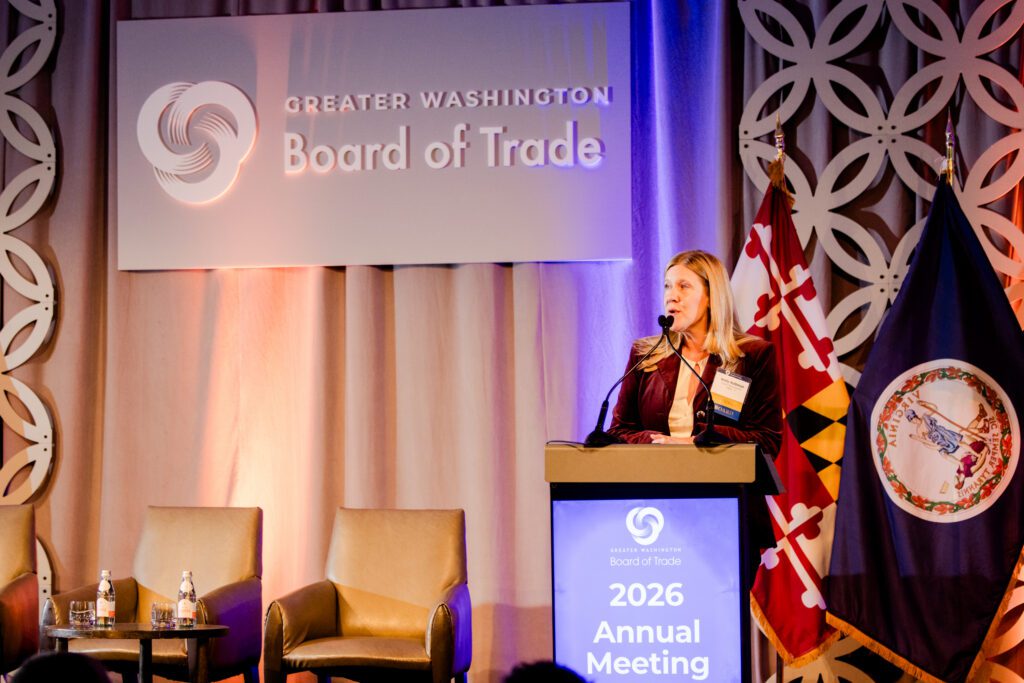
Opening the program, Emily Holliman, Regional President of Kaiser Permanente and a member of the Board of Trade’s Board of Directors, emphasized the interconnected nature of the region’s economic priorities.
Reliable transportation, affordable housing, a skilled workforce, thriving businesses and healthy communities are not independent objectives. Each helps create the conditions necessary for progress in the others.
Transportation connects people to employment and opportunity. Healthy communities strengthen the workforce. Innovation and business growth generate the resources needed to reinvest in communities and improve quality of life.
Holliman underscored that no single company, industry or jurisdiction can address these challenges alone. Greater Washington’s next chapter will require leaders to work across traditional geographic and industry boundaries and recognize their shared interests.
It is a perspective that reinforces the Board of Trade’s multidisciplinary approach to regional competitiveness and the importance of bringing diverse business, government and community perspectives together.
Moving from Regional Conversations to Meaningful Impact
As Greater Washington’s economy changes, the Board of Trade is evolving how it serves its members and the region.
While convening leaders and building relationships remain fundamental to the organization’s mission, McDougle emphasized the growing need for deeper engagement on complex issues, credible policy analysis and practical solutions.
That approach was reflected in several areas of the Board of Trade’s work in 2026:
- Transportation and mobility: Advancing DMVMoves and sustainable capital funding for Metro, partnering with the Urban Institute to examine the future of regional mobility, and recommending innovative financing and delivery approaches for the American Legion Bridge replacement.
- Energy: Convening the Regional Energy Outlook, establishing an Energy Advisory Council, helping launch the Ascend Coalition to advance electric transmission infrastructure in Virginia, and engaging in energy policy discussions across the region.
- Economic growth and competitiveness: Analyzing the District’s fiscal challenges and business environment, advancing cross-jurisdictional economic development discussions, and launching the Business Growth Initiative to support the growth and retention of established regional businesses.
- Sports and economic development: Advancing the regional Sports Council and recognizing the broader economic development opportunities associated with Greater Washington’s professional sports ecosystem.
- Research and regional expertise: Relaunching the Greater Washington Board of Trade Foundation to expand the organization’s capacity for rigorous research, independent analysis and fresh thinking on complex regional challenges.
Together, these efforts, and more, reflect an organizational focus on the underlying conditions that enable businesses to succeed, attract investment and create opportunities.
The Board of Trade’s success, McDougle emphasized, should be measured not by the number of events it hosts or issues it takes on, but by the value it delivers and the impact it has on the issues that matter most.
Building on a Legacy of Partnership with The District
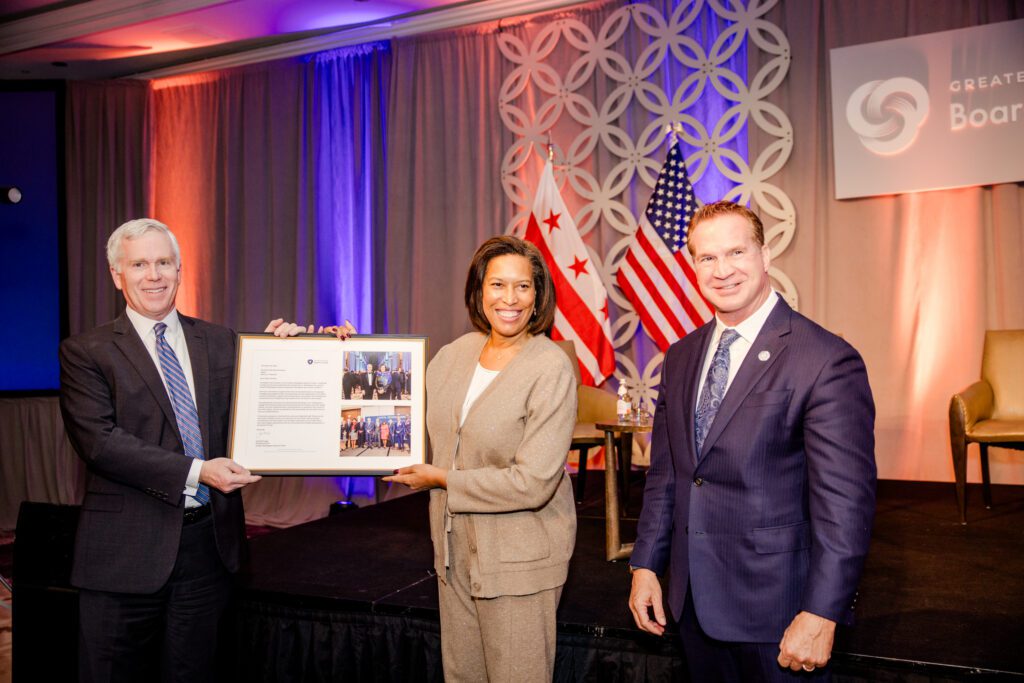
The Annual Meeting also provided an opportunity to recognize D.C. Mayor Muriel Bowser for her years of public service and longstanding partnership with the regional business community.
In introducing Mayor Bowser, 2026 Board of Trade Chair Tyler Anthony, President and CEO of Pepco Holdings, reflected on the District’s transformation during her administration, highlighting the development of The Wharf, the Frederick Douglass Memorial Bridge, Cedar Hill Regional Medical Center, the retention of the Washington Capitals and Wizards, and the planned return of the Washington Commanders to the city.
In her keynote remarks, Mayor Bowser reflected on the importance of public-private partnerships in advancing the District’s economic development, transportation, education, housing and public safety priorities.
Looking ahead, she emphasized the need to maintain investments in schools and public safety, encourage renewed investment in the District, capitalize on changes to the federal footprint and retain the region’s talented workforce.
Her remarks reinforced a challenge facing Greater Washington as a whole: ensuring that residents navigating a changing economy can find their next job, start their next business and pursue their next opportunity within the region.
Artificial Intelligence Is a Business and Workforce Transformation
Artificial intelligence is reshaping industries, business models and the nature of work. But what does that mean for Greater Washington, its employers and its workforce?
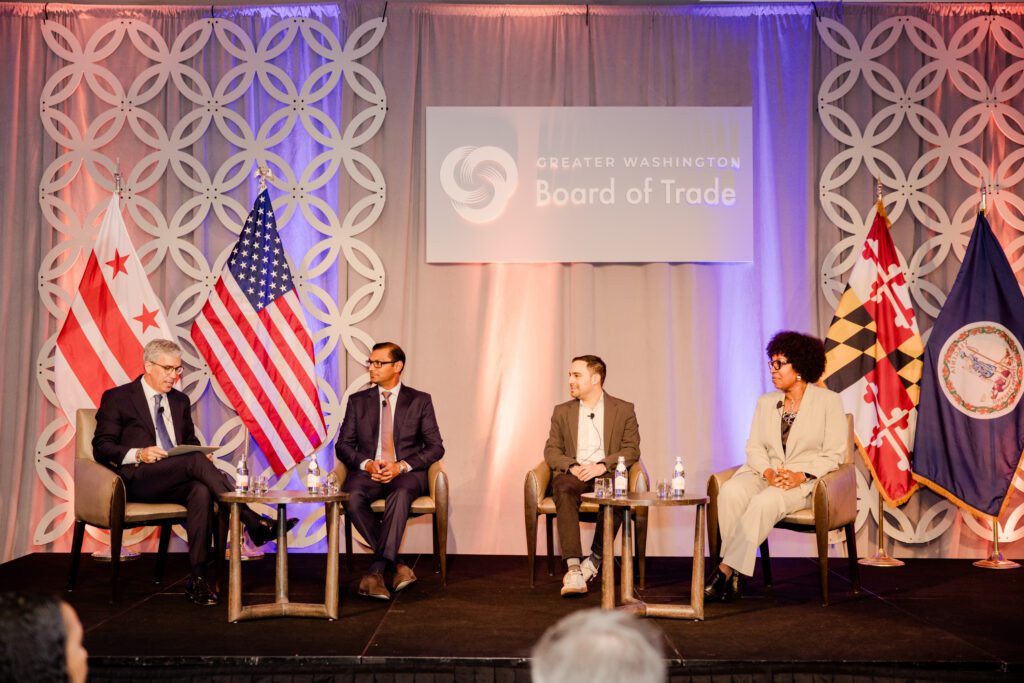
A panel discussion moderated by Brad Flickinger, Chair of the Greater Washington Board of Trade Foundation, brought together perspectives from technology, management consulting and behavioral and social science research to explore these questions.
The discussion moved beyond the capabilities of individual AI tools to examine how organizations can meaningfully integrate artificial intelligence into their operations and how Greater Washington can position itself for leadership.
Several important insights emerged:
- AI adoption is a leadership responsibility, not simply a technology decision. Purchasing software or introducing AI into existing workflows does not necessarily produce better outcomes. Business leaders must rethink operating models, identify meaningful problems to solve and establish clear measures of success.
- Growth is a more compelling opportunity than efficiency alone. While AI can reduce administrative burdens and improve productivity, its greater potential may lie in enabling employees to spend more time on activities that create value, strengthen relationships and drive innovation.
- Trust and governance are essential to adoption at scale. Organizations must move beyond written policies to develop systems, safeguards and processes that support responsible use and account for human error.
- Developing the next generation of talent will require new approaches. As AI takes on tasks traditionally assigned to early-career professionals, employers and educational institutions must reconsider how people develop expertise, critical thinking and sound judgment. The panel emphasized embracing AI in educational settings with appropriate guardrails rather than attempting to exclude it altogether.
- Greater Washington’s traditional business models are also changing. With a significant concentration of federal contractors and professional services firms, the region must consider how AI-enabled productivity and a potential shift toward outcomes-based contracting could reshape how businesses deliver and measure value.
The panelists also identified a distinctive opportunity for Greater Washington. The region’s concentration of policymakers, researchers, technology developers, businesses and educational institutions creates an environment in which responsible, evidence-based AI adoption could become a competitive advantage.
Ultimately, the discussion reinforced that many of the most significant challenges associated with AI are human and organizational, rather than purely technological.
Looking Ahead: Building on a Strong Foundation for 2027
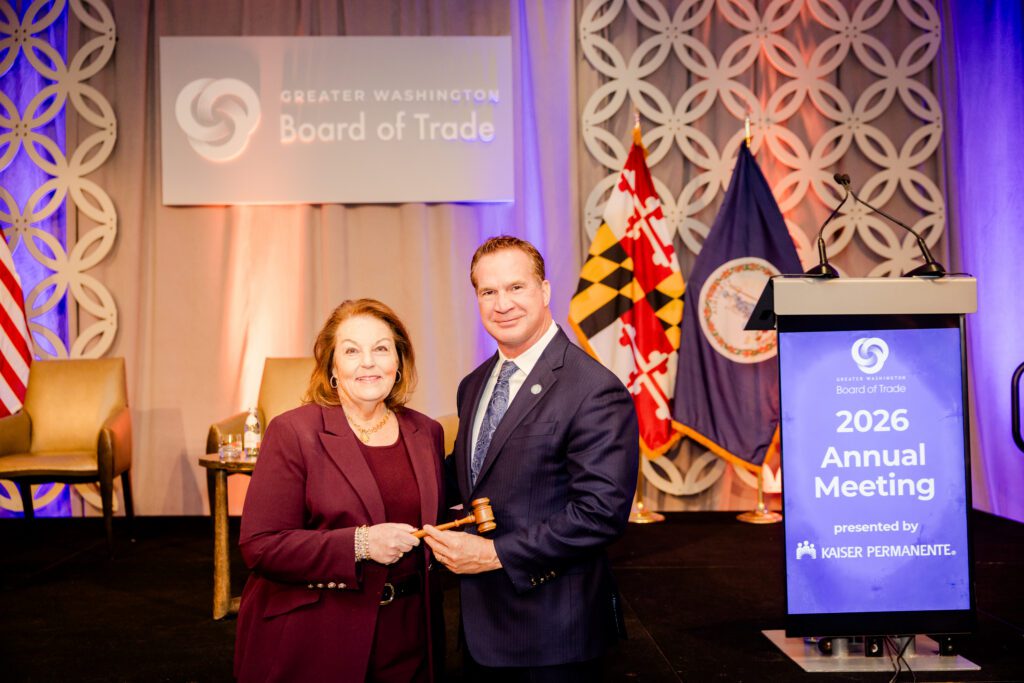
The Annual Meeting marked the ceremonial transition of Board of Trade leadership from Tyler Anthony to Cecilia Hodges of M&T Bank, who will serve as the organization’s 2027 Chair.
Reflecting on his year as chair, Anthony encouraged members to consider why they are part of the Board of Trade: to make a difference, build a stronger region and give back to their communities.
He emphasized the strength of the organization’s collective voice and the importance of business leaders contributing their expertise to address challenges that extend beyond their individual companies and industries.
Hodges echoed that sentiment in outlining her perspective for the coming year. She emphasized the importance of bringing leaders together, challenging assumptions and maintaining an active dialogue with members as the regional economy continues to evolve.
The Board of Trade Foundation will help strengthen that work by connecting research and regional expertise, informing a more strategic approach to policy and helping identify the conditions necessary for businesses and communities to thrive.
Members will remain central to that effort. Their experiences, insights and engagement will help the Board of Trade better understand emerging challenges, identify opportunities and focus its resources where they can have the greatest impact.
A Shared Commitment to Greater Washington
Throughout the Annual Meeting, one message remained consistent: Greater Washington’s future will be shaped by the collective efforts of its business, government and community leaders.
The region has the talent, institutions, expertise and resources to build a more diverse, resilient and competitive economy. Realizing that potential will require intentional collaboration, sustained investment and a willingness to challenge conventional thinking.
The Greater Washington Board of Trade extends its appreciation to our members, Board of Directors, officers, speakers and sponsors for their leadership, engagement and continued commitment to the region.
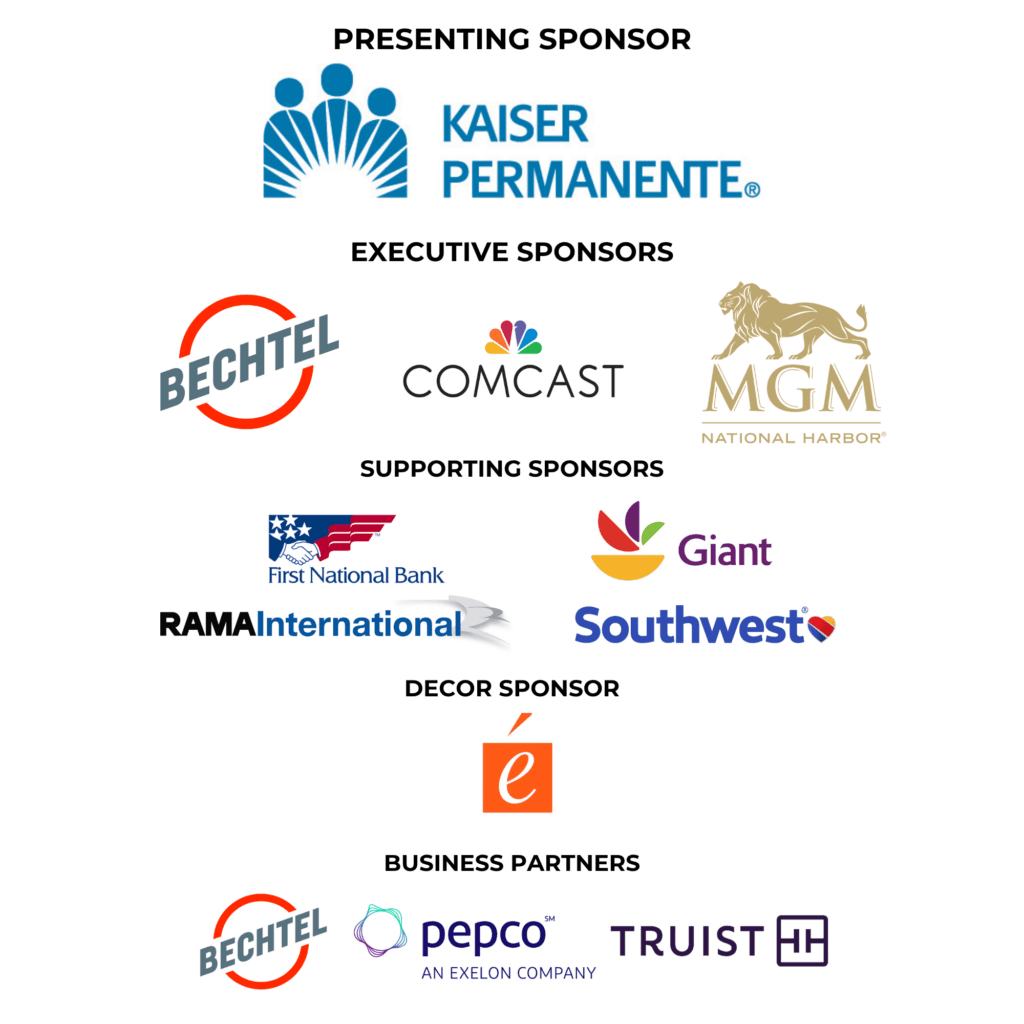
Special thanks to Kaiser Permanente for its longstanding support as the presenting sponsor of our Annual Meeting and for its partnership in advancing a healthier, stronger Greater Washington.
We look forward to continuing this important work together in 2027.
Check out all the great moments at the 2026 Annual Meeting

Special Thank You
Become a member today
We need your voice at the table to make Greater Washington a place where everyone can succeed